North America Asparagus Market Research Report – Segmentation by Flavor Profile (Classic Dill, Sweet Pickles, Spicy and Zesty); By Distribution Channel (Supermarkets and Grocery Stores, Online Retailers, Specialty Stores, Farmer's Markets and Local Stores, Restaurants and Foodservice): and Region; - Size, Share, Growth Analysis | Forecast (2024– 2030)
North America Asparagus Market Size (2024-2030)
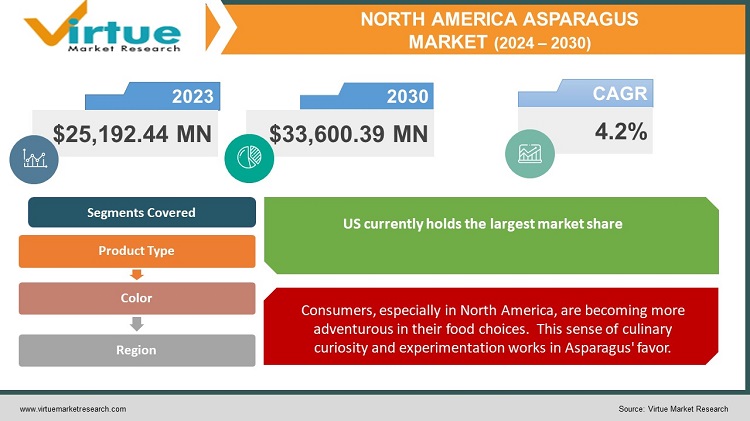
The North America Asparagus Market was valued at USD 25,192.44 Million in 2023 and is projected to reach a market size of USD 33,600.39 Million by the end of 2030. Over the forecast period of 2024-2030, the market is projected to grow at a CAGR of 4.2%.
Asparagus, the springtime delicacy, has carved a significant niche in the North American market. While Mexico dominates production, both the United States and Canada play crucial roles as producers and consumers. Mexico leads the way, with areas like the Caborca region in Sonora ideal for both fresh and processed asparagus cultivation. Extensive acreage and favorable climatic conditions contribute to its market dominance. Washington State, especially the Yakima Valley, produces high-quality asparagus with vibrant color and flavor, catering to a discerning market segment. The majority of asparagus is consumed fresh. However, processing methods like canning or freezing allow for year-round availability and cater to the needs of the food service industry. Asparagus reaches consumers through supermarkets, grocery stores, farmers' markets, and increasingly through online sales platforms directly from growers. The demand for organic asparagus is steadily growing, driven by health-conscious consumers who prefer food grown with sustainable practices.
Key Market Insights:
North America, specifically the United States, heavily relies on asparagus imports, predominantly from Mexico and Peru. This is due to favorable growing climates and labor costs in these regions. While cultivation techniques are extending the season, asparagus remains heavily seasonal. Early spring sees a surge in domestic production, but imports fill the gaps before and after this localized peak. Demand exists for both fresh asparagus sold directly to consumers and processed asparagus (frozen, canned) used in soups, sauces, and prepared meals. This creates distinct supply chains and pricing patterns. Asparagus' reputation as a nutrient-dense, low-calorie vegetable aligns well with consumer focus on healthy eating. This provides a positive long-term demand driver. The demand for organically grown asparagus mirrors the larger trend towards organic produce. This segment caters to health-conscious and environmentally-conscious consumers who are willing to pay a premium for pesticide-free options. Pre-washed, pre-cut, or ready-to-cook asparagus formats appeal to time-strapped consumers. These offer a value-add, potentially commanding higher prices. Asparagus is moving beyond being a simple side dish. The rise of foodie culture and diverse recipes encourage more adventurous use of asparagus in salads, stir-fries, and other dishes. While limited by seasonality, some regions show a preference for locally grown asparagus during its peak season. This supports smaller farms and aligns with the "eat local" trend.
North America Asparagus Market Drivers:
The shift towards prioritizing health and wellness has become a major force shaping consumer choices, with ripple effects throughout the food industry – and asparagus benefits significantly from this trend.
Consumers increasingly focus on foods that prevent illness and contribute to long-term health rather than simply reacting to existing issues with restrictive diets. There's an emphasis on whole, minimally processed foods packed with nutrients. This aligns perfectly with the nutritional profile of asparagus. Consumers today are better informed about ingredients and their impact. Label reading, nutrition apps, and the abundance of credible health information online make people more discerning about their food choices. Gone are the days of one-size-fits-all diets. Consumers personalize their eating habits based on individual needs, preferences, and what makes them feel their best, creating space for vegetables like asparagus. Asparagus delivers a powerful array of vitamins, minerals, and fiber in a package that won't break the calorie bank. This makes it a perfect choice for people who aim for nutrient-rich diets and may be watching their weight. As consumers shift away from heavily processed snacks and meals, asparagus, with its fresh flavor and minimal preparation required, becomes a desirable alternative. The potential diuretic properties of asparagus, along with its reputation for being rich in antioxidants, tap into the consumer desire for foods that support the body's natural cleansing mechanisms. Demand for organic asparagus skyrockets due to consumer avoidance of pesticides, herbicides, and potential residues. This creates a lucrative market segment for producers and retailers. Consumers prioritize unblemished, crisp asparagus spears – visual indicators of quality and peak nutritional goodness. This influences harvesting cycles and supply chain efficiency. Healthy eating is propelling online grocery sales and subscription boxes specializing in fresh produce delivery. Asparagus can expand its reach through these emerging channels. The perception of asparagus as a "superfood" could open up possibilities for its inclusion (perhaps in powdered or juiced forms) in healthy smoothies, snack bars, and supplemental products.
Consumers, especially in North America, are becoming more adventurous in their food choices. This sense of culinary curiosity and experimentation works in Asparagus' favor.
Restaurants featuring cuisines from the Mediterranean, Asia, and Latin America often incorporate asparagus in innovative ways, exposing diners to new flavors and preparations. Social media and food blogs amplify these trends. Stunning images of asparagus dishes, creative recipes, and cooking tutorials make asparagus less intimidating and more exciting for the home cook. The availability of pre-washed, pre-trimmed, or even pre-cooked asparagus lowers the barrier to entry. People short on time can still experiment with this vegetable without labor-intensive preparation. Asparagus is no longer confined to special occasions. Recipes showcasing how to incorporate it into quick weeknight meals widen its potential customer base. Consumers become interested in different colored asparagus (purple, white), each with unique flavor profiles, keeping things exciting. Recipes utilizing different asparagus forms (frozen, canned) make it possible to enjoy asparagus dishes year-round, smoothing out the supply and demand peaks. Producers specializing in niche asparagus varieties or those focused on innovative prepared asparagus products find an audience ready to explore. Consumers might buy asparagus with a specific recipe in mind, moving it from an impulse buy to an intentional ingredient. Some consumers may still find asparagus unfamiliar or be unsure how to cook it. Recipes need to be clear, and basic cooking methods made easily accessible.
North America Asparagus Market Restraints and Challenges:
Fresh asparagus has a notoriously short shelf life compared to many other vegetables. Asparagus cultivation, especially harvesting, is labor-intensive. This poses a major challenge, particularly in North America.
Loss due to spoilage impacts the bottom line for growers, distributors, and retailers. It drives up costs and can potentially inflate prices for consumers. The need for quick transport and strict temperature control throughout the supply chain from field to shelf creates additional expense and limits distribution reach. While fresh asparagus is flown internationally, its short lifespan puts limits on how far afield asparagus from North America can realistically be exported in fresh form. If consumers have had prior negative experiences with quickly wilting asparagus, they might be less likely to repurchase, dampening demand. The agricultural sector often struggles to attract and retain enough workers, and asparagus is no exception. This shortage can lead to delayed harvests, impacting both yield and quality. When workers are available, the need to pay competitive wages in an already price-sensitive market puts pressure on producers to keep costs down in other areas and can impact product pricing for consumers. Reliance on seasonal migrant labor makes asparagus farming vulnerable to shifts in immigration policies and potential visa restrictions. While mechanization efforts for asparagus harvesting are ongoing, the technology isn't yet commercially viable on a large scale. This reliance on manual labor remains a constraint. The cost of fertilizers, pest control, irrigation (especially in dry regions), and fuel impacts asparagus production significantly. Fluctuations in these costs can put a squeeze on growers' margins. Imported asparagus, often from countries with lower production costs, puts downward pressure on prices for domestically grown asparagus. This can be particularly pronounced outside of peak season. Asparagus doesn't exist in isolation. Consumers might opt for cheaper or more familiar vegetables, especially if they perceive asparagus as "only for special occasions.
North America Asparagus Market Opportunities:
Different asparagus varieties have slightly varying growing seasons. By meticulously planning the cultivation of early, mid, and late-season varieties, producers can potentially extend the availability of fresh domestic asparagus. Hydroponic systems and advanced greenhouse cultivation offer more control over growing conditions. While potentially more capital-intensive, this approach can allow for asparagus production outside of the traditional season. Collaboration with South American growers, where the asparagus season complements North America's, can ensure reliable, high-quality supply even during the traditional off-season, meeting consistent demand. Organic asparagus commands a premium price due to its alignment with consumer values surrounding pesticide-free food and environmentally conscious production methods. The organic label draws in consumers who might not normally consider asparagus due to price sensitivity, creating a larger potential customer base. Online platforms and subscription boxes focused on organic produce increase the visibility and accessibility of organic asparagus to consumers nationwide. Collaborations with chefs, food bloggers, and recipe developers to create exciting dishes featuring asparagus in new ways can spark consumer interest and increase its perceived value. Teaming up with complementary products – think specialty olive oils, gourmet vinegar, or seasoning blends – can elevate asparagus and boost sales for both parties. Marketing campaigns highlighting the unique uses of green, white, and purple asparagus, and guiding their preparation can expand consumption occasions. Emphasizing the local origin, showcasing farmers' stories, or even offering farm visits can create a strong emotional connection with consumers willing to support their regional food system.
NORTH AMERICA ASPARAGUS MARKET REPORT COVERAGE:
REPORT METRIC
DETAILS
Market Size Available
2023 - 2030
Base Year
2023
Forecast Period
2024 - 2030
CAGR
4.2%
Segments Covered
By Product Type, Colour, and Region
Various Analyses Covered
Regional & Country Level Analysis, Segment-Level Analysis, DROC, PESTLE Analysis, Porter’s Five Forces Analysis, Competitive Landscape, Analyst Overview on Investment Opportunities
Regional Scope
North America, USA, CANADA, MEXICO
Key Companies Profiled
DanPer Trujillo S.A.C, Sociedad Agrícola Virú, Beta S.A., Camposol, Cranberry Country Growers , Church Brothers Farms, Agrizar, Sun Belle, Sysco, United Natural Foods Inc
North America Asparagus Market Segmentation:
North America Asparagus Market Segmentation: By Color
Green Asparagus
White Asparagus
Purple Asparagus
Green Asparagus: This is the most widely cultivated and consumed asparagus variety. It boasts a fresh, grassy flavor with subtly sweet undertones. Green asparagus becomes more tender towards its tips. White Asparagus: Grown in a unique way where it's deprived of sunlight, preventing chlorophyll development. This gives it a pale, creamy color and a milder, less herbaceous flavor than green asparagus. It's often considered a delicacy. Purple Asparagus: A specialty variety with a striking purple hue. It offers a slightly sweeter and nuttier flavor profile compared to green and may potentially contain higher levels of antioxidants. Green asparagus enjoys a very substantial market share in North America. Green asparagus is the easiest to cultivate on a large scale. Production methods are well-established, resulting in widespread availability. Green asparagus works well with a plethora of cooking methods – grilling, roasting, steaming, stir-frying – making it approachable to a wide range of consumers. Purple asparagus is the most exciting from a growth potential perspective. The vivid color makes purple asparagus stand out on shelves and plates, attracting curious consumers.
North America Asparagus Market Segmentation: By Product Type
Fresh Asparagus
Frozen Asparagus
Canned Asparagus
Other Processed Forms
Fresh Asparagus: Comprises the vast majority of the market, likely somewhere in the 70-80% range. This is unquestionably the reigning champion of the market. Consumers associate asparagus primarily with its crisp snap, vibrant color, and peak flavor in its fresh, unprocessed state. Frozen Asparagus: Holds a substantial share, potentially around 15-25%, with its popularity fluctuating somewhat based on the seasonality of fresh asparagus. A significant player, frozen asparagus offers advantages in terms of convenience, year-round availability, and often, a more budget-friendly price point. Canned Asparagus: These represent a much smaller slice of the market, likely below 10% combined. While still present on grocery store shelves, canned asparagus is a declining segment. Its use is largely limited to situations where fresh or frozen aren't available, or as an ingredient in prepared dishes where texture is less important. Other Processed Forms: These represent a niche but growing category. Examples include pickled asparagus, ready-to-eat asparagus snacks, asparagus puree used in soups or smoothies, and even powdered asparagus for use in supplements. While fresh asparagus will likely remain the top dog, the processed asparagus category holds the potential for significant growth.
North America Asparagus Market Segmentation: Regional Analysis:
USA
Canada
Mexico
The United States: Holds the lion's share of the asparagus market in North America. It boasts a range of climates suitable for asparagus cultivation, a sizable domestic consumer base, and an established agricultural infrastructure. Mexico: Mexico's asparagus production has been steadily increasing, making it a major supplier to the North American market, especially outside of the peak domestic growing season. Canada: While smaller than the U.S. and Mexico, Canada has a dedicated asparagus sector. Its proximity to the U.S. market and focus on fresh produce create opportunities for Canadian growers. The U.S. holds a leadership position in the asparagus market. California, Michigan, and Washington state are major asparagus producers. The variation in climates allows for somewhat staggered growing seasons, extending the availability of fresh domestic asparagus. The large population of the U.S. provides a sizable consumer base for asparagus. Urban centers and their surrounding regions drive steady demand. Mexico's asparagus production and export to North America have seen significant expansion in recent years. Mexico's warmer climate and longer growing seasons complement the traditional U.S. asparagus season, providing a source of fresh asparagus during a larger portion of the year. Mexican growers have been investing in advanced cultivation techniques and infrastructure, improving both the quality and yield of their asparagus.
COVID-19 Impact Analysis on the North America Asparagus Market:
Restaurant closures and initial consumer anxieties about fresh produce safety led to a significant drop in demand for fresh asparagus. This was particularly hard on producers who relied heavily on supplying the food service industry. As consumers stocked their pantries with shelf-stable options, sales of frozen and canned asparagus increased. Their longer shelf life and familiar presence in meals offered a sense of security during uncertain times. Restaurants offering takeout and delivery options created some demand for fresh asparagus. Grocery stores saw a rise in home cooking, leading to renewed interest in fresh produce as restrictions eased. With people wary of in-person shopping, online grocery platforms offering fresh asparagus delivery experienced a surge in popularity. This provided new sales channels for some producers. Consumers, concerned about food security and wanting to support local businesses, turned to farmers' markets and local farms for fresh asparagus, potentially benefiting smaller producers. Demand for fresh asparagus in the food service sector gradually recovered, but it likely hasn't yet reached pre-pandemic levels. The pandemic heightened awareness of food system vulnerabilities. Consumers might be more receptive to asparagus grown with sustainable practices, creating opportunities for producers who emphasize eco-friendly methods. The emergence of new COVID variants might lead to renewed restrictions, impacting both supply chains and consumer behavior. Extreme weather events linked to climate change could disrupt asparagus production in some regions, impacting overall supply and potentially driving price fluctuations.
Latest Trends/ Developments:
Efforts to address food waste throughout the supply chain will impact the asparagus market. Innovations in post-harvest storage methods to extend shelf life and developing uses for less-than-perfect spears contribute to minimizing losses. Communicating a commitment to sustainability to consumers through labeling, certifications, and brand storytelling can become a competitive advantage, especially for values-conscious shoppers. Research is underway to develop asparagus varieties better adapted to extreme weather events, heat, and drought, which are increasing due to climate change. This aims to ensure a stable supply, even in less predictable climates. While still experimental, some companies are exploring indoor vertical farming systems for asparagus production. This has potential for urban areas, and regions with limited arable land, allowing for year-round, ultra-local supply. With advances in cultivation techniques and the right varieties, regions not traditionally associated with asparagus could become niche production areas, expanding the reach of domestic asparagus within North America.
Key Players:
DanPer Trujillo S.A.C
Sociedad Agrícola Virú
Beta S.A.
Camposol
Cranberry Country Growers
Church Brothers Farms
Agrizar
Sun Belle
Sysco
United Natural Foods Inc
To Learn more about this report,
Global automotive lighting refers to all vehicle lighting systems, from headlamps that illuminate the road to taillights that communicate movements. They guarantee motorists and other road users alike safety, visibility, and style. While taillights frequently use LEDs for improved visibility, headlights are available in a variety of technologies, including LED and laser. Interior illumination, DRLs, and signal lights all have a role to play. This market, which was estimated to be worth $33.64 billion in 2022, is anticipated to rise to $67.39 billion by 2030 because of laws, luxury tastes, safety concerns, and technological developments like OLED taillights and adaptive headlights. Anticipate a future dominated by intelligent, connected, personalized, and sustainable lighting systems that enhance the safety, efficiency, and aesthetic appeal of automobiles.
Key Market Insights:
Car lighting works its magic to provide safety, visibility, and style. Headlights cut through the night, taillights express intent, and interiors shine with comfort. The billion-dollar global business is expected to rise due to consumer demand for high-end experiences, safer roads, and cutting-edge technology. Imagine dynamic messages being painted by taillights, headlights that adjust to the road, and interiors that customize their atmosphere. Driven by technological advancements like linked systems and laser beams, this future is calling. Anticipate even more visually attractive, environmentally friendly, and intelligent lighting to illuminate the way ahead, making cars safer, more efficient, and unquestionably cooler.
Global Automotive Lighting Market Drivers:
Using cutting-edge technology to illuminate the road, safety serves as a guiding light.
In the market for automobile lighting, safety is the driving force behind demand from the public and laws. While automated high beams smoothly react to traffic, adaptive headlights modify their beams so as not to blind other people. With visually striking displays, dynamic taillights convey intentions for braking and turning. Beyond these developments, integrated pedestrian identification and lane departure alerts will soon make roads safer and brighter for everyone.
Beyond Performance-Based Luxuries Redefined by Light.
Luxurious automobile lighting creates a distinct visual identity that goes beyond simple illumination. Personalized interior lighting customizes the driving experience by setting the mood with a range of colours and intensities, while intricate designs and distinctive DRLs modify exteriors. As you approach your automobile at night, welcoming lights lead the way, resulting in an interior that is perfectly lit. Not only is this symphony of light aesthetically pleasing, but it also stands as a tribute to luxury. Upcoming developments like gesture-controlled lighting and holographic displays promise to further enhance the experience.
Fuel Efficiency Takes the Lead: Illuminating Sustainability
The worldwide automotive lighting market is undergoing a significant transition towards energy-efficient solutions, as environmental concerns gain prominence. LED technology is leading the way, providing a ray of hope for the environment and drivers alike. LED lights beam brighter and use a lot less energy than conventional halogen lamps. There are some tangible advantages to this. For drivers, this translates to increased fuel economy, which lowers petrol prices and lessens reliance on fossil fuels. Greater air quality and a reduction in the transport sector's contribution to climate change are the results of reduced overall emissions.
To Learn more about this report,
Global Automotive Lighting Market Restraints and Challenges:
Although the global automotive lighting business is booming, there are still unknowns. Difficulties impede growth even as innovation propels it with eye catching features like laser beams and adaptable headlights. These technologies are luxury items due to their high cost and difficult integration, which puts producers' abilities to the test. The worldwide patchwork created by unclear legislation limits the potential of innovation. Durability issues persist, particularly when complex systems are subjected to challenging conditions. Ultimately, a lot of drivers still don't fully understand how these improvements can help them. Together, we can overcome these obstacles. The keys to reducing costs are improved production, more seamless integration, and unified regulations. Their full potential can be realized by educating customers about the safety, efficiency, and aesthetic value of these lighting wonders. By working together, we can pave the way for an even brighter and safer future for vehicle lighting.
Global Automotive Lighting Market Opportunities:
It is made possible by advanced LED technology, which gives drivers the ability to customize their illumination for the highest level of comfort and flair. Consumers that care about the environment want greener products, and vehicle lighting complies. While solar- and self-powered lighting technologies offer a future powered by clean energy, energy-efficient LEDs lower pollution. The advent of connected lighting systems heralds a new age. Envision automobiles interacting with infrastructure and one another to minimize accidents and enhance traffic efficiency. Integrated headlights with pedestrian recognition provide unmatched safety, while dramatic taillights with eye-catching displays alert onlookers to your intentions. The possibilities are endless in the future. Gesture-controlled interior illumination, holographic displays projected onto the road, and even light fixtures with self-healing capabilities.
AUTOMOTIVE LIGHTING MARKET REPORT COVERAGE:
To Learn more about this report,
Global Automotive Lighting Market Segmentation: By Application
Exterior Lighting
Interior Lighting
Due to laws requiring safety features like headlights, taillights, and brake lights, exterior lighting presently holds the most market share in the vehicle lighting industry. The dominance of this market is partly attributed to advancements in safety-focused technologies such as adaptive headlights and daytime running lights. The market value of external lighting is increased by the quick adoption of technology like LED bulbs and laser lights, which improve performance and aesthetics. Conversely, the interior lighting market is expected to increase at the fastest rate in the upcoming years. Innovations like ambient lighting and technology breakthroughs like LED and OLED displays, driven by consumer demand for comfort and personalisation, open new possibilities. The spread of sophisticated interior lighting systems is further driven by the growing emphasis on safety and the expansion of the luxury car market.
Global Automotive Lighting Market Segmentation: By Technology
Halogen
LED (Light-Emitting Diode)
Xenon
Emerging Technologies
The worldwide vehicle lighting market is currently dominated by halogen because of its more affordable price, advanced technology, and useful illumination. With its dependable supply chain and affordable option for manufacturers and cost-conscious customers, halogen holds the biggest market share. The fastest-growing market right now is LEDs, which are predicted to shortly overtake halogen. The rapid expansion of LEDs is driven by their higher efficiency, longer lifespan, flexibility in design, and technological breakthroughs including enhanced brightness. Because LEDs use less energy and produce fewer emissions and better fuel economy, they are becoming more and more popular in the changing automotive lighting market.
Global Automotive Lighting Market Segmentation: By Vehicle Type
Passenger Cars
Commercial Vehicles
Passenger automobiles rule the worldwide automotive lighting market. The sheer number of passenger cars produced which surpasses that of business vehicles and fuels the need for lighting systems is the primary cause of this popularity. The growing demand for personal automobiles in developing nations is a result of rising disposable income, which in turn drives the rise of the passenger car market. The importance that consumers place on safety and aesthetics elements helps to drive market expansion. But in the upcoming years, the market for electric and hybrid cars is expected to develop at the quickest rate. The exponential rise of the worldwide electric car market, which is still expanding and shows no signs of slowing down, is what is driving this surge. Specialised lighting solutions are required since electric and hybrid vehicles have different lighting requirements because of their specific functionality and design aesthetics.
Global Automotive Lighting Market Segmentation: By Sales Channel
OEM (Original Equipment Manufacturers)
Aftermarket
Most lighting systems sold nowadays are sold by OEMs (Original Equipment Manufacturers), primarily because manufacturers pre-install lighting systems in new cars. But in the next years, the aftermarket is expected to develop at the quickest rate. This spike in demand for replacement parts, especially lighting systems, can be linked to several variables, one of them being the average age of cars. The industry is expanding because of consumers' growing desire to personalise their cars with aftermarket lighting upgrades such LED upgrades and decorative lighting. The availability and affordability of technologies like adaptive headlights and laser lights in the aftermarket, together with other advancements in lighting technology, are driving demand even more. Moreover, the growing market for electric cars (EVs).
To Learn more about this report,
Global Automotive Lighting Market Segmentation: By Region
North America
Asia-Pacific
Europe
South America
Middle East and Africa
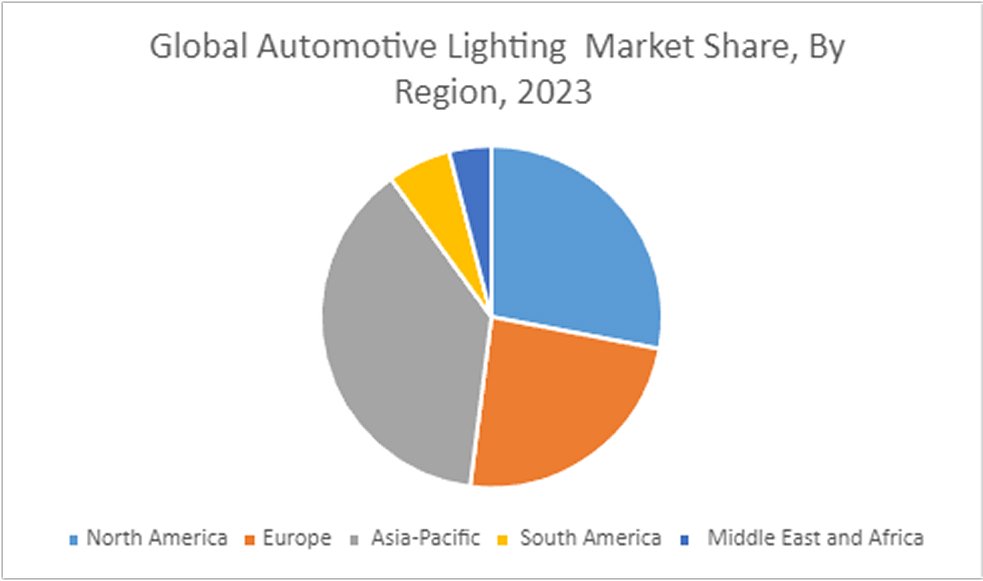
Throughout the forecast period, Asia Pacific is anticipated to be the automotive lighting market with the highest profitability. Over the past few years, Asia Pacific countries like China and India have seen notable increases in automotive manufacturing and sales, primarily in the medium-to premium luxury car segment. Asia Pacific is predicted to see an increase in the manufacturing of passenger cars, with India experiencing the strongest growth rate. Depending on the state of the national economy, the area offers a suitable selection of both high-end and cheap cars. For instance, there is a substantial demand for halogen, Xenon/HID, and LED since China and India produce more economy and mid-range automobiles. On the other hand, luxury car adoption rates are greater in South Korea and Japan, where LED lighting is the norm.
COVID-19 Impact Analysis on the Global Automotive Lighting Market:
A brief shadow was thrown by COVID-19 over the worldwide automotive lighting market. Production was stopped by lockdowns and supply chain disruptions, while luxury lighting upgrades were shelved by consumers on a tight budget. Resources became scarce, and R&D stagnated. Still, the market is recovering thanks to resurgent demand and rearranged priorities. While energy-efficient LEDs are being pushed towards adoption by sustainability, safety concerns are driving interest in features like pedestrian detection and adaptive headlights. The digital push of the epidemic creates opportunities for intelligent, networked lighting systems that may interact with infrastructure and other cars. Ultimately, the industry is positioned to shine brighter, focused on safety, sustainability, and a connected future, even though the pandemic dimmed its brilliance.
Recent Trends and Developments in the Global Automotive Lighting Market:
A development collaboration between OSRAM Continental and REHAU aims to incorporate lighting into external components, providing automobile manufacturers with innovative lighting options that improve functionality and design flexibility. For rear combination lamps, Hella unveiled a revolutionary lighting innovation called Hella FlatLight technology. A Memorandum of Understanding (MoU) was signed by Samvardhana Motherson Automotive Systems Group BV (SMRPBV), a division of Motherson Group, and Marelli Automotive Lighting to investigate a technology collaboration focused on intelligently lighted external body components. Valeo debuted their revolutionary 360° lighting system at the Shanghai Auto Show. This technology surrounds the car with a band of light, projecting instantaneous, clear signs that other drivers can see from a distance. Pedestrians, cyclists, and scooter riders are especially susceptible to these signals
Key Players:
AMS Osram
Cree
Hella
Hyundai Mobis
Koito
Luminus Devices
Magneti Marelli
Osram Licht AG
Stanley Electric
Valeo
Chapter 1. North America Asparagus Market– Scope & Methodology
1.1. Market Segmentation
1.2. Scope, Assumptions & Limitations
1.3. Research Methodology
1.4. Primary Sources
1.5. Secondary Sources
Chapter 2. North America Asparagus Market – Executive Summary
Fill out the form below and our team will get back to you shortly
FAQ's
Asparagus boasts a stellar nutritional profile: low-calorie, high fiber, packed with vitamins (especially Vitamin K, folate, vitamin C) and antioxidants. This perfectly aligns with consumer demand for nutrient-dense foods
Asparagus cultivation, especially harvesting, is labor-intensive. Shortages of farmworkers or rising labor costs significantly impact production and can create bottlenecks during peak harvesting periods
Report Code: VMR-18738 | Published Date: October 2025 | Format: Excel and PDF
The Middle East and Africa Cold Cuts Market was valued at USD 35.93 billion in 2024 and is projected to reach a market size of USD 110.55 billion by the end of 2030. Over the forecast period of 2025-2030, the market is p...
Report Code: VMR-18663 | Published Date: October 2024 | Format: Excel and PDF
The Arabica Sourced Bioactive Compounds in Coffee Market was valued at USD 340 Million in 2024 and is projected to reach a market size of USD 513 Million by the end of 2030.
Report Code: VMR-15690 | Published Date: August 2023 | Format: Excel and PDF
The Global Online Ready-to-Drink Cocktails Market was valued at USD 8.2 billion in 2024 and will grow at a CAGR of 12% from 2025 to 2030. The market is expected to reach USD 16.2 billion by 2030.
Report Code: VMR-2118 | Published Date: July 2024 | Format: Excel and PDF
The Global Beauty Drinks Market was valued at USD 2.2 billion in 2024 and will grow at a CAGR of 14% from 2025 to 2030. The market is expected to reach USD 4.8 billion by 2030.
Report Code: VMR-1283 | Published Date: March 2024 | Format: Excel and PDF
The global chocolate powdered drinks market was valued at USD 2.92 billion and is projected to reach a market size of USD 5.28 billion by the end of 2030. Over the forecast period of 2024–2030, the market is projected to...
“We received a complex piece of work for our niche market from Virtue Market research in short period of time. I appreciate the quality and content of the final files we received. Thanks for the support”
Medical Devices Company based in Europe
“We received a complex piece of work for our niche market from Virtue Market research in short period of time. I appreciate the quality and content of the final files we received. Thanks for the support”
Medical Devices Company based in Europe
“We received a complex piece of work for our niche market from Virtue Market research in short period of time. I appreciate the quality and content of the final files we received. Thanks for the support”
Medical Devices Company based in Europe
“We received a complex piece of work for our niche market from Virtue Market research in short period of time. I appreciate the quality and content of the final files we received. Thanks for the support”
Medical Devices Company based in Europe
“We received a complex piece of work for our niche market from Virtue Market research in short period of time. I appreciate the quality and content of the final files we received. Thanks for the support”
Medical Devices Company based in Europe
“We received a complex piece of work for our niche market from Virtue Market research in short period of time. I appreciate the quality and content of the final files we received. Thanks for the support”