Europe Wheat Gluten Market Research Report – Segmentation by Form (Liquid and Powder); By Application (Dietary Supplements, Bakery & Confectionery, Animal Feed, and Others): and Region; - Size, Share, Growth Analysis | Forecast (2024– 2030)
Europe Wheat Gluten Market Size (2024-2030)
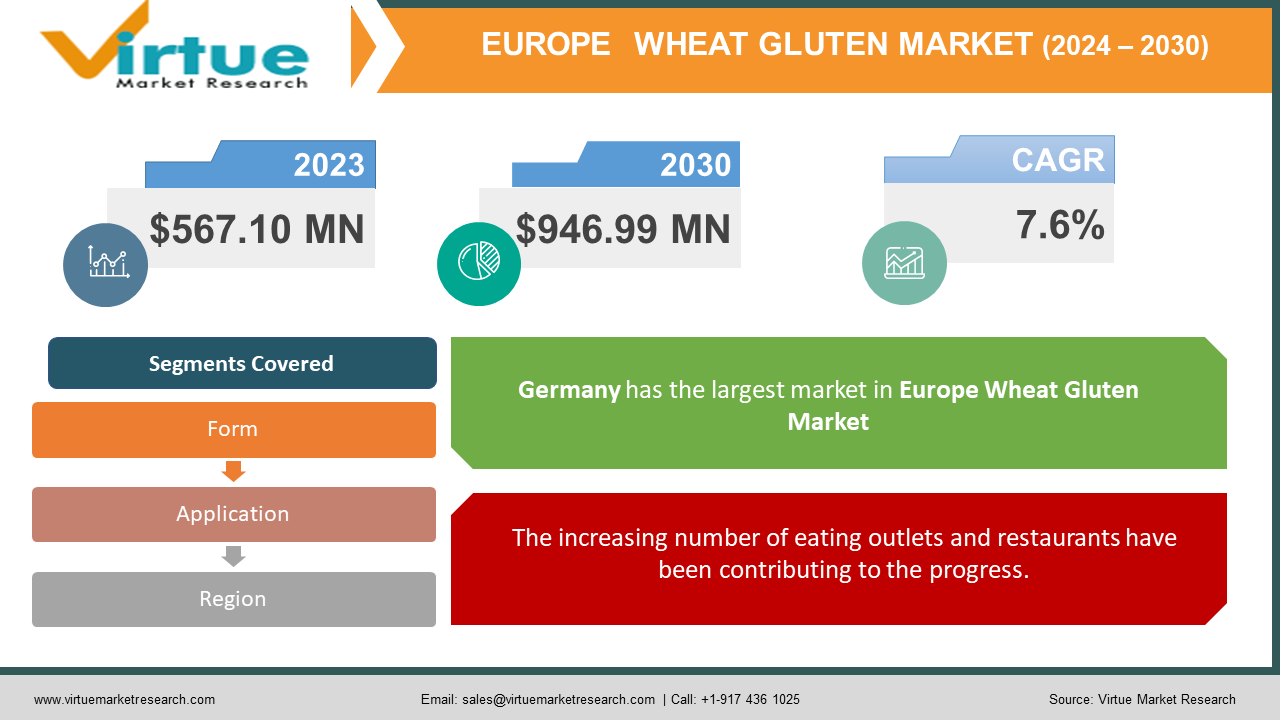
The European wheat gluten market was valued at USD 567.10 million and is projected to reach a market size of USD 946.99 million by the end of 2030. Over the forecast period of 2024–2030, the market is projected to grow at a CAGR of 7.6%.
Two water-insoluble proteins called glutenins and gliadins make up the majority of wheat gluten (WG), a by-product of the wheat starch industry. These proteins are important in establishing the functional characteristics of flour. Low-molecular-weight proteins make up glutenins, whereas high-molecular-weight proteins make up glutenins. This market has had a significant presence in the past in Europe due to the strong agricultural system and traditional use of wheat in various food products. Presently, the market has seen a notable expansion owing to the increasing population and demand. In the future, with a focus on innovations and biotechnological methods, this market is anticipated to witness good growth.
Key Market Insights:
The value of wheat and gluten exports climbed to over 208 million euros in 2022 in France.
The value of Poland's wheat-gluten exports rose by 43.66% in 2022.
The value of Belgium's wheat-gluten exports rose by 10.91% in 2022.
The value of wheat gluten exported from the United Kingdom rose by 18.5 million British pounds in 2022. Thus, at 49.5 million British pounds, the value reached its maximum throughout the time under observation.
The estimated frequency in European countries like Finland for gluten allergies ranges from 2–3%. This number is predicted to increase during the forecast period. To tackle this, companies have been coming up with gluten-free alternatives and are prioritizing clean labeling.
Wheat Gluten Market Drivers:
The nutritional benefits of wheat gluten have been facilitating market development.
There has been an increasing health consciousness amongst people due to a higher incidence of chronic illnesses from a young age. Wheat gluten is known for its high protein content and is incorporated by many people in their diets due to this factor. 370 calories, 75 grams of protein, 14 grams of carbs, 1.9 grams of fat, 0.3 grams of saturated fat, and 0 milligrams of cholesterol are found in a 100-gram meal of wheat gluten. It is an important iron and selenium source. About 2.6 milligrams of iron, or 12–14% of the daily required requirement for adult women and 32% for adult men and women over 50, may be found in two ounces of essential wheat gluten. Besides, it contains phosphorus, which aids in digestion. Moreover, wheat protein has all nine of the necessary amino acids, making it a complete protein. Furthermore, the high fiber content of wheat protein might help in cholesterol reduction. All these advantages make it an ideal choice, creating an elevation in its use in various food products.
The increasing number of eating outlets and restaurants have been contributing to the progress.
Over the years, there has been an increase in the number of restaurants, hotels, and other eateries. These places offer many cuisines that include wheat gluten as an essential ingredient. People are constantly looking for more choices and are keen on experimentation. Wheat gluten is used in the food industry in cereals, soups, desserts, snacks, fried items, meat, etc. When wheat gluten is added to food items, it acts as a binding agent, binding food together and giving it shape. Secondly, it creates a very elastic and extensible structure when combined and moistened, which is what gives bread dough its capacity to contain gas. The dough keeps its form and rises because of the flexibility that gluten imparts to it. This frequently results in a chewy texture for the finished product. Thirdly, in processed foods, gluten is frequently used as an addition to enhance flavor, texture, and moisture retention. Furthermore, bakery goods that include gluten can have a longer shelf life and can be kept at room temperature before losing quality. All these unique properties are creating an upsurge.
Wheat Gluten Market Restraints and Challenges:
Gluten-related disorders and intense competition are the main concerns of the market.
A certain percent of the population cannot digest gluten. This is because of an autoimmune response to gluten that is called celiac disease. If such patients consume gluten, their small intestines can be affected. Few research studies have indicated cognitive impairment in people who are gluten-sensitive and have celiac disease. A person with a cognitive disability struggles with learning, remembering, concentrating, making decisions, and using judgment. In a few others, gluten is responsible for allergies in the form of body rash and itching. The rest of the people have experienced inflammation in the gut and other issues like mood swings, sudden weight gain, fatigue, joint pain, and digestive challenges. Apart from this, this market can experience losses due to alternative proteins like soy, pea, and rice protein. Consumers can opt for these choices due to health benefits and increasing allergies. As a result, manufacturers can opt for the manufacturing and processing of these alternatives.
Wheat Gluten Market Opportunities:
Veganism is the practice of incorporating plant-based diets. A lot of people are inclined towards this dietary preference. Wheat gluten is derived from plant-based sources. By encouraging and educating the public about this factor, the market can explore an ample number of possibilities. Secondly, innovations and product diversity are beneficial. By capitalizing on this, the market can increase its revenue. This includes manufacturing gluten-free products to reach a wider consumer base and people who have a gluten intolerance. R&D activities are being carried out to expand the application of wheat gluten in the pharmaceutical industry for various drugs and other formulations. Additionally, the animal industry is exploring the potential use of this ingredient for animal feed. Online retail is a boon. By creating a virtual presence, companies and sellers can increase their sales globally. Apart from this, there has been a rise in meat substitutes. These food products use wheat gluten for various meat substitutes like sausages, burgers, and meatballs. Wheat gluten's property provides texture and elasticity, helping to acquire a similar taste as that of the actual meat in these products.
EUROPE WHEAT GLUTEN MARKET REPORT COVERAGE:
REPORT METRIC
DETAILS
Market Size Available
2023 - 2030
Base Year
2023
Forecast Period
2024 - 2030
CAGR
7.6%
Segments Covered
By Form, Application, and Region
Various Analyses Covered
Regional & Country Level Analysis, Segment-Level Analysis, DROC, PESTLE Analysis, Porter’s Five Forces Analysis, Competitive Landscape, Analyst Overview on Investment Opportunities
The powder segment is the largest category in 2023 with the dominant market share. Wheat gluten is a powder that resembles flour and is almost all gluten and very little starch. After soaking wheat flour to activate the gluten protein, everything except the gluten is removed by processing. Protein content in wheat gluten powder normally ranges from 70% to 80% on a dry weight basis. Because of this, it's a great source of plant-based protein for diets that include vegetarianism and veganism. In the culinary sector, wheat gluten powder is frequently used as an ingredient, especially for making baked goods like bread, pizza dough, bagels, and pastries. Liquid form is the fastest-growing segment. Liquid wheat gluten concentrates and extracts have become popular because they are easy to handle, are included in formulations, and may offer functional benefits in some applications. Furthermore, liquid forms could provide certain practical benefits in particular uses, such as better dough hydration in breadmaking.
Europe Wheat Gluten Market Segmentation: By Application:
Dietary Supplements
Bakery & Confectionery
Animal Feed
Others
Based on application, bakery & confectionery has the largest market share in 2023. A frequent component of bread, buns, cakes, pastries, cookies, and other baked foods is wheat gluten. Due to its special functional qualities, which include giving dough structure, elasticity, and strength, it is an essential ingredient in baking recipes. Besides, the rising demand for bakery items due to their taste and diversity has been fueling the growth. Dietary supplements are the fastest-growing category. Demand for plant-based protein sources, including wheat gluten in dietary supplements, has increased as a result of rising vegetarian and vegan lifestyles and growing consumer knowledge of the health advantages of protein supplementation.
Wheat gluten is a popular component in protein powders, shakes, bars, and other dietary supplements marketed to athletes, fitness enthusiasts, and health-conscious consumers due to its high protein content and nutritional profile.
Europe Wheat Gluten Market Segmentation: Regional Analysis:
UK
Germany
France
Italy
Spain
Rest of Europe
Germany has the largest market in the year 2023. Because of the considerable consumer demand for an alternate source of meat and soy protein, Germany makes up a sizeable portion of the industry. The bakery, confectionery, and processed food industries are all part of Germany’s well-established and mature food industry. Because of this infrastructure, it is easier to produce, distribute, and consume goods containing wheat gluten, which attracts suppliers and manufacturers. The United Kingdom is the fastest-growing market. In the culinary traditions of the United Kingdom, baked foods, including bread, cakes, and pastries, have cultural importance. Because of these items' widespread appeal, there is a constant need for wheat gluten, an essential component of many bakery recipes. Supermarkets, convenience stores, specialist food stores, and internet merchants are all part of the UK's varied retail scene. With the help of this varied distribution network, producers of wheat gluten goods may contact customers through a variety of channels, meeting a range of tastes and purchasing habits.
COVID-19 Impact Analysis on the European Wheat Gluten Market:
The viral epidemic hurt the market. Lockdowns, movement limitations, and social isolation became the new standards. Transportation, other logistics, and the supply chain were all affected by this. As a result, import-export operations deteriorated. To stop the virus from spreading, all restaurants were forced to close. Production and other operations were stopped as a result. Because of the unpredictability of the economy, layoffs were prevalent in several industries. Numerous people experienced job losses. The majority of the funds were used for necessities and basic utilities. All funds were directed toward medical applications, such as PPE kits, hospital beds, oxygen tanks, masks, and vaccinations. Launches and partnerships were delayed as a result. Apart from this, there was a lot of awareness about the importance of having a healthy mind and body. People started consuming food that was healthy and helped provide immunity. Home-cooked food gained prominence. A research paper published by the National Institute of Health showed that a gluten-free diet may lessen inflammatory responses generally, which may enhance immune system function generally and lessen the risk of contracting COVID-19 infection. This caused significant losses for the market. Following the epidemic, the market has started to improve. The market is now adjusting to sustainable methods. Online channels have seen good growth due to convenience. People can place their order and have it delivered to their doorstep. The easing of regulations and the raising of standards have returned to normal.
Latest Trends/ Developments:
Companies in this industry are motivated to increase their market share by using a range of strategies, including acquisitions, joint ventures, and investments. Businesses are spending a lot of money to develop techniques to retain competitive pricing. Further growth has resulted from this.
Sustainability is becoming a crucial factor for both organizations and consumers. Manufacturers of wheat gluten are incorporating sustainable practices into their production processes, such as using wheat that has been cultivated sustainably, using less energy and water, and producing less waste.
Key Players:
Cargill, Incorporated
Archer Daniels Midland Company
Roquette Frères
Tereos
CropEnergies AG
MGP Ingredients, Inc.
Manildra Group
Crespel & Deiters GmbH & Co. KG
Kröner-Stärke GmbH
Glico Nutrition Co., Ltd.
In May 2023, IFF introduced ENOVERATM 2000. This product line may substitute up to 50% of the essential gluten in whole wheat bread. The ENOVERATM 2000 series, a next-generation enzyme dough strengthener, is intended for bakery makers who are interested in replacing critical gluten, especially in difficult applications like whole wheat bread. Due to this ground-breaking enzymatic discovery, operating costs may be lowered without sacrificing volume or quality.
In May 2023, in Norrköping, Sweden, Lantmännen Biorefineries opened a new manufacturing plant for extracting wheat protein, or gluten. The resilience of Swedish food production is enhanced, and an expanding industrial demand is matched by its greatly enlarged production capacity. A total of SEK 800 million was invested in the new production plant.
In March 2022, Lantmännen Biorefineries announced its initiative to produce gluten-free wheat starch from carefully chosen autumn wheat cultivated in western Sweden. This product is a fine white powder that tastes neutral and has great baking qualities that work well for all kinds of gluten-free baking. It will be introduced first in the Nordics and northern Europe, where there is now a great deal of demand, and is gluten-free according to European guidelines.
To Learn more about this report,
Global automotive lighting refers to all vehicle lighting systems, from headlamps that illuminate the road to taillights that communicate movements. They guarantee motorists and other road users alike safety, visibility, and style. While taillights frequently use LEDs for improved visibility, headlights are available in a variety of technologies, including LED and laser. Interior illumination, DRLs, and signal lights all have a role to play. This market, which was estimated to be worth $33.64 billion in 2022, is anticipated to rise to $67.39 billion by 2030 because of laws, luxury tastes, safety concerns, and technological developments like OLED taillights and adaptive headlights. Anticipate a future dominated by intelligent, connected, personalized, and sustainable lighting systems that enhance the safety, efficiency, and aesthetic appeal of automobiles.
Key Market Insights:
Car lighting works its magic to provide safety, visibility, and style. Headlights cut through the night, taillights express intent, and interiors shine with comfort. The billion-dollar global business is expected to rise due to consumer demand for high-end experiences, safer roads, and cutting-edge technology. Imagine dynamic messages being painted by taillights, headlights that adjust to the road, and interiors that customize their atmosphere. Driven by technological advancements like linked systems and laser beams, this future is calling. Anticipate even more visually attractive, environmentally friendly, and intelligent lighting to illuminate the way ahead, making cars safer, more efficient, and unquestionably cooler.
Global Automotive Lighting Market Drivers:
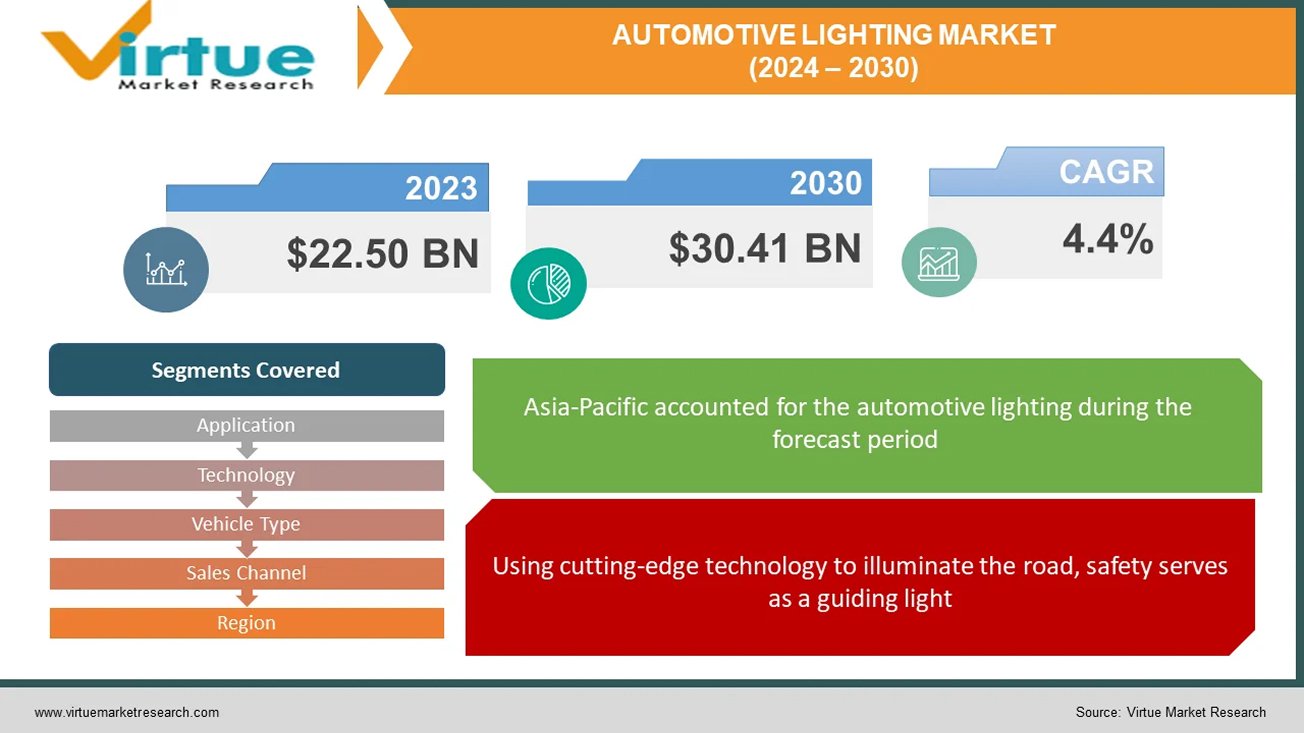
Using cutting-edge technology to illuminate the road, safety serves as a guiding light.
In the market for automobile lighting, safety is the driving force behind demand from the public and laws. While automated high beams smoothly react to traffic, adaptive headlights modify their beams so as not to blind other people. With visually striking displays, dynamic taillights convey intentions for braking and turning. Beyond these developments, integrated pedestrian identification and lane departure alerts will soon make roads safer and brighter for everyone.
Beyond Performance-Based Luxuries Redefined by Light.
Luxurious automobile lighting creates a distinct visual identity that goes beyond simple illumination. Personalized interior lighting customizes the driving experience by setting the mood with a range of colours and intensities, while intricate designs and distinctive DRLs modify exteriors. As you approach your automobile at night, welcoming lights lead the way, resulting in an interior that is perfectly lit. Not only is this symphony of light aesthetically pleasing, but it also stands as a tribute to luxury. Upcoming developments like gesture-controlled lighting and holographic displays promise to further enhance the experience.
Fuel Efficiency Takes the Lead: Illuminating Sustainability
The worldwide automotive lighting market is undergoing a significant transition towards energy-efficient solutions, as environmental concerns gain prominence. LED technology is leading the way, providing a ray of hope for the environment and drivers alike. LED lights beam brighter and use a lot less energy than conventional halogen lamps. There are some tangible advantages to this. For drivers, this translates to increased fuel economy, which lowers petrol prices and lessens reliance on fossil fuels. Greater air quality and a reduction in the transport sector's contribution to climate change are the results of reduced overall emissions.
To Learn more about this report,
Global Automotive Lighting Market Restraints and Challenges:
Although the global automotive lighting business is booming, there are still unknowns. Difficulties impede growth even as innovation propels it with eye catching features like laser beams and adaptable headlights. These technologies are luxury items due to their high cost and difficult integration, which puts producers' abilities to the test. The worldwide patchwork created by unclear legislation limits the potential of innovation. Durability issues persist, particularly when complex systems are subjected to challenging conditions. Ultimately, a lot of drivers still don't fully understand how these improvements can help them. Together, we can overcome these obstacles. The keys to reducing costs are improved production, more seamless integration, and unified regulations. Their full potential can be realized by educating customers about the safety, efficiency, and aesthetic value of these lighting wonders. By working together, we can pave the way for an even brighter and safer future for vehicle lighting.
Global Automotive Lighting Market Opportunities:
It is made possible by advanced LED technology, which gives drivers the ability to customize their illumination for the highest level of comfort and flair. Consumers that care about the environment want greener products, and vehicle lighting complies. While solar- and self-powered lighting technologies offer a future powered by clean energy, energy-efficient LEDs lower pollution. The advent of connected lighting systems heralds a new age. Envision automobiles interacting with infrastructure and one another to minimize accidents and enhance traffic efficiency. Integrated headlights with pedestrian recognition provide unmatched safety, while dramatic taillights with eye-catching displays alert onlookers to your intentions. The possibilities are endless in the future. Gesture-controlled interior illumination, holographic displays projected onto the road, and even light fixtures with self-healing capabilities.
AUTOMOTIVE LIGHTING MARKET REPORT COVERAGE:
To Learn more about this report,
Global Automotive Lighting Market Segmentation: By Application
Exterior Lighting
Interior Lighting
Due to laws requiring safety features like headlights, taillights, and brake lights, exterior lighting presently holds the most market share in the vehicle lighting industry. The dominance of this market is partly attributed to advancements in safety-focused technologies such as adaptive headlights and daytime running lights. The market value of external lighting is increased by the quick adoption of technology like LED bulbs and laser lights, which improve performance and aesthetics. Conversely, the interior lighting market is expected to increase at the fastest rate in the upcoming years. Innovations like ambient lighting and technology breakthroughs like LED and OLED displays, driven by consumer demand for comfort and personalisation, open new possibilities. The spread of sophisticated interior lighting systems is further driven by the growing emphasis on safety and the expansion of the luxury car market.
Global Automotive Lighting Market Segmentation: By Technology
Halogen
LED (Light-Emitting Diode)
Xenon
Emerging Technologies
The worldwide vehicle lighting market is currently dominated by halogen because of its more affordable price, advanced technology, and useful illumination. With its dependable supply chain and affordable option for manufacturers and cost-conscious customers, halogen holds the biggest market share. The fastest-growing market right now is LEDs, which are predicted to shortly overtake halogen. The rapid expansion of LEDs is driven by their higher efficiency, longer lifespan, flexibility in design, and technological breakthroughs including enhanced brightness. Because LEDs use less energy and produce fewer emissions and better fuel economy, they are becoming more and more popular in the changing automotive lighting market.
Global Automotive Lighting Market Segmentation: By Vehicle Type
Passenger Cars
Commercial Vehicles
Passenger automobiles rule the worldwide automotive lighting market. The sheer number of passenger cars produced which surpasses that of business vehicles and fuels the need for lighting systems is the primary cause of this popularity. The growing demand for personal automobiles in developing nations is a result of rising disposable income, which in turn drives the rise of the passenger car market. The importance that consumers place on safety and aesthetics elements helps to drive market expansion. But in the upcoming years, the market for electric and hybrid cars is expected to develop at the quickest rate. The exponential rise of the worldwide electric car market, which is still expanding and shows no signs of slowing down, is what is driving this surge. Specialised lighting solutions are required since electric and hybrid vehicles have different lighting requirements because of their specific functionality and design aesthetics.
Global Automotive Lighting Market Segmentation: By Sales Channel
OEM (Original Equipment Manufacturers)
Aftermarket
Most lighting systems sold nowadays are sold by OEMs (Original Equipment Manufacturers), primarily because manufacturers pre-install lighting systems in new cars. But in the next years, the aftermarket is expected to develop at the quickest rate. This spike in demand for replacement parts, especially lighting systems, can be linked to several variables, one of them being the average age of cars. The industry is expanding because of consumers' growing desire to personalise their cars with aftermarket lighting upgrades such LED upgrades and decorative lighting. The availability and affordability of technologies like adaptive headlights and laser lights in the aftermarket, together with other advancements in lighting technology, are driving demand even more. Moreover, the growing market for electric cars (EVs).
To Learn more about this report,
Global Automotive Lighting Market Segmentation: By Region
North America
Asia-Pacific
Europe
South America
Middle East and Africa
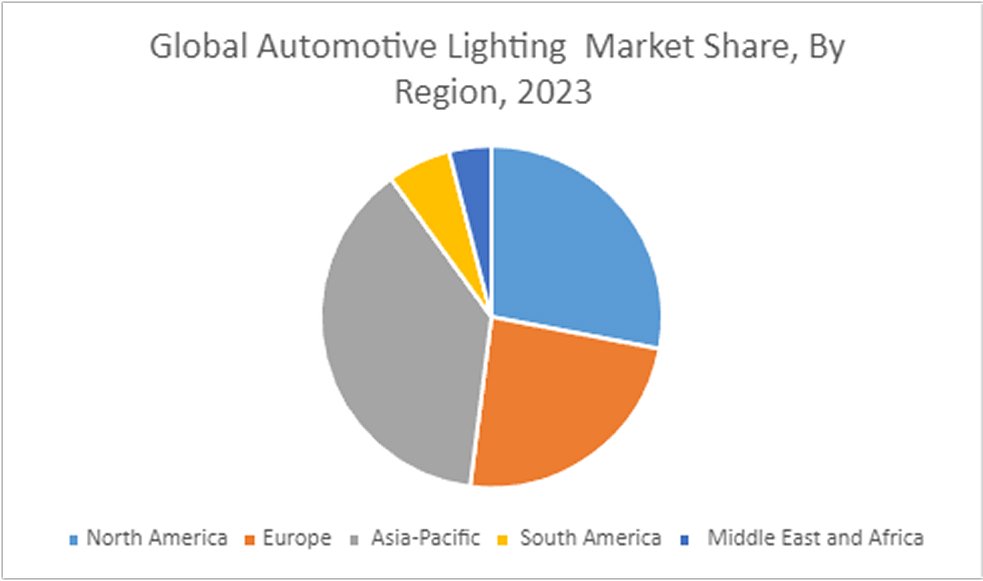
Throughout the forecast period, Asia Pacific is anticipated to be the automotive lighting market with the highest profitability. Over the past few years, Asia Pacific countries like China and India have seen notable increases in automotive manufacturing and sales, primarily in the medium-to premium luxury car segment. Asia Pacific is predicted to see an increase in the manufacturing of passenger cars, with India experiencing the strongest growth rate. Depending on the state of the national economy, the area offers a suitable selection of both high-end and cheap cars. For instance, there is a substantial demand for halogen, Xenon/HID, and LED since China and India produce more economy and mid-range automobiles. On the other hand, luxury car adoption rates are greater in South Korea and Japan, where LED lighting is the norm.
COVID-19 Impact Analysis on the Global Automotive Lighting Market:
A brief shadow was thrown by COVID-19 over the worldwide automotive lighting market. Production was stopped by lockdowns and supply chain disruptions, while luxury lighting upgrades were shelved by consumers on a tight budget. Resources became scarce, and R&D stagnated. Still, the market is recovering thanks to resurgent demand and rearranged priorities. While energy-efficient LEDs are being pushed towards adoption by sustainability, safety concerns are driving interest in features like pedestrian detection and adaptive headlights. The digital push of the epidemic creates opportunities for intelligent, networked lighting systems that may interact with infrastructure and other cars. Ultimately, the industry is positioned to shine brighter, focused on safety, sustainability, and a connected future, even though the pandemic dimmed its brilliance.
Recent Trends and Developments in the Global Automotive Lighting Market:
A development collaboration between OSRAM Continental and REHAU aims to incorporate lighting into external components, providing automobile manufacturers with innovative lighting options that improve functionality and design flexibility. For rear combination lamps, Hella unveiled a revolutionary lighting innovation called Hella FlatLight technology. A Memorandum of Understanding (MoU) was signed by Samvardhana Motherson Automotive Systems Group BV (SMRPBV), a division of Motherson Group, and Marelli Automotive Lighting to investigate a technology collaboration focused on intelligently lighted external body components. Valeo debuted their revolutionary 360° lighting system at the Shanghai Auto Show. This technology surrounds the car with a band of light, projecting instantaneous, clear signs that other drivers can see from a distance. Pedestrians, cyclists, and scooter riders are especially susceptible to these signals
Key Players:
AMS Osram
Cree
Hella
Hyundai Mobis
Koito
Luminus Devices
Magneti Marelli
Osram Licht AG
Stanley Electric
Valeo
Chapter 1. Europe Wheat Gluten Market– Scope & Methodology
1.1. Market Segmentation
1.2. Scope, Assumptions & Limitations
1.3. Research Methodology
1.4. Primary Product Form of Material s
1.5. Secondary Product Form of Material s
Chapter 2. Europe Wheat Gluten Market – Executive Summary
Fill out the form below and our team will get back to you shortly
FAQ's
TheEuropean wheat gluten market was valued at USD 567.10 million and is projected to reach a market size of USD 946.99 million by the end of 2030. Over the forecast period of 2024–2030, the market is projected to grow at a CAGR of 7.6%.
The nutritional benefits of wheat gluten and demand from the food industryare the main factors propelling the European wheat gluten market
Based on form, the European wheat gluten market is segmentedintoliquid and powder.
Germany is the most dominant region for theEuropean wheat-gluten market.
Cargill, Incorporated, Archer Daniels Midland Company, and Roquette Frères are the key players operating in the European wheat-gluten market
More related reports
Get expert-driven market research reports from a leading research partner to help you navigate the future of the global industry.
Report Code: VMR-18738 | Published Date: October 2025 | Format: Excel and PDF
The Middle East and Africa Cold Cuts Market was valued at USD 35.93 billion in 2024 and is projected to reach a market size of USD 110.55 billion by the end of 2030. Over the forecast period of 2025-2030, the market is p...
Report Code: VMR-18663 | Published Date: October 2024 | Format: Excel and PDF
The Arabica Sourced Bioactive Compounds in Coffee Market was valued at USD 340 Million in 2024 and is projected to reach a market size of USD 513 Million by the end of 2030.
Report Code: VMR-15690 | Published Date: August 2023 | Format: Excel and PDF
The Global Online Ready-to-Drink Cocktails Market was valued at USD 8.2 billion in 2024 and will grow at a CAGR of 12% from 2025 to 2030. The market is expected to reach USD 16.2 billion by 2030.
Report Code: VMR-2118 | Published Date: July 2024 | Format: Excel and PDF
The Global Beauty Drinks Market was valued at USD 2.2 billion in 2024 and will grow at a CAGR of 14% from 2025 to 2030. The market is expected to reach USD 4.8 billion by 2030.
Report Code: VMR-1283 | Published Date: March 2024 | Format: Excel and PDF
The global chocolate powdered drinks market was valued at USD 2.92 billion and is projected to reach a market size of USD 5.28 billion by the end of 2030. Over the forecast period of 2024–2030, the market is projected to...
“We received a complex piece of work for our niche market from Virtue Market research in short period of time. I appreciate the quality and content of the final files we received. Thanks for the support”
Medical Devices Company based in Europe
“We received a complex piece of work for our niche market from Virtue Market research in short period of time. I appreciate the quality and content of the final files we received. Thanks for the support”
Medical Devices Company based in Europe
“We received a complex piece of work for our niche market from Virtue Market research in short period of time. I appreciate the quality and content of the final files we received. Thanks for the support”
Medical Devices Company based in Europe
“We received a complex piece of work for our niche market from Virtue Market research in short period of time. I appreciate the quality and content of the final files we received. Thanks for the support”
Medical Devices Company based in Europe
“We received a complex piece of work for our niche market from Virtue Market research in short period of time. I appreciate the quality and content of the final files we received. Thanks for the support”
Medical Devices Company based in Europe
“We received a complex piece of work for our niche market from Virtue Market research in short period of time. I appreciate the quality and content of the final files we received. Thanks for the support”