Europe Used Cooking Oil Market Research Report – Segmentation by Oil Type (Sunflower Oil, Rapeseed Oil, Soybean Oil, Olive Oil, Palm Oil, Animal Fats); By Quality (Grade A, Grade B, Grade C): and Region; - Size, Share, Growth Analysis | Forecast (2024– 2030)
Europe Cooking Oil Market Size (2024-2030)
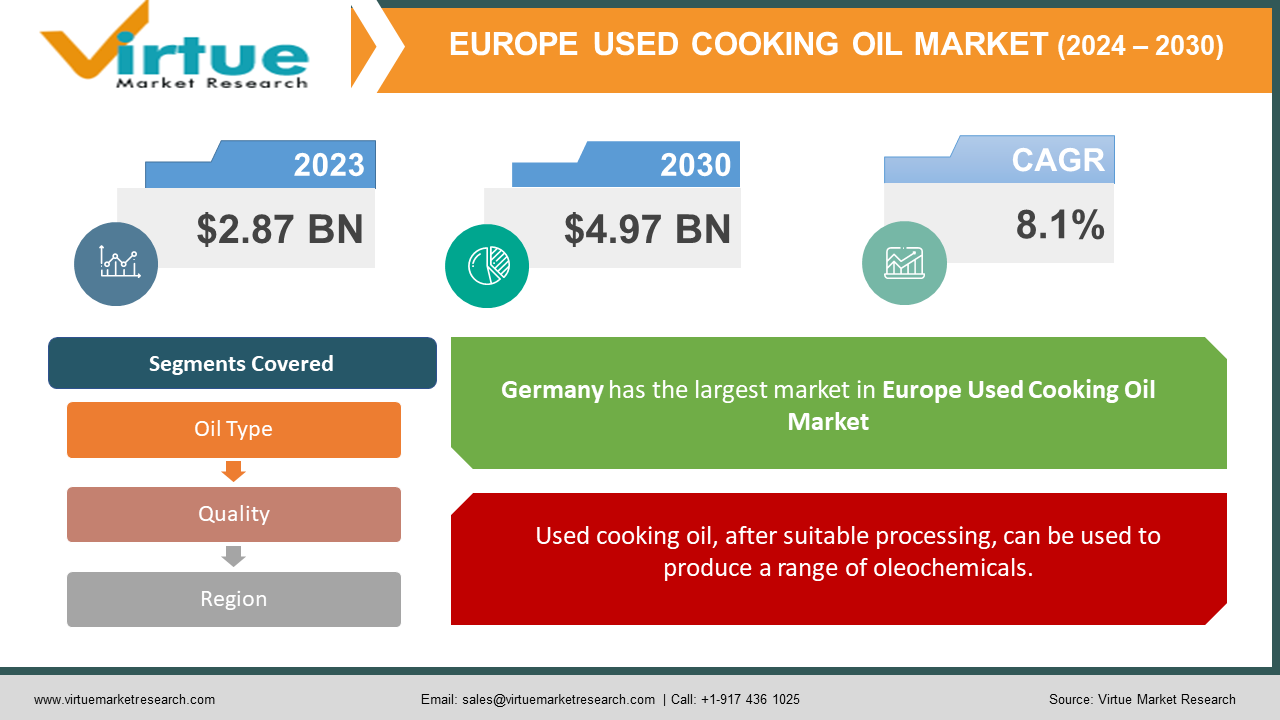
The Europe Cooking Oil Market was valued at USD 2.87 Billion in 2023 and is projected to reach a market size of USD 4.97 Billion by the end of 2030. Over the forecast period of 2024-2030, the market is projected to grow at a CAGR of 8.1%.
The European used cooking oil market encompasses the intricate network involved in collecting, processing, and repurposing the vast amount of used cooking oil generated by various entities in the food chain. UCO originates from restaurants, food processing industries, catering businesses, commercial kitchens, and even households. The type and quality can vary depending on the oil originally used and its applications (frying, baking, etc.). A mix of private collectors, municipalities, and waste management companies are involved in establishing efficient pipelines for UCO collection, often relying on designated collection points and specialized containers. Collected UCO undergoes a series of pre-treatment steps (filtering, dewatering) followed by refinement to remove impurities, free fatty acids, and other undesirable components. This creates a usable raw material for various applications. The most significant end-use for processed UCO is in the production of biodiesel, contributing to the renewable energy sector. It also finds applications in animal feed, technical-grade products, and potentially even future advancements in bioplastics. The most significant end-use for processed UCO is in the production of biodiesel, contributing to the renewable energy sector. It also finds applications in animal feed, technical-grade products, and potentially even future advancements in bioplastics.
Key Market Insights:
Europe's commitment to reducing waste and increasing resource efficiency is a primary driver fueling the UCO market. Used cooking oil, when effectively harnessed, becomes a valuable feedstock for various applications rather than an environmental pollutant. EU directives and member-state policies on renewable energy and biofuels promote the collection and utilization of UCO. Incentives and mandates for biodiesel production are influential market forces. While UCO traditionally focused on oils like sunflower or rapeseed oil, the market is broadening to include alternative feedstocks. Animal fats and innovative sources like algae-derived oils are gaining consideration. The core application for UCO in Europe is biodiesel production. However, a wider array of applications is emerging, including animal feed, industrial uses, oleochemicals, and even conversion back into edible oil in limited, highly controlled scenarios. The UCO market involves multiple players – generators (restaurants, households), collectors, pre-processors, biofuel manufacturers, and end-users in various industries. Efficient coordination among these stakeholders is essential. The European Union's Renewable Energy Directive sets ambitious targets for renewable energy use across member states. UCO-derived biodiesel plays a part in fulfilling these mandates, further fueling the market. Improper disposal of UCO can lead to environmental problems like clogged drains and contaminated water sources. The European focus on the circular economy incentivizes the collection and repurposing of UCO as a sustainable waste management strategy.
Europe Used Cooking Oil Market Drivers:
The European Union, through initiatives like the Renewable Energy Directive (RED), sets ambitious targets for replacing fossil fuels with renewable sources in transportation.
The European Union, through initiatives like the Renewable Energy Directive (RED), sets ambitious targets for replacing fossil fuels with renewable sources in transportation. Biodiesel produced from UCO is a significant contributor towards achieving these targets. To encourage biodiesel adoption, many European countries offer subsidies, and tax breaks, or require blending a certain percentage of biodiesel into conventional diesel fuel. This creates a guaranteed and increasing demand for UCO as a primary feedstock. Biodiesel production from UCO aligns with the EU's circular economy goals. It positions a former waste product as a resource, preventing improper disposal while reducing the need for virgin vegetable oils specifically cultivated for fuel. As biodiesel becomes mainstream, UCO faces competition from other feedstocks like animal fats and purpose-grown oil crops. This puts upward pressure on UCO prices but also promotes innovation in biodiesel processing technology to utilize diverse and cheaper inputs. While biodiesel is considered renewable, concerns may arise regarding the overall sustainability of sourcing UCO at scale. The industry must prioritize traceability and combat potential instances of using questionably sourced UCO to maintain its environmentally positive image.
Used cooking oil, after suitable processing, can be used to produce a range of oleochemicals.
Used cooking oil, after suitable processing, can be used to produce a range of oleochemicals. These building blocks find their way into soaps, detergents, lubricants, cosmetics, and other industrial applications. The oleochemicals market provides an alternative outlet for UCO, reducing overreliance on the biodiesel sector. This creates a more balanced and resilient demand landscape. Advancements in purification and refining technologies unlock the potential for UCO to be used in higher-value products within the oleochemical industry. This boosts the value proposition for UCO collectors and processors. UCO suppliers are no longer solely dependent on biodiesel producers. Oleochemical manufacturers become key buyers, expanding the customer base and potentially improving price negotiation options. The oleochemical sector, with its focus on diverse end uses, might attract businesses specializing in refining and chemical processing that see an opportunity in UCO as a renewable and increasingly consistent feedstock. A well-functioning UCO market benefits the entire chain. Strong demand from oleochemicals can indirectly support prices for biodiesel production, improving the overall economics of UCO collection.
Europe Used Cooking Oil Market Restraints and Challenges:
Inconsistent and Uncertain Feedstock Supply is big aMarket Restraint.
The primary source of UCO is household and commercial kitchens (restaurants, food processors). Collection infrastructure can be inconsistent. Some regions have robust networks, while others lack organized systems. Collected UCO can suffer from contamination due to improper disposal practices. Mixing with other waste or exposure to chemicals can significantly reduce quality. Higher levels of impurities (particularly free fatty acids and water) create processing challenges. Depending on regional regulations, low-quality UCO might be diverted to animal feed or other non-biofuel applications. This can create competition for feedstock and price fluctuations, particularly in a tight supply environment. While the EU has overarching goals regarding renewable fuels, individual member states have varying levels of policy support (incentives, mandates, taxation) for UCO-based biofuels. This can create complexity for companies operating across borders. The definition of "sustainable" UCO can be subject to debate and evolving regulations. Issues like double-counting (claiming UCO's environmental benefit in multiple sectors) and potential unintended consequences on land use remain concerns for some policymakers. While generally supportive of UCO-based biodiesel, environmental groups monitor its overall impact. If concerns arise about feedstock sourcing or competition with food production, there's potential for stricter controls in the future.
Europe Used Cooking Oil Market Opportunities:
UCO is a primary feedstock for biodiesel production. With the European Union's strong push for renewable energy and reduction of transport sector emissions, UCO has become a prized commodity. UCO fits neatly into circular economy models, promoting resource efficiency and reducing reliance on virgin vegetable oils. Its potential beyond biodiesel extends to the chemical and animal feed industries. Directives like the Renewable Energy Directive (RED II) and national policies across Europe incentivize the collection and processing of UCO for sustainable uses, driving the market. UCO needs to be pre-processed to remove impurities and free fatty acids (FFAs) before conversion into biodiesel or other applications. Upgrading pre-processing facilities is crucial for meeting quality standards. Pre-processing innovations to produce higher-quality UCO cater to a broader range of potential applications in the oleochemical industry and advanced biofuels (like Hydrotreated Vegetable Oil - HVO), unlocking further market value. Biodiesel remains the primary use case for UCO in Europe. Expanding biodiesel conversion capacity remains critical to keep up with demand. Integrating biodiesel production from UCO with other value-added products within a biorefinery concept maximizes resource utilization and profitability. Processed UCO can serve as a raw material for soaps, detergents, lubricants, and other industrial chemicals. Developing new niches within this sector reduces reliance solely on biodiesel demand. Advancements in technologies like Hydrotreated Vegetable Oil (HVO) open up a path for using UCO to produce a high-quality, drop-in replacement for traditional diesel, particularly appealing for aviation.
EUROPE USED COOKING OIL MARKET REPORT COVERAGE:
REPORT METRIC
DETAILS
Market Size Available
2023 - 2030
Base Year
2023
Forecast Period
2024 - 2030
CAGR
8.1%
Segments Covered
By Oil Type, quality, and Region
Various Analyses Covered
Regional & Country Level Analysis, Segment-Level Analysis, DROC, PESTLE Analysis, Porter’s Five Forces Analysis, Competitive Landscape, Analyst Overview on Investment Opportunities
Europe Used Cooking Oil Market Segmentation: By Oil Type -
Sunflower Oil
Rapeseed Oil
Soybean Oil
Olive Oil
Palm Oil
Animal Fats
Sunflower Oil has good oxidative stability, a favorable fatty acid profile for biodiesel, and widespread availability. It can have a higher cloud point (solidification temperature) compared to some oils, requiring adjustments for use in colder climates. Rapeseed Oil excels in low-temperature performance as biodiesel, a good source of oleic acid for chemical industry uses. Historically higher processing costs due to FFA content, but innovation is addressing this issue. Soybean Oil is a plentiful source, particularly from UCO collected from processed food manufacturers. The polyunsaturated fatty acid profile can impact biodiesel stability, often blended with other UCO types. Olive Oil is concentrated in certain regions, it possesses high value in oleochemical applications beyond biodiesel. Palm Oil usage can be controversial due to sustainability concerns surrounding its production, impacting its UCO market acceptance in some areas. Animal Fats can be a source for niche biodiesel or specific industrial uses. It is highly regulated due to potential contaminants. Requires specialized processing, generally lower value than vegetable UCO sources.
Europe Used Cooking Oil Market Segmentation: By Quality -
Grade A
Grade B
Grade C
Grade A Emphasis on source separation and efficient collection to maintain low FFA levels and minimize impurities. Beyond premium biodiesel, Grade A is sought after for oleochemical applications where purity is paramount. This broadened market creates greater demand. High-quality UCO could command a higher price due to its value in producing both sustainable biofuels and premium chemicals. Grade B requires more extensive pre-processing but is still the most cost-effective feedstock for the majority of biodiesel production. Improving pre-processing technologies to handle higher FFA content widens the acceptable pool of Grade B UCO. Grade B faces potential competition from alternative feedstocks for biodiesel if those become economically attractive. Processing Grade C UCO for higher-value applications is often cost-prohibitive or technically complex. Strict regulations often limit the use of Grade C UCO for animal feed, particularly for ruminant animals. Potential for Grade C in specific industrial lubricants, combustion applications, and conversion processes with higher tolerance for impurities.
Europe Used Cooking Oil Market Segmentation: Regional Analysis:
UK
Germany
France
Italy
Spain
Rest of Europe
Germany: One of the leaders in UCO collection in Europe, fueled by efficient systems and an established biodiesel industry. German companies are often at the forefront of technological developments in UCO pre-processing and conversion processes. France: Government initiatives and regulations strongly support UCO collection and valorization for sustainability goals. Significant and growing interest in using UCO within the oleochemical industry for producing soaps, detergents, and other products. Italy: Expanding UCO collection networks, especially in urban areas, driven by a greater focus on renewable energy sources. Biodiesel is a significant driver, but exploration of high-value niche applications in the oleochemical sector is also gaining traction. UK: UCO collection systems are evolving, and government policies aim to increase the utilization of UCO for biofuels and other sustainable purposes. Growing awareness and public pressure for environmentally conscious practices create opportunities within the UCO market. Spain: Increasing biodiesel production capacity generates demand for UCO feedstocks. Focus on improving UCO collection infrastructure and engaging households and smaller businesses in proper disposal. Rest of Europe: Expanding economies driving increased UCO generation and collection, particularly in Poland and surrounding nations. A mix of countries with established UCO industries alongside those in earlier stages of market development. Western Europe collectively holds the largest share of the UCO market within the continent. Countries like Germany and France boast well-established biodiesel production capacity creating consistent demand for UCO feedstock. The "Rest of Europe" segment encompasses a diverse mix of countries and exhibits strong potential to be the fastest-growing region within the European UCO market.
COVID-19 Impact Analysis on Europe Used Cooking Oil Market:
Lockdowns and social distancing measures forced the closure or significant reduction in operations of restaurants, cafes, and hospitality businesses across Europe. This led to a drastic decline in the generation of used cooking oil, the primary source material for the UCO market. Restrictions on movement and social distancing protocols hampered collection activities, causing logistical challenges and a temporary halt to the smooth flow of UCO from source to processors. Demand for biodiesel, the primary end-use for UCO in Europe, plummeted due to a significant decrease in transportation fuel needs with fewer cars and commercial vehicles on the road. This further dampened the demand for UCO feedstock. While the food service industry suffered, a surge in home cooking activities led to a potential increase in household-generated UCO. However, efficient collection systems were often not yet in place to capture this new source effectively. The pandemic spurred innovation within the UCO sector. Companies explored new technologies for pre-processing and conversion to expand UCO's applications beyond biodiesel. This included research on using UCO for sustainable aviation fuel (SAF) and other high-value products.
Latest Trends/ Developments:
The UCO collection process is getting a technological upgrade, moving away from simple bins at restaurants to more sophisticated systems. Smart containers utilizing IoT (Internet of Things) sensors monitor UCO fill levels in real time, optimizing collection routes and preventing overflow. Data collected from smart systems helps UCO collectors streamline logistics, reduce unnecessary trips, and increase efficiency, ultimately lowering collection costs. Development of smaller-scale smart collection solutions tailored for domestic kitchens, making it easier for households to contribute to the UCO circular economy. Upgrading pre-processing technology is key to increasing the viability of lower-quality UCO (higher in free fatty acids and impurities). Explorations into novel pre-processing methods like enzymatic treatments, advanced filtration systems, and chemical processes that cost-effectively improve UCO quality. The oleochemical industry uses oils and fats to create soaps, detergents, lubricants, cosmetics, and other valuable products. High-quality UCO is a promising sustainable alternative feedstock.
Key Players:
Renewi
SARIA
Olleco
Tradebe
Lesieur Cristal
Neste
UPM Biofuels
To Learn more about this report,
Global automotive lighting refers to all vehicle lighting systems, from headlamps that illuminate the road to taillights that communicate movements. They guarantee motorists and other road users alike safety, visibility, and style. While taillights frequently use LEDs for improved visibility, headlights are available in a variety of technologies, including LED and laser. Interior illumination, DRLs, and signal lights all have a role to play. This market, which was estimated to be worth $33.64 billion in 2022, is anticipated to rise to $67.39 billion by 2030 because of laws, luxury tastes, safety concerns, and technological developments like OLED taillights and adaptive headlights. Anticipate a future dominated by intelligent, connected, personalized, and sustainable lighting systems that enhance the safety, efficiency, and aesthetic appeal of automobiles.
Key Market Insights:
Car lighting works its magic to provide safety, visibility, and style. Headlights cut through the night, taillights express intent, and interiors shine with comfort. The billion-dollar global business is expected to rise due to consumer demand for high-end experiences, safer roads, and cutting-edge technology. Imagine dynamic messages being painted by taillights, headlights that adjust to the road, and interiors that customize their atmosphere. Driven by technological advancements like linked systems and laser beams, this future is calling. Anticipate even more visually attractive, environmentally friendly, and intelligent lighting to illuminate the way ahead, making cars safer, more efficient, and unquestionably cooler.
Global Automotive Lighting Market Drivers:
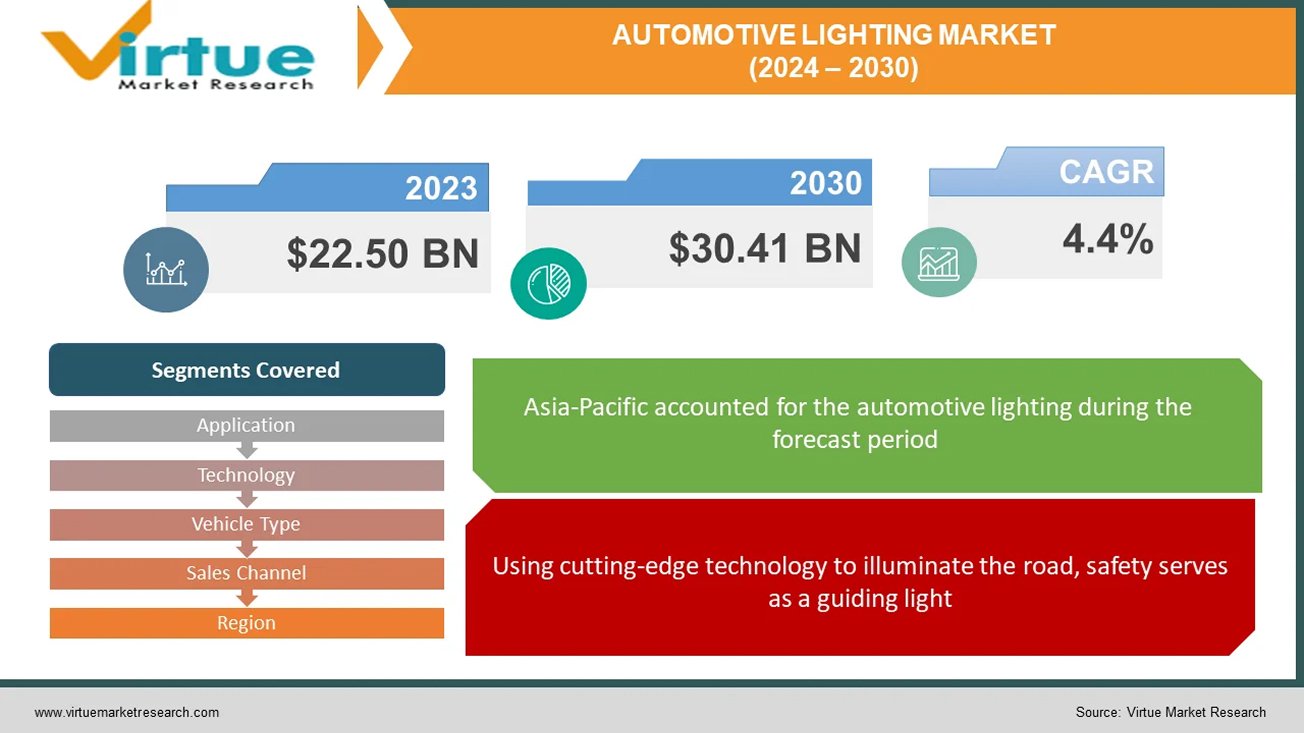
Using cutting-edge technology to illuminate the road, safety serves as a guiding light.
In the market for automobile lighting, safety is the driving force behind demand from the public and laws. While automated high beams smoothly react to traffic, adaptive headlights modify their beams so as not to blind other people. With visually striking displays, dynamic taillights convey intentions for braking and turning. Beyond these developments, integrated pedestrian identification and lane departure alerts will soon make roads safer and brighter for everyone.
Beyond Performance-Based Luxuries Redefined by Light.
Luxurious automobile lighting creates a distinct visual identity that goes beyond simple illumination. Personalized interior lighting customizes the driving experience by setting the mood with a range of colours and intensities, while intricate designs and distinctive DRLs modify exteriors. As you approach your automobile at night, welcoming lights lead the way, resulting in an interior that is perfectly lit. Not only is this symphony of light aesthetically pleasing, but it also stands as a tribute to luxury. Upcoming developments like gesture-controlled lighting and holographic displays promise to further enhance the experience.
Fuel Efficiency Takes the Lead: Illuminating Sustainability
The worldwide automotive lighting market is undergoing a significant transition towards energy-efficient solutions, as environmental concerns gain prominence. LED technology is leading the way, providing a ray of hope for the environment and drivers alike. LED lights beam brighter and use a lot less energy than conventional halogen lamps. There are some tangible advantages to this. For drivers, this translates to increased fuel economy, which lowers petrol prices and lessens reliance on fossil fuels. Greater air quality and a reduction in the transport sector's contribution to climate change are the results of reduced overall emissions.
To Learn more about this report,
Global Automotive Lighting Market Restraints and Challenges:
Although the global automotive lighting business is booming, there are still unknowns. Difficulties impede growth even as innovation propels it with eye catching features like laser beams and adaptable headlights. These technologies are luxury items due to their high cost and difficult integration, which puts producers' abilities to the test. The worldwide patchwork created by unclear legislation limits the potential of innovation. Durability issues persist, particularly when complex systems are subjected to challenging conditions. Ultimately, a lot of drivers still don't fully understand how these improvements can help them. Together, we can overcome these obstacles. The keys to reducing costs are improved production, more seamless integration, and unified regulations. Their full potential can be realized by educating customers about the safety, efficiency, and aesthetic value of these lighting wonders. By working together, we can pave the way for an even brighter and safer future for vehicle lighting.
Global Automotive Lighting Market Opportunities:
It is made possible by advanced LED technology, which gives drivers the ability to customize their illumination for the highest level of comfort and flair. Consumers that care about the environment want greener products, and vehicle lighting complies. While solar- and self-powered lighting technologies offer a future powered by clean energy, energy-efficient LEDs lower pollution. The advent of connected lighting systems heralds a new age. Envision automobiles interacting with infrastructure and one another to minimize accidents and enhance traffic efficiency. Integrated headlights with pedestrian recognition provide unmatched safety, while dramatic taillights with eye-catching displays alert onlookers to your intentions. The possibilities are endless in the future. Gesture-controlled interior illumination, holographic displays projected onto the road, and even light fixtures with self-healing capabilities.
AUTOMOTIVE LIGHTING MARKET REPORT COVERAGE:
To Learn more about this report,
Global Automotive Lighting Market Segmentation: By Application
Exterior Lighting
Interior Lighting
Due to laws requiring safety features like headlights, taillights, and brake lights, exterior lighting presently holds the most market share in the vehicle lighting industry. The dominance of this market is partly attributed to advancements in safety-focused technologies such as adaptive headlights and daytime running lights. The market value of external lighting is increased by the quick adoption of technology like LED bulbs and laser lights, which improve performance and aesthetics. Conversely, the interior lighting market is expected to increase at the fastest rate in the upcoming years. Innovations like ambient lighting and technology breakthroughs like LED and OLED displays, driven by consumer demand for comfort and personalisation, open new possibilities. The spread of sophisticated interior lighting systems is further driven by the growing emphasis on safety and the expansion of the luxury car market.
Global Automotive Lighting Market Segmentation: By Technology
Halogen
LED (Light-Emitting Diode)
Xenon
Emerging Technologies
The worldwide vehicle lighting market is currently dominated by halogen because of its more affordable price, advanced technology, and useful illumination. With its dependable supply chain and affordable option for manufacturers and cost-conscious customers, halogen holds the biggest market share. The fastest-growing market right now is LEDs, which are predicted to shortly overtake halogen. The rapid expansion of LEDs is driven by their higher efficiency, longer lifespan, flexibility in design, and technological breakthroughs including enhanced brightness. Because LEDs use less energy and produce fewer emissions and better fuel economy, they are becoming more and more popular in the changing automotive lighting market.
Global Automotive Lighting Market Segmentation: By Vehicle Type
Passenger Cars
Commercial Vehicles
Passenger automobiles rule the worldwide automotive lighting market. The sheer number of passenger cars produced which surpasses that of business vehicles and fuels the need for lighting systems is the primary cause of this popularity. The growing demand for personal automobiles in developing nations is a result of rising disposable income, which in turn drives the rise of the passenger car market. The importance that consumers place on safety and aesthetics elements helps to drive market expansion. But in the upcoming years, the market for electric and hybrid cars is expected to develop at the quickest rate. The exponential rise of the worldwide electric car market, which is still expanding and shows no signs of slowing down, is what is driving this surge. Specialised lighting solutions are required since electric and hybrid vehicles have different lighting requirements because of their specific functionality and design aesthetics.
Global Automotive Lighting Market Segmentation: By Sales Channel
OEM (Original Equipment Manufacturers)
Aftermarket
Most lighting systems sold nowadays are sold by OEMs (Original Equipment Manufacturers), primarily because manufacturers pre-install lighting systems in new cars. But in the next years, the aftermarket is expected to develop at the quickest rate. This spike in demand for replacement parts, especially lighting systems, can be linked to several variables, one of them being the average age of cars. The industry is expanding because of consumers' growing desire to personalise their cars with aftermarket lighting upgrades such LED upgrades and decorative lighting. The availability and affordability of technologies like adaptive headlights and laser lights in the aftermarket, together with other advancements in lighting technology, are driving demand even more. Moreover, the growing market for electric cars (EVs).
To Learn more about this report,
Global Automotive Lighting Market Segmentation: By Region
North America
Asia-Pacific
Europe
South America
Middle East and Africa
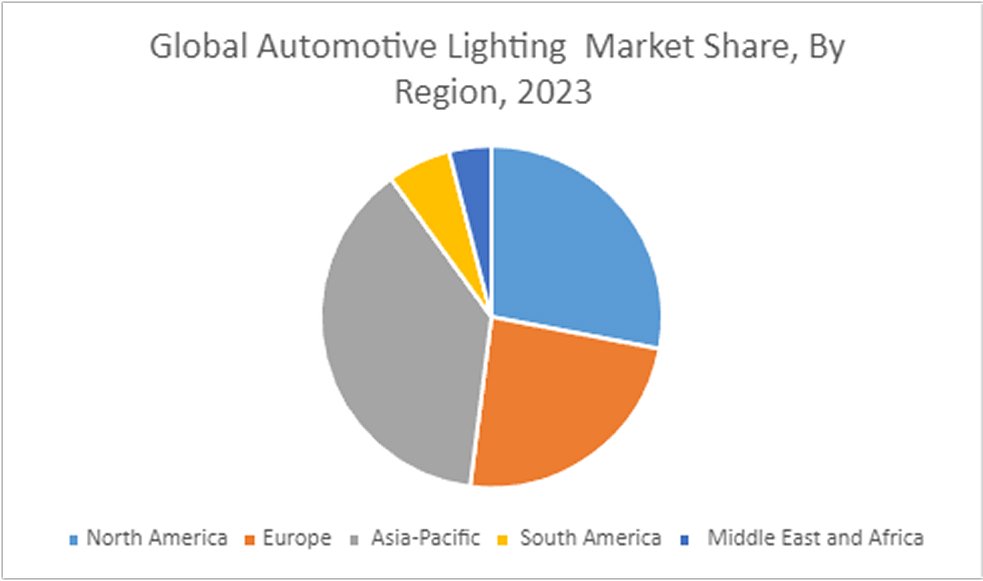
Throughout the forecast period, Asia Pacific is anticipated to be the automotive lighting market with the highest profitability. Over the past few years, Asia Pacific countries like China and India have seen notable increases in automotive manufacturing and sales, primarily in the medium-to premium luxury car segment. Asia Pacific is predicted to see an increase in the manufacturing of passenger cars, with India experiencing the strongest growth rate. Depending on the state of the national economy, the area offers a suitable selection of both high-end and cheap cars. For instance, there is a substantial demand for halogen, Xenon/HID, and LED since China and India produce more economy and mid-range automobiles. On the other hand, luxury car adoption rates are greater in South Korea and Japan, where LED lighting is the norm.
COVID-19 Impact Analysis on the Global Automotive Lighting Market:
A brief shadow was thrown by COVID-19 over the worldwide automotive lighting market. Production was stopped by lockdowns and supply chain disruptions, while luxury lighting upgrades were shelved by consumers on a tight budget. Resources became scarce, and R&D stagnated. Still, the market is recovering thanks to resurgent demand and rearranged priorities. While energy-efficient LEDs are being pushed towards adoption by sustainability, safety concerns are driving interest in features like pedestrian detection and adaptive headlights. The digital push of the epidemic creates opportunities for intelligent, networked lighting systems that may interact with infrastructure and other cars. Ultimately, the industry is positioned to shine brighter, focused on safety, sustainability, and a connected future, even though the pandemic dimmed its brilliance.
Recent Trends and Developments in the Global Automotive Lighting Market:
A development collaboration between OSRAM Continental and REHAU aims to incorporate lighting into external components, providing automobile manufacturers with innovative lighting options that improve functionality and design flexibility. For rear combination lamps, Hella unveiled a revolutionary lighting innovation called Hella FlatLight technology. A Memorandum of Understanding (MoU) was signed by Samvardhana Motherson Automotive Systems Group BV (SMRPBV), a division of Motherson Group, and Marelli Automotive Lighting to investigate a technology collaboration focused on intelligently lighted external body components. Valeo debuted their revolutionary 360° lighting system at the Shanghai Auto Show. This technology surrounds the car with a band of light, projecting instantaneous, clear signs that other drivers can see from a distance. Pedestrians, cyclists, and scooter riders are especially susceptible to these signals
Key Players:
AMS Osram
Cree
Hella
Hyundai Mobis
Koito
Luminus Devices
Magneti Marelli
Osram Licht AG
Stanley Electric
Valeo
Chapter 1. Europe Used Cooking Oil Market– Scope & Methodology
1.1. Market Segmentation
1.2. Scope, Assumptions & Limitations
1.3. Research Methodology
1.4. Primary Product Oil Type
1.5. Secondary Product Oil Type
Chapter 2. Europe Used Cooking Oil Market – Executive Summary
Fill out the form below and our team will get back to you shortly
FAQ's
The EU's Renewable Energy Directives (RED I and II), along with individual member states' targets, mandate an increase in renewable fuels within the transportation sector. UCO is a prime feedstock for biodiesel.
The quality of UCO varies depending on its source (restaurants vs. food processing), the type of oil used, and how it was handled. Inconsistent quality complicates processing and can limit end-use applications.
Germany currently holds the largest market share, estimated at around 25%.
Countries within Eastern Europe, such as Poland, Hungary, the Czech Republic, and others, are seeing significant economic growth and rising disposable incomes.
More related reports
Get expert-driven market research reports from a leading research partner to help you navigate the future of the global industry.
Report Code: VMR-18738 | Published Date: October 2025 | Format: Excel and PDF
The Middle East and Africa Cold Cuts Market was valued at USD 35.93 billion in 2024 and is projected to reach a market size of USD 110.55 billion by the end of 2030. Over the forecast period of 2025-2030, the market is p...
Report Code: VMR-18663 | Published Date: October 2024 | Format: Excel and PDF
The Arabica Sourced Bioactive Compounds in Coffee Market was valued at USD 340 Million in 2024 and is projected to reach a market size of USD 513 Million by the end of 2030.
Report Code: VMR-15690 | Published Date: August 2023 | Format: Excel and PDF
The Global Online Ready-to-Drink Cocktails Market was valued at USD 8.2 billion in 2024 and will grow at a CAGR of 12% from 2025 to 2030. The market is expected to reach USD 16.2 billion by 2030.
Report Code: VMR-2118 | Published Date: July 2024 | Format: Excel and PDF
The Global Beauty Drinks Market was valued at USD 2.2 billion in 2024 and will grow at a CAGR of 14% from 2025 to 2030. The market is expected to reach USD 4.8 billion by 2030.
Report Code: VMR-1283 | Published Date: March 2024 | Format: Excel and PDF
The global chocolate powdered drinks market was valued at USD 2.92 billion and is projected to reach a market size of USD 5.28 billion by the end of 2030. Over the forecast period of 2024–2030, the market is projected to...
“We received a complex piece of work for our niche market from Virtue Market research in short period of time. I appreciate the quality and content of the final files we received. Thanks for the support”
Medical Devices Company based in Europe
“We received a complex piece of work for our niche market from Virtue Market research in short period of time. I appreciate the quality and content of the final files we received. Thanks for the support”
Medical Devices Company based in Europe
“We received a complex piece of work for our niche market from Virtue Market research in short period of time. I appreciate the quality and content of the final files we received. Thanks for the support”
Medical Devices Company based in Europe
“We received a complex piece of work for our niche market from Virtue Market research in short period of time. I appreciate the quality and content of the final files we received. Thanks for the support”
Medical Devices Company based in Europe
“We received a complex piece of work for our niche market from Virtue Market research in short period of time. I appreciate the quality and content of the final files we received. Thanks for the support”
Medical Devices Company based in Europe
“We received a complex piece of work for our niche market from Virtue Market research in short period of time. I appreciate the quality and content of the final files we received. Thanks for the support”