Asia Pacific Electrolyte Drinks Market Size (2024-2030)
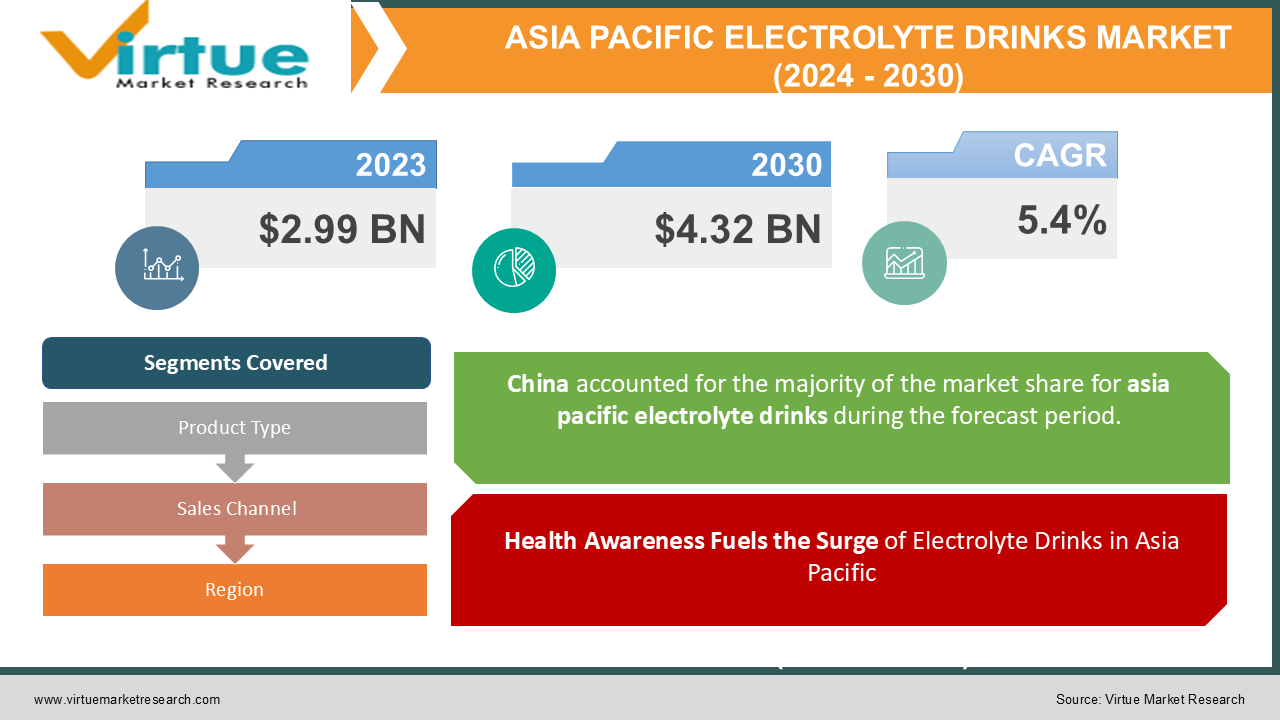
The Asia Pacific Electrolyte Drinks Marketwas valued at USD 2.99 billion in 2023 and is projected to reach a market size of USD 4.32 billion by the end of 2030. The market is anticipated to expand at a compound annual growth rate (CAGR) of 5.4% between 2024 and 2030.
The Asia Pacific electrolyte drinks market stands at the forefront of a burgeoning industry, driven by a confluence of factors ranging from increasing health consciousness to changing lifestyle preferences. As the region witnesses rapid urbanization and a rising middle class, there's a palpable shift towards healthier beverage options, of which electrolyte drinks have emerged as a frontrunner. These beverages, enriched with essential minerals like potassium, sodium, and magnesium, offer hydration and replenishment benefits that cater to the active lifestyles prevalent in the region. Moreover, the Asia Pacific region's diverse climate conditions, ranging from tropical to subtropical, further accentuate the need for effective hydration solutions, making electrolyte drinks a compelling choice for consumers across various demographics. With an expanding fitness-conscious population, coupled with a growing awareness of the importance of electrolyte balance for overall well-being, the market for these beverages is witnessing robust growth. Against this backdrop, understanding the dynamics of the Asia Pacific electrolyte drinks market becomes imperative for businesses aiming to capitalize on the burgeoning demand. This introduction sets the stage for a comprehensive exploration of market trends, consumer preferences, key players, and growth opportunities within this dynamic and evolving industry landscape.
Key Market Insights:
72% of consumers in China actively seek functional beverages, driving demand for electrolyte drinks.
Natural electrolyte drinks are expected to claim a 65% market share by 2027, with ingredients like coconut water and plant-based sweeteners gaining popularity.
Over 55% of electrolyte drinks in the Asia Pacific region are sold through independent retailers, such as convenience stores, due to their widespread presence and convenience for impulse purchases.
China leads the electrolyte drinks market in the Asia Pacific region, accounting for nearly 40% of total sales, propelled by its large population and rising disposable income.
The region's fitness culture is driving a projected 25% increase in demand for electrolyte drinks among fitness enthusiasts, with gym memberships expected to surpass 300 million by 2025.
The hypertonic electrolyte drink segment, formulated for intense exercise, is anticipated to witness the fastest growth due to rising participation in high-performance sports.
Asia Pacific Electrolyte Drinks Market Drivers:
Health Awareness Fuels the Surge of Electrolyte Drinks in Asia Pacific
Rising health consciousness among consumers in the Asia Pacific region is driving a notable shift towards functional beverages, with electrolyte drinks emerging as a popular choice. As individuals increasingly prioritize their overall well-being, there's a heightened awareness of the importance of maintaining electrolyte balance, especially among those leading active lifestyles or residing in hot climates. Electrolyte drinks are positioned as more than just a source of hydration; they are marketed to replenish essential minerals lost through sweat, offering a holistic solution to support physical activity and combat dehydration. This appeal is particularly resonant in the Asia Pacific, where diverse climate conditions and a burgeoning fitness culture contribute to the growing demand for such beverages. Moreover, the perception that electrolyte drinks provide health benefits beyond simple hydration aligns with the broader trend towards functional and wellness-oriented products, further fueling their popularity among health-conscious consumers in the region.
Electrolyte Drinks Surge in Demand Amidst Asia Pacific's Fitness Boom.
The Asia Pacific region is witnessing a notable surge in the popularity of fitness programs and a heightened emphasis on leading a healthy lifestyle, propelled by factors such as rising disposable incomes, rapid urbanization, and a growing awareness of the benefits of exercise. This burgeoning fitness culture is reshaping consumer preferences, particularly in the beverage sector, where electrolyte drinks are emerging as a favored choice. As individuals seek products that can enhance their performance during exercise and aid in quicker post-workout recovery, the demand for electrolyte drinks is on the rise. These beverages, formulated to replenish essential minerals lost through sweat, align perfectly with the needs of an active population keen on optimizing their fitness routines. Moreover, the increasing proliferation of fitness centers and gyms across the region further amplifies the demand for electrolyte drinks, as health-conscious consumers gravitate towards convenient and effective hydration solutions to support their workout regimes. The confluence of these factors underscores the growing significance of electrolyte drinks within the evolving landscape of Asia Pacific's health and fitness industry, positioning them as a key player in catering to the needs of an increasingly active and wellness-oriented demographic.
Asia Pacific Electrolyte Drinks Market Restraints and Challenges:
In navigating the Asia Pacific electrolyte drinks market, several notable restraints and challenges present themselves, shaping the industry's trajectory. Regulatory hurdles and compliance requirements pose significant obstacles for market players, particularly concerning labeling, health claims, and ingredient sourcing standards, which vary across different countries within the region. Additionally, heightened competition from alternative hydration solutions, including sports drinks, coconut water, and DIY electrolyte mixes, adds complexity to market dynamics, compelling companies to differentiate their offerings through innovation and marketing strategies. Economic uncertainties and fluctuations in disposable incomes in certain countries within the region may also impact consumer purchasing behavior, influencing demand patterns for electrolyte drinks. Furthermore, concerns regarding the environmental impact of single-use packaging and the sustainability of production processes present challenges for companies seeking to align with increasingly eco-conscious consumer preferences. Addressing these restraints and challenges requires a multifaceted approach, encompassing regulatory compliance, product differentiation, economic resilience, and sustainable practices, to sustain growth and foster resilience within the Asia Pacific electrolyte drinks market.
Asia Pacific Electrolyte Drinks Market Opportunities:
Within the Asia Pacific electrolyte drinks market, a plethora of opportunities await savvy businesses poised to capitalize on emerging trends and consumer preferences. The region's rapidly expanding middle class and urban population present a vast consumer base increasingly inclined towards health and wellness products, providing a fertile ground for electrolyte drink manufacturers to tap into. Moreover, with rising awareness of the importance of hydration and electrolyte balance, fueled by a growing fitness culture and changing lifestyle patterns, there's a heightened demand for innovative electrolyte formulations tailored to diverse consumer needs. Expanding distribution channels, including e-commerce platforms and convenience stores, offer convenient avenues for market penetration and accessibility, particularly in remote or underserved areas. Additionally, partnerships with fitness centers, sports events, and health-focused initiatives can enhance brand visibility and foster consumer engagement. Furthermore, leveraging technological advancements such as smart packaging and personalized nutrition solutions can enable companies to offer enhanced product experiences and cater to evolving consumer preferences. By strategically positioning themselves to capitalize on these opportunities, businesses can unlock untapped potential and drive sustained growth within the dynamic Asia Pacific electrolyte drinks market.
ASIA PACIFIC ELECTROLYTE DRINKS MARKET REPORT COVERAGE:
REPORT METRIC
DETAILS
Market Size Available
2023 - 2030
Base Year
2023
Forecast Period
2024 - 2030
CAGR
5.4%
Segments Covered
By Product Type, Sales Channel and Region
Various Analyses Covered
Regional & Country Level Analysis, Segment-Level Analysis, DROC, PESTLE Analysis, Porter’s Five Forces Analysis, Competitive Landscape, Analyst Overview on Investment Opportunities
Asia Pacific Electrolyte Drinks Market Segmentation:
Asia Pacific Electrolyte Drinks Market Segmentation By Sales Channel:
Independent Retailers
Convenience Stores
Specialist Retailers
Supermarkets & Hypermarkets
Online Retailers
In the Asia Pacific Electrolyte DrinksMarketSegmented by Sales Channel,Independent Retailershadthe largest market share last year and are poised to maintain their dominance throughout the forecast period. Independent retailers, comprising convenience stores, corner shops, and mom-and-pop stores, form a ubiquitous presence across the Asia Pacific region, serving as vital hubs for everyday essentials, including electrolyte drinks. Their extensive reach, particularly in rural areas and densely populated cities, ensures easy access to these beverages for a diverse consumer base. Catering to the daily needs of individuals, especially athletes, outdoor workers, and those in hot climates, independent retailers offer a convenient solution for immediate hydration requirements, often resulting in impulse purchases. Moreover, their adaptability to local preferences enables them to stock a wide array of electrolyte drink brands, including regional favorites that might not be available in larger chain stores, thereby catering to diverse taste preferences. However, these retailers face challenges such as competition from larger chains, which leverage bulk buying power to offer lower prices, and limited marketing reach compared to big brands. Despite these hurdles, the inherent strengths of independent retailers—flexibility, convenience, and localization—are poised to maintain their dominance as the primary sales channel for electrolyte drinks in the Asia Pacific region in the foreseeable future.
Asia Pacific Electrolyte Drinks Market Segmentation By Product Type:
Natural
Artificial
The Asia Pacific Electrolyte DrinksMarketSegmented by Product Type,Artificialhadthe largest market share last year and is poised to maintain its dominance throughout the forecast period. The Asia Pacific region is witnessing a significant shift towards health-conscious consumption patterns, particularly in the realm of electrolyte drinks, where consumers are increasingly gravitating towards products perceived as natural and beneficial. This preference for natural ingredients such as coconut water, plant-based sweeteners, and Himalayan pink salt reflects a broader trend towards clean labeling and clean eating. Manufacturers are capitalizing on this trend by heavily marketing electrolyte drinks featuring natural sources of electrolytes, emphasizing health benefits and clean ingredients. Despite potential challenges related to affordability and taste preferences, driven by the higher cost of natural ingredients and lingering preferences for artificial flavors, respectively, the growing disposable income in many parts of the region is enabling consumers to prioritize premium products, including natural electrolyte drinks. As awareness of the health benefits associated with natural ingredients continues to grow, it is expected to drive a sustained demand for natural electrolyte drinks, solidifying their dominance in the market landscape throughout the forecast period.
Asia Pacific Electrolyte Drinks Market Segmentation By Region:
China
Japan
South Korea
India
Australia & New Zealand
Rest of Asia-Pacific
The Asia Pacific Electrolyte DrinksMarketSegmented by Region,Chinahadthe largest market share last year and is poised to maintain its dominance throughout the forecast period. China stands as a colossal force in the Asia Pacific Electrolyte Drinks Market, boasting the world's largest population, a significant portion of which aligns with the target demographic for such beverages. With rising disposable incomes and a surging wave of health consciousness sweeping the nation, there exists a massive potential consumer pool eager to embrace functional beverages like electrolyte drinks. Government initiatives promoting fitness further bolster this favorable environment, while the presence of established domestic and international brands offers consumers a diverse array of choices. However, as other Asian countries like India and Southeast Asian nations experience rapid economic growth and increasing disposable incomes, the landscape may witness a redistribution of market share in the future. Additionally, competition and market saturation pose ongoing challenges, necessitating continual innovation in product offerings and marketing strategies to sustain dominance. Despite these factors, China's advantageous position, driven by its sheer population size, economic growth, and health-conscious trends, solidifies its status as a powerhouse in the Asia Pacific electrolyte drinks market, albeit with an eye on evolving dynamics within the region.
COVID-19 Impact Analysis on theAsia Pacific Electrolyte DrinksMarket.
The COVID-19 pandemic has significantly impacted the Asia Pacific electrolyte drinks market, leading to both short-term disruptions and long-term shifts in consumer behavior and market dynamics. Initially, the widespread lockdowns and social distancing measures implemented across the region resulted in a decline in overall consumption as people stayed indoors and outdoor activities, including sports events and fitness activities, were suspended. This led to a temporary slump in demand for electrolyte drinks, particularly in the on-the-go segment. Moreover, supply chain disruptions and logistical challenges further exacerbated the situation, impacting production and distribution capabilities. However, as the pandemic progressed, there was a notable shift towards health and wellness products, including electrolyte drinks, as consumers became more health-conscious and sought ways to boost their immunity and overall well-being. This trend, coupled with the gradual easing of restrictions and resumption of outdoor activities, contributed to a recovery in demand for electrolyte drinks, albeit with changes in consumption patterns and preferences. Additionally, the growing popularity of e-commerce channels for purchasing beverages further accelerated during the pandemic, presenting both challenges and opportunities for market players. Overall, while COVID-19 posed initial challenges to the Asia Pacific electrolyte drinks market, it also catalyzed shifts towards health-oriented consumption patterns and digitalization, shaping the future trajectory of the industry.
Latest trends / Developments:
The Asia Pacific Electrolyte Drinks Market is experiencing a robust boom, fueled by a burgeoning health consciousness and a thriving fitness culture. Consumers are increasingly turning away from artificial ingredients, instead embracing natural sources of electrolytes like coconut water and Himalayan pink salt. This shift towards natural alternatives is driving a trend towards premiumization, with consumers showing a willingness to pay more for products perceived to offer enhanced health benefits. While China currently dominates the market, propelled by its vast population and increasing disposable income, competition is intensifying in emerging markets like India and Southeast Asia. As brands vie for a share of this growing and health-focused consumer base, continued innovation is expected in both natural flavors and functionality. Expect to see a proliferation of new products catering to diverse tastes and preferences, as companies seek to differentiate themselves and capitalize on the lucrative opportunities presented by the region's booming electrolyte drinks market.
Key Players:
PepsiCo, Inc. (Gatorade)
The Coca-Cola Company (Powerade)
Red Bull GmbH
Lucozade Ribena Suntory (Lucozade Sport)
Abbott Laboratories (Pedialyte)
Glanbia plc (Optimum Nutrition)
Otsuka Pharmaceutical Co., Ltd. (Pocari Sweat)
Danone S.A. (Evian)
Monster Beverage Corporation (Monster Hydro)
BodyArmor SuperDrink (Dr Pepper Snapple Group)
To Learn more about this report,
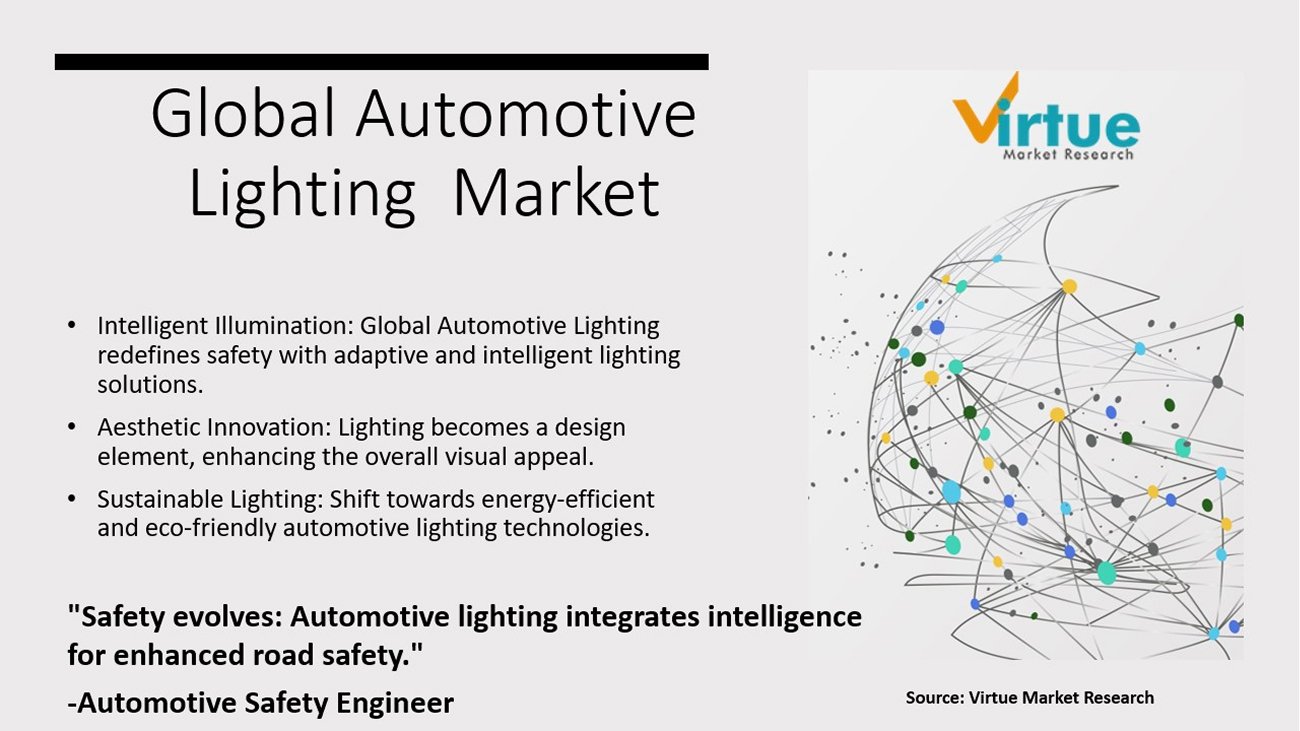
Global automotive lighting refers to all vehicle lighting systems, from headlamps that illuminate the road to taillights that communicate movements. They guarantee motorists and other road users alike safety, visibility, and style. While taillights frequently use LEDs for improved visibility, headlights are available in a variety of technologies, including LED and laser. Interior illumination, DRLs, and signal lights all have a role to play. This market, which was estimated to be worth $33.64 billion in 2022, is anticipated to rise to $67.39 billion by 2030 because of laws, luxury tastes, safety concerns, and technological developments like OLED taillights and adaptive headlights. Anticipate a future dominated by intelligent, connected, personalized, and sustainable lighting systems that enhance the safety, efficiency, and aesthetic appeal of automobiles.
Key Market Insights:
Car lighting works its magic to provide safety, visibility, and style. Headlights cut through the night, taillights express intent, and interiors shine with comfort. The billion-dollar global business is expected to rise due to consumer demand for high-end experiences, safer roads, and cutting-edge technology. Imagine dynamic messages being painted by taillights, headlights that adjust to the road, and interiors that customize their atmosphere. Driven by technological advancements like linked systems and laser beams, this future is calling. Anticipate even more visually attractive, environmentally friendly, and intelligent lighting to illuminate the way ahead, making cars safer, more efficient, and unquestionably cooler.
Global Automotive Lighting Market Drivers:
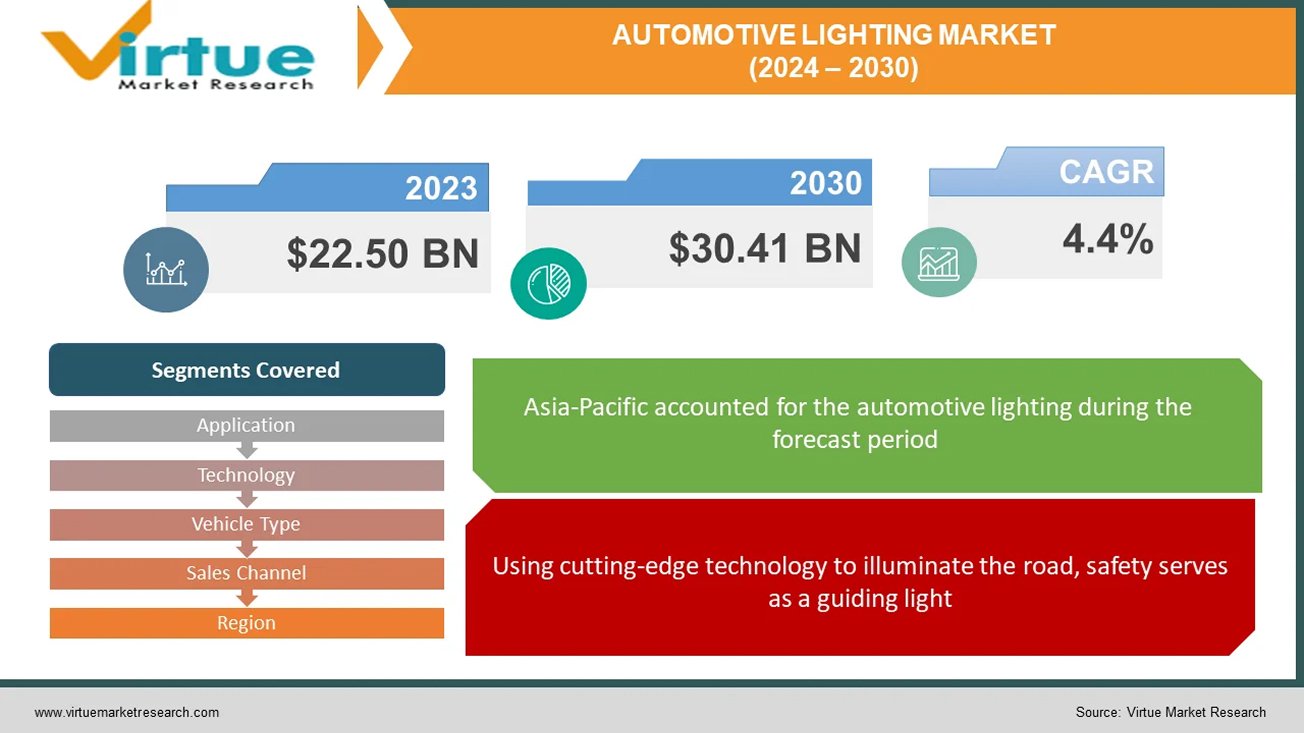
Using cutting-edge technology to illuminate the road, safety serves as a guiding light.
In the market for automobile lighting, safety is the driving force behind demand from the public and laws. While automated high beams smoothly react to traffic, adaptive headlights modify their beams so as not to blind other people. With visually striking displays, dynamic taillights convey intentions for braking and turning. Beyond these developments, integrated pedestrian identification and lane departure alerts will soon make roads safer and brighter for everyone.
Beyond Performance-Based Luxuries Redefined by Light.
Luxurious automobile lighting creates a distinct visual identity that goes beyond simple illumination. Personalized interior lighting customizes the driving experience by setting the mood with a range of colours and intensities, while intricate designs and distinctive DRLs modify exteriors. As you approach your automobile at night, welcoming lights lead the way, resulting in an interior that is perfectly lit. Not only is this symphony of light aesthetically pleasing, but it also stands as a tribute to luxury. Upcoming developments like gesture-controlled lighting and holographic displays promise to further enhance the experience.
Fuel Efficiency Takes the Lead: Illuminating Sustainability
The worldwide automotive lighting market is undergoing a significant transition towards energy-efficient solutions, as environmental concerns gain prominence. LED technology is leading the way, providing a ray of hope for the environment and drivers alike. LED lights beam brighter and use a lot less energy than conventional halogen lamps. There are some tangible advantages to this. For drivers, this translates to increased fuel economy, which lowers petrol prices and lessens reliance on fossil fuels. Greater air quality and a reduction in the transport sector's contribution to climate change are the results of reduced overall emissions.
To Learn more about this report,
Global Automotive Lighting Market Restraints and Challenges:
Although the global automotive lighting business is booming, there are still unknowns. Difficulties impede growth even as innovation propels it with eye catching features like laser beams and adaptable headlights. These technologies are luxury items due to their high cost and difficult integration, which puts producers' abilities to the test. The worldwide patchwork created by unclear legislation limits the potential of innovation. Durability issues persist, particularly when complex systems are subjected to challenging conditions. Ultimately, a lot of drivers still don't fully understand how these improvements can help them. Together, we can overcome these obstacles. The keys to reducing costs are improved production, more seamless integration, and unified regulations. Their full potential can be realized by educating customers about the safety, efficiency, and aesthetic value of these lighting wonders. By working together, we can pave the way for an even brighter and safer future for vehicle lighting.
Global Automotive Lighting Market Opportunities:
It is made possible by advanced LED technology, which gives drivers the ability to customize their illumination for the highest level of comfort and flair. Consumers that care about the environment want greener products, and vehicle lighting complies. While solar- and self-powered lighting technologies offer a future powered by clean energy, energy-efficient LEDs lower pollution. The advent of connected lighting systems heralds a new age. Envision automobiles interacting with infrastructure and one another to minimize accidents and enhance traffic efficiency. Integrated headlights with pedestrian recognition provide unmatched safety, while dramatic taillights with eye-catching displays alert onlookers to your intentions. The possibilities are endless in the future. Gesture-controlled interior illumination, holographic displays projected onto the road, and even light fixtures with self-healing capabilities.
AUTOMOTIVE LIGHTING MARKET REPORT COVERAGE:
To Learn more about this report,
Global Automotive Lighting Market Segmentation: By Application
Exterior Lighting
Interior Lighting
Due to laws requiring safety features like headlights, taillights, and brake lights, exterior lighting presently holds the most market share in the vehicle lighting industry. The dominance of this market is partly attributed to advancements in safety-focused technologies such as adaptive headlights and daytime running lights. The market value of external lighting is increased by the quick adoption of technology like LED bulbs and laser lights, which improve performance and aesthetics. Conversely, the interior lighting market is expected to increase at the fastest rate in the upcoming years. Innovations like ambient lighting and technology breakthroughs like LED and OLED displays, driven by consumer demand for comfort and personalisation, open new possibilities. The spread of sophisticated interior lighting systems is further driven by the growing emphasis on safety and the expansion of the luxury car market.
Global Automotive Lighting Market Segmentation: By Technology
Halogen
LED (Light-Emitting Diode)
Xenon
Emerging Technologies
The worldwide vehicle lighting market is currently dominated by halogen because of its more affordable price, advanced technology, and useful illumination. With its dependable supply chain and affordable option for manufacturers and cost-conscious customers, halogen holds the biggest market share. The fastest-growing market right now is LEDs, which are predicted to shortly overtake halogen. The rapid expansion of LEDs is driven by their higher efficiency, longer lifespan, flexibility in design, and technological breakthroughs including enhanced brightness. Because LEDs use less energy and produce fewer emissions and better fuel economy, they are becoming more and more popular in the changing automotive lighting market.
Global Automotive Lighting Market Segmentation: By Vehicle Type
Passenger Cars
Commercial Vehicles
Passenger automobiles rule the worldwide automotive lighting market. The sheer number of passenger cars produced which surpasses that of business vehicles and fuels the need for lighting systems is the primary cause of this popularity. The growing demand for personal automobiles in developing nations is a result of rising disposable income, which in turn drives the rise of the passenger car market. The importance that consumers place on safety and aesthetics elements helps to drive market expansion. But in the upcoming years, the market for electric and hybrid cars is expected to develop at the quickest rate. The exponential rise of the worldwide electric car market, which is still expanding and shows no signs of slowing down, is what is driving this surge. Specialised lighting solutions are required since electric and hybrid vehicles have different lighting requirements because of their specific functionality and design aesthetics.
Global Automotive Lighting Market Segmentation: By Sales Channel
OEM (Original Equipment Manufacturers)
Aftermarket
Most lighting systems sold nowadays are sold by OEMs (Original Equipment Manufacturers), primarily because manufacturers pre-install lighting systems in new cars. But in the next years, the aftermarket is expected to develop at the quickest rate. This spike in demand for replacement parts, especially lighting systems, can be linked to several variables, one of them being the average age of cars. The industry is expanding because of consumers' growing desire to personalise their cars with aftermarket lighting upgrades such LED upgrades and decorative lighting. The availability and affordability of technologies like adaptive headlights and laser lights in the aftermarket, together with other advancements in lighting technology, are driving demand even more. Moreover, the growing market for electric cars (EVs).
To Learn more about this report,
Global Automotive Lighting Market Segmentation: By Region
North America
Asia-Pacific
Europe
South America
Middle East and Africa
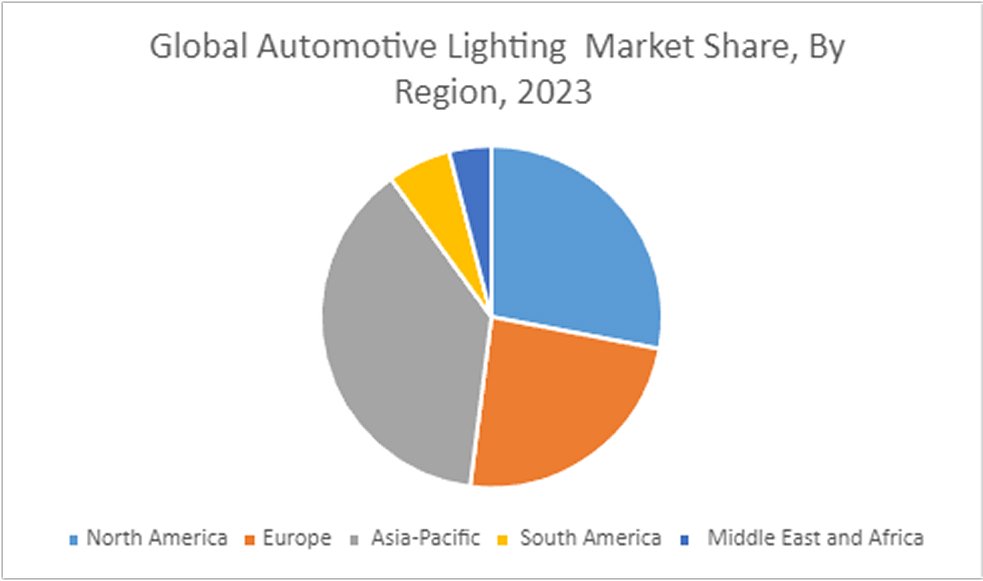
Throughout the forecast period, Asia Pacific is anticipated to be the automotive lighting market with the highest profitability. Over the past few years, Asia Pacific countries like China and India have seen notable increases in automotive manufacturing and sales, primarily in the medium-to premium luxury car segment. Asia Pacific is predicted to see an increase in the manufacturing of passenger cars, with India experiencing the strongest growth rate. Depending on the state of the national economy, the area offers a suitable selection of both high-end and cheap cars. For instance, there is a substantial demand for halogen, Xenon/HID, and LED since China and India produce more economy and mid-range automobiles. On the other hand, luxury car adoption rates are greater in South Korea and Japan, where LED lighting is the norm.
COVID-19 Impact Analysis on the Global Automotive Lighting Market:
A brief shadow was thrown by COVID-19 over the worldwide automotive lighting market. Production was stopped by lockdowns and supply chain disruptions, while luxury lighting upgrades were shelved by consumers on a tight budget. Resources became scarce, and R&D stagnated. Still, the market is recovering thanks to resurgent demand and rearranged priorities. While energy-efficient LEDs are being pushed towards adoption by sustainability, safety concerns are driving interest in features like pedestrian detection and adaptive headlights. The digital push of the epidemic creates opportunities for intelligent, networked lighting systems that may interact with infrastructure and other cars. Ultimately, the industry is positioned to shine brighter, focused on safety, sustainability, and a connected future, even though the pandemic dimmed its brilliance.
Recent Trends and Developments in the Global Automotive Lighting Market:
A development collaboration between OSRAM Continental and REHAU aims to incorporate lighting into external components, providing automobile manufacturers with innovative lighting options that improve functionality and design flexibility. For rear combination lamps, Hella unveiled a revolutionary lighting innovation called Hella FlatLight technology. A Memorandum of Understanding (MoU) was signed by Samvardhana Motherson Automotive Systems Group BV (SMRPBV), a division of Motherson Group, and Marelli Automotive Lighting to investigate a technology collaboration focused on intelligently lighted external body components. Valeo debuted their revolutionary 360° lighting system at the Shanghai Auto Show. This technology surrounds the car with a band of light, projecting instantaneous, clear signs that other drivers can see from a distance. Pedestrians, cyclists, and scooter riders are especially susceptible to these signals
Key Players:
AMS Osram
Cree
Hella
Hyundai Mobis
Koito
Luminus Devices
Magneti Marelli
Osram Licht AG
Stanley Electric
Valeo
Chapter 1. Asia Pacific Electrolyte Drinks Market– Scope & Methodology
1.1. Market Segmentation
1.2. Scope, Assumptions & Limitations
1.3. Research Methodology
1.4. Primary Sources
1.5. Secondary Sources
Chapter 2. Asia Pacific Electrolyte Drinks Market – Executive Summary
Report Code: VMR-18738 | Published Date: October 2025 | Format: Excel and PDF
The Middle East and Africa Cold Cuts Market was valued at USD 35.93 billion in 2024 and is projected to reach a market size of USD 110.55 billion by the end of 2030. Over the forecast period of 2025-2030, the market is p...
Report Code: VMR-18663 | Published Date: October 2024 | Format: Excel and PDF
The Arabica Sourced Bioactive Compounds in Coffee Market was valued at USD 340 Million in 2024 and is projected to reach a market size of USD 513 Million by the end of 2030.
Report Code: VMR-15690 | Published Date: August 2023 | Format: Excel and PDF
The Global Online Ready-to-Drink Cocktails Market was valued at USD 8.2 billion in 2024 and will grow at a CAGR of 12% from 2025 to 2030. The market is expected to reach USD 16.2 billion by 2030.
Report Code: VMR-2118 | Published Date: July 2024 | Format: Excel and PDF
The Global Beauty Drinks Market was valued at USD 2.2 billion in 2024 and will grow at a CAGR of 14% from 2025 to 2030. The market is expected to reach USD 4.8 billion by 2030.
Report Code: VMR-1283 | Published Date: March 2024 | Format: Excel and PDF
The global chocolate powdered drinks market was valued at USD 2.92 billion and is projected to reach a market size of USD 5.28 billion by the end of 2030. Over the forecast period of 2024–2030, the market is projected to...
“We received a complex piece of work for our niche market from Virtue Market research in short period of time. I appreciate the quality and content of the final files we received. Thanks for the support”
Medical Devices Company based in Europe
“We received a complex piece of work for our niche market from Virtue Market research in short period of time. I appreciate the quality and content of the final files we received. Thanks for the support”
Medical Devices Company based in Europe
“We received a complex piece of work for our niche market from Virtue Market research in short period of time. I appreciate the quality and content of the final files we received. Thanks for the support”
Medical Devices Company based in Europe
“We received a complex piece of work for our niche market from Virtue Market research in short period of time. I appreciate the quality and content of the final files we received. Thanks for the support”
Medical Devices Company based in Europe
“We received a complex piece of work for our niche market from Virtue Market research in short period of time. I appreciate the quality and content of the final files we received. Thanks for the support”
Medical Devices Company based in Europe
“We received a complex piece of work for our niche market from Virtue Market research in short period of time. I appreciate the quality and content of the final files we received. Thanks for the support”