
Industrial Lubricants Market
The market size was estimated at USD 77 billion in 2025, and is projected to reach 88.83 billion in 2030, growing at a CAGR of 2.9% from 2026 to 2030.
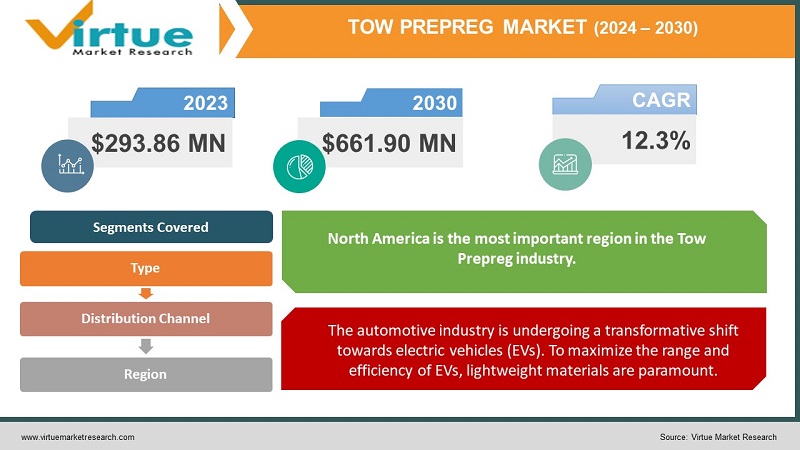
Explore reportThe Global Tow Prepreg Market was valued at USD 293.86 Million in 2023 and is projected to reach a market size of USD 661.90 Million by the end of 2030. Over the forecast period of 2024-2030, the market is projected to grow at a CAGR of 12.3%.
Within the composite materials industry, the tow prepreg market is a dynamic and quickly developing area. With its composition of glass or carbon reinforcing fibers pre-impregnated with a resin binder, tow prepreg provides special benefits for producing high-performance composite parts. The market for tow prepreg is being driven by an industry-wide obsession with finding lightweight, high-strength materials. Because of their remarkable strength-to-weight ratios, these materials are perfect for situations where reducing weight is crucial. The use of tow prepreg for missile systems, spacecraft structures, and aircraft parts is leading the aerospace and defense industries. Increased payload capacity, better fuel economy, and higher overall performance are all correlated with the ability to produce lightweight, high-performance parts.
Key Market Insights:
Carbon Fiber Prepregs hold a 70% market share due to their exceptional strength-to-weight ratio. Glass Fiber Prepregs hold a 20% market share, offering a cost-effective alternative. Aramid Fiber Prepregs (Kevlar) holds a 10% market share for specific applications requiring high impact resistance.
Epoxy Resins hold an 85% market share, valued for their versatility and mechanical properties. Phenolic Resins hold a 15% market share, offering superior fire resistance but with trade-offs in performance.
Aerospace & Defence holds a 40% market share, utilizing tow prepreg for lightweight, high-strength aircraft components. Automotive holds a 25% market share, adopting tow prepreg for car parts to improve fuel efficiency.
The average Cost of Carbon Fiber Tow Prepreg is $50 - $100 per kilogram (USD) (as of 2024). The estimated Material Cost for a Typical Aircraft Wing is $1 million - $5 million (USD) (using carbon fiber tow prepreg).

Tow Prepreg Market Drivers:
For decades, the aerospace and defense sector has been at the forefront of pushing the boundaries of material science. The relentless pursuit of lighter, stronger, and more durable materials is a constant battle in this industry.
Reducing aircraft weight directly translates to improved fuel efficiency. Lighter aircraft require less fuel to achieve the same level of performance, leading to significant cost savings for airlines and a reduction in environmental impact. Tow prepreg's exceptional strength-to-weight ratio allows for the creation of lightweight yet robust aircraft components, contributing directly to this goal. A lighter aircraft translates to a higher payload capacity. This is crucial for both commercial and military applications. Commercial airlines can carry more passengers and cargo, leading to increased revenue potential. Military aircraft can carry additional weapons, surveillance equipment, or personnel, enhancing their operational capabilities. Lighter aircraft generally exhibit improved maneuverability due to their lower inertia. This is particularly critical for military aircraft engaged in combat situations or high-performance maneuvers. Additionally, the weight reduction can contribute to increased aircraft range, allowing for longer flight times without refueling.
The automotive industry is undergoing a transformative shift towards electric vehicles (EVs). To maximize the range and efficiency of EVs, lightweight materials are paramount.
Battery packs are one of the heaviest components in an EV. Utilizing tow prepreg for battery enclosures can significantly reduce weight, translating to increased driving range on a single charge. Lightweight yet strong components like chassis parts and underbody panels can be constructed using tow prepreg, contributing to overall weight reduction. Tow prepreg's ability to be molded into complex shapes makes it ideal for creating aerodynamic components like spoilers and diffusers, which can improve an EV's energy efficiency. As mentioned earlier, weight reduction is critical for EVs. Tow prepreg's lightweight properties can significantly contribute to extending the driving range of EVs on a single charge. A lighter vehicle generally exhibits better handling and performance. By reducing the weight of key components, tow prepreg can enhance the overall driving experience of EVs.
Tow Prepreg Market Restraints and Challenges:
Carbon fiber is the primary choice for tow prepreg due to its exceptional strength-to-weight ratio. However, it is significantly more expensive compared to traditional materials like steel or aluminum. This high cost can be a barrier for manufacturers, especially for budget-conscious applications. Working with tow prepreg requires specialized equipment and skilled labor. The process itself can be intricate, involving precise handling, layup techniques, and stringent curing procedures. This complexity adds to the overall manufacturing cost, further hindering wider adoption. Research and development efforts focused on creating new, more cost-effective carbon fiber variants would be a game-changer. Additionally, exploring alternative high-performance fibers with lower production costs could offer broader application possibilities. Working with tow prepreg demands a skilled workforce with a deep understanding of composite materials, handling procedures, and quality control measures. A lack of such skilled labor can hinder production capacity and potentially lead to inconsistencies in product quality.
Tow Prepreg Market Opportunities:
Because tow prepreg is biocompatible and can be tailored for strength and flexibility, it is perfect for making lightweight prosthetics and medical implants. Patients may experience increased comfort and movement as a result. The need for thin, light electronics creates opportunities for tow prepreg applications. Because of its excellent strength-to-weight ratio, components for mobile phones, laptop casings, and other consumer electronics may be made thin and strong. Tow prepreg can be used to create lightweight and high-strength components for bridges, buildings, and other infrastructure projects. This can potentially lead to improved load-bearing capacity and reduced construction time. The ever-increasing focus on sustainability presents a significant opportunity for tow prepreg. Its ability to create lightweight components in various industries, such as automotive and aerospace, translates to reduced fuel consumption and lower greenhouse gas emissions. Incorporating AI and machine learning into the manufacturing process can optimize production parameters, streamline quality control, and potentially lead to the development of innovative tow prepreg applications.
TOW PREPREG MARKET REPORT COVERAGE:
|
REPORT METRIC |
DETAILS |
|
Market Size Available |
2023 - 2030 |
|
Base Year |
2022 |
|
Forecast Period |
2024 - 2030 |
|
CAGR |
12.3% |
|
Segments Covered |
By Type, , Distribution Channel and Region |
|
Various Analyses Covered |
Global, Regional & Country Level Analysis, Segment-Level Analysis, DROC, PESTLE Analysis, Porter’s Five Forces Analysis, Competitive Landscape, Analyst Overview on Investment Opportunities |
|
Regional Scope |
North America, Europe, APAC, Latin America, Middle East & Africa |
|
Key Companies Profiled |
Hexcel Corporation , Toray Industries, Inc. , Solvay Group , SGL Carbon SE , Teijin Limited , Mitsubishi Chemical Corporation , TCR Composites, Inc. , ENEOs Holdings, Inc. , Porcher Industries , Red Composites Ltd , Vitech Composites , Axiom Materials |
Tow Prepreg Market Segmentation:
Carbon fiber reigns supreme in the tow prepreg market, accounting for roughly 70% of the total share. Carbon fibers boast exceptional strength and stiffness while remaining remarkably lightweight. This translates to significant weight reduction in finished products, making them ideal for applications where every gram counts, such as aerospace and high-performance vehicles Carbon fibers exhibit outstanding tensile strength, compressive strength, and fatigue resistance. These properties make them suitable for components that experience high loads and stresses. Carbon fibers retain their shape exceptionally well under varying temperature and pressure conditions. This dimensional stability is critical for components requiring precise tolerances.
Aramid fibers, most notably Kevlar, are carving a niche in the tow prepreg market, holding an estimated 10% share and experiencing the fastest growth rate among fiber types. Despite its impressive impact resistance, Kevlar remains lightweight and offers good flexibility. This combination makes it suitable for creating protective gear that doesn't restrict movement. Kevlar's strength and thermal stability make it suitable for components in industrial settings where puncture resistance or protection against heat is crucial.
Direct Sales channel involves direct interaction between tow prepreg manufacturers and end-user industries. This approach is typically preferred for large-volume orders, complex technical requirements, and close collaboration on project specifications. Tow prepreg is often used in critical applications within industries like aerospace and defense. The complex nature of these applications necessitates close collaboration between manufacturers and end-users. Direct sales facilitate this collaboration, allowing for in-depth discussions about project specifications, material selection, and technical support.
The tow prepreg distribution landscape is likely to witness a dynamic interplay between established channels and the evolving e-commerce segment. Manufacturers may adopt hybrid models, utilizing direct sales for large, complex projects while leveraging e-commerce platforms to reach a broader customer base for smaller orders. E-commerce platforms will likely invest in features that address current limitations, such as offering in-depth product information, technical support resources, and potentially even online configuration tools for tow prepreg selections. Closer collaboration between manufacturers, distributors, and e-commerce platforms can create a more efficient and user-friendly distribution network for the tow prepreg market.

With a market share of between 30 and 35 percent, North America is the most important region in the Tow Prepreg industry. Furthermore, the region's emphasis on technological innovation and developments has aided in the creation of innovative composite materials, such as tow prepregs. North America—which consists of the US and Canada—has made a name for itself in the Tow Prepreg industries. A strong manufacturing industry and the presence of significant aerospace and defense industries are responsible for this region's dominance. The aerospace, automotive, and wind energy industries' requirement for lightweight, high-performance materials is what drives the need for tow prepregs in North America. The region's dedication to technical improvements and innovation contributes to the market's growth.
COVID-19 Impact Analysis on the Tow Prepreg Market:
Restrictions on movement and border closures hampered the smooth flow of raw materials like carbon fiber and epoxy resins. This shortage of critical inputs led to production slowdowns and price fluctuations for tow prepreg manufacturers. Disruptions in global shipping and air cargo transportation added another layer of complexity. Delays and increased transportation costs further disrupted the timely delivery of tow prepreg to end-user industries. The aviation industry faced a significant decline in passenger and cargo travel due to travel restrictions. This led to a slowdown in aircraft production and a subsequent decrease in demand for tow prepreg, typically used in aircraft components. The automotive industry experienced production shutdowns and a decline in overall vehicle demand during the initial phase of the pandemic. This impacted the demand for tow prepreg used in lightweight car parts, contributing to a market contraction. Lockdowns and social distancing measures dampened participation in recreational activities. This resulted in a decreased demand for sporting goods like bicycles and skis, which utilize tow prepreg for high-performance components. The pandemic highlighted the need for essential medical equipment, such as ventilators and personal protective equipment (PPE). Tow prepreg's lightweight properties and potential for rapid prototyping opened doors for its exploration in these areas.
Latest Trends/ Developments:
While epoxy resins dominate the tow prepreg market, thermoplastics offer distinct advantages. Thermoplastic tow prepregs are faster to cure, offer superior recyclability, and can potentially be welded together, simplifying fabrication processes. Advancements in high-performance thermoplastics like PEEK (polyetheretherketone) and PEKK (polyether ketone ketone) are making them increasingly viable alternatives to epoxy-based tow prepregs. Sustainability is a key concern, and the development of bio-based fibers like those derived from flax, bamboo, or even cellulose offers a promising alternative. While bio-based fibers may not yet match the performance of high-end carbon fibers, advancements in processing techniques and composite design hold promise for their future potential. Developing bio-based or partially bio-derived resins can significantly reduce the environmental footprint of tow prepreg production. Research is ongoing to create high-performance bio-resins with properties comparable to traditional epoxies. Exploring the feasibility of incorporating recycled carbon fibers or other materials into tow prepregs can minimize waste and promote a more circular economy. Technical challenges remain, but advancements in sorting and processing technologies offer promising possibilities.
Key Players:
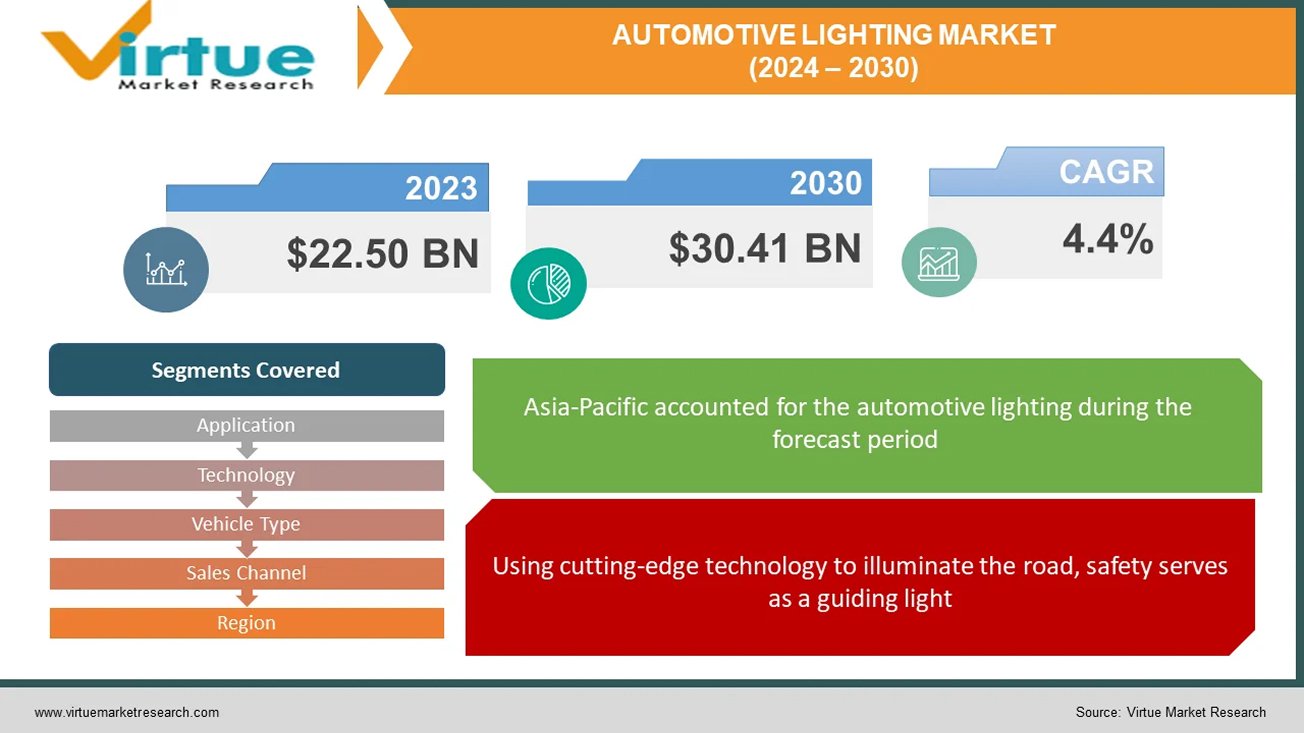
Global automotive lighting refers to all vehicle lighting systems, from headlamps that illuminate the road to taillights that communicate movements. They guarantee motorists and other road users alike safety, visibility, and style. While taillights frequently use LEDs for improved visibility, headlights are available in a variety of technologies, including LED and laser. Interior illumination, DRLs, and signal lights all have a role to play. This market, which was estimated to be worth $33.64 billion in 2022, is anticipated to rise to $67.39 billion by 2030 because of laws, luxury tastes, safety concerns, and technological developments like OLED taillights and adaptive headlights. Anticipate a future dominated by intelligent, connected, personalized, and sustainable lighting systems that enhance the safety, efficiency, and aesthetic appeal of automobiles.
Car lighting works its magic to provide safety, visibility, and style. Headlights cut through the night, taillights express intent, and interiors shine with comfort. The billion-dollar global business is expected to rise due to consumer demand for high-end experiences, safer roads, and cutting-edge technology. Imagine dynamic messages being painted by taillights, headlights that adjust to the road, and interiors that customize their atmosphere. Driven by technological advancements like linked systems and laser beams, this future is calling. Anticipate even more visually attractive, environmentally friendly, and intelligent lighting to illuminate the way ahead, making cars safer, more efficient, and unquestionably cooler.
In the market for automobile lighting, safety is the driving force behind demand from the public and laws. While automated high beams smoothly react to traffic, adaptive headlights modify their beams so as not to blind other people. With visually striking displays, dynamic taillights convey intentions for braking and turning. Beyond these developments, integrated pedestrian identification and lane departure alerts will soon make roads safer and brighter for everyone.
Luxurious automobile lighting creates a distinct visual identity that goes beyond simple illumination. Personalized interior lighting customizes the driving experience by setting the mood with a range of colours and intensities, while intricate designs and distinctive DRLs modify exteriors. As you approach your automobile at night, welcoming lights lead the way, resulting in an interior that is perfectly lit. Not only is this symphony of light aesthetically pleasing, but it also stands as a tribute to luxury. Upcoming developments like gesture-controlled lighting and holographic displays promise to further enhance the experience.
The worldwide automotive lighting market is undergoing a significant transition towards energy-efficient solutions, as environmental concerns gain prominence. LED technology is leading the way, providing a ray of hope for the environment and drivers alike. LED lights beam brighter and use a lot less energy than conventional halogen lamps. There are some tangible advantages to this. For drivers, this translates to increased fuel economy, which lowers petrol prices and lessens reliance on fossil fuels. Greater air quality and a reduction in the transport sector's contribution to climate change are the results of reduced overall emissions.
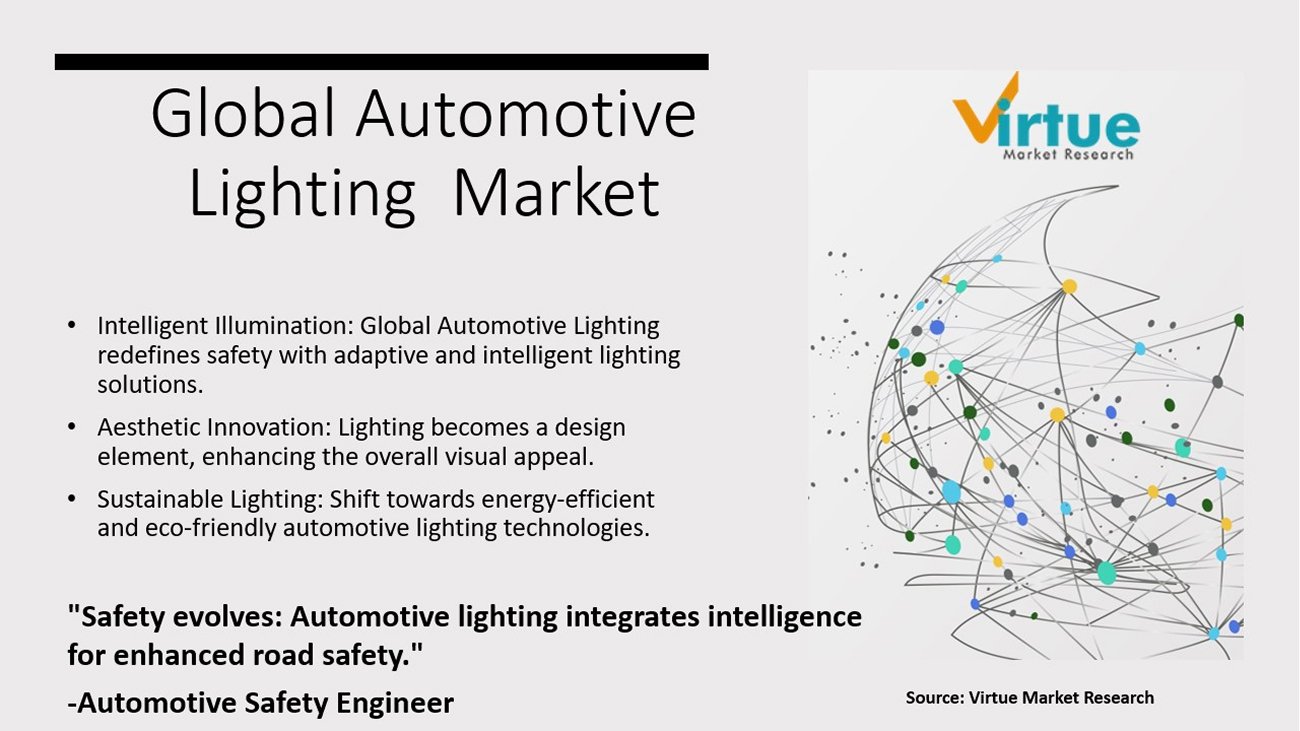
Although the global automotive lighting business is booming, there are still unknowns. Difficulties impede growth even as innovation propels it with eye catching features like laser beams and adaptable headlights. These technologies are luxury items due to their high cost and difficult integration, which puts producers' abilities to the test. The worldwide patchwork created by unclear legislation limits the potential of innovation. Durability issues persist, particularly when complex systems are subjected to challenging conditions. Ultimately, a lot of drivers still don't fully understand how these improvements can help them. Together, we can overcome these obstacles. The keys to reducing costs are improved production, more seamless integration, and unified regulations. Their full potential can be realized by educating customers about the safety, efficiency, and aesthetic value of these lighting wonders. By working together, we can pave the way for an even brighter and safer future for vehicle lighting.
It is made possible by advanced LED technology, which gives drivers the ability to customize their illumination for the highest level of comfort and flair. Consumers that care about the environment want greener products, and vehicle lighting complies. While solar- and self-powered lighting technologies offer a future powered by clean energy, energy-efficient LEDs lower pollution. The advent of connected lighting systems heralds a new age. Envision automobiles interacting with infrastructure and one another to minimize accidents and enhance traffic efficiency. Integrated headlights with pedestrian recognition provide unmatched safety, while dramatic taillights with eye-catching displays alert onlookers to your intentions. The possibilities are endless in the future. Gesture-controlled interior illumination, holographic displays projected onto the road, and even light fixtures with self-healing capabilities.

Due to laws requiring safety features like headlights, taillights, and brake lights, exterior lighting presently holds the most market share in the vehicle lighting industry. The dominance of this market is partly attributed to advancements in safety-focused technologies such as adaptive headlights and daytime running lights. The market value of external lighting is increased by the quick adoption of technology like LED bulbs and laser lights, which improve performance and aesthetics. Conversely, the interior lighting market is expected to increase at the fastest rate in the upcoming years. Innovations like ambient lighting and technology breakthroughs like LED and OLED displays, driven by consumer demand for comfort and personalisation, open new possibilities. The spread of sophisticated interior lighting systems is further driven by the growing emphasis on safety and the expansion of the luxury car market.
The worldwide vehicle lighting market is currently dominated by halogen because of its more affordable price, advanced technology, and useful illumination. With its dependable supply chain and affordable option for manufacturers and cost-conscious customers, halogen holds the biggest market share. The fastest-growing market right now is LEDs, which are predicted to shortly overtake halogen. The rapid expansion of LEDs is driven by their higher efficiency, longer lifespan, flexibility in design, and technological breakthroughs including enhanced brightness. Because LEDs use less energy and produce fewer emissions and better fuel economy, they are becoming more and more popular in the changing automotive lighting market.
Passenger automobiles rule the worldwide automotive lighting market. The sheer number of passenger cars produced which surpasses that of business vehicles and fuels the need for lighting systems is the primary cause of this popularity. The growing demand for personal automobiles in developing nations is a result of rising disposable income, which in turn drives the rise of the passenger car market. The importance that consumers place on safety and aesthetics elements helps to drive market expansion. But in the upcoming years, the market for electric and hybrid cars is expected to develop at the quickest rate. The exponential rise of the worldwide electric car market, which is still expanding and shows no signs of slowing down, is what is driving this surge. Specialised lighting solutions are required since electric and hybrid vehicles have different lighting requirements because of their specific functionality and design aesthetics.
Most lighting systems sold nowadays are sold by OEMs (Original Equipment Manufacturers), primarily because manufacturers pre-install lighting systems in new cars. But in the next years, the aftermarket is expected to develop at the quickest rate. This spike in demand for replacement parts, especially lighting systems, can be linked to several variables, one of them being the average age of cars. The industry is expanding because of consumers' growing desire to personalise their cars with aftermarket lighting upgrades such LED upgrades and decorative lighting. The availability and affordability of technologies like adaptive headlights and laser lights in the aftermarket, together with other advancements in lighting technology, are driving demand even more. Moreover, the growing market for electric cars (EVs).
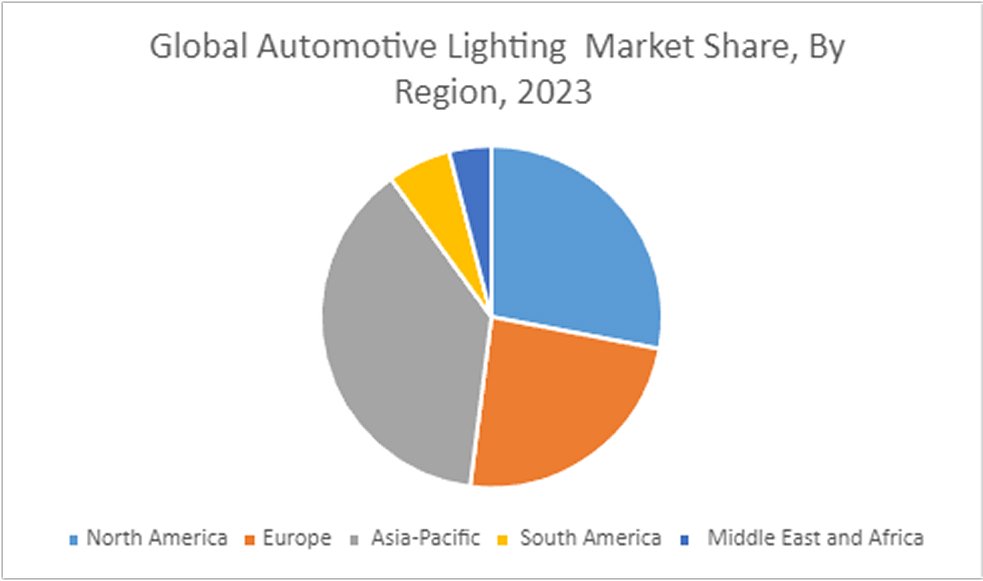
Throughout the forecast period, Asia Pacific is anticipated to be the automotive lighting market with the highest profitability. Over the past few years, Asia Pacific countries like China and India have seen notable increases in automotive manufacturing and sales, primarily in the medium-to premium luxury car segment. Asia Pacific is predicted to see an increase in the manufacturing of passenger cars, with India experiencing the strongest growth rate. Depending on the state of the national economy, the area offers a suitable selection of both high-end and cheap cars. For instance, there is a substantial demand for halogen, Xenon/HID, and LED since China and India produce more economy and mid-range automobiles. On the other hand, luxury car adoption rates are greater in South Korea and Japan, where LED lighting is the norm.
A brief shadow was thrown by COVID-19 over the worldwide automotive lighting market. Production was stopped by lockdowns and supply chain disruptions, while luxury lighting upgrades were shelved by consumers on a tight budget. Resources became scarce, and R&D stagnated. Still, the market is recovering thanks to resurgent demand and rearranged priorities. While energy-efficient LEDs are being pushed towards adoption by sustainability, safety concerns are driving interest in features like pedestrian detection and adaptive headlights. The digital push of the epidemic creates opportunities for intelligent, networked lighting systems that may interact with infrastructure and other cars. Ultimately, the industry is positioned to shine brighter, focused on safety, sustainability, and a connected future, even though the pandemic dimmed its brilliance.
A development collaboration between OSRAM Continental and REHAU aims to incorporate lighting into external components, providing automobile manufacturers with innovative lighting options that improve functionality and design flexibility. For rear combination lamps, Hella unveiled a revolutionary lighting innovation called Hella FlatLight technology. A Memorandum of Understanding (MoU) was signed by Samvardhana Motherson Automotive Systems Group BV (SMRPBV), a division of Motherson Group, and Marelli Automotive Lighting to investigate a technology collaboration focused on intelligently lighted external body components. Valeo debuted their revolutionary 360° lighting system at the Shanghai Auto Show. This technology surrounds the car with a band of light, projecting instantaneous, clear signs that other drivers can see from a distance. Pedestrians, cyclists, and scooter riders are especially susceptible to these signals
Tow prepreg offers a compelling advantage – an exceptional strength-to-weight ratio. This means two prepreg components can be remarkably lightweight while still possessing the necessary strength to withstand demanding applications. This unique property makes it a highly sought-after material across various industries.
. Carbon fiber, the primary choice for tow prepreg due to its exceptional properties, is significantly more expensive compared to traditional materials like steel or aluminum. This high cost can be a barrier for manufacturers, especially for budget-conscious applications.
Hexcel Corporation, Toray Industries, Inc., Solvay Group, SGL Carbon SE Teijin Limited, Mitsubishi Chemical Corporation, TCR Composites, Inc., ENEOs Holdings, Inc., Porcher Industries, Red Composites Ltd, Vitech Composites, Axiom Materials
North America has emerged as the most dominant player in the market, commanding an impressive 35% share
Asia-Pacific emerges as the fastest-growing region in this sector. Its burgeoning population, rising disposable incomes, and rapid urbanization have fueled the demand.
Joining thousands of companies around the world committed to making the Excellent Business Solutions.

Specify your preferred Countries, Segments, or timeframes
Unlock Country Level Outlook, Trends, Cross-country Comparability, or supply Chain Variations.



Analyst Support
Every order comes with Analyst Support.

Customization
We offer customization to cater your needs to fullest.

Verified Analysis
We value integrity, quality and authenticity the most.

