SMS Marketing Market Research Report Segmentation by Type (A2P SMS, Promotional SMS, Transactional SMS, Two-Way SMS); By Application (Retail & E-commerce, Banking & Financial Services, Healthcare, Travel & Hospitality, Media & Entertainment, Others); By End User (Enterprises, SMEs, Agencies, Developers); Region – Forecast (2025–2030)
GLOBAL SMS MARKETING MARKET (2025 - 2030)
The global SMS marketing market was valued at USD 12.6 billion in 2025 and is projected to reach USD 38.4 billion by 2030, growing at a compound annual growth rate (CAGR) of 20.4% during the forecast period.
SMS marketing, also referred to as A2P (application-to-person) messaging when sent from businesses to consumers, remains one of the fastest-growing direct marketing channels because of its immediacy, high open rates and near universal reach (no app download required). SMS’s resilience stems from simple technical realities, extremely high deliverability and open rates, compatibility with every mobile phone, and low friction (users don’t need to install anything to receive messages). Over the past 3 years marketers have reallocated budgets toward messaging channels that drive immediate engagement and measurable conversion, coupled with regulatory improvements for A2P (e.g., 10DLC in the U.S.) and advances in richer messaging (RCS/BM — Rich Communication Services / RCS Business Messaging), the SMS marketing channel is evolving from basic text blasts to personalized, interactive customer journeys.
KEY MARKET INSIGHTS
Two-way conversational messaging and rich formats (RCS Business Messaging) are growing fastest as they enable in-message flows (chatbots, product carousels, payment links) that measurably boost conversion and CLTV.
Asia-Pacific leads by message volumes because of large user bases and deep mobile penetration. North America and Europe lead in per-user monetization and platform innovation. The U.S. SMS marketing market alone was valued at roughly USD 2.86 billion in 2024.
RCS adoption accelerates globally, with major carriers and platforms expanding support for richer business messaging and brands piloting carousels and suggested replies to increase conversions.
Research and vendor studies show consumer opt-in rates and conversion via SMS rising sharply, with surveys reporting that roughly half of consumers have made purchases as a direct result of business texts and opt-in penetration increasing year-over-year.
Analysts highlight A2P/SMS platform consolidation as larger CPaaS vendors continue to acquire specialized messaging providers to strengthen carrier relations and add RCS capabilities.
Retail & e-commerce and Financial Services drive the highest volumes, retail for promotions, cart-abandon recovery and flash sales; finance for OTPs and important alerts.
SMS Marketing Market Drivers
Exceptional engagement performance and cost efficiency continue to make SMS one of the most effective and high-ROI marketing channels.
SMS marketing continues to outperform most other digital marketing channels when it comes to immediate engagement and response rates. Across multiple industry surveys and benchmark reports, SMS consistently records open rates exceeding 90%, far higher than email or display advertising. This exceptional performance translates into strong short-term conversions when campaigns are timed effectively. For instance, businesses report significantly higher response rates for flash sales, appointment reminders, delivery updates, and limited-time offers when executed through SMS. The key advantage lies in cost efficiency and immediacy; the cost per delivered impression is low, yet the return in terms of user action and engagement is high. Messages are typically read within minutes of delivery, enabling real-time marketing impact. Because of this, marketers continue to invest heavily in SMS as a reliable, high-performing communication channel for both transactional and promotional outreach.
Advancements in RCS, AI personalization, and omnichannel integration are transforming SMS from a simple messaging tool into an intelligent, interactive communication platform.
The SMS marketing landscape is rapidly evolving with the integration of Rich Communication Services (RCS), Artificial Intelligence (AI), and omnichannel orchestration. Traditional text messaging is being enhanced through RCS Business Messaging, which introduces interactive elements like carousels, suggested replies, and multimedia layouts. These features allow brands to engage consumers with visually rich, dynamic experiences ,similar to app-like interactions within the messaging interface, driving higher engagement and click-through rates.At the same time, AI-driven personalization is revolutionizing how businesses communicate via SMS. Advanced algorithms now analyze customer behavior, preferences, and timing to tailor messages more precisely. Marketers are using AI to predict user intent, automate responses, and design conversational flows that guide customers through the buyer journey.Additionally, leading marketing platforms are orchestrating SMS alongside other digital channels such as email, push notifications, and chatbots, creating seamless, cross-channel experiences. This integration transforms SMS from a one-way broadcast tool into a two-way conversational engine capable of nurturing relationships, gathering feedback, automating customer service, and even directing real-time purchases. These technological advancements are propelling SMS marketing into a more intelligent, interactive, and data-driven era.
Market Restraints and Challenges
The SMS marketing market faces several restraints primarily driven by increasing regulatory scrutiny and evolving compliance standards. Stricter frameworks such as the 10DLC regulations in the U.S., GDPR-like privacy laws in other regions, and carrier-level anti-spam filters are making it more complex for legitimate businesses to operate large-scale messaging campaigns. These measures, while aimed at curbing spam, have introduced higher operational and compliance costs. Additionally, overuse of promotional texts and poor opt-in management often result in customer fatigue, increased unsubscribe rates, and potential blocklisting by carriers. For smaller enterprises, the need to continuously manage deliverability, register campaigns with carriers, and maintain clean subscriber lists adds significant technical and financial burdens, limiting their ability to scale SMS marketing efforts effectively.
Market Opportunities
The SMS marketing market presents strong growth potential through the expansion of Rich Communication Services (RCS) and the rapid rise of conversational commerce. As handset manufacturers and mobile carriers increasingly support RCS, businesses can move beyond simple text messages to deliver interactive, media-rich, and shoppable experiences directly within users’ messaging apps. This evolution allows brands to engage customers through two-way conversations, integrate product browsing or payments, and provide real-time customer support, all of which drive higher engagement and conversion rates. Moreover, the trend toward vertical-specific solutions is unlocking new revenue opportunities for vendors. Industry-tailored SMS and RCS flows, such as automated restaurant reservations, fraud-protected financial one-time passwords (OTPs), or healthcare appointment reminders, enable companies to offer more specialised, high-value services. This verticalization strategy not only boosts average contract values (ACV) but also strengthens customer retention by embedding SMS solutions deeply within each client’s operational workflow.
GLOBAL SMS MARKETING MARKET
REPORT METRIC
DETAILS
Market Size Available
2024 - 2030
Base Year
2024
Forecast Period
2025 - 2030
CAGR
20.4%
Segments Covered
By Product, Type, Consumption, Distribution Channel and Region
Various Analyses Covered
Global, Regional & Country Level Analysis, Segment-Level Analysis, DROC, PESTLE Analysis, Porter’s Five Forces Analysis, Competitive Landscape, Analyst Overview on Investment Opportunities
Regional Scope
North America, Europe, APAC, Latin America, Middle East & Africa
Key Companies Profiled
Twilio Inc., Sinch AB, Infobip Ltd., Vonage Holdings Corp. (part of Ericsson), MessageBird B.V., Kaleyra Inc.
Netcore Cloud Pvt. Ltd., Tyntec GmbH
Clickatell, Route Mobile Ltd.
Segmentation by Type
A2P SMS
Promotional SMS
Transactional SMS
Two-Way SMS
A2P (Application-to-Person) SMS dominates the SMS Marketing Market, accounting for the largest revenue share in 2025. Businesses across industries rely heavily on A2P SMS for notifications, OTP verifications, delivery alerts, and appointment confirmations due to its unmatched reach and reliability. It serves as the backbone of enterprise communication and customer engagement strategies, especially in banking, retail, and telecom sectors.
Promotional SMS continues to expand steadily as brands prioritize direct mobile engagement to drive sales and brand awareness. With open rates above 90%, SMS campaigns remain one of the most effective tools for marketing promotions, flash sales, and limited-time offers. Transactional SMS also holds significant importance for secure and personalized communication, especially in sectors like fintech, e-commerce, and logistics.
The fastest-growing segment, however, is Two-Way SMS, which enables interactive communication between businesses and customers. Driven by conversational marketing and customer support automation, Two-Way SMS allows brands to collect feedback, handle inquiries, and complete transactions in real-time. As personalization and real-time engagement become central to marketing success, Two-Way SMS adoption is expected to surge rapidly through 2030.
Segmentation by Application
Retail & E-commerce
Banking & Financial Services
Healthcare
Travel & Hospitality
Media & Entertainment
Others
Retail and e-commerce lead the SMS marketing landscape, with brands leveraging text campaigns to announce flash sales, order updates, and loyalty rewards. The high conversion rate of SMS promotions has made it an essential channel for customer retention and abandoned cart recovery. The segment benefits from the rise of omnichannel retailing, where SMS acts as a seamless link between online and offline customer journeys.
Banking and financial services also hold a strong share, using SMS for authentication, balance alerts, and fraud prevention. Transactional trust and compliance with regulatory frameworks make this segment stable and recurring. The fastest-growing application is seen in Healthcare and Travel & Hospitality, where SMS is increasingly used for appointment reminders, health alerts, travel updates, and booking confirmations. Media and entertainment brands are also tapping into SMS to promote events, OTT releases, and contests, further broadening the application base.
Segmentation by End User
Enterprises
SMEs
Agencies
Developers
Enterprises represent the largest end-user segment, contributing significantly to market revenue due to large-scale communication needs across departments, customers, and geographies. Enterprises in banking, telecom, logistics, and e-commerce sectors integrate SMS APIs for automated marketing and alert systems, ensuring timely outreach and operational efficiency.
SMEs, on the other hand, are rapidly adopting SMS marketing for its affordability, scalability, and ease of execution. The low setup cost and high return on investment make SMS an ideal tool for small businesses to reach their target audiences directly. Marketing agencies and developers are emerging as key ecosystem players, managing multi-client campaigns, analytics, and API integrations. This reflects a growing trend of outsourcing SMS marketing operations to specialized service providers who can optimize delivery rates, compliance, and engagement metrics.
Regional Analysis
• North America
• Europe
• Asia-Pacific
• Middle East & Africa
• Latin America
Asia-Pacific dominates the SMS Marketing Market, driven by its massive mobile user base, affordable messaging services, and expanding digital commerce ecosystem. Countries like India, China, and Indonesia are major growth engines, where mobile-first marketing continues to outperform other channels.
North America is the fastest-growing region, propelled by rising investment in omnichannel customer engagement, compliance-based SMS platforms, and integration of AI-driven personalization. Enterprises in the U.S. and Canada are increasingly combining SMS with CRM and automation tools for advanced targeting. Europe maintains a steady growth trajectory supported by strong data protection frameworks (like GDPR) and the popularity of permission-based marketing. Meanwhile, Latin America and the Middle East & Africa are witnessing expanding adoption of SMS-based marketing, especially in banking and retail sectors where smartphone penetration and digital literacy are rapidly increasing.
LATEST TRENDS & DEVELOPMENTS
RCS adoption expanded in 2024–2025 and is reshaping expectations for branded, interactive messaging. Brands are increasingly experimenting with RCS when supported and fall back to SMS for universal reach. Marketers use AI for message timing, segmentation, subject phrasing and conversational agents that handle responses 24/7, improving ROI on SMS spends.SMS is now embedded in broader customer journeys with email, push notifications and in-app messages; platforms provide unified analytics and attribution. Brands use SMS for loyalty program nudges, membership renewals and subscription billing reminders, use cases that increase recurring revenue.
COVID-19 IMPACT ANALYSIS
The COVID-19 pandemic accelerated digital communication and drove greater use of SMS for critical notifications (service updates, health alerts, delivery tracking). Many businesses that historically relied on in-store marketing pivoted to mobile messaging to reach customers at home. While in the initial months of the crisis, some campaigns were paused, the medium’s long-term relevance increased, a shift that persists as companies maintain SMS as a core part of their customer retention and recovery playbooks.
KEY PLAYERS IN THE MARKET
Twilio Inc.
Sinch AB
Infobip Ltd.
Vonage Holdings Corp. (part of Ericsson)
MessageBird B.V.
Kaleyra Inc.
Netcore Cloud Pvt. Ltd.
Tyntec GmbH
Clickatell
Route Mobile Ltd.
To Learn more about this report,
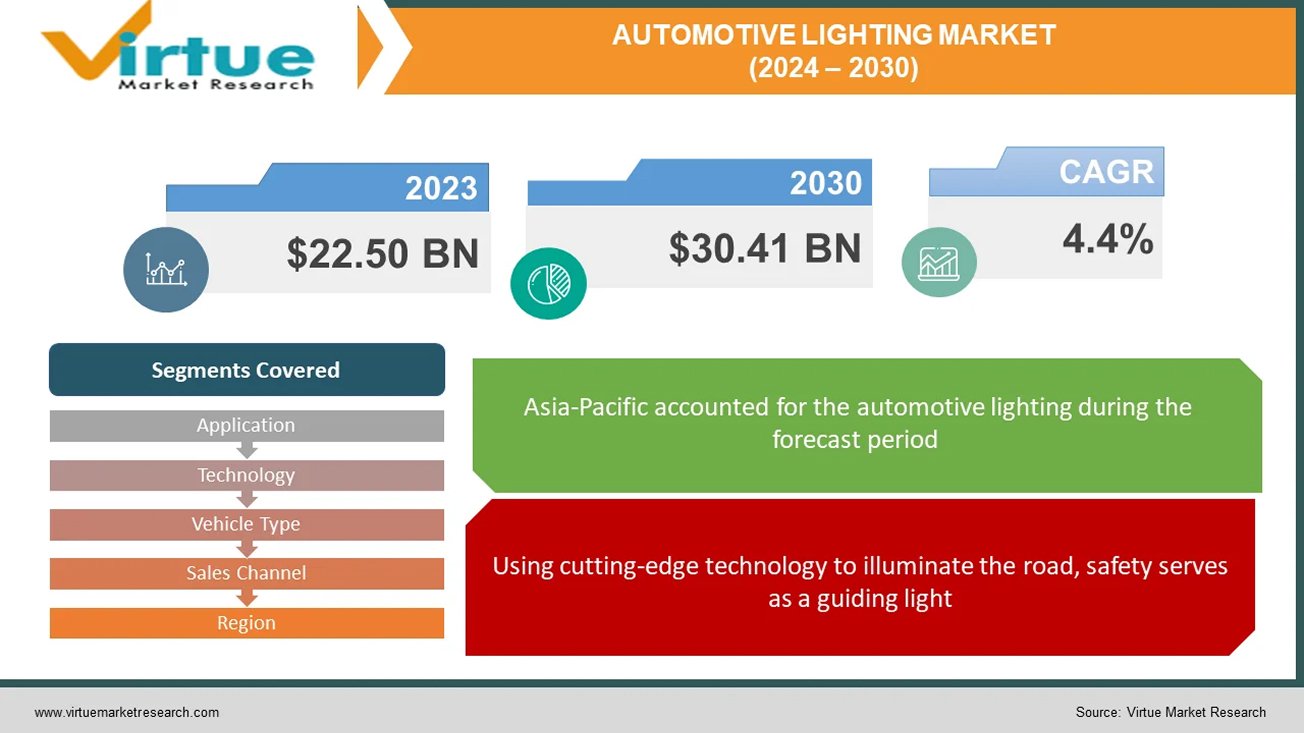
Global automotive lighting refers to all vehicle lighting systems, from headlamps that illuminate the road to taillights that communicate movements. They guarantee motorists and other road users alike safety, visibility, and style. While taillights frequently use LEDs for improved visibility, headlights are available in a variety of technologies, including LED and laser. Interior illumination, DRLs, and signal lights all have a role to play. This market, which was estimated to be worth $33.64 billion in 2022, is anticipated to rise to $67.39 billion by 2030 because of laws, luxury tastes, safety concerns, and technological developments like OLED taillights and adaptive headlights. Anticipate a future dominated by intelligent, connected, personalized, and sustainable lighting systems that enhance the safety, efficiency, and aesthetic appeal of automobiles.
Key Market Insights:
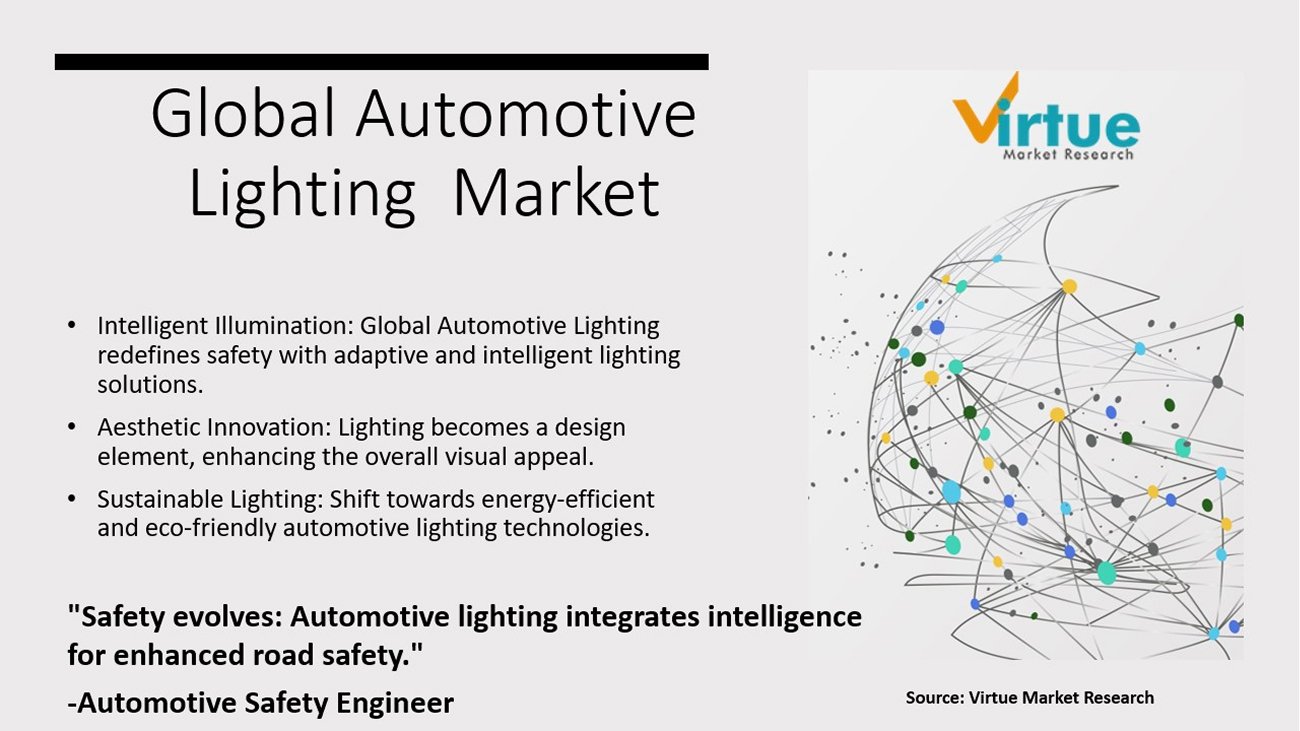
Car lighting works its magic to provide safety, visibility, and style. Headlights cut through the night, taillights express intent, and interiors shine with comfort. The billion-dollar global business is expected to rise due to consumer demand for high-end experiences, safer roads, and cutting-edge technology. Imagine dynamic messages being painted by taillights, headlights that adjust to the road, and interiors that customize their atmosphere. Driven by technological advancements like linked systems and laser beams, this future is calling. Anticipate even more visually attractive, environmentally friendly, and intelligent lighting to illuminate the way ahead, making cars safer, more efficient, and unquestionably cooler.
Global Automotive Lighting Market Drivers:
Using cutting-edge technology to illuminate the road, safety serves as a guiding light.
In the market for automobile lighting, safety is the driving force behind demand from the public and laws. While automated high beams smoothly react to traffic, adaptive headlights modify their beams so as not to blind other people. With visually striking displays, dynamic taillights convey intentions for braking and turning. Beyond these developments, integrated pedestrian identification and lane departure alerts will soon make roads safer and brighter for everyone.
Beyond Performance-Based Luxuries Redefined by Light.
Luxurious automobile lighting creates a distinct visual identity that goes beyond simple illumination. Personalized interior lighting customizes the driving experience by setting the mood with a range of colours and intensities, while intricate designs and distinctive DRLs modify exteriors. As you approach your automobile at night, welcoming lights lead the way, resulting in an interior that is perfectly lit. Not only is this symphony of light aesthetically pleasing, but it also stands as a tribute to luxury. Upcoming developments like gesture-controlled lighting and holographic displays promise to further enhance the experience.
Fuel Efficiency Takes the Lead: Illuminating Sustainability
The worldwide automotive lighting market is undergoing a significant transition towards energy-efficient solutions, as environmental concerns gain prominence. LED technology is leading the way, providing a ray of hope for the environment and drivers alike. LED lights beam brighter and use a lot less energy than conventional halogen lamps. There are some tangible advantages to this. For drivers, this translates to increased fuel economy, which lowers petrol prices and lessens reliance on fossil fuels. Greater air quality and a reduction in the transport sector's contribution to climate change are the results of reduced overall emissions.
To Learn more about this report,
Global Automotive Lighting Market Restraints and Challenges:
Although the global automotive lighting business is booming, there are still unknowns. Difficulties impede growth even as innovation propels it with eye catching features like laser beams and adaptable headlights. These technologies are luxury items due to their high cost and difficult integration, which puts producers' abilities to the test. The worldwide patchwork created by unclear legislation limits the potential of innovation. Durability issues persist, particularly when complex systems are subjected to challenging conditions. Ultimately, a lot of drivers still don't fully understand how these improvements can help them. Together, we can overcome these obstacles. The keys to reducing costs are improved production, more seamless integration, and unified regulations. Their full potential can be realized by educating customers about the safety, efficiency, and aesthetic value of these lighting wonders. By working together, we can pave the way for an even brighter and safer future for vehicle lighting.
Global Automotive Lighting Market Opportunities:
It is made possible by advanced LED technology, which gives drivers the ability to customize their illumination for the highest level of comfort and flair. Consumers that care about the environment want greener products, and vehicle lighting complies. While solar- and self-powered lighting technologies offer a future powered by clean energy, energy-efficient LEDs lower pollution. The advent of connected lighting systems heralds a new age. Envision automobiles interacting with infrastructure and one another to minimize accidents and enhance traffic efficiency. Integrated headlights with pedestrian recognition provide unmatched safety, while dramatic taillights with eye-catching displays alert onlookers to your intentions. The possibilities are endless in the future. Gesture-controlled interior illumination, holographic displays projected onto the road, and even light fixtures with self-healing capabilities.
AUTOMOTIVE LIGHTING MARKET REPORT COVERAGE:
To Learn more about this report,
Global Automotive Lighting Market Segmentation: By Application
Exterior Lighting
Interior Lighting
Due to laws requiring safety features like headlights, taillights, and brake lights, exterior lighting presently holds the most market share in the vehicle lighting industry. The dominance of this market is partly attributed to advancements in safety-focused technologies such as adaptive headlights and daytime running lights. The market value of external lighting is increased by the quick adoption of technology like LED bulbs and laser lights, which improve performance and aesthetics. Conversely, the interior lighting market is expected to increase at the fastest rate in the upcoming years. Innovations like ambient lighting and technology breakthroughs like LED and OLED displays, driven by consumer demand for comfort and personalisation, open new possibilities. The spread of sophisticated interior lighting systems is further driven by the growing emphasis on safety and the expansion of the luxury car market.
Global Automotive Lighting Market Segmentation: By Technology
Halogen
LED (Light-Emitting Diode)
Xenon
Emerging Technologies
The worldwide vehicle lighting market is currently dominated by halogen because of its more affordable price, advanced technology, and useful illumination. With its dependable supply chain and affordable option for manufacturers and cost-conscious customers, halogen holds the biggest market share. The fastest-growing market right now is LEDs, which are predicted to shortly overtake halogen. The rapid expansion of LEDs is driven by their higher efficiency, longer lifespan, flexibility in design, and technological breakthroughs including enhanced brightness. Because LEDs use less energy and produce fewer emissions and better fuel economy, they are becoming more and more popular in the changing automotive lighting market.
Global Automotive Lighting Market Segmentation: By Vehicle Type
Passenger Cars
Commercial Vehicles
Passenger automobiles rule the worldwide automotive lighting market. The sheer number of passenger cars produced which surpasses that of business vehicles and fuels the need for lighting systems is the primary cause of this popularity. The growing demand for personal automobiles in developing nations is a result of rising disposable income, which in turn drives the rise of the passenger car market. The importance that consumers place on safety and aesthetics elements helps to drive market expansion. But in the upcoming years, the market for electric and hybrid cars is expected to develop at the quickest rate. The exponential rise of the worldwide electric car market, which is still expanding and shows no signs of slowing down, is what is driving this surge. Specialised lighting solutions are required since electric and hybrid vehicles have different lighting requirements because of their specific functionality and design aesthetics.
Global Automotive Lighting Market Segmentation: By Sales Channel
OEM (Original Equipment Manufacturers)
Aftermarket
Most lighting systems sold nowadays are sold by OEMs (Original Equipment Manufacturers), primarily because manufacturers pre-install lighting systems in new cars. But in the next years, the aftermarket is expected to develop at the quickest rate. This spike in demand for replacement parts, especially lighting systems, can be linked to several variables, one of them being the average age of cars. The industry is expanding because of consumers' growing desire to personalise their cars with aftermarket lighting upgrades such LED upgrades and decorative lighting. The availability and affordability of technologies like adaptive headlights and laser lights in the aftermarket, together with other advancements in lighting technology, are driving demand even more. Moreover, the growing market for electric cars (EVs).
To Learn more about this report,
Global Automotive Lighting Market Segmentation: By Region
North America
Asia-Pacific
Europe
South America
Middle East and Africa
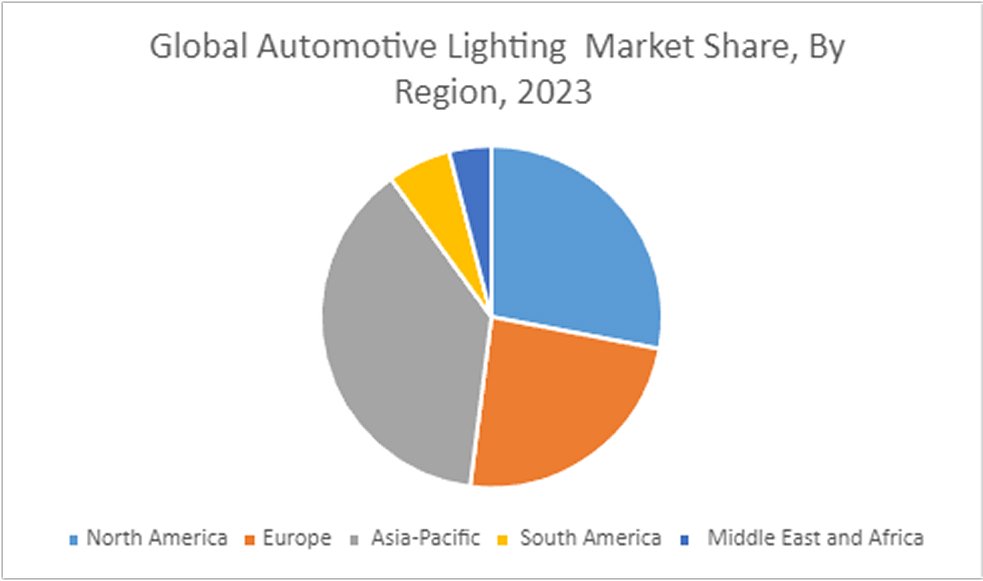
Throughout the forecast period, Asia Pacific is anticipated to be the automotive lighting market with the highest profitability. Over the past few years, Asia Pacific countries like China and India have seen notable increases in automotive manufacturing and sales, primarily in the medium-to premium luxury car segment. Asia Pacific is predicted to see an increase in the manufacturing of passenger cars, with India experiencing the strongest growth rate. Depending on the state of the national economy, the area offers a suitable selection of both high-end and cheap cars. For instance, there is a substantial demand for halogen, Xenon/HID, and LED since China and India produce more economy and mid-range automobiles. On the other hand, luxury car adoption rates are greater in South Korea and Japan, where LED lighting is the norm.
COVID-19 Impact Analysis on the Global Automotive Lighting Market:
A brief shadow was thrown by COVID-19 over the worldwide automotive lighting market. Production was stopped by lockdowns and supply chain disruptions, while luxury lighting upgrades were shelved by consumers on a tight budget. Resources became scarce, and R&D stagnated. Still, the market is recovering thanks to resurgent demand and rearranged priorities. While energy-efficient LEDs are being pushed towards adoption by sustainability, safety concerns are driving interest in features like pedestrian detection and adaptive headlights. The digital push of the epidemic creates opportunities for intelligent, networked lighting systems that may interact with infrastructure and other cars. Ultimately, the industry is positioned to shine brighter, focused on safety, sustainability, and a connected future, even though the pandemic dimmed its brilliance.
Recent Trends and Developments in the Global Automotive Lighting Market:
A development collaboration between OSRAM Continental and REHAU aims to incorporate lighting into external components, providing automobile manufacturers with innovative lighting options that improve functionality and design flexibility. For rear combination lamps, Hella unveiled a revolutionary lighting innovation called Hella FlatLight technology. A Memorandum of Understanding (MoU) was signed by Samvardhana Motherson Automotive Systems Group BV (SMRPBV), a division of Motherson Group, and Marelli Automotive Lighting to investigate a technology collaboration focused on intelligently lighted external body components. Valeo debuted their revolutionary 360° lighting system at the Shanghai Auto Show. This technology surrounds the car with a band of light, projecting instantaneous, clear signs that other drivers can see from a distance. Pedestrians, cyclists, and scooter riders are especially susceptible to these signals
Fill out the form below and our team will get back to you shortly
FAQ's
Yes ,SMS remains highly effective for immediate, time-sensitive communication due to extremely high open rates and no app or internet dependency. It’s best used in an omnichannel mix for maximum ROI.
RCS (Rich Communication Services) is the “next gen” of messaging that supports carousels, suggested replies and rich media. Where supported, it increases engagement and enables more app-like experiences within the native messaging app, but a fallback to SMS is still essential for universal reach.
Key hurdles include obtaining clear opt-in consent, registering A2P flows where required (e.g., 10DLC in the U.S.), maintaining list hygiene, and staying inside carrier guidelines to avoid filtering or blocklisting.
Retail & e-commerce, financial services, healthcare and travel see high value — retail for promotions, finance for secure transactional messages, healthcare for reminders and adherence communications.
A mix of metrics like delivery & read rates, click-through rate on links, conversion (sales attributable to SMS), opt-out rate, revenue per message, and upstream metrics such as lifetime value and retention uplift from message sequences. Modern platforms also attribute conversions across channels in omnichannel journeys.
More related reports
Get expert-driven market research reports from a leading research partner to help you navigate the future of the global industry.
Report Code: VMR-203 | Published Date: July 2025 | Format: Excel and PDF
The 3D Scanning Market was valued at USD 2.28 billion in 2024 and is projected to reach a market size of USD 5.37 billion by the end of 2030. Over the forecast period of 2025-2030, the market is projected to grow at a CA...
Report Code: VMR-14818 | Published Date: July 2024 | Format: Excel and PDF
The Global Passwordless Authentication Market is expected to grow from USD 22.70 billion in 2025 to approximately USD 49.13 billion by 2030, at a 16.7% CAGR from 2026-2030.
Report Code: VMR-435 | Published Date: March 2024 | Format: Excel and PDF
The Equity Management Software Market was valued at USD 591.85 million in 2023. Over the forecast period of 2024-2030, it is projected to reach USD 1508.47 million by 2030, growing at a CAGR of 14.3%.
Report Code: VMR-15816 | Published Date: March 2024 | Format: Excel and PDF
The global intellectual property (IP) services market was valued at USD 2.8 billion and is projected to reach a market size of USD 6.38 billion by the end of 2030. Over the forecast period of 2024–2030, the market is pro...
“We received a complex piece of work for our niche market from Virtue Market research in short period of time. I appreciate the quality and content of the final files we received. Thanks for the support”
Medical Devices Company based in Europe
“We received a complex piece of work for our niche market from Virtue Market research in short period of time. I appreciate the quality and content of the final files we received. Thanks for the support”
Medical Devices Company based in Europe
“We received a complex piece of work for our niche market from Virtue Market research in short period of time. I appreciate the quality and content of the final files we received. Thanks for the support”
Medical Devices Company based in Europe
“We received a complex piece of work for our niche market from Virtue Market research in short period of time. I appreciate the quality and content of the final files we received. Thanks for the support”
Medical Devices Company based in Europe
“We received a complex piece of work for our niche market from Virtue Market research in short period of time. I appreciate the quality and content of the final files we received. Thanks for the support”
Medical Devices Company based in Europe
“We received a complex piece of work for our niche market from Virtue Market research in short period of time. I appreciate the quality and content of the final files we received. Thanks for the support”


 Regional Analysis