
Family Entertainment Centers Market
The Family Entertainment Centers Market was valued at USD 34.45 billion in 2023. Over the forecast period of 2024-2030 it is projected to reach USD 73.81 billion by 2030, growing at a CAGR of 11.5%.
Explore reportThe Global Secondhand Luxury Goods Market was valued at USD 41 billion in 2025 and is projected to reach a market size of USD 61.08 billion by the end of 2030. Over the forecast period of 2026-2030, the market is projected to grow at a CAGR of 8.3 %.
The Global Secondhand Luxury Goods Market is characterised as a systematic ecosystem, which is the resale, purchase and exchange of second-hand high-value fashion and lifestyle products at extended lifecycles and provides consumers with access to luxury at lower price ranges. Over the past few years, this market has evolved from a niche, bargain-focused market to a mainstream, aspirational industry with a sense of changing consumer values and the increased importance of sustainability and democratisation of luxury ownership. Modern-day fashion consumers, collectors, and value-focused consumers are all engaged in an exciting circle economy where desirable handbags, iconic watches, designer clothing, exclusive jewellery, as well as limited-edition accessories and footwear, are all enjoying significant prestige well past the time they were initially purchased. Transparency, authentication technology, and trust are what the market is based on, and which enable making buying confident and the second-hand model a valid alternative to full-price retail. An array of sellers, including personal collection sellers that clear sellers and retail outlets, plus brand-managed buy-back programs, has made product accessibility more open and enhanced the product credibility. In the meantime, the changing nature of sales channels, including global online marketplaces and curated luxury resales sites, peer-to-peer marketplaces, consignment boutiques, and conventional thrift and estate dealers, gives customers and sellers numerous options to meet. The demand is still under pressure due to digital innovation, the ever-present economic pressure, and the increased environmental consciousness, as younger generations are now adopting resale not merely as a smart financial solution, but as a lifestyle choice. The credibility of the market and the perceived value of the market are increasing as the brands engage more in the circular practices and as the available authentication standards become more enhanced. With the second hand luxury market in the 2026-2030 prediction horizon, it is projected that the industry will experience a strong growth, due to consumer confidence, changing retail trends and growing interest in the high-end craftsmanship around the world. It is not just a transactional market but rather a cultural movement of reinventing the idea of luxury ownership in contemporary society.

Key Market Insights:

Market Drivers:
The increasing Consumer Value Consciousness and the changing Luxury Perception are driving the market.
A shift in consumer mindset is a very strong force behind the long second-hand luxury goods market across the world. The new generation of shoppers, particularly younger generations, including millennials and Gen Z, does not consider luxury as the possession of new products. Rather, they consider luxury in terms of financial wisdom, genuineness, and emotional attachment to craftsmanship. This transformation has taken pre-owned luxury that was a low-profile niche and made it a statement of a glamorous way of life. The attraction factor is not only on reduced costs but also access to iconic and high-quality products that have a long-term value. Consumers are becoming more and more interested in such goods as expensive handbags, vintage timepieces, luxury shoes, precious jewellery, and other accessories that would be unaffordable at retail prices.
Blistering Development of the Digital Resale Ecosystem and Trust-Enabling Infrastructure is driving the market.
Technology is taking a radical role in remaking the second-hand luxury environment. What used to be a loosely and ambiguously defined marketplace dominated by thrift stores, personal networks or even word of mouth transactions, has now been altered into a structured and believable global economy of resale. The modern shopper has gained power through advanced online resources and is able to pay safely, see clear images of the products, read their prices, and even have their identities verified by specialists. These breakthroughs have made perceived risk a lot lower, and shoppers are now willing to spend on high-end used products. The digital innovations make these brands highly accessible, such that buyers can shop verified handbags, precious jewels, fashionable attire, and treasured shoes regardless of where they are located across the globe.
Market Restraints and Challenges:
The worldwide market of second-hand luxury goods is facing a knotted network of limitations and obstacles that hinder the pace. Fractured supply chains and inconsistent authentication policies bring a lack of trust and reliability to the buyer, and disparate pricing and provenance discourage mainstream customers. The cross-border taxes and regulatory barriers introduce cost and complexity to the resellers trading across the regions. There are still lots of legacy brands that are leery about resale, and formal inventory flows are constrained by convoluted buyback programs. Business pressures, such as the costs of refurbishment and storage, intense competition on the platform, and counterfeiting, remain a thorn in the flesh of the verification attempts. Buyers are concerned with quality, refunds and dependable after-sales service of higher-priced items, which inhibits repeat buying. The assertions of sustainability bring about questioning, which places the marketplaces under the challenge of demonstrating actual circularity. The combination of these barriers requires spending on improved technology, strict regulation, partnerships with clarity, and more explicit regulation.
Market Opportunities:
The second-hand luxury goods market in the world provides many opportunities to investors and businesspeople. Authenticating and refurbishing used products can grow rapidly as consumers demand an authentic and sustainable platform. They will be able to collaborate with brands on certified buyback programs, provide smooth omnichannel experiences, and enter underpenetrated regions where heritage labels are gaining in demand. There are other services that can be led by technology: AI-based pricing, condition grading, and virtual try-ons can help you obtain greater margins and trust. The recurring revenue through curated subscription models, rental services and circular-fashion programs minimises the inventory risk. Resale can be repackaged as something worth retaining through strategic partnerships with influencers and legacy houses. Friction will be removed further by the introduction of logistics solutions based on the high-value shipments and transparent provenance tools. New entrants and existing players.
SECONDHAND LUXURY GOODS MARKET REPORT COVERAGE:
|
REPORT METRIC |
DETAILS |
|
Market Size Available |
2025 - 2030 |
|
Base Year |
2025 |
|
Forecast Period |
2026 - 2030 |
|
CAGR |
8.3% |
|
Segments Covered |
By Product Type, seller type, , Distribution Channel and Region |
|
Various Analyses Covered |
Global, Regional & Country Level Analysis, Segment-Level Analysis, DROC, PESTLE Analysis, Porter’s Five Forces Analysis, Competitive Landscape, Analyst Overview on Investment Opportunities |
|
Regional Scope |
North America, Europe, APAC, Latin America, Middle East & Africa |
|
Key Companies Profiled |
The RealReal, Vestiaire Collective, Rebag, Fashionphile, StockX, GOAT Group, Tradesy, Grailed, What Goes Around Comes Around, Heritage Auctions, 1stDibs, Farfetch Limited (Stadium Goods), Catawiki, Cudoni, and Luxury Garage Sale. |
Secondhand Luxury Goods Market Segmentation:
The highest share in the global secondhand luxury goods market belongs to handbags & small leather goods, as they have an unsurpassed value retention, collectability, and resale desirability. They are perennially attractive products and have the capability of anchoring their demand in both online and speciality resale settings because of their timeless appeal and their capacity to maintain premium pricing. Old-fashioned luxury homes are still in high demand, with silhouette designs that are classic and limited collections that are rare and circulate on resale markets. Following watches, clothing, jewellery, accessories, and footwear are on constant tracks that are fueled by sustainability agendas and shifting replacement cycles of wardrobes among fashion-conscious consumer groups across the world.
Watches are classified as the fastest-increasing product category since the interest in investment-grade timepieces and brand-certified pre-owned programs is increasing and enhancing trust and authenticity. Watches are becoming perceived more as enduring and value-enhancing possessions by collectors and younger luxury purchasers, less as obligatory utility products, contributing to the explosive growth of digital trading platforms and luxury authentication support services. The cycle of resale in apparel and footwear is also growing due to the normalisation of the circular luxury consumption cycle. Jewels and accessories continue to be key access points for aspirational customers who are increasingly transitioning out of new-purchase and new-chain purchases into edited pre-owned luxury ownership.

Individual sellers take the greatest portion of the seller population, which is driven by the resale culture among peers, high inventory turnover, and stiff competition on prices in the marketplace at both national and international levels. Personal luxury collections are going further into formalised resale spaces, with convenience and liquidity being the underpinning values that sellers will use to realise value out of unused premium goods. The social commerce and mobile listing also contribute to the accessibility of handbags, watches, and accessories, in that they can move fast without using traditional channels. The dynamic C2C ecosystem promotes elastic pricing and fast access to audiences, and this is why it is the most powerful source of inventory provision.
The fastest expanding group with luxury houses moving closer to circular commerce are retailers and professional resellers, with brand buyback and certified trade-in programs becoming more popular. Authentication, repair, professional valuation, and warranty help ensure the confidence of buyers by assuring them that they are not alone in thinking that resale is possible and that it should be a structured, high-end experience. The transition allows product lifecycle ownership and brand protection, as well as diversified customer relationships via sustainable values by the brands. Verified resale ecosystems that combine credibility and premium merchandising are currently preferred by consumers and redefine long-term loyalty and formal resale adoption on a global scale.

Platforms and online marketplaces have the highest distribution share due to the presence of global adoption of digital, easy product search, as well as broad inventory visibility based on category and price, among others. Open authentication, connected logistics, and artificial intelligence-matched products streamline buyer experience and boost trust in transactions on high-end goods. These marketplaces enable global resale liquidity, where buyers are able to find rare collectables and limited-edition luxury products sold by international buyers. Physical stores, peer-to-peer platforms, and offline resale environments add value to the mix as they use personal curation and physical judgment.
Peer-to-peer / C2C Platforms The most rapidly expanding distribution channel, fueled by social-first shopping habits and intense growth of community-driven reselling, is peer-to-peer / C2C. One-on-one buyer-seller experience encourages even greater price flexibility and customisation of negotiation, which may be popular among younger audiences who want to obtain their product at a cheaper cost and validate their authenticity. Conventionally, offline and consignment shops are transformed by the hybridisation of their digital technologies, which enhances the touchpoints in the authentication of high-quality watches and designer bags. Experienced resellers hasten the change by bringing high-trust, service-based resale with a high-end luxury portfolio and access to competitive marketplaces.

The largest portion of the global secondhand luxury goods market has been located in Europe due to a rich heritage of luxury and resale culture and a high concentration of high fashion houses. Legal secondary boutiques, auction houses, and established certified pre-owned watch and jewellery networks enhance regional supremacy in the resale value. The consumption intensity in North America and the Asia Pacific is high due to the growth of digital platforms and the availability of luxury, which is quickly changing. South America and the Middle East & Africa are involved with the emerging premium retail clusters and with the increased recognition of the circular luxury ownership.
Asia Pacific is the most rapidly expanding region that is driven by growing luxury-buying populations, faster penetration of the digital marketplace, and an interest in watches and collectable handbags. The cohorts of younger consumers actively embrace secondhand luxury as a good way to show individuality and savvy financial worth, which is accelerating cross-border ecommerce at a very high pace. North America brings in vivacious energy in terms of sustainability anticipations and resale-driven lifestyle changes, whereas Europe maintains consistent activity within certified premium channels. South America and the Middle East & Africa markets have been on an upward trend, and it is expected to continue as resale infrastructure and authentication become stronger.
The world market of second-hand luxury goods has been redefined by the COVID-19 pandemic in a way not many people could have anticipated. With the closures of physical retail outlets and consignment shops in big cities during lockdowns, the industry had to quickly redefine the manner in which customers and sellers interact. Consumer behaviour had changed radically, as the majority of people who were financially uncertain began to sell used luxury handbags, jewellery, watches, clothes, and accessories as a way of earning money, increasing their supply within the resale system. Meanwhile, the demand for high-quality secondhand products has increased since the taste of shoppers was oriented towards the more sensible alternative to the policy of luxurious shopping and focused on values, authenticity, and sustainability, rather than making an unthought-out purchase. Due to the lack of access to physical stores through travel bans and store closures, online marketplaces, speciality resellers, and peer-to-peer platforms were critical retailers. E-tools that authenticate digitally, virtual consultations, and contactless logistics were speeding up, and they will forever increase the adoption of e-commerce in the segment. Interestingly enough, the pandemic also fostered the culture of change: now consumers started perceiving second-hand luxury as a status-saving and environmentally conscious decision. Major luxury houses started to pay attention to the strategic role of circular retail and the attractiveness of this retail model to their younger, digitally native audiences, which resulted in an intensified brand buyback program. Though a temporary economic slowdown offered challenges to offline thrift and estate dealers, many of them recovered through the incorporation of a hybrid model and curated arrangement sales.
Latest Trends and Developments:
In the retail environment of any country, the secondhand luxury market is transforming at a pace that is even quicker than anticipated due to the shifting consumer principles and the shrewd digital platforms. Whispered and previously a secret amongst collectors, used designer items now have a mainstream bid as shoppers pursue sustainability and value in purchases, along with a story behind the item. The change is based on technology: verified markets, price algorithms, and 3D product catalogues offer reliability and convenience, and social networks and reseller culture of influencers make it acceptable to purchase second-hand luxury goods. Brands and independent experts are reacting differently- some are trying recommerce with authenticated buy-back schemes and pre-owned boutiques, others are trying to defend brand equity by tightening authentication, warranties and selective channel alliances. The geographic demand is expanding, and the appetite in the emerging markets is growing, and the mature market is showing an increasing interest in investment-grade watches, rare handbags and vintage jewellery. The dynamics of pricing have become subtle; scarcity, provenance and condition have now surpassed seasonality in influencing value, making some second-hand goods collectable assets. Circularity-oriented logistics, refurbishment services and sustainable packaging also enhance margins and lower the ecological cost of luxury consumption in the meantime. Regulatory focus and industry norms are also on the rise, which encourages more open lines of consumer protection and counterfeit avoidance that further professionalise the area.
Key Players in the Market:
Market News:
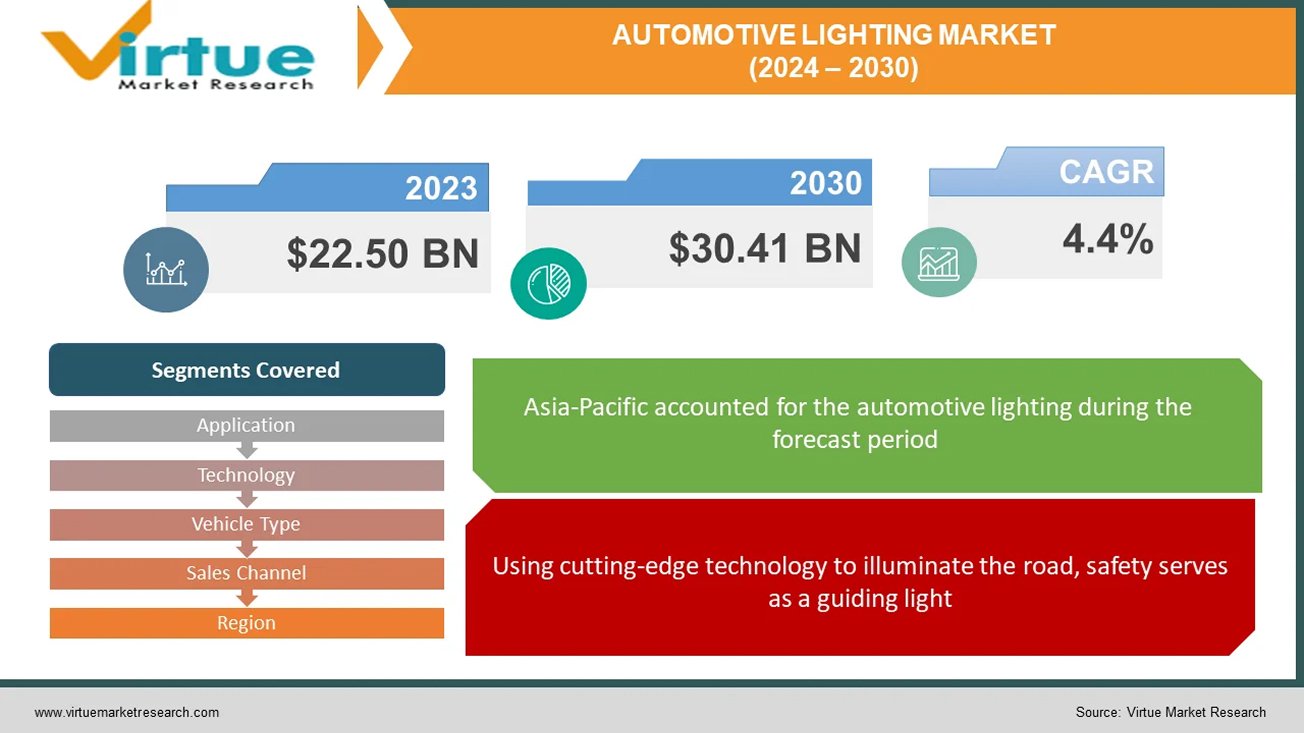
Global automotive lighting refers to all vehicle lighting systems, from headlamps that illuminate the road to taillights that communicate movements. They guarantee motorists and other road users alike safety, visibility, and style. While taillights frequently use LEDs for improved visibility, headlights are available in a variety of technologies, including LED and laser. Interior illumination, DRLs, and signal lights all have a role to play. This market, which was estimated to be worth $33.64 billion in 2022, is anticipated to rise to $67.39 billion by 2030 because of laws, luxury tastes, safety concerns, and technological developments like OLED taillights and adaptive headlights. Anticipate a future dominated by intelligent, connected, personalized, and sustainable lighting systems that enhance the safety, efficiency, and aesthetic appeal of automobiles.
Car lighting works its magic to provide safety, visibility, and style. Headlights cut through the night, taillights express intent, and interiors shine with comfort. The billion-dollar global business is expected to rise due to consumer demand for high-end experiences, safer roads, and cutting-edge technology. Imagine dynamic messages being painted by taillights, headlights that adjust to the road, and interiors that customize their atmosphere. Driven by technological advancements like linked systems and laser beams, this future is calling. Anticipate even more visually attractive, environmentally friendly, and intelligent lighting to illuminate the way ahead, making cars safer, more efficient, and unquestionably cooler.
In the market for automobile lighting, safety is the driving force behind demand from the public and laws. While automated high beams smoothly react to traffic, adaptive headlights modify their beams so as not to blind other people. With visually striking displays, dynamic taillights convey intentions for braking and turning. Beyond these developments, integrated pedestrian identification and lane departure alerts will soon make roads safer and brighter for everyone.
Luxurious automobile lighting creates a distinct visual identity that goes beyond simple illumination. Personalized interior lighting customizes the driving experience by setting the mood with a range of colours and intensities, while intricate designs and distinctive DRLs modify exteriors. As you approach your automobile at night, welcoming lights lead the way, resulting in an interior that is perfectly lit. Not only is this symphony of light aesthetically pleasing, but it also stands as a tribute to luxury. Upcoming developments like gesture-controlled lighting and holographic displays promise to further enhance the experience.
The worldwide automotive lighting market is undergoing a significant transition towards energy-efficient solutions, as environmental concerns gain prominence. LED technology is leading the way, providing a ray of hope for the environment and drivers alike. LED lights beam brighter and use a lot less energy than conventional halogen lamps. There are some tangible advantages to this. For drivers, this translates to increased fuel economy, which lowers petrol prices and lessens reliance on fossil fuels. Greater air quality and a reduction in the transport sector's contribution to climate change are the results of reduced overall emissions.
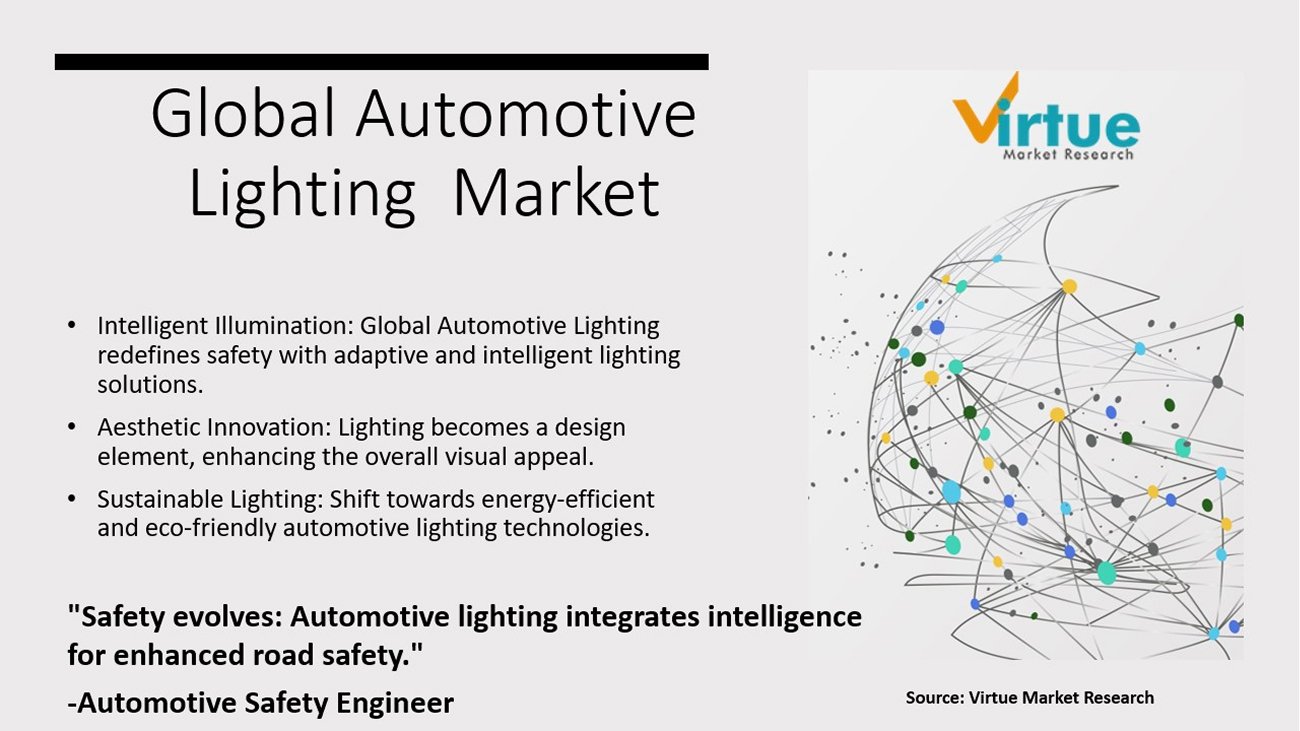
Although the global automotive lighting business is booming, there are still unknowns. Difficulties impede growth even as innovation propels it with eye catching features like laser beams and adaptable headlights. These technologies are luxury items due to their high cost and difficult integration, which puts producers' abilities to the test. The worldwide patchwork created by unclear legislation limits the potential of innovation. Durability issues persist, particularly when complex systems are subjected to challenging conditions. Ultimately, a lot of drivers still don't fully understand how these improvements can help them. Together, we can overcome these obstacles. The keys to reducing costs are improved production, more seamless integration, and unified regulations. Their full potential can be realized by educating customers about the safety, efficiency, and aesthetic value of these lighting wonders. By working together, we can pave the way for an even brighter and safer future for vehicle lighting.
It is made possible by advanced LED technology, which gives drivers the ability to customize their illumination for the highest level of comfort and flair. Consumers that care about the environment want greener products, and vehicle lighting complies. While solar- and self-powered lighting technologies offer a future powered by clean energy, energy-efficient LEDs lower pollution. The advent of connected lighting systems heralds a new age. Envision automobiles interacting with infrastructure and one another to minimize accidents and enhance traffic efficiency. Integrated headlights with pedestrian recognition provide unmatched safety, while dramatic taillights with eye-catching displays alert onlookers to your intentions. The possibilities are endless in the future. Gesture-controlled interior illumination, holographic displays projected onto the road, and even light fixtures with self-healing capabilities.

Due to laws requiring safety features like headlights, taillights, and brake lights, exterior lighting presently holds the most market share in the vehicle lighting industry. The dominance of this market is partly attributed to advancements in safety-focused technologies such as adaptive headlights and daytime running lights. The market value of external lighting is increased by the quick adoption of technology like LED bulbs and laser lights, which improve performance and aesthetics. Conversely, the interior lighting market is expected to increase at the fastest rate in the upcoming years. Innovations like ambient lighting and technology breakthroughs like LED and OLED displays, driven by consumer demand for comfort and personalisation, open new possibilities. The spread of sophisticated interior lighting systems is further driven by the growing emphasis on safety and the expansion of the luxury car market.
The worldwide vehicle lighting market is currently dominated by halogen because of its more affordable price, advanced technology, and useful illumination. With its dependable supply chain and affordable option for manufacturers and cost-conscious customers, halogen holds the biggest market share. The fastest-growing market right now is LEDs, which are predicted to shortly overtake halogen. The rapid expansion of LEDs is driven by their higher efficiency, longer lifespan, flexibility in design, and technological breakthroughs including enhanced brightness. Because LEDs use less energy and produce fewer emissions and better fuel economy, they are becoming more and more popular in the changing automotive lighting market.
Passenger automobiles rule the worldwide automotive lighting market. The sheer number of passenger cars produced which surpasses that of business vehicles and fuels the need for lighting systems is the primary cause of this popularity. The growing demand for personal automobiles in developing nations is a result of rising disposable income, which in turn drives the rise of the passenger car market. The importance that consumers place on safety and aesthetics elements helps to drive market expansion. But in the upcoming years, the market for electric and hybrid cars is expected to develop at the quickest rate. The exponential rise of the worldwide electric car market, which is still expanding and shows no signs of slowing down, is what is driving this surge. Specialised lighting solutions are required since electric and hybrid vehicles have different lighting requirements because of their specific functionality and design aesthetics.
Most lighting systems sold nowadays are sold by OEMs (Original Equipment Manufacturers), primarily because manufacturers pre-install lighting systems in new cars. But in the next years, the aftermarket is expected to develop at the quickest rate. This spike in demand for replacement parts, especially lighting systems, can be linked to several variables, one of them being the average age of cars. The industry is expanding because of consumers' growing desire to personalise their cars with aftermarket lighting upgrades such LED upgrades and decorative lighting. The availability and affordability of technologies like adaptive headlights and laser lights in the aftermarket, together with other advancements in lighting technology, are driving demand even more. Moreover, the growing market for electric cars (EVs).
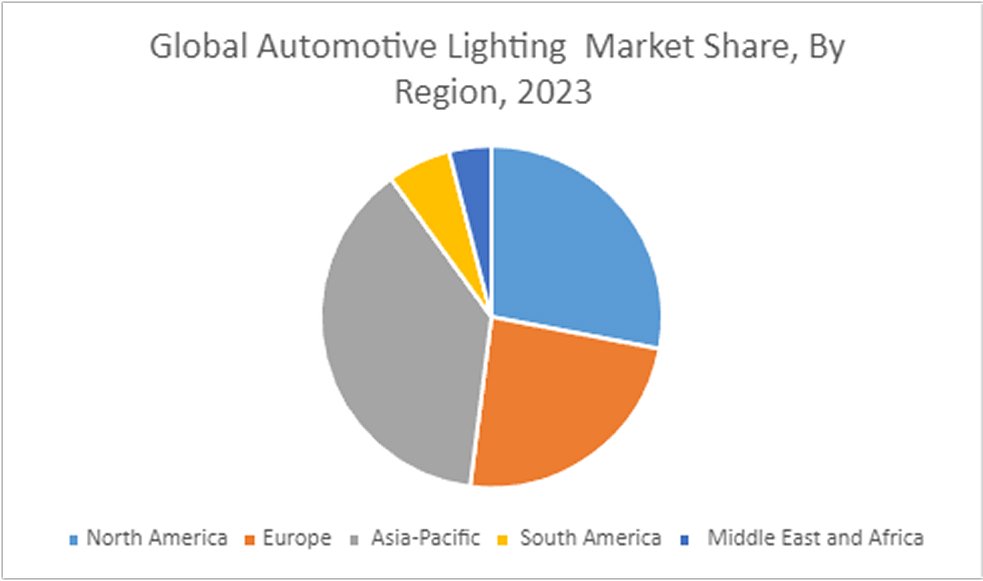
Throughout the forecast period, Asia Pacific is anticipated to be the automotive lighting market with the highest profitability. Over the past few years, Asia Pacific countries like China and India have seen notable increases in automotive manufacturing and sales, primarily in the medium-to premium luxury car segment. Asia Pacific is predicted to see an increase in the manufacturing of passenger cars, with India experiencing the strongest growth rate. Depending on the state of the national economy, the area offers a suitable selection of both high-end and cheap cars. For instance, there is a substantial demand for halogen, Xenon/HID, and LED since China and India produce more economy and mid-range automobiles. On the other hand, luxury car adoption rates are greater in South Korea and Japan, where LED lighting is the norm.
A brief shadow was thrown by COVID-19 over the worldwide automotive lighting market. Production was stopped by lockdowns and supply chain disruptions, while luxury lighting upgrades were shelved by consumers on a tight budget. Resources became scarce, and R&D stagnated. Still, the market is recovering thanks to resurgent demand and rearranged priorities. While energy-efficient LEDs are being pushed towards adoption by sustainability, safety concerns are driving interest in features like pedestrian detection and adaptive headlights. The digital push of the epidemic creates opportunities for intelligent, networked lighting systems that may interact with infrastructure and other cars. Ultimately, the industry is positioned to shine brighter, focused on safety, sustainability, and a connected future, even though the pandemic dimmed its brilliance.
A development collaboration between OSRAM Continental and REHAU aims to incorporate lighting into external components, providing automobile manufacturers with innovative lighting options that improve functionality and design flexibility. For rear combination lamps, Hella unveiled a revolutionary lighting innovation called Hella FlatLight technology. A Memorandum of Understanding (MoU) was signed by Samvardhana Motherson Automotive Systems Group BV (SMRPBV), a division of Motherson Group, and Marelli Automotive Lighting to investigate a technology collaboration focused on intelligently lighted external body components. Valeo debuted their revolutionary 360° lighting system at the Shanghai Auto Show. This technology surrounds the car with a band of light, projecting instantaneous, clear signs that other drivers can see from a distance. Pedestrians, cyclists, and scooter riders are especially susceptible to these signals
The growth of the Global Secondhand Luxury Goods Market is driven by rising consumer interest in sustainable, affordable luxury and the democratisation of high-end products. Key factors include increasing resale of handbags, watches, apparel, accessories, jewellery, and footwear, growing adoption of online marketplaces and peer-to-peer platforms, and expanding brand buyback and certified resale programs.
The Global Secondhand Luxury Goods Market faces challenges such as fractured supply chains, inconsistent authentication, and regulatory complexities. Other hurdles include counterfeiting, platform competition, managing refurbishment and storage costs, and balancing sustainability claims with consumer trust. Ensuring quality, after-sales support, and fair pricing across different sellers and platforms also remains a critical obstacle.
Key players in the Global Secondhand Luxury Goods Market include The RealReal, Vestiaire Collective, Rebag, Fashionphile, StockX, GOAT Group, Tradesy, Grailed, What Goes Around Comes Around, Heritage Auctions, 1stDibs, Farfetch Limited (Stadium Goods), Catawiki, Cudoni, and Luxury Garage Sale.
Europe holds the largest share of the Global Secondhand Luxury Goods Market, supported by its rich luxury heritage, established resale culture, and concentration of high fashion houses. Legal secondary boutiques, certified pre-owned watch and jewellery networks, and strong authentication standards strengthen the region’s market leadership.
Asia-Pacific is the fastest-growing region in the Global Secondhand Luxury Goods Market, driven by rising luxury-buying populations, digital marketplace penetration, and growing interest in collectable handbags, watches, and jewellery. Younger consumers in countries such as China, India, and Singapore are actively embracing resale, accelerating cross-border e-commerce and market expansion.
Joining thousands of companies around the world committed to making the Excellent Business Solutions.


Specify your preferred Countries, Segments, or timeframes

Unlock Country Level Outlook, Trends, Cross-country Comparability, or supply Chain Variations.



Analyst Support
Every order comes with Analyst Support.

Customization
We offer customization to cater your needs to fullest.

Verified Analysis
We value integrity, quality and authenticity the most.

