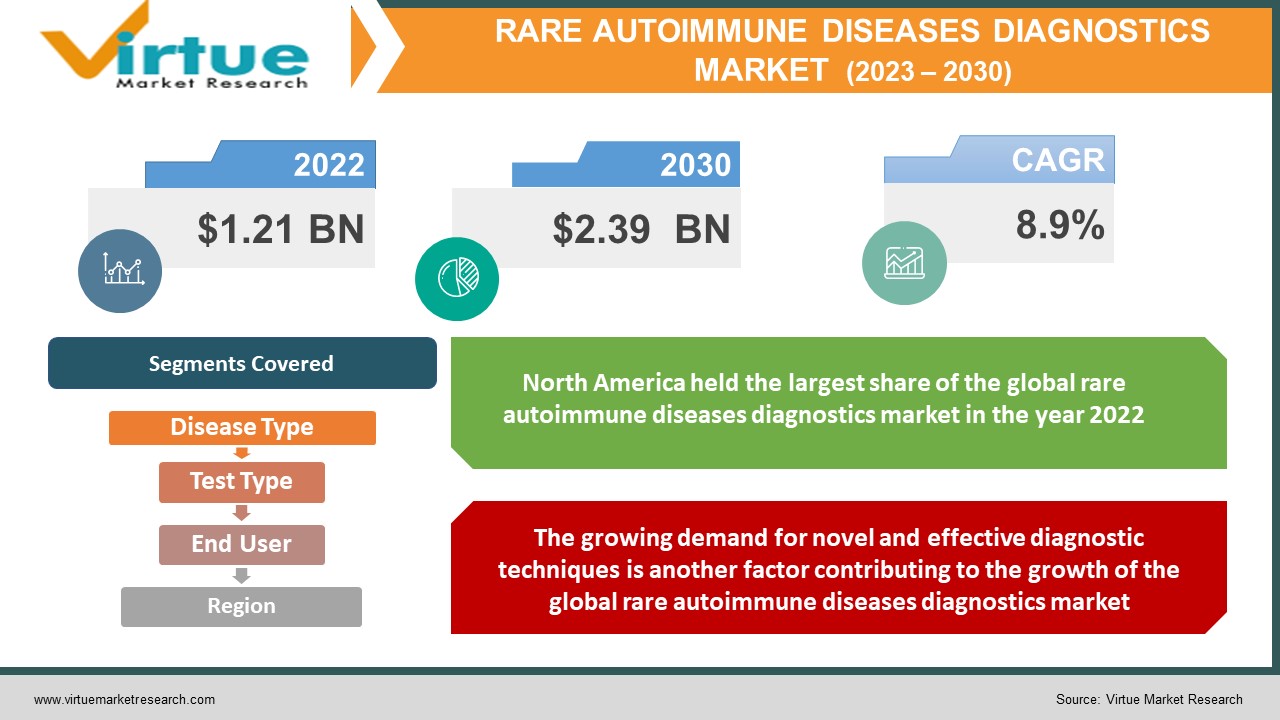
Global Rare Autoimmune Diseases Diagnostics Market is estimated to be worth USD 1.21 Billion in 2022 and is projected to reach a value of USD 2.39 Billion by 2030, growing at a CAGR of 8.9% during the forecast period 2023-2030.
Autoimmune illnesses happen when the body's immune system tragically misguides its defense and erroneously attacks vital cells, which culminates in an extensive array of health maladies, encompassing rheumatoid arthritis, Crohn's disease, and thyroid disorders. Generally, the immune system guards the body by identifying and targeting foreign cells. However, in autoimmune illnesses, the immune system falters in its ability to discern between foreign and self-cells, giving rise to the creation of autoantibodies that attack vital cells in organs like joints and skin. These diseases can affect specific organs or the entire body, with examples like type 1 diabetes damaging the pancreas and lupus impacting multiple body systems.
While the exact cause of autoimmune diseases remains elusive, factors like gender, familial lineage, environmental encounters, ethnic background, dietary choices, and concurrent medical conditions can significantly contribute to their emergence and progression. Symptoms vary but may include extreme exhaustion, elevated body temperature, intense muscular discomfort, swelling, impaired cognitive focus, sensory numbness, substantial alopecia, and notable dermatological eruptions. Certain autoimmune diseases exhibit periods of symptom flare-ups and remission, and each ailment presents distinct and individual symptoms depending on the specific bodily systems that are affected.
Global Rare Autoimmune Diseases Diagnostics Market Drivers:
The increasing government and non-profit organizations’ initiatives regarding rare autoimmune diseases are fueling the growth of the global rare autoimmune diseases diagnostics market.
The rare autoimmune disease diagnostics market is anticipated to experience significant growth owing to the efforts of various government and non-profit organizations in distinct regions. These organizations are actively involved in amplifying awareness regarding rare autoimmune diseases. One notable example is the American Autoimmune Related Diseases Association (AARDA), which is dedicated to educating the populace regarding the risk factors, incidence rates, and paucity of awareness surrounding uncommon autoimmune diseases, along with accessible treatment alternatives. By means of their powerful campaigns and initiatives, the AARDA and similar organizations are spreading invaluable information that impels individuals to exhibit unparalleled proactivity in taking care of their health and recognizing the symptoms of autoimmune diseases. These awareness-building activities play a vital role in propelling the growth of the rare autoimmune disease diagnostics market, as they empower people to seek timely diagnosis and treatment.
The growing demand for novel and effective diagnostic techniques is another factor contributing to the growth of the global rare autoimmune diseases diagnostics market.
The rising incidence of uncommon autoimmune disorders among the populace has surged the demand for the development of novel and efficacious diagnostic techniques. This need stems from the necessity to accurately and efficiently diagnose rare autoimmune diseases to facilitate timely treatment and containment measures. As a result, the demand for diagnostic testing services pertaining to rare autoimmune diseases has witnessed a significant surge, fueling the growth of the market. The development of novel diagnostic techniques that can offer enhanced accuracy, sensitivity, and rapid results becomes crucial in addressing the rising population diagnosed with rare autoimmune diseases. Consequently, this increasing need for novel and useful diagnostic techniques acts as a market driver, propelling the growth of the global rare autoimmune diseases diagnostics market during the forecast period.
Global Rare Autoimmune Diseases Diagnostics Market Challenges:
The global rare autoimmune diseases diagnostics market is encountering challenges, primarily in terms of the existence of strict regulations. The development of novel rapid diagnostic testing kits has been hindered by stringent regulatory norms, particularly in the United States where diagnostic products undergo a rigorous clearance process by the FDA. These regulatory barriers limit the introduction of novel diagnostic testing products, thus posing a significant constraint on the market's potential for revenue expansion. Moreover, limitations imposed on certain testing kits by regulatory bodies can impede the progress and introduction of advanced and novel diagnostic testing products. These challenges pertaining to regulatory policies and restrictions posit obstacles to the overall revenue growth of the market.
Global Rare Autoimmune Diseases Diagnostics Market Opportunities:
Market expansion strategies present lucrative opportunities in the global rare autoimmune diseases diagnostics market. The prominent players in the global rare autoimmune diseases diagnostics market possess tremendous growth potential in emerging economies including India, South Korea, Brazil, and Mexico. These countries provide opportunities owing to their high disease rates, large populations in need of healthcare, improving medical facilities, rising disposable incomes, and a growing trend of medical tourism. Furthermore, the region of Asia-Pacific, including these countries, is becoming an attractive destination for business owing to its adaptable environment and fewer strict regulations and data requirements. This combination of factors makes these economies exceedingly promising markets for enterprises operating in the diagnostics sector.
COVID-19 Impact on the Global Rare Autoimmune Diseases Diagnostics Market:
The outbreak of the COVID-19 pandemic substantially impacted the global rare autoimmune diseases diagnostics market. The pandemic caused disruptions in supply chains and distribution of goods and services, which highly affected the supply of essential materials like reagents and testing equipment for diagnostic testing for rare autoimmune diseases. Moreover, the shifted focus of healthcare infrastructure resources and personnel to COVID-19 testing and treatment further declined the demand for rare autoimmune diseases diagnostic testing. These factors negatively impacted the growth of the global rare autoimmune diseases diagnostics market. Despite these challenges, the global rare autoimmune diseases diagnostics market is projected to recover and grow in the coming years.
Global Rare Autoimmune Diseases Diagnostics Market Recent Developments:
In September 2022, Avesthagen Limited launched AVGEN Diagnostics, an all-inclusive personalized genetic testing service using NGS sequencing and AI-driven analytics. Catering to both individual consumers and corporate entities, it forms partnerships with healthcare providers and insurers, forging alliances to serve a wide range of clientele. The extensive portfolio encompasses diverse realms such as cancer, cardiac care, neurodegenerative disorders, autoimmune conditions, rare diseases, pharmacogenomics, ancestry analysis, and women's health. Powered by Congenica's AI platform, AVGEN enables precise medical interventions through cutting-edge analytics for enhanced precision medicine.
In July 2022, KSL Beutner Laboratories, a widely acclaimed international provider of immunologic testing for diverse skin disorders, unveiled a pioneering indirect immunofluorescence (IIF) serum blood test in the United States. This test specifically detects the presence of laminin 332, an antigen intricately linked to the persistent and incapacitating autoimmune condition known as mucous membrane pemphigoid (MMP). This milestone represents a remarkable leap forward in diagnostic capabilities for the precise identification of MMP.
In June 2022, Thermo Fisher Scientific, Inc. unveiled that the company has received clearance from the FDA for two blood tests, namely EliA RNA Polymerase III and EliA Rib-P, which are ingeniously designed to accurately pinpoint and diagnose 2 specific autoimmune disorders, systemic sclerosis (SSc) and systemic lupus erythematosus (SLE). The approval of these tests enhances the EliA portfolio, providing a comprehensive range of automated connective tissue disease tests. This expansion allows for a stronger clinical offering, catering to a wider range of diagnostic needs in the field of connective tissue diseases.
Global, Regional & Country Level Analysis, Segment-Level Analysis, DROC, PESTLE Analysis, Porter’s Five Forces Analysis, Competitive Landscape, Analyst Overview on Investment Opportunities
Regional Scope
North America, Europe, APAC, Latin America, Middle East & Africa
Key Companies Profiled
Thermo Fisher Scientific Inc. (United States), Danaher Corporation (United States), Abbott Laboratories (United States), F. Hoffmann-La Roche AG (Switzerland), Siemens Healthineers (Germany), bioMérieux SA (France), Bio-Rad Laboratories, Inc. (United States), Trinity Biotech plc (Ireland), Seramun Diagnostica GmbH (Germany), Quest Diagnostics (United States)
Global Rare Autoimmune Diseases Diagnostics Market Segmentation:
Global Rare Autoimmune Diseases Diagnostics Market Segmentation: By Disease Type
Eosinophilic granulomatosis with polyangiitis (EGPA)
Guillain-Barre syndrome
Kawasaki disease
Mixed connective tissue disease (MCTD)
Myasthenia gravis
Others
In 2022, the eosinophilic granulomatosis with polyangiitis (EGPA) segment held the highest market share. The growth can be ascribed to the higher prevalence of EGPA disease in contrast to other rare autoimmune diseases. This autoimmune illness, formerly referred to as Churg Strauss syndrome, is marked by amplified levels of a certain type of white blood cells called eosinophils. This elevation frequently initiates inflammation within the blood vessels, potentially leading to detrimental effects on numerous organs encompassing the lungs, kidneys, heart, and other bodily systems. Generally, individuals with this condition initially experience symptoms related to asthma and allergies.
Global Rare Autoimmune Diseases Diagnostics Market Segmentation: By Test Type
Antinuclear antibody (ANA) tests
Autoantibody tests
Complete blood count (CBC)
Comprehensive metabolic panel
C-reactive protein (CRP)
Erythrocyte sedimentation rate (ESR)
Urinalysis
In 2022, the antinuclear antibody (ANA) tests segment held the highest market share. The growth can be ascribed to the rising incidence of rare autoimmune diseases and the presence of favorable medical insurance and reimbursement policies. Guillain-Barré Syndrome (GBS), an exceedingly uncommon and exceedingly swift-developing disorder distinguished by nerve inflammation, resulting in muscular debility and, in severe instances, total immobilization, afflicts approximately 1 to 2 individuals per 100,000 people each year, as per the data provided by the Rare Disease Organization. Antinuclear antibody tests, encompassing immunofluorescence assay and Enzyme-Linked Immunosorbent Assay (ELISA), are extensively employed to attain remarkably precise diagnostic outcomes. Furthermore, the introduction of novel diagnostic testing equipment is significantly augmenting the revenue expansion of this segment.
Global Rare Autoimmune Diseases Diagnostics Market Segmentation: By End User
Academic & Research Institutions
Diagnostic Centers
Hospitals & Clinical Laboratories
Others
In 2022, the hospitals and clinical laboratories segment held the highest market share. The growth can be ascribed to the elevated patient footfall in these healthcare settings. Hospitals and clinical laboratories provide comprehensive healthcare amenities, incorporating specialized laboratory infrastructures and experienced healthcare professionals to guarantee prompt and proficient diagnostic examinations. In hospitals, there exist intensive care units (ICUs) and emergency departments, which stand readily prepared for urgent intervention and care of individuals diagnosed with rare autoimmune diseases. Individuals diagnosed with rare autoimmune diseases often necessitate hospital admittance, and hospitals provide a suitable environment for continuous monitoring and intervention. Access to resources, including advanced diagnostic equipment and seasoned professionals, further empowers hospitals and clinical laboratories to execute diverse diagnostic examinations with utmost efficiency.
Global Rare Autoimmune Diseases Diagnostics Market Segmentation: By Region
North America
Europe
Asia-Pacific
South America
Middle East & Africa
The region of North America held the largest share of the global rare autoimmune diseases diagnostics market in the year 2022. The rising incidence of uncommon autoimmune illnesses, including Eosinophilic granulomatosis with polyangiitis (EGPA), Kawasaki disease, POEMS syndrome, Scleroderma, and Retroperitoneal fibrosis, the presence of well-established healthcare infrastructure in nations, such as the United States and Canada, rapid advancements in clinical diagnostics, and the introduction of novel technologies that aid in the accurate and efficient detection of rare autoimmune diseases are some of the factors propelling the region's growth. Furthermore, the region of North America houses a multitude of renowned market giants, encompassing Thermo Fisher Scientific Inc., Danaher Corporation, Abbott Laboratories, Bio-Rad Laboratories, Inc., and Quest Diagnostics, among others.
The region of Asia-Pacific is anticipated to expand at the quickest rate over the forecast period owing to the ascending development of the medical diagnostics industry in nations, such as China, India, and Japan, and the growing awareness and emphasis on preventive healthcare, such as rare autoimmune diseases screening and treatment.
Global Rare Autoimmune Diseases Diagnostics Market Key Players:
Thermo Fisher Scientific Inc. (United States)
Danaher Corporation (United States)
Abbott Laboratories (United States)
F. Hoffmann-La Roche AG (Switzerland)
Siemens Healthineers (Germany)
bioMérieux SA (France)
Bio-Rad Laboratories, Inc. (United States)
Trinity Biotech plc (Ireland)
Seramun Diagnostica GmbH (Germany)
Quest Diagnostics (United States)
To Learn more about this report,
Global automotive lighting refers to all vehicle lighting systems, from headlamps that illuminate the road to taillights that communicate movements. They guarantee motorists and other road users alike safety, visibility, and style. While taillights frequently use LEDs for improved visibility, headlights are available in a variety of technologies, including LED and laser. Interior illumination, DRLs, and signal lights all have a role to play. This market, which was estimated to be worth $33.64 billion in 2022, is anticipated to rise to $67.39 billion by 2030 because of laws, luxury tastes, safety concerns, and technological developments like OLED taillights and adaptive headlights. Anticipate a future dominated by intelligent, connected, personalized, and sustainable lighting systems that enhance the safety, efficiency, and aesthetic appeal of automobiles.
Key Market Insights:
Car lighting works its magic to provide safety, visibility, and style. Headlights cut through the night, taillights express intent, and interiors shine with comfort. The billion-dollar global business is expected to rise due to consumer demand for high-end experiences, safer roads, and cutting-edge technology. Imagine dynamic messages being painted by taillights, headlights that adjust to the road, and interiors that customize their atmosphere. Driven by technological advancements like linked systems and laser beams, this future is calling. Anticipate even more visually attractive, environmentally friendly, and intelligent lighting to illuminate the way ahead, making cars safer, more efficient, and unquestionably cooler.
Global Automotive Lighting Market Drivers:
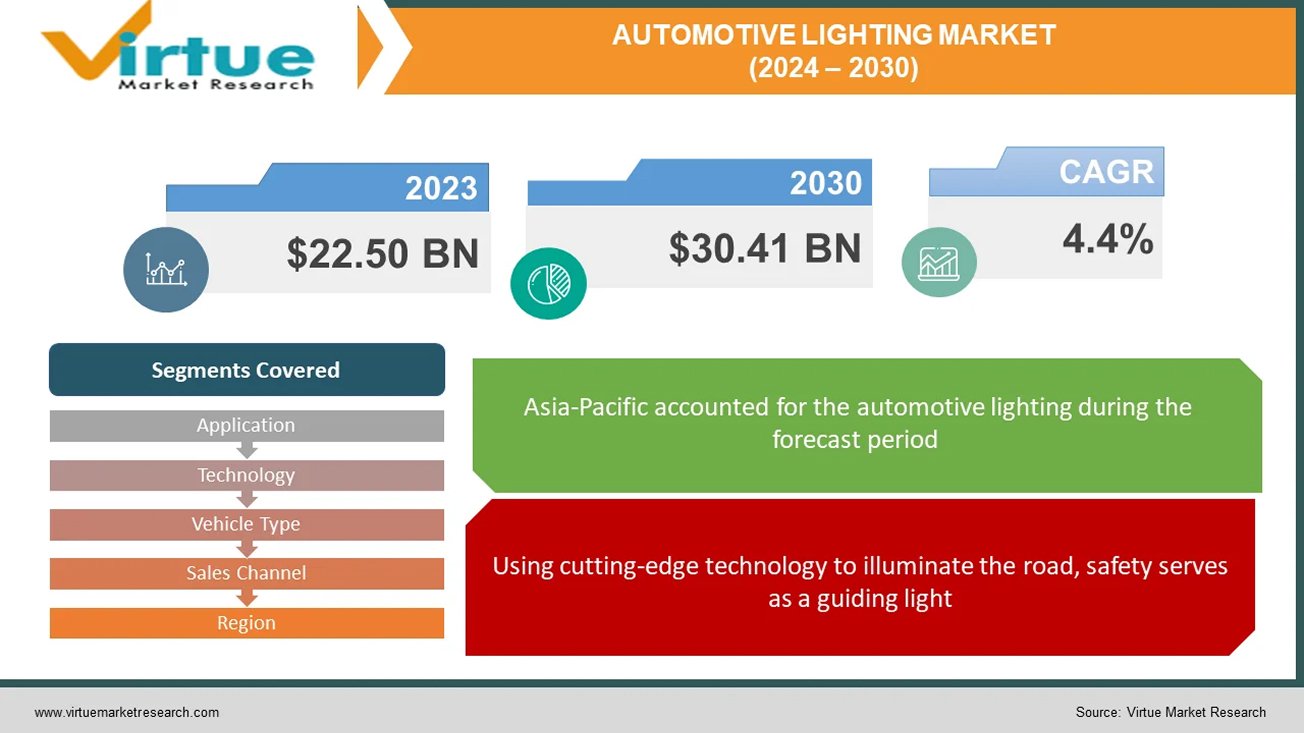
Using cutting-edge technology to illuminate the road, safety serves as a guiding light.
In the market for automobile lighting, safety is the driving force behind demand from the public and laws. While automated high beams smoothly react to traffic, adaptive headlights modify their beams so as not to blind other people. With visually striking displays, dynamic taillights convey intentions for braking and turning. Beyond these developments, integrated pedestrian identification and lane departure alerts will soon make roads safer and brighter for everyone.
Beyond Performance-Based Luxuries Redefined by Light.
Luxurious automobile lighting creates a distinct visual identity that goes beyond simple illumination. Personalized interior lighting customizes the driving experience by setting the mood with a range of colours and intensities, while intricate designs and distinctive DRLs modify exteriors. As you approach your automobile at night, welcoming lights lead the way, resulting in an interior that is perfectly lit. Not only is this symphony of light aesthetically pleasing, but it also stands as a tribute to luxury. Upcoming developments like gesture-controlled lighting and holographic displays promise to further enhance the experience.
Fuel Efficiency Takes the Lead: Illuminating Sustainability
The worldwide automotive lighting market is undergoing a significant transition towards energy-efficient solutions, as environmental concerns gain prominence. LED technology is leading the way, providing a ray of hope for the environment and drivers alike. LED lights beam brighter and use a lot less energy than conventional halogen lamps. There are some tangible advantages to this. For drivers, this translates to increased fuel economy, which lowers petrol prices and lessens reliance on fossil fuels. Greater air quality and a reduction in the transport sector's contribution to climate change are the results of reduced overall emissions.
To Learn more about this report,
Global Automotive Lighting Market Restraints and Challenges:
Although the global automotive lighting business is booming, there are still unknowns. Difficulties impede growth even as innovation propels it with eye catching features like laser beams and adaptable headlights. These technologies are luxury items due to their high cost and difficult integration, which puts producers' abilities to the test. The worldwide patchwork created by unclear legislation limits the potential of innovation. Durability issues persist, particularly when complex systems are subjected to challenging conditions. Ultimately, a lot of drivers still don't fully understand how these improvements can help them. Together, we can overcome these obstacles. The keys to reducing costs are improved production, more seamless integration, and unified regulations. Their full potential can be realized by educating customers about the safety, efficiency, and aesthetic value of these lighting wonders. By working together, we can pave the way for an even brighter and safer future for vehicle lighting.
Global Automotive Lighting Market Opportunities:
It is made possible by advanced LED technology, which gives drivers the ability to customize their illumination for the highest level of comfort and flair. Consumers that care about the environment want greener products, and vehicle lighting complies. While solar- and self-powered lighting technologies offer a future powered by clean energy, energy-efficient LEDs lower pollution. The advent of connected lighting systems heralds a new age. Envision automobiles interacting with infrastructure and one another to minimize accidents and enhance traffic efficiency. Integrated headlights with pedestrian recognition provide unmatched safety, while dramatic taillights with eye-catching displays alert onlookers to your intentions. The possibilities are endless in the future. Gesture-controlled interior illumination, holographic displays projected onto the road, and even light fixtures with self-healing capabilities.
AUTOMOTIVE LIGHTING MARKET REPORT COVERAGE:
To Learn more about this report,
Global Automotive Lighting Market Segmentation: By Application
Exterior Lighting
Interior Lighting
Due to laws requiring safety features like headlights, taillights, and brake lights, exterior lighting presently holds the most market share in the vehicle lighting industry. The dominance of this market is partly attributed to advancements in safety-focused technologies such as adaptive headlights and daytime running lights. The market value of external lighting is increased by the quick adoption of technology like LED bulbs and laser lights, which improve performance and aesthetics. Conversely, the interior lighting market is expected to increase at the fastest rate in the upcoming years. Innovations like ambient lighting and technology breakthroughs like LED and OLED displays, driven by consumer demand for comfort and personalisation, open new possibilities. The spread of sophisticated interior lighting systems is further driven by the growing emphasis on safety and the expansion of the luxury car market.
Global Automotive Lighting Market Segmentation: By Technology
Halogen
LED (Light-Emitting Diode)
Xenon
Emerging Technologies
The worldwide vehicle lighting market is currently dominated by halogen because of its more affordable price, advanced technology, and useful illumination. With its dependable supply chain and affordable option for manufacturers and cost-conscious customers, halogen holds the biggest market share. The fastest-growing market right now is LEDs, which are predicted to shortly overtake halogen. The rapid expansion of LEDs is driven by their higher efficiency, longer lifespan, flexibility in design, and technological breakthroughs including enhanced brightness. Because LEDs use less energy and produce fewer emissions and better fuel economy, they are becoming more and more popular in the changing automotive lighting market.
Global Automotive Lighting Market Segmentation: By Vehicle Type
Passenger Cars
Commercial Vehicles
Passenger automobiles rule the worldwide automotive lighting market. The sheer number of passenger cars produced which surpasses that of business vehicles and fuels the need for lighting systems is the primary cause of this popularity. The growing demand for personal automobiles in developing nations is a result of rising disposable income, which in turn drives the rise of the passenger car market. The importance that consumers place on safety and aesthetics elements helps to drive market expansion. But in the upcoming years, the market for electric and hybrid cars is expected to develop at the quickest rate. The exponential rise of the worldwide electric car market, which is still expanding and shows no signs of slowing down, is what is driving this surge. Specialised lighting solutions are required since electric and hybrid vehicles have different lighting requirements because of their specific functionality and design aesthetics.
Global Automotive Lighting Market Segmentation: By Sales Channel
OEM (Original Equipment Manufacturers)
Aftermarket
Most lighting systems sold nowadays are sold by OEMs (Original Equipment Manufacturers), primarily because manufacturers pre-install lighting systems in new cars. But in the next years, the aftermarket is expected to develop at the quickest rate. This spike in demand for replacement parts, especially lighting systems, can be linked to several variables, one of them being the average age of cars. The industry is expanding because of consumers' growing desire to personalise their cars with aftermarket lighting upgrades such LED upgrades and decorative lighting. The availability and affordability of technologies like adaptive headlights and laser lights in the aftermarket, together with other advancements in lighting technology, are driving demand even more. Moreover, the growing market for electric cars (EVs).
To Learn more about this report,
Global Automotive Lighting Market Segmentation: By Region
North America
Asia-Pacific
Europe
South America
Middle East and Africa
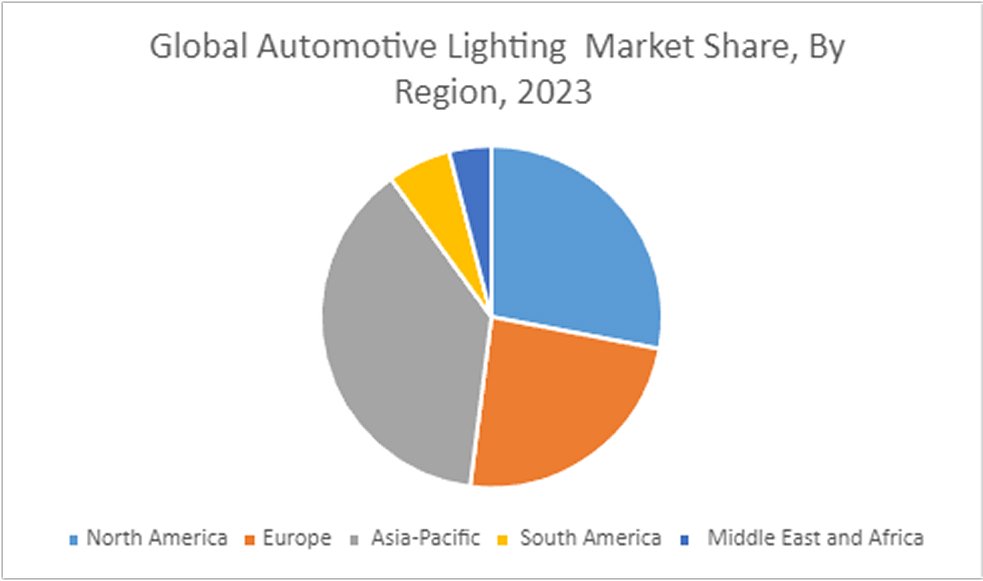
Throughout the forecast period, Asia Pacific is anticipated to be the automotive lighting market with the highest profitability. Over the past few years, Asia Pacific countries like China and India have seen notable increases in automotive manufacturing and sales, primarily in the medium-to premium luxury car segment. Asia Pacific is predicted to see an increase in the manufacturing of passenger cars, with India experiencing the strongest growth rate. Depending on the state of the national economy, the area offers a suitable selection of both high-end and cheap cars. For instance, there is a substantial demand for halogen, Xenon/HID, and LED since China and India produce more economy and mid-range automobiles. On the other hand, luxury car adoption rates are greater in South Korea and Japan, where LED lighting is the norm.
COVID-19 Impact Analysis on the Global Automotive Lighting Market:
A brief shadow was thrown by COVID-19 over the worldwide automotive lighting market. Production was stopped by lockdowns and supply chain disruptions, while luxury lighting upgrades were shelved by consumers on a tight budget. Resources became scarce, and R&D stagnated. Still, the market is recovering thanks to resurgent demand and rearranged priorities. While energy-efficient LEDs are being pushed towards adoption by sustainability, safety concerns are driving interest in features like pedestrian detection and adaptive headlights. The digital push of the epidemic creates opportunities for intelligent, networked lighting systems that may interact with infrastructure and other cars. Ultimately, the industry is positioned to shine brighter, focused on safety, sustainability, and a connected future, even though the pandemic dimmed its brilliance.
Recent Trends and Developments in the Global Automotive Lighting Market:
A development collaboration between OSRAM Continental and REHAU aims to incorporate lighting into external components, providing automobile manufacturers with innovative lighting options that improve functionality and design flexibility. For rear combination lamps, Hella unveiled a revolutionary lighting innovation called Hella FlatLight technology. A Memorandum of Understanding (MoU) was signed by Samvardhana Motherson Automotive Systems Group BV (SMRPBV), a division of Motherson Group, and Marelli Automotive Lighting to investigate a technology collaboration focused on intelligently lighted external body components. Valeo debuted their revolutionary 360° lighting system at the Shanghai Auto Show. This technology surrounds the car with a band of light, projecting instantaneous, clear signs that other drivers can see from a distance. Pedestrians, cyclists, and scooter riders are especially susceptible to these signals
Fill out the form below and our team will get back to you shortly
FAQ's
Global Rare Autoimmune Diseases Diagnostics Market is estimated to be worth USD 1.21 Billion in 2022 and is projected to reach a value of USD 2.39 Billion by 2030, growing at a CAGR of 8.9% during the forecast period 2023-2030.
The Global Rare Autoimmune Diseases Diagnostics Market Drivers are the increasing government and non-profit organization initiatives regarding rare autoimmune diseases and the growing demand for novel and effective diagnostic techniques.
Based on the Disease Type, the Global Rare Autoimmune Diseases Diagnostics Market is segmented into Eosinophilic granulomatosis with polyangiitis (EGPA), Guillain-Barre syndrome, Kawasaki disease, Mixed connective tissue disease (MCTD), Myasthenia gravis, and Others.
The United States is the most dominating country in the region of North America for the Global Rare Autoimmune Diseases Diagnostics Market.
Thermo Fisher Scientific Inc., Danaher Corporation, and Abbott Laboratories are the leading players in the Global Rare Autoimmune Diseases Diagnostics Market.
More related reports
Get expert-driven market research reports from a leading research partner to help you navigate the future of the global industry.
Report Code: VMR-18737 | Published Date: October 2025 | Format: Excel and PDF
The Radiation Therapy-based Glioblastoma Multiforme Treatment Market was valued at USD 3.72 billion in 2024 and is projected to reach a market size of USD 6.13 billion by the end of 2030. Over the forecast period of 2025...
Report Code: VMR-15695 | Published Date: August 2022 | Format: Excel and PDF
The Placental Stem Cell Therapy for Neurological Disorders Market was valued at USD 464.96 Million and is projected to reach a market size of USD 1,806.95 Million by the end of 2030. Over the forecast period of 2024-2030...
Report Code: VMR-18524 | Published Date: July 2025 | Format: Excel and PDF
The Insurance Market was valued at USD 10.11 trillion in 2024 and is projected to reach a market size of USD 14.65 trillion by the end of 2030. Over the forecast period of 2025-2030, the market is projected to grow at a...
Report Code: VMR-7325 | Published Date: July 2025 | Format: Excel and PDF
The Insomnia Market was valued at USD 3.76 billion in 2024 and is projected to reach a market size of USD 4.84 billion by the end of 2030. Over the forecast period of 2025-2030, the market is projected to grow at a CAGR...
Report Code: VMR-19021 | Published Date: January 2026 | Format: Excel and PDF
The Oncology Biologics Competitive Benchmarking Market was valued at USD 1.57 billion in 2025 and is projected to reach a market size of USD 2.42 billion by the end of 2030. Over the forecast period of 2026-2030, the mar...
“We received a complex piece of work for our niche market from Virtue Market research in short period of time. I appreciate the quality and content of the final files we received. Thanks for the support”
Medical Devices Company based in Europe
“We received a complex piece of work for our niche market from Virtue Market research in short period of time. I appreciate the quality and content of the final files we received. Thanks for the support”
Medical Devices Company based in Europe
“We received a complex piece of work for our niche market from Virtue Market research in short period of time. I appreciate the quality and content of the final files we received. Thanks for the support”
Medical Devices Company based in Europe
“We received a complex piece of work for our niche market from Virtue Market research in short period of time. I appreciate the quality and content of the final files we received. Thanks for the support”
Medical Devices Company based in Europe
“We received a complex piece of work for our niche market from Virtue Market research in short period of time. I appreciate the quality and content of the final files we received. Thanks for the support”
Medical Devices Company based in Europe
“We received a complex piece of work for our niche market from Virtue Market research in short period of time. I appreciate the quality and content of the final files we received. Thanks for the support”