
Industrial Lubricants Market
The market size was estimated at USD 77 billion in 2025, and is projected to reach 88.83 billion in 2030, growing at a CAGR of 2.9% from 2026 to 2030.
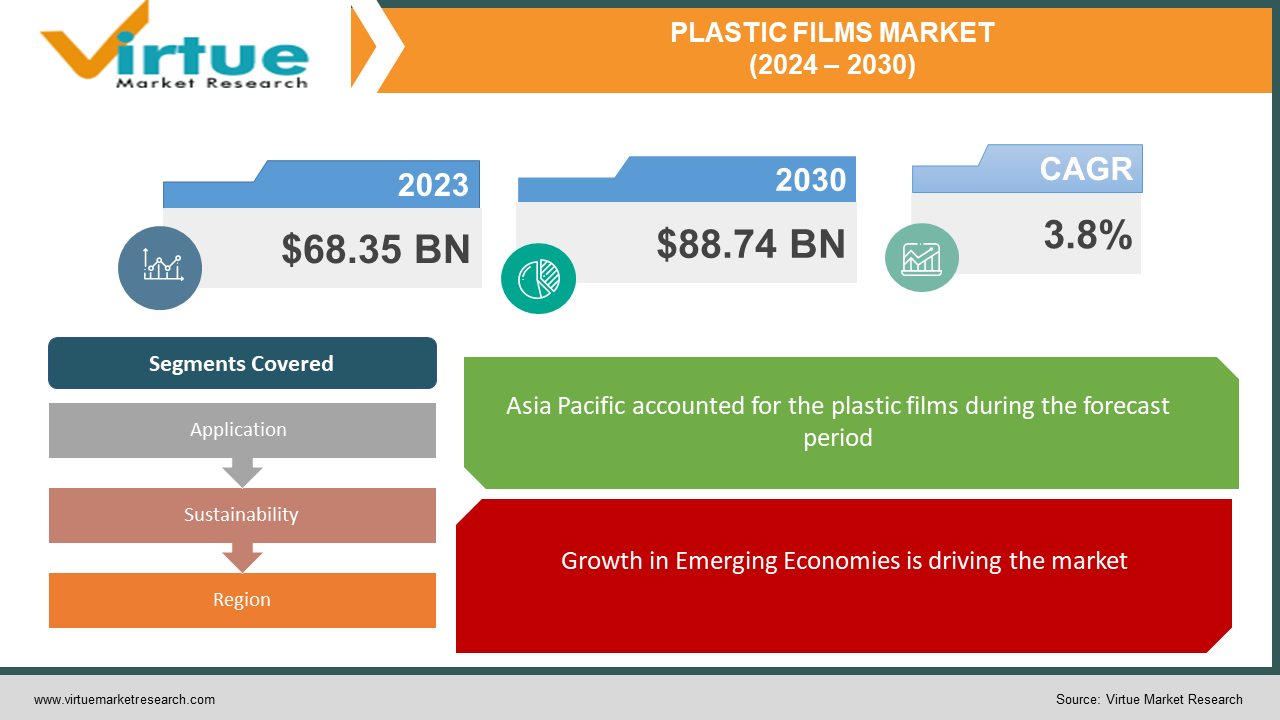
Explore reportThe Global Plastic Films Market was valued at USD 68.35 billion in 2023 and will grow at a CAGR of 3.8% from 2024 to 2030. The market is expected to reach USD 88.74 billion by 2030.
Key Market Insights:
The Plastic film market is booming, driven by surging demand in packaging (especially for food and beverages) and flourishing e-commerce. But sustainability concerns loom large. Biodegradable and compostable films are gaining traction, while regulations on traditional plastics are tightening. This creates opportunities for producers of eco-friendly alternatives but challenges traditional film manufacturers. Expect continued growth in food packaging films and those used in agriculture, while technological advancements in barrier films and high-performance films will open new doors in diverse sectors like construction and healthcare. Overall, the Plastic film market offers promising growth, but innovation and adaptation towards sustainable solutions will be key for long-term success.
Global Plastic Films Market Drivers:
Growth in Emerging Economies is driving the market
The thriving food processing, healthcare, and construction industries are fueling a surge in demand for plastic films. In the food processing sector, plastic films are vital for packaging a wide range of products, ensuring freshness, safety, and extended shelf life. This caters to the growing demand for convenience foods and reduces food waste. Similarly, the healthcare industry utilizes plastic films for sterile packaging of medical devices and pharmaceuticals, while also playing a crucial role in hygiene products like adult diapers and bandages. These films contribute to improved hygiene practices and patient safety. The construction industry is another major driver, with plastic films finding application in vapor barriers, waterproofing membranes, and even as lightweight yet durable building materials. This translates to faster construction times, improved energy efficiency in buildings, and overall cost savings. Essentially, the expansion of these industries creates a ripple effect, driving innovation in plastic film functionalities and propelling the overall market forward.
The development of new types of plastic films is driving the market
Innovation in plastic films is a double win for the market and the environment. New developments, like bi-axially oriented films (BO films), offer superior functionality while addressing sustainability concerns. BO films, for example, are stretched in two directions, resulting in increased strength, clarity, and barrier properties, all while using less material. This translates to lighter packaging, reducing transportation costs and environmental impact. Furthermore, research is actively improving the recyclability of plastic films. By making them easier to identify and sort during recycling processes, these advancements contribute to a circular economy for plastics. This not only reduces plastic waste but also creates new market opportunities for recycled plastic content, appealing to environmentally conscious consumers and aligning with stricter regulations. Ultimately, innovation in plastic films allows manufacturers to cater to both sustainability demands and market growth.
The expansion of industries like food processing, healthcare, and construction is driving the market
The thriving food processing, healthcare, and construction industries are fueling a surge in demand for plastic films. In the food processing sector, plastic films are vital for packaging a wide range of products, ensuring freshness, safety, and extended shelf life. This caters to the growing demand for convenience foods and reduces food waste. Similarly, the healthcare industry utilizes plastic films for sterile packaging of medical devices and pharmaceuticals, while also playing a crucial role in hygiene products like adult diapers and bandages. These films contribute to improved hygiene practices and patient safety. The construction industry is another major driver, with plastic films finding application in vapor barriers, waterproofing membranes, and even as lightweight yet durable building materials. This translates to faster construction times, improved energy efficiency in buildings, and overall cost savings. Essentially, the expansion of these industries creates a ripple effect, driving innovation in plastic film functionalities and propelling the overall market forward.

Global Plastic Films Market challenges and restraints:
Public pressure and stricter environmental regulations are restricting the market growth
The tide is turning against traditional plastic films. Growing public concern about plastic pollution and stricter environmental regulations are forcing a major shift. Consumers are increasingly vocal in demanding eco-friendly packaging, and governments are implementing bans or limitations on single-use plastics, especially plastic bags and films. This puts immense pressure on plastic film producers. To stay afloat, they need to innovate and adopt more sustainable alternatives. This could involve developing new bio-based or biodegradable plastic films, exploring innovative recycling technologies, or even focusing on compostable options. The good news is that these efforts can open new markets and cater to environmentally conscious consumers. However, navigating this transition requires significant investment in research and development, potentially impacting production costs in the short term. The future of the plastic film industry hinges on its ability to adapt and embrace sustainable solutions.
Vulnerability to Raw Material Costs is restricting the market growth
Plastic film manufacturers walk a tightrope when it comes to raw materials. Their bread and butter – oil and natural gas – are a double-edged sword. While these fossil fuels are readily available and relatively inexpensive to refine into plastic film precursors, their prices are notoriously volatile. Geopolitical tensions, supply chain disruptions, and even shifts in consumer behavior towards renewable energy can send oil and gas prices on a rollercoaster ride. This directly translates to fluctuating production costs for plastic film manufacturers. When prices spike, their profit margins shrink. To maintain profitability, they may have to raise their prices, potentially getting passed down the line to consumers. This price sensitivity can lead to decreased demand, creating a precarious situation for manufacturers. To mitigate this risk, some companies are exploring alternative, more stable raw materials or even integrating production with reliable suppliers. The quest for cost stability is a constant battle for plastic film producers in a world increasingly focused on price predictability.
Market Opportunities:
The Plastic Films Market presents a multitude of exciting opportunities for innovation and growth. Sustainability concerns are driving the development of eco-friendly plastic films. Bio-based and biodegradable films are gaining traction, catering to environmentally conscious consumers and potentially mitigating plastic pollution. Research into improved recyclability is another promising avenue. By creating films that are easier to sort and reprocess, manufacturers can contribute to a circular economy for plastics, reducing waste and creating a market for recycled content. Technological advancements are also opening doors for high-performance films. Bi-axially oriented films (BO films) exemplify this, offering superior strength, clarity, and barrier properties with less material. This translates to lighter packaging, minimizing transportation costs and environmental impact. The burgeoning food processing, healthcare, and construction industries create significant demand for plastic films with specialized functionalities. In food processing, films can extend shelf life and improve food safety. The healthcare sector requires sterile packaging for medical devices and pharmaceuticals, while also utilizing films in hygiene products. The construction industry presents opportunities for plastic films in vapor barriers, waterproofing membranes, and even lightweight building materials. These applications can lead to faster construction times, improved energy efficiency, and overall cost savings. Furthermore, the rise of e-commerce creates a demand for durable and tamper-evident packaging solutions, which plastic films can deliver effectively. By focusing on innovation, sustainability, and catering to the specific needs of expanding industries, plastic film manufacturers can capitalize on these exciting market opportunities and ensure their continued success.
PLASTIC FILMS MARKET REPORT COVERAGE:
|
REPORT METRIC |
DETAILS |
|
Market Size Available |
2023 - 2030 |
|
Base Year |
2023 |
|
Forecast Period |
2024 - 2030 |
|
CAGR |
3.8% |
|
Segments Covered |
By Application, Sustainability, and Region |
|
Various Analyses Covered |
Global, Regional & Country Level Analysis, Segment-Level Analysis, DROC, PESTLE Analysis, Porter’s Five Forces Analysis, Competitive Landscape, Analyst Overview on Investment Opportunities |
|
Regional Scope |
North America, Europe, APAC, Latin America, Middle East & Africa |
|
Key Companies Profiled |
DowDuPont, Exxon Mobil Corporation, Chevron Phillips Chemical Company LLC, LyondellBasell Industries Holdings, LLC, SABIC, Braskem S.A., Sinopec Corp., Toray Industries, Inc., Berry Global Group, Inc., Sealed Air Corporation, Treofan GmbH, Uflex Limited |
Packaging
Agriculture
Construction
While Packaging, Agriculture, and Construction are all significant segments in the Plastic Films Market, Packaging reigns supreme. It encompasses a vast array of sub-segments, including food packaging, beverage packaging, and industrial packaging. Each with specific requirements for film properties like strength, clarity, and barrier protection. This vastness and critical role in numerous industries solidify Packaging's dominance within the Plastic Films Market.
Traditional plastic films
Biodegradable films
Compostable films
Bio-based films
While traditional plastic films currently hold the dominant position in the market due to their established infrastructure and cost-effectiveness, their reign is facing challenges. Growing environmental concerns and stricter regulations are propelling a shift towards more sustainable alternatives. Among these, biodegradable films are currently experiencing the most significant growth. Their ability to decompose naturally under specific conditions resonates with eco-conscious consumers, offering a solution to plastic waste woes.
North America
Asia-Pacific
Europe
South America
Middle East and Africa

The crown for the dominant market in plastic films belongs to Asia Pacific. This region boasts a booming population, rapid industrialization, and a prioritization of cost-effective solutions, making traditional plastic films still a popular choice. Conversely, the fastest growing market is also in Asia Pacific. The same factors driving dominance also fuel significant growth, with a rising middle class and increasing demand for packaged goods propelling the market forward. However, watch out for a shift towards sustainable alternatives as environmental awareness takes hold in this dynamic region.
COVID-19 Impact Analysis on the Global Plastic Films Market
The COVID-19 pandemic delivered a complex impact on the Global Plastic Films Market. Initially, disruptions in supply chains and lockdowns caused a decline in demand across most sectors. However, this was countered by a surge in specific areas. The rise in hygiene concerns led to a significant increase in demand for plastic films used in medical supplies like personal protective equipment (PPE) and sterile packaging. Additionally, the boom in e-commerce and home deliveries fueled the need for plastic films in tamper-evident packaging. This rise in demand for specific applications partially offset the decline in other sectors like automotive and industrial manufacturing. Overall, the pandemic caused a temporary dip in the market growth, but estimates suggest it is on track for recovery and continued growth. Looking ahead, the long-term impact of COVID-19 on the Plastic Films Market remains to be seen. Increased focus on hygiene and sanitation may lead to a lasting rise in demand for plastic films in healthcare and hygiene products. However, growing awareness of plastic pollution and potential regulations to curb single-use plastics could pose challenges. The market's future success will depend on the development of sustainable and eco-friendly plastic film alternatives, improved recycling technologies, and the ability to cater to the evolving needs of the post-pandemic world.
Latest trends/Developments
The Plastic film market is witnessing a wave of innovation driven by sustainability concerns, technological advancements, and the demands of burgeoning industries. Bio-based and biodegradable films are gaining ground, addressing environmental issues and appealing to eco-conscious consumers. Improved recyclability is another hot trend, with research focusing on films easier to sort and reprocess, promoting a circular economy for plastics. Technology is playing a key role in the development of high-performance films like bi-axially oriented (BO) films. These films offer superior strength, clarity, and barrier properties using less material, resulting in lighter packaging and a reduced environmental footprint. Specific industries are driving demand for specialized films. The food processing sector seeks films that extend shelf life and enhance food safety, while healthcare relies on them for sterile medical device packaging and hygiene products. The construction industry presents opportunities for plastic films in vapor barriers, waterproofing, and even lightweight, yet sturdy building materials, promoting faster construction times and improved energy efficiency. E-commerce is another growth driver, demanding durable and tamper-evident packaging solutions that plastic films can effectively provide. Overall, the latest trends in the Plastic film market highlight a focus on innovation, sustainability, and catering to the evolving needs of various industries, ensuring its continued growth and adaptation in the face of ever-changing market dynamics.
Key Players:
DowDuPont
Exxon Mobil Corporation
Chevron Phillips Chemical Company LLC
LyondellBasell Industries Holdings, LLC
SABIC
Braskem S.A.
Sinopec Corp.
Toray Industries, Inc.
Berry Global Group, Inc.
Sealed Air Corporation
Treofan GmbH
Uflex Limited
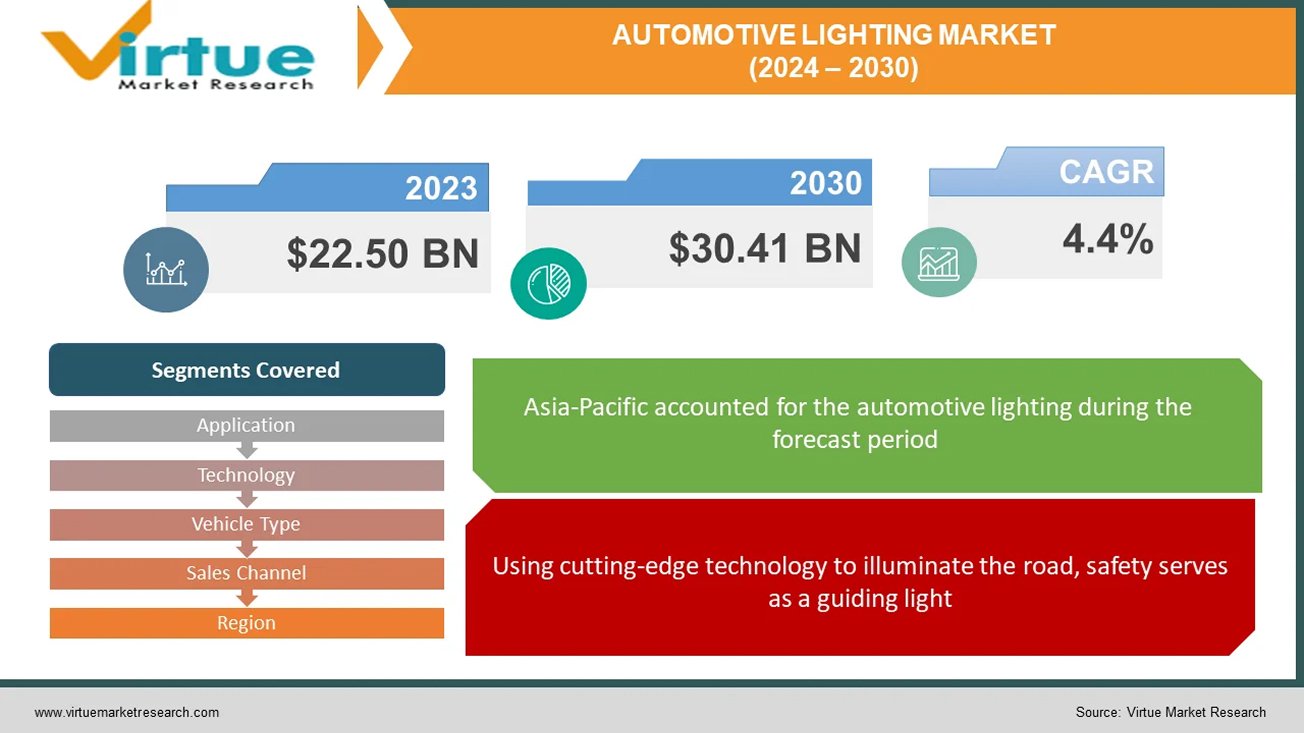
Global automotive lighting refers to all vehicle lighting systems, from headlamps that illuminate the road to taillights that communicate movements. They guarantee motorists and other road users alike safety, visibility, and style. While taillights frequently use LEDs for improved visibility, headlights are available in a variety of technologies, including LED and laser. Interior illumination, DRLs, and signal lights all have a role to play. This market, which was estimated to be worth $33.64 billion in 2022, is anticipated to rise to $67.39 billion by 2030 because of laws, luxury tastes, safety concerns, and technological developments like OLED taillights and adaptive headlights. Anticipate a future dominated by intelligent, connected, personalized, and sustainable lighting systems that enhance the safety, efficiency, and aesthetic appeal of automobiles.
Car lighting works its magic to provide safety, visibility, and style. Headlights cut through the night, taillights express intent, and interiors shine with comfort. The billion-dollar global business is expected to rise due to consumer demand for high-end experiences, safer roads, and cutting-edge technology. Imagine dynamic messages being painted by taillights, headlights that adjust to the road, and interiors that customize their atmosphere. Driven by technological advancements like linked systems and laser beams, this future is calling. Anticipate even more visually attractive, environmentally friendly, and intelligent lighting to illuminate the way ahead, making cars safer, more efficient, and unquestionably cooler.
In the market for automobile lighting, safety is the driving force behind demand from the public and laws. While automated high beams smoothly react to traffic, adaptive headlights modify their beams so as not to blind other people. With visually striking displays, dynamic taillights convey intentions for braking and turning. Beyond these developments, integrated pedestrian identification and lane departure alerts will soon make roads safer and brighter for everyone.
Luxurious automobile lighting creates a distinct visual identity that goes beyond simple illumination. Personalized interior lighting customizes the driving experience by setting the mood with a range of colours and intensities, while intricate designs and distinctive DRLs modify exteriors. As you approach your automobile at night, welcoming lights lead the way, resulting in an interior that is perfectly lit. Not only is this symphony of light aesthetically pleasing, but it also stands as a tribute to luxury. Upcoming developments like gesture-controlled lighting and holographic displays promise to further enhance the experience.
The worldwide automotive lighting market is undergoing a significant transition towards energy-efficient solutions, as environmental concerns gain prominence. LED technology is leading the way, providing a ray of hope for the environment and drivers alike. LED lights beam brighter and use a lot less energy than conventional halogen lamps. There are some tangible advantages to this. For drivers, this translates to increased fuel economy, which lowers petrol prices and lessens reliance on fossil fuels. Greater air quality and a reduction in the transport sector's contribution to climate change are the results of reduced overall emissions.
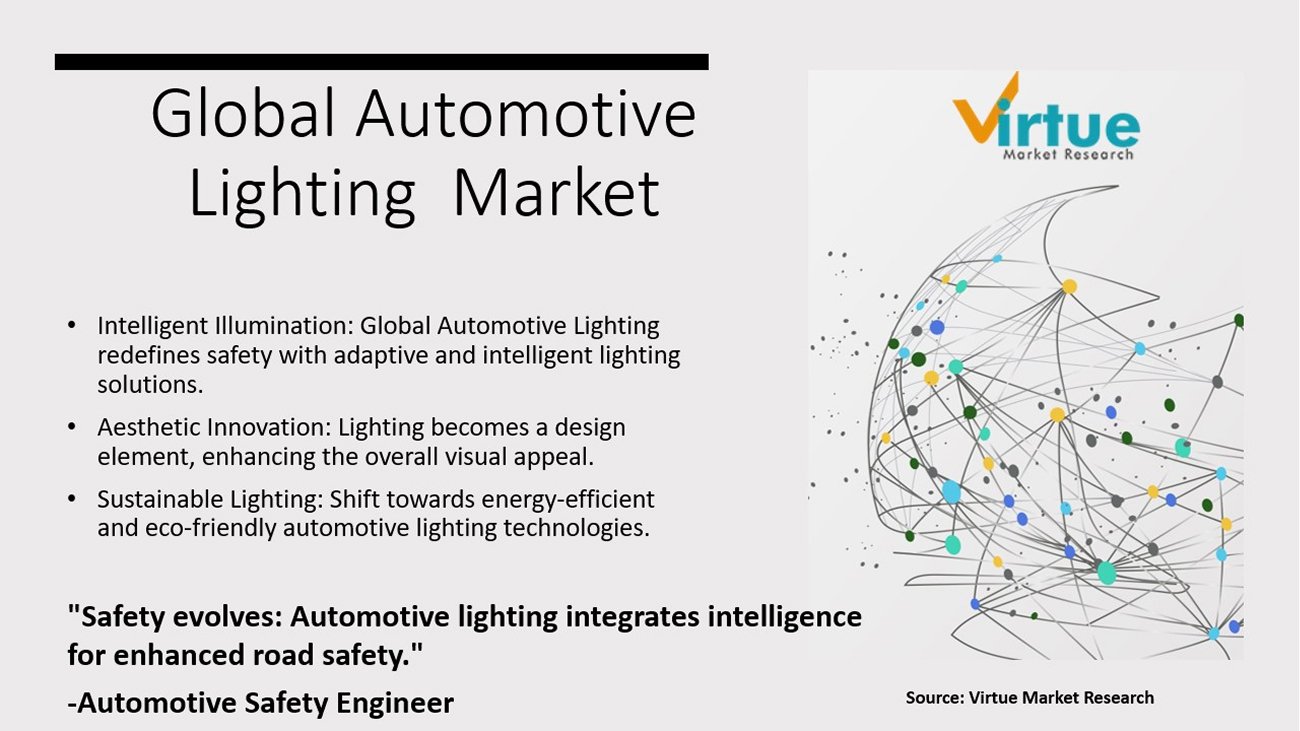
Although the global automotive lighting business is booming, there are still unknowns. Difficulties impede growth even as innovation propels it with eye catching features like laser beams and adaptable headlights. These technologies are luxury items due to their high cost and difficult integration, which puts producers' abilities to the test. The worldwide patchwork created by unclear legislation limits the potential of innovation. Durability issues persist, particularly when complex systems are subjected to challenging conditions. Ultimately, a lot of drivers still don't fully understand how these improvements can help them. Together, we can overcome these obstacles. The keys to reducing costs are improved production, more seamless integration, and unified regulations. Their full potential can be realized by educating customers about the safety, efficiency, and aesthetic value of these lighting wonders. By working together, we can pave the way for an even brighter and safer future for vehicle lighting.
It is made possible by advanced LED technology, which gives drivers the ability to customize their illumination for the highest level of comfort and flair. Consumers that care about the environment want greener products, and vehicle lighting complies. While solar- and self-powered lighting technologies offer a future powered by clean energy, energy-efficient LEDs lower pollution. The advent of connected lighting systems heralds a new age. Envision automobiles interacting with infrastructure and one another to minimize accidents and enhance traffic efficiency. Integrated headlights with pedestrian recognition provide unmatched safety, while dramatic taillights with eye-catching displays alert onlookers to your intentions. The possibilities are endless in the future. Gesture-controlled interior illumination, holographic displays projected onto the road, and even light fixtures with self-healing capabilities.

Due to laws requiring safety features like headlights, taillights, and brake lights, exterior lighting presently holds the most market share in the vehicle lighting industry. The dominance of this market is partly attributed to advancements in safety-focused technologies such as adaptive headlights and daytime running lights. The market value of external lighting is increased by the quick adoption of technology like LED bulbs and laser lights, which improve performance and aesthetics. Conversely, the interior lighting market is expected to increase at the fastest rate in the upcoming years. Innovations like ambient lighting and technology breakthroughs like LED and OLED displays, driven by consumer demand for comfort and personalisation, open new possibilities. The spread of sophisticated interior lighting systems is further driven by the growing emphasis on safety and the expansion of the luxury car market.
The worldwide vehicle lighting market is currently dominated by halogen because of its more affordable price, advanced technology, and useful illumination. With its dependable supply chain and affordable option for manufacturers and cost-conscious customers, halogen holds the biggest market share. The fastest-growing market right now is LEDs, which are predicted to shortly overtake halogen. The rapid expansion of LEDs is driven by their higher efficiency, longer lifespan, flexibility in design, and technological breakthroughs including enhanced brightness. Because LEDs use less energy and produce fewer emissions and better fuel economy, they are becoming more and more popular in the changing automotive lighting market.
Passenger automobiles rule the worldwide automotive lighting market. The sheer number of passenger cars produced which surpasses that of business vehicles and fuels the need for lighting systems is the primary cause of this popularity. The growing demand for personal automobiles in developing nations is a result of rising disposable income, which in turn drives the rise of the passenger car market. The importance that consumers place on safety and aesthetics elements helps to drive market expansion. But in the upcoming years, the market for electric and hybrid cars is expected to develop at the quickest rate. The exponential rise of the worldwide electric car market, which is still expanding and shows no signs of slowing down, is what is driving this surge. Specialised lighting solutions are required since electric and hybrid vehicles have different lighting requirements because of their specific functionality and design aesthetics.
Most lighting systems sold nowadays are sold by OEMs (Original Equipment Manufacturers), primarily because manufacturers pre-install lighting systems in new cars. But in the next years, the aftermarket is expected to develop at the quickest rate. This spike in demand for replacement parts, especially lighting systems, can be linked to several variables, one of them being the average age of cars. The industry is expanding because of consumers' growing desire to personalise their cars with aftermarket lighting upgrades such LED upgrades and decorative lighting. The availability and affordability of technologies like adaptive headlights and laser lights in the aftermarket, together with other advancements in lighting technology, are driving demand even more. Moreover, the growing market for electric cars (EVs).
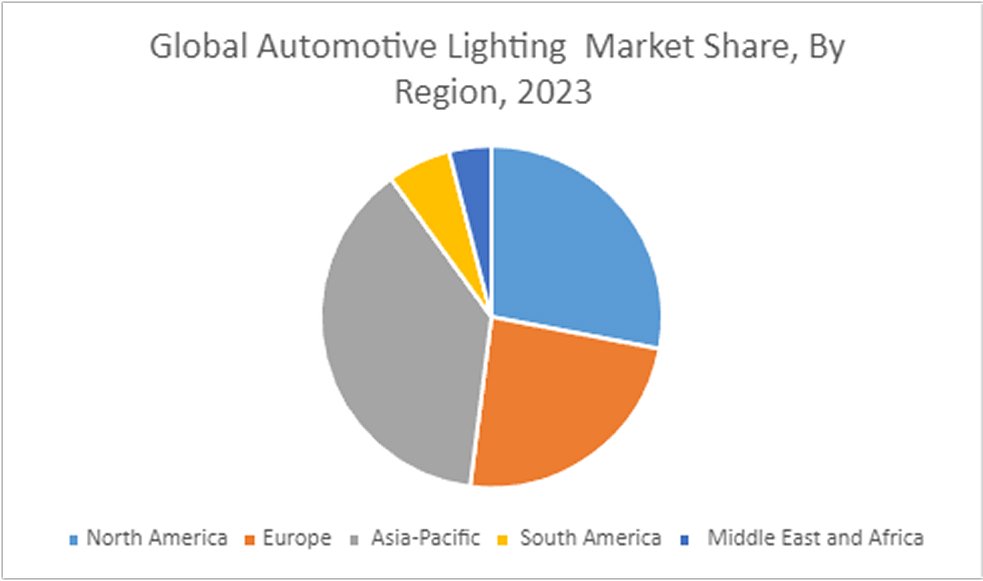
Throughout the forecast period, Asia Pacific is anticipated to be the automotive lighting market with the highest profitability. Over the past few years, Asia Pacific countries like China and India have seen notable increases in automotive manufacturing and sales, primarily in the medium-to premium luxury car segment. Asia Pacific is predicted to see an increase in the manufacturing of passenger cars, with India experiencing the strongest growth rate. Depending on the state of the national economy, the area offers a suitable selection of both high-end and cheap cars. For instance, there is a substantial demand for halogen, Xenon/HID, and LED since China and India produce more economy and mid-range automobiles. On the other hand, luxury car adoption rates are greater in South Korea and Japan, where LED lighting is the norm.
A brief shadow was thrown by COVID-19 over the worldwide automotive lighting market. Production was stopped by lockdowns and supply chain disruptions, while luxury lighting upgrades were shelved by consumers on a tight budget. Resources became scarce, and R&D stagnated. Still, the market is recovering thanks to resurgent demand and rearranged priorities. While energy-efficient LEDs are being pushed towards adoption by sustainability, safety concerns are driving interest in features like pedestrian detection and adaptive headlights. The digital push of the epidemic creates opportunities for intelligent, networked lighting systems that may interact with infrastructure and other cars. Ultimately, the industry is positioned to shine brighter, focused on safety, sustainability, and a connected future, even though the pandemic dimmed its brilliance.
A development collaboration between OSRAM Continental and REHAU aims to incorporate lighting into external components, providing automobile manufacturers with innovative lighting options that improve functionality and design flexibility. For rear combination lamps, Hella unveiled a revolutionary lighting innovation called Hella FlatLight technology. A Memorandum of Understanding (MoU) was signed by Samvardhana Motherson Automotive Systems Group BV (SMRPBV), a division of Motherson Group, and Marelli Automotive Lighting to investigate a technology collaboration focused on intelligently lighted external body components. Valeo debuted their revolutionary 360° lighting system at the Shanghai Auto Show. This technology surrounds the car with a band of light, projecting instantaneous, clear signs that other drivers can see from a distance. Pedestrians, cyclists, and scooter riders are especially susceptible to these signals
The Global Plastic Films Market was valued at USD 68.35 billion in 2023 and will grow at a CAGR of 3.8% from 2024 to 2030. The market is expected to reach USD 88.74 billion by 2030.
Growth in Emerging Economies, Development of new types of plastic films, and expansion of industries like food processing, healthcare, and construction are the reasons that are driving the market.
Based on application it is divided into three segments- Packaging, Agriculture, Construction
Asia-Pacific is the most dominant region for the Plastic Films Market.
Exxon Mobil Corporation, Chevron Phillips Chemical Company LLC, LyondellBasell Industries Holdings, LLC, SABIC
Joining thousands of companies around the world committed to making the Excellent Business Solutions.


Specify your preferred Countries, Segments, or timeframes

Unlock Country Level Outlook, Trends, Cross-country Comparability, or supply Chain Variations.



Analyst Support
Every order comes with Analyst Support.

Customization
We offer customization to cater your needs to fullest.

Verified Analysis
We value integrity, quality and authenticity the most.

