
Family Entertainment Centers Market
The Family Entertainment Centers Market was valued at USD 34.45 billion in 2023. Over the forecast period of 2024-2030 it is projected to reach USD 73.81 billion by 2030, growing at a CAGR of 11.5%.
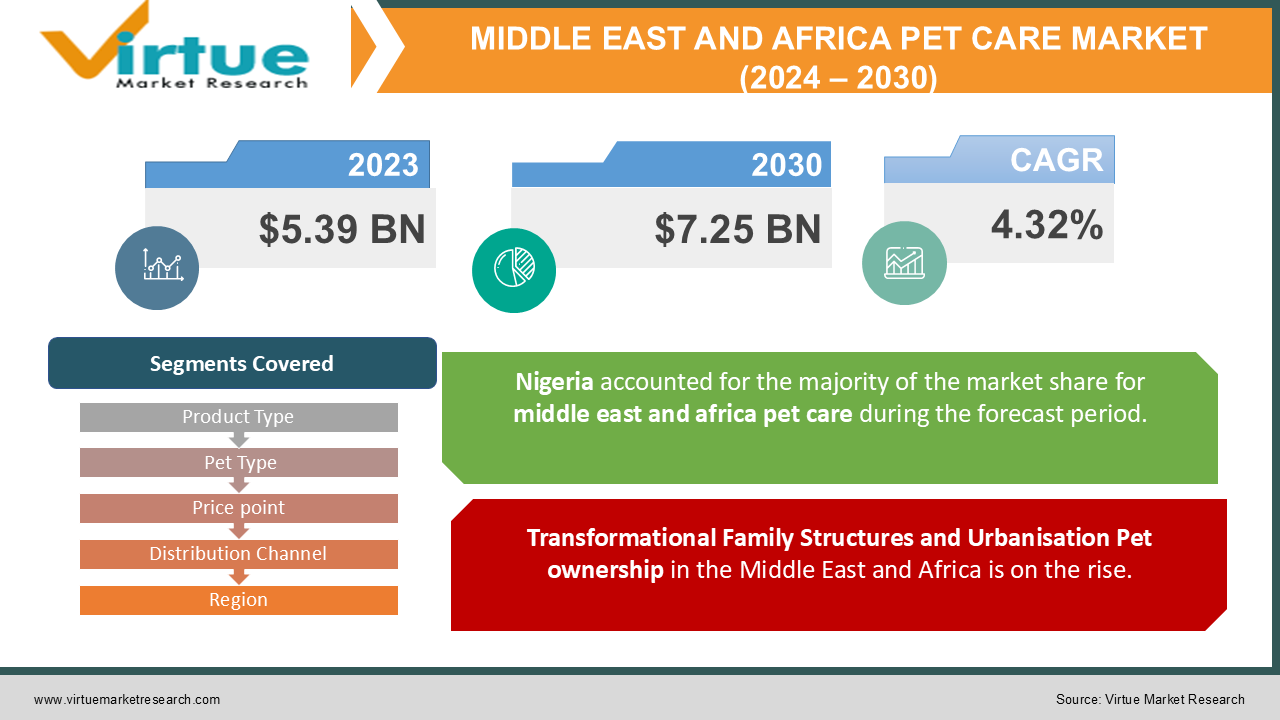
Explore reportThe Middle East and Africa Pet Care Market was valued at USD 5.39 billion in 2023 and is projected to reach a market size of USD 7.25 billion by 2030. Over the forecast period of 2024-2030, the market is projected to grow at a CAGR of 4.32%.
The pet food industry in the Middle East and Africa is expected to increase significantly. Pet ownership is growing throughout the area due to rising disposable incomes and urbanization. Additionally, pet owners are beginning to consider their animals more like members of the family and are prepared to pay extra for premium pet food that is seen to be healthier. Pet health awareness is increasing, which drives the demand for specially prepared food. Local and regional firms are gaining momentum, despite the dominance of global giants like Nestle and Mars in the industry. Affordability keeps dry food at the top but treats and wet food are becoming more and more popular. Pet food is available for purchase online, in pet stores, and in supermarkets. There are other obstacles to overcome, such as little knowledge about pet nutrition, expensive premium food, and the popularity of homemade substitutes.
Key Market Insights:
Middle East and Africa Pet Care Market Drivers:
Transformational Family Structures and Urbanisation Pet ownership in the Middle East and Africa is on the rise.
The Middle East and Africa's growing urbanization is providing an ideal environment for pet ownership. Living conditions frequently get smaller and less suitable for big families as more people relocate to cities. This leaves a void that dogs may fill in a special way, especially considering the trend towards later marriages and smaller families generally. Urban inhabitants in the area are increasingly turning to furry friends for emotional support and companionship as they have more discretionary cash available to them. The number of pets in Saudi Arabia has quadrupled in the last several years, from 0.8 million to a startling 2.4 million, demonstrating this trend. This data point illustrates how pet ownership in the Middle East and Africa has been significantly impacted by urbanization and shifting family relations.
The Middle East and Africa's Growing Pet Humanization Drives the Market Growth
In the Middle East and Africa, it's becoming harder to distinguish between a pet and a family member. This stems from an increasing emotional bond with dogs. They are now seen as beloved family members who need the finest care instead of just being friends. This translates into a readiness to spend money on high-quality food, medical services, and even stylish accessories. A big part of this tendency is social media. There are a tonne of accounts on social media sites like Instagram and TikTok that are devoted to showing off cute dogs, their shenanigans, and their opulent lifestyles. Regular exposure strengthens the emotional connection between pet owner and animal, fostering a culture in which lavishing care on pets is not only accepted but also encouraged.
Middle East and Africa Pet Care Market Restraints and Challenges:
The Middle East and Africa pet sector faces challenges despite a rise in pet ownership. Religious and cultural convictions, especially those that prohibit dog ownership, might impede the expansion of the industry. Additionally, there is still a knowledge gap about the right diet for pets, particularly in rural regions where pet owners may have to rely on homemade food that may be deficient in important nutrients. Growing demand for high-quality pet food is at odds with its increased price, which puts certain customers at a disadvantage. Particularly in rural areas, limited access to licensed veterinarians and veterinary facilities deters people from owning pets and reduces the appeal of pet insurance. Uncertainty for enterprises might arise from the changing regulatory landscape about pet food production.
Middle East and Africa Pet Care Market Opportunities:
The pet industry in the Middle East and Africa is rife with possibilities. Driven by an increase in pet ownership and disposable cash, this sector offers firms a wealth of opportunities. Premiumization is the way of the future, with pet owners expecting premium food, treats, and accessories that are tailored to the individual requirements of their furry friends. The development in e-commerce provides a handy means of distributing this wealth, allowing companies to attract clients with personalized suggestions, quick delivery, and online storefronts. The two main tools in this expanding sector are localization and innovation. Pet owners who care about the environment may find resonance in creating pet food recipes that are appropriate for local breeds and climates, as well as in investigating ecologically friendly packaging options and locally obtained products. Education is also very important. Collaborating with doctors, pet influencers, and the media may help close the knowledge gap on nutrition and care for pets while highlighting the need for high-quality pet goods and responsible pet ownership. Pet health issues are addressed and opportunities for pet insurance and other services are created by investing in veterinary infrastructure, particularly in rural regions. Lastly, the humanization of the pet movement opens doors for grooming services, wellness goods, and pet spas. Businesses may provide a full pet care experience and foster client loyalty by catering to these pampered dogs. The pet industry in the Middle East and Africa has a promising future, and companies that successfully navigate current obstacles and seize these possibilities will be well-positioned for success.
|
REPORT METRIC |
DETAILS |
|
Market Size Available |
2023 - 2030 |
|
Base Year |
2023 |
|
Forecast Period |
2024 - 2030 |
|
CAGR |
4.32% |
|
Segments Covered |
By Product Type, Pet Type, Price point, Distribution Channel and Region |
|
Various Analyses Covered |
Regional & Country Level Analysis, Segment-Level Analysis, DROC, PESTLE Analysis, Porter’s Five Forces Analysis, Competitive Landscape, Analyst Overview on Investment Opportunities |
|
Regional Scope |
United Arab Emirates (UAE), Saudi Arabia, South Africa, Kenya, Rest of MEA |
|
Key Companies Profiled |
Amazon, Carrefour, Colgate-Palmolive (Hill's Science Diet), Dubai Pet Insurance, Elanco Animal Health (South Africa), Etiqa UAE Insurance, Lulu Group, Mars (Whiskas, Pedigree, Royal Canin), Nestle (Purina), Noon |
Middle East and Africa Pet Care Market Segmentation:
With a rising demand for bigger breeds, dogs now make up the largest part of the pet industry in the Middle East and Africa. Cats, on the other hand, come in second, especially in cities. Smaller creatures including fish, birds, and rodents are included in the Other Pets section, which is the smallest of the three.
Because all pets must eat, pet food dominates the market. Driven by a few variables, the services industry is, however, the rising star. Pet owners can treat themselves to extras like grooming and pet walking as their discretionary income rises. A comprehensive approach to pet care is encouraged by the premiumization trend, which raises the demand for these services. Lastly, as many pet owners now lead busy lives and have little space, urbanization increases the need for professional assistance. The services market is expected to increase more as the bond between people and their animal friends grows.
The Middle East and Africa's pet goods market provides a multichannel shopping experience. Because they are known to customers, traditional retailers like pet shops and supermarkets continue to lead the industry. Online retail, on the other hand, is expanding at the quickest rate due to its ease and greater selection of products. The market is rounded out by veterinarian clinics that also sell pet food and specialty shops that cater to certain needs, giving pet owners the flexibility to select the channel that best fits their needs.
Price point segmentation allows the Pet Care Market in the Middle East and Africa to serve a variety of budgets. Value is now the largest category; it appeals to a wide variety of pet owners by providing a balance between quality and price. But the premium market is expanding at the highest rate. The humanization of pets and an increase in disposable money are the main drivers of this expansion. To lavish their furry (or feathery) family members with luxury food, trendy accessories, and specialized services, pet owners are becoming more and more ready to spend extra money.

Although the pet industry in the Middle East and Africa may be examined overall, regional segmentation leads to more sophisticated knowledge. This shows differences. Developed regions with high pet ownership and discretionary wealth, such as the GCC, tend to favor high-end goods. On the other hand, Sub-Saharan African emerging regions have opportunities for future expansion, necessitating approaches that consider lower income levels. Furthermore, breaking down the market into North Africa or the GCC enables a more in-depth examination of certain cultural inclinations and economic realities within those areas.
The COVID-19 pandemic had a rollercoaster effect on the Pet Care Market in the Middle East and Africa. Lockdowns and movement restrictions caused supply chains to stutter, which resulted in temporary shortages and price hikes for pet food and supplies. Production facilities also slowed down due to closures and a reduction in workforce. Fears about the economy during this time caused some people to cut back on non-essential spending, which may have an impact on purchases of pet products. However, the pandemic also brought about some unexpected benefits. The lockdowns and social distancing measures fostered a desire for companionship, which led to a spike in pet ownership, which will probably translate into long-term market growth. Restrictions on movement also fuelled the e-commerce boom, providing pet owners with a safe and convenient alternative. Heightened awareness of hygiene. In summary, while the COVID-19 pandemic caused some short-term disruptions, the long-term outlook for the Pet Care Market in the Middle East and Africa is still bright. Looking ahead, the market is expected to fully recover and resume its upward trajectory as the pandemic subsides. Also, the rise of online pet shopping is likely here to stay, becoming a permanent fixture in the market landscape. Furthermore, the trend towards premium pet food and care is anticipated to continue as pet owners become even more invested in the health and happiness of their furry (or feathered) family members.
Recent Trends and Developments in the Middle East and Africa Pet Care Market:
The pet industry in the Middle East and Africa is booming with innovations and trends. Demand for vegan and plant-based pet food solutions is being driven by environmentally concerned pet owners, while other pet owners are looking for functional pet food that addresses certain health issues. The trend of personalized pet nutrition is growing, with subscription firms providing feeding programs that are specifically tailored to each pet's needs. The world of online shopping is changing as well, with social media influencers influencing consumer choices and e-commerce sites broadening their product selection to include high-end goods, grooming supplies, and even pet apparel. With the introduction of wearable activity trackers, smart feeders, and toys with remote monitoring, technology is also having a great impact. However, spoiling doesn't end online. Major cities are seeing an increase in pet spa services that provide opulent treatments to satisfy people's rising desire to indulge their animal friends. Lastly, local pet care companies are thriving because they recognize the significance of climate and cultural preferences. These fascinating patterns highlight how dynamic the Pet Care Market is throughout the Middle East and Africa, and those who can innovate and adapt will undoubtedly succeed in this booming sector.
Key Players:
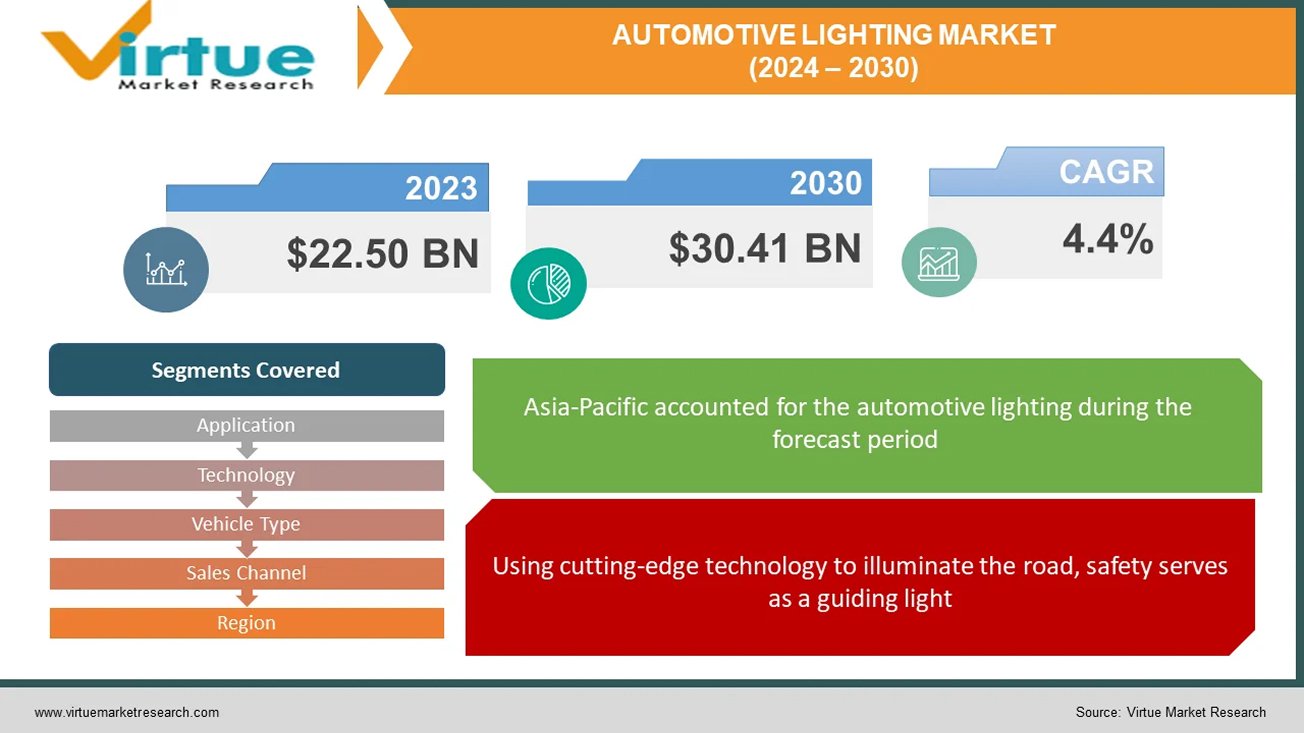
Global automotive lighting refers to all vehicle lighting systems, from headlamps that illuminate the road to taillights that communicate movements. They guarantee motorists and other road users alike safety, visibility, and style. While taillights frequently use LEDs for improved visibility, headlights are available in a variety of technologies, including LED and laser. Interior illumination, DRLs, and signal lights all have a role to play. This market, which was estimated to be worth $33.64 billion in 2022, is anticipated to rise to $67.39 billion by 2030 because of laws, luxury tastes, safety concerns, and technological developments like OLED taillights and adaptive headlights. Anticipate a future dominated by intelligent, connected, personalized, and sustainable lighting systems that enhance the safety, efficiency, and aesthetic appeal of automobiles.
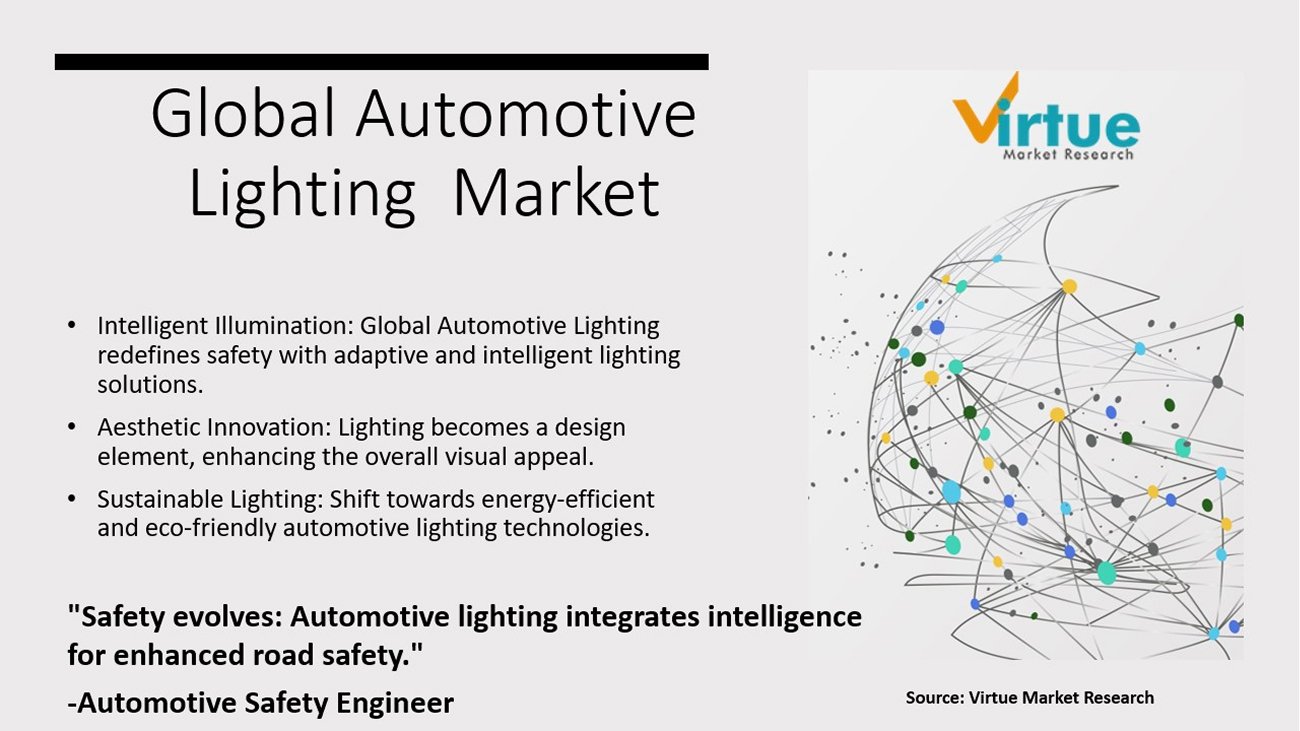
Car lighting works its magic to provide safety, visibility, and style. Headlights cut through the night, taillights express intent, and interiors shine with comfort. The billion-dollar global business is expected to rise due to consumer demand for high-end experiences, safer roads, and cutting-edge technology. Imagine dynamic messages being painted by taillights, headlights that adjust to the road, and interiors that customize their atmosphere. Driven by technological advancements like linked systems and laser beams, this future is calling. Anticipate even more visually attractive, environmentally friendly, and intelligent lighting to illuminate the way ahead, making cars safer, more efficient, and unquestionably cooler.
In the market for automobile lighting, safety is the driving force behind demand from the public and laws. While automated high beams smoothly react to traffic, adaptive headlights modify their beams so as not to blind other people. With visually striking displays, dynamic taillights convey intentions for braking and turning. Beyond these developments, integrated pedestrian identification and lane departure alerts will soon make roads safer and brighter for everyone.
Luxurious automobile lighting creates a distinct visual identity that goes beyond simple illumination. Personalized interior lighting customizes the driving experience by setting the mood with a range of colours and intensities, while intricate designs and distinctive DRLs modify exteriors. As you approach your automobile at night, welcoming lights lead the way, resulting in an interior that is perfectly lit. Not only is this symphony of light aesthetically pleasing, but it also stands as a tribute to luxury. Upcoming developments like gesture-controlled lighting and holographic displays promise to further enhance the experience.
The worldwide automotive lighting market is undergoing a significant transition towards energy-efficient solutions, as environmental concerns gain prominence. LED technology is leading the way, providing a ray of hope for the environment and drivers alike. LED lights beam brighter and use a lot less energy than conventional halogen lamps. There are some tangible advantages to this. For drivers, this translates to increased fuel economy, which lowers petrol prices and lessens reliance on fossil fuels. Greater air quality and a reduction in the transport sector's contribution to climate change are the results of reduced overall emissions.
Although the global automotive lighting business is booming, there are still unknowns. Difficulties impede growth even as innovation propels it with eye catching features like laser beams and adaptable headlights. These technologies are luxury items due to their high cost and difficult integration, which puts producers' abilities to the test. The worldwide patchwork created by unclear legislation limits the potential of innovation. Durability issues persist, particularly when complex systems are subjected to challenging conditions. Ultimately, a lot of drivers still don't fully understand how these improvements can help them. Together, we can overcome these obstacles. The keys to reducing costs are improved production, more seamless integration, and unified regulations. Their full potential can be realized by educating customers about the safety, efficiency, and aesthetic value of these lighting wonders. By working together, we can pave the way for an even brighter and safer future for vehicle lighting.
It is made possible by advanced LED technology, which gives drivers the ability to customize their illumination for the highest level of comfort and flair. Consumers that care about the environment want greener products, and vehicle lighting complies. While solar- and self-powered lighting technologies offer a future powered by clean energy, energy-efficient LEDs lower pollution. The advent of connected lighting systems heralds a new age. Envision automobiles interacting with infrastructure and one another to minimize accidents and enhance traffic efficiency. Integrated headlights with pedestrian recognition provide unmatched safety, while dramatic taillights with eye-catching displays alert onlookers to your intentions. The possibilities are endless in the future. Gesture-controlled interior illumination, holographic displays projected onto the road, and even light fixtures with self-healing capabilities.

Due to laws requiring safety features like headlights, taillights, and brake lights, exterior lighting presently holds the most market share in the vehicle lighting industry. The dominance of this market is partly attributed to advancements in safety-focused technologies such as adaptive headlights and daytime running lights. The market value of external lighting is increased by the quick adoption of technology like LED bulbs and laser lights, which improve performance and aesthetics. Conversely, the interior lighting market is expected to increase at the fastest rate in the upcoming years. Innovations like ambient lighting and technology breakthroughs like LED and OLED displays, driven by consumer demand for comfort and personalisation, open new possibilities. The spread of sophisticated interior lighting systems is further driven by the growing emphasis on safety and the expansion of the luxury car market.
The worldwide vehicle lighting market is currently dominated by halogen because of its more affordable price, advanced technology, and useful illumination. With its dependable supply chain and affordable option for manufacturers and cost-conscious customers, halogen holds the biggest market share. The fastest-growing market right now is LEDs, which are predicted to shortly overtake halogen. The rapid expansion of LEDs is driven by their higher efficiency, longer lifespan, flexibility in design, and technological breakthroughs including enhanced brightness. Because LEDs use less energy and produce fewer emissions and better fuel economy, they are becoming more and more popular in the changing automotive lighting market.
Passenger automobiles rule the worldwide automotive lighting market. The sheer number of passenger cars produced which surpasses that of business vehicles and fuels the need for lighting systems is the primary cause of this popularity. The growing demand for personal automobiles in developing nations is a result of rising disposable income, which in turn drives the rise of the passenger car market. The importance that consumers place on safety and aesthetics elements helps to drive market expansion. But in the upcoming years, the market for electric and hybrid cars is expected to develop at the quickest rate. The exponential rise of the worldwide electric car market, which is still expanding and shows no signs of slowing down, is what is driving this surge. Specialised lighting solutions are required since electric and hybrid vehicles have different lighting requirements because of their specific functionality and design aesthetics.
Most lighting systems sold nowadays are sold by OEMs (Original Equipment Manufacturers), primarily because manufacturers pre-install lighting systems in new cars. But in the next years, the aftermarket is expected to develop at the quickest rate. This spike in demand for replacement parts, especially lighting systems, can be linked to several variables, one of them being the average age of cars. The industry is expanding because of consumers' growing desire to personalise their cars with aftermarket lighting upgrades such LED upgrades and decorative lighting. The availability and affordability of technologies like adaptive headlights and laser lights in the aftermarket, together with other advancements in lighting technology, are driving demand even more. Moreover, the growing market for electric cars (EVs).
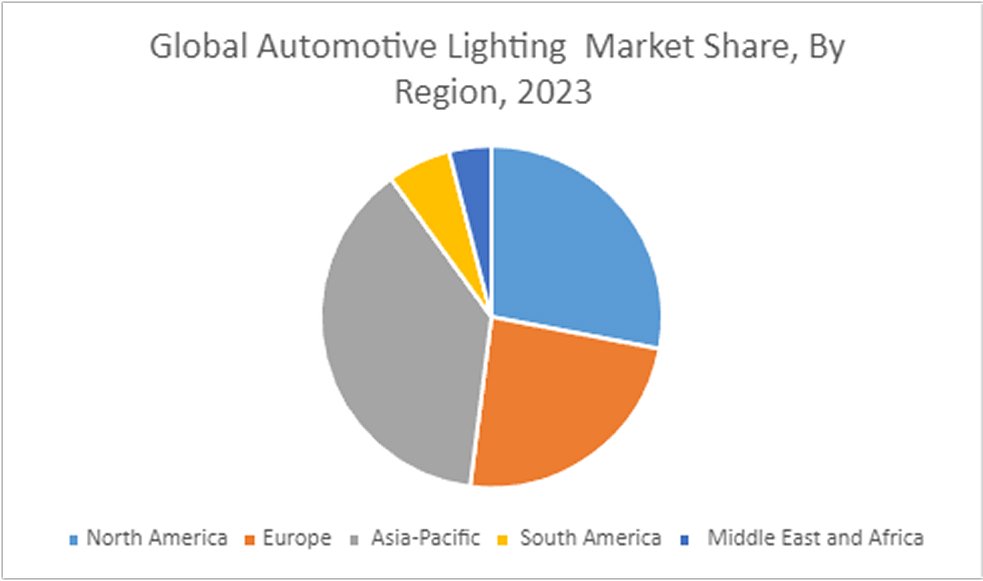
Throughout the forecast period, Asia Pacific is anticipated to be the automotive lighting market with the highest profitability. Over the past few years, Asia Pacific countries like China and India have seen notable increases in automotive manufacturing and sales, primarily in the medium-to premium luxury car segment. Asia Pacific is predicted to see an increase in the manufacturing of passenger cars, with India experiencing the strongest growth rate. Depending on the state of the national economy, the area offers a suitable selection of both high-end and cheap cars. For instance, there is a substantial demand for halogen, Xenon/HID, and LED since China and India produce more economy and mid-range automobiles. On the other hand, luxury car adoption rates are greater in South Korea and Japan, where LED lighting is the norm.
A brief shadow was thrown by COVID-19 over the worldwide automotive lighting market. Production was stopped by lockdowns and supply chain disruptions, while luxury lighting upgrades were shelved by consumers on a tight budget. Resources became scarce, and R&D stagnated. Still, the market is recovering thanks to resurgent demand and rearranged priorities. While energy-efficient LEDs are being pushed towards adoption by sustainability, safety concerns are driving interest in features like pedestrian detection and adaptive headlights. The digital push of the epidemic creates opportunities for intelligent, networked lighting systems that may interact with infrastructure and other cars. Ultimately, the industry is positioned to shine brighter, focused on safety, sustainability, and a connected future, even though the pandemic dimmed its brilliance.
A development collaboration between OSRAM Continental and REHAU aims to incorporate lighting into external components, providing automobile manufacturers with innovative lighting options that improve functionality and design flexibility. For rear combination lamps, Hella unveiled a revolutionary lighting innovation called Hella FlatLight technology. A Memorandum of Understanding (MoU) was signed by Samvardhana Motherson Automotive Systems Group BV (SMRPBV), a division of Motherson Group, and Marelli Automotive Lighting to investigate a technology collaboration focused on intelligently lighted external body components. Valeo debuted their revolutionary 360° lighting system at the Shanghai Auto Show. This technology surrounds the car with a band of light, projecting instantaneous, clear signs that other drivers can see from a distance. Pedestrians, cyclists, and scooter riders are especially susceptible to these signals
The Middle East and Africa Pet Care Market size is valued at USD 5.39 billion in 2023
The Middle East and Africa Pet Care Market growth is estimated to be 4.32% from 2024 to 2030.
Middle East and Africa Pet Care Market segmentation covered in the report is By Pet Type (Dogs, Cats, Other Pets); By Product Type (Pet Food, Accessories, Healthcare Products, Services); By Distribution Channel (Traditional Retail, Online Retail, Specialty Stores, Veterinary Clinics); By Price Point (Economy, Value, Premium) and by region.
Anticipate sustained expansion in premiumization, pet health services, and customized pet care solutions across the Middle East and Africa in tandem with rising disposable income and increasing sophistication of pet ownership
The Pet Care Market in the Middle East and Africa saw a mixed response to the COVID-19 outbreak. Production slowed down and supply chain problems resulted after the initial interruptions. On the other hand, the market witnessed a surge in e-commerce sales and an increase in pet ownership, which boded well for the long run.
Joining thousands of companies around the world committed to making the Excellent Business Solutions.

Specify your preferred Countries, Segments, or timeframes
Unlock Country Level Outlook, Trends, Cross-country Comparability, or supply Chain Variations.



Analyst Support
Every order comes with Analyst Support.

Customization
We offer customization to cater your needs to fullest.

Verified Analysis
We value integrity, quality and authenticity the most.

