
Industrial Lubricants Market
The market size was estimated at USD 77 billion in 2025, and is projected to reach 88.83 billion in 2030, growing at a CAGR of 2.9% from 2026 to 2030.
Explore reportThe Middle East and Africa Industrial Coatings Market was valued at USD 9.26 billion in 2024 and is projected to reach a market size of USD 11.04 billion by the end of 2030. Over the forecast period of 2025-2030, the market is projected to grow at a CAGR of 2.98%.
Expanding applications within the oil and gas sector are significantly contributing to market growth. The adverse environmental effects associated with solvent-borne coatings are constraining market growth. Key players include BASF SE, Axalta Coating Systems and Akzo Nobel N.V. The Saudi Arabia region has the biggest share in the Middle East and Africa Industrial Coatings Market.

Key Market Insights:
The sector is approaching the threshold of traditional linear demand expansion. Historically, chemical consumption has closely followed or surpassed GDP growth. However, as markets evolve and mature, this relationship tends to diminish, leading to a more level growth trajectory. A growing number of fast-developing regions are now entering this more stabilized phase. Furthermore, several advanced economies are witnessing declines in both GDP and chemical industry performance, driven by shifting demographics, fluctuating energy costs, and evolving regulatory landscapes.

Market Drivers:
The increasing demand for protective coatings is a key factor propelling market expansion.
Protective coatings have become increasingly critical as asset owners emphasize durability and the optimization of lifecycle costs. Advanced solutions, such as NEI Corporation’s NANOMYTE TC-3001, provide long-term corrosion resistance—up to 15 years—with minimal upkeep, allowing operators to postpone costly equipment replacements. Facilities like downstream oil refineries, chemical processing plants, and offshore platforms are progressively adopting multi-layer epoxy and zinc-rich systems that offer both barrier and cathodic protection. The incorporation of embedded sensors in these coatings is transforming maintenance practices, shifting from reactive inspections to predictive monitoring, which reduces unplanned outages and enhances safety. Simultaneously, regulatory bodies are imposing extended service life requirements for public infrastructure, further driving the need for advanced coatings capable of resisting harsh environmental factors such as coastal salinity, de-icing agents, and industrial contaminants. These combined factors are steering the industrial coatings sector toward innovations that enhance durability without increasing coating thickness or prolonging cure times.
Expanding applications within the oil and gas sector are significantly contributing to market growth.
Deep-water and high-temperature wells are placing increased demands on traditional coating technologies, prompting the development of hybrid formulations that integrate epoxy phenolics with ceramic or silicone components. These advanced chemistries offer improved resistance to hydrocarbons and temperatures exceeding 150 °C. Purpose-designed systems from companies such as PPG protect subsea pipelines against sour gas corrosion, while also delivering intumescent fire protection for topside structures within a unified solution. Coating technologies are further adapting to withstand high-pressure carbon dioxide conditions anticipated in large-scale carbon capture and storage (CCS) initiatives. In the Middle East, regional suppliers are securing licenses for these innovations to support the rapid growth of local drilling operations, although strict qualification standards often extend the timeline for commercial deployment. As the sector increasingly adopts digital twin technologies for monitoring asset integrity, coatings compatible with embedded remote sensing systems are gaining momentum—underscoring the oil and gas industry’s critical role in advancing the industrial coatings market.
Market Restraints and Challenges:
The adverse environmental effects associated with solvent-borne coatings are constraining market growth.
Stricter regulations on volatile organic compound (VOC) emissions in the United States and the European Economic Area have reduced permissible output levels for industrial paint operations, compelling facilities to either invest in emission control systems or transition to low-solvent alternatives. As a result, water-borne and powder coating technologies are steadily gaining market share in the industrial coatings sector, even as overall painted surface areas grow at a moderate pace. Manufacturers opting to upgrade existing dispersion lines, rather than develop new solvent-based infrastructure, reflect a strategic focus on long-term cost efficiency—demonstrating a broader industry shift toward sustainable chemistries. Companies that proactively align with environmental standards are securing multi-year supply agreements based on their sustainability credentials, reinforcing a cycle in which regulatory compliance becomes a baseline requirement for market participation rather than a differentiating factor.
Market Opportunities:
The growing emphasis on sustainability is accelerating the transition to low-VOC technologies, creating new opportunities within the market.
Regulatory bodies such as the U.S. Environmental Protection Agency (EPA) and California’s Air Resources Board have implemented stricter limits on VOC emissions, prompting manufacturers to shift from solvent-based formulations to water-borne and powder-based alternatives. In response, producers are investing in zero-emission dispersion technologies—demonstrated by BASF’s carbon-neutral facility expansion in the Netherlands, which increases water-based production capacity while reducing Scope 1 emissions. While water-borne coatings have traditionally underperformed in early moisture resistance, recent innovations in acrylic-epoxy hybrids and metal-catalyzed curing systems have closed the performance gap without requiring significant changes to plant infrastructure. Automotive OEMs have led this transition, with over 70% of interior coatings now water-based—a trend that is steadily extending into the general industrial and heavy machinery sectors. As a result, sustainability goals continue to shape both formulation strategies and long-term capital investment plans across the industry.
MIDDLE EAST AND AFRICA INDUSTRIAL COATINGS MARKET REPORT COVERAGE:
|
REPORT METRIC |
DETAILS |
|
Market Size Available |
2024 - 2030 |
|
Base Year |
2024 |
|
Forecast Period |
2025 - 2030 |
|
CAGR |
2.98% |
|
Segments Covered |
By Resin Type, Technology, End-use Industry, Substrate and Region |
|
Various Analyses Covered |
Global, Regional & Country Level Analysis, Segment-Level Analysis, DROC, PESTLE Analysis, Porter’s Five Forces Analysis, Competitive Landscape, Analyst Overview on Investment Opportunities |
|
Regional Scope |
North America, Europe, APAC, Latin America, Middle East & Africa |
|
Key Companies Profiled |
BASF SE, Axalta Coating Systems, Akzo Nobel N.V., PPG Industries, Inc, Kansai Paints, Nippon Paint Holdings Co., Ltd., The Sherwin-Williams Company, RPM International Inc., Hempel A/S, Diamond Paints |
Middle East and Africa Industrial Coatings Market Segmentation:
Epoxy coatings continue to lead the industrial coatings market, with polyurethane systems projected to experience faster growth, surpassing the industry’s overall expansion rate. This dominance is attributed to epoxy's excellent adhesion, chemical resistance, and compatibility with a wide range of substrates, making them a preferred choice in environments such as refineries, wastewater treatment facilities, and fabrication workshops. Innovations like hybrid nano-silica-modified epoxies are gaining traction by offering enhanced abrasion resistance while maintaining low VOC content—aligning with increasingly stringent environmental regulations.
Meanwhile, polyurethane coatings are steadily gaining market share in exterior applications where UV resistance and flexibility are essential, notably in sectors such as wind turbine infrastructure and railcar manufacturing. Acrylic coatings continue to serve a distinct role in light-duty applications, valued for their quick drying times and cost efficiency. Recent investments, including Lubrizol’s USD 20 million expansion in North Carolina, reflect growing demand for water-borne acrylic emulsions.

Solvent-borne coatings currently hold the largest share of the industrial coatings market, while water-borne technologies are demonstrating steady growth due to their reliable performance across a variety of climatic conditions. Increasingly, water-borne products are gaining traction in maintenance repaint applications, as contractors respond to evolving requirements for reduced solvent content, lower odor, and safer handling practices. By 2030, the adoption of water-borne coatings in heavy machinery is expected to rise significantly, in line with the expiration of phase-in periods for stricter VOC regulations across Europe and North America.
Powder coatings, which are inherently solvent-free, represent the fastest-growing segment. Capacity is expanding to serve applications in agricultural equipment and appliance exteriors. For example, Sherwin-Williams' Powdura ECO product line incorporates recycled polyethylene terephthalate (rPET) while maintaining strong corrosion resistance, showcasing a commitment to sustainability that aligns with circular economy goals embraced by many brand owners.

General industrial applications have historically driven growth within the industrial coatings market and are expected to continue expanding over the forecast period. Consistent OEM production volumes and routine refurbishment cycles provide a reliable foundation for sustained coating demand. In this segment, factory-applied coil coatings are widely used to ensure color retention and surface durability for metal furnishings and HVAC enclosures, while aftermarket demand is supported by on-site maintenance and touch-up activities.
Innovative hybrid polysiloxane topcoats, equipped with fluorescing pigments, are streamlining quality assurance by enabling rapid film-thickness verification under ultraviolet light—particularly useful for critical infrastructure such as monopile foundations. Meanwhile, self-healing coatings featuring micro-encapsulated curing agents are advancing from laboratory research to pilot-scale implementation on transmission towers, with the potential to significantly reduce maintenance frequency.
In more demanding environments, oil and gas operators are increasingly adopting ceramic-reinforced epoxy systems engineered to withstand continuous exposure to flue gases at temperatures reaching 1,800 °F. Field installations by Cerakote on gas compressors have demonstrated multi-year durability, validating their use in extreme service conditions.
These advancements underscore a growing segmentation within the industrial coatings market—between high-volume, general-purpose applications and specialized, low-volume protective systems. This divergence is influencing product portfolio strategies, as manufacturers seek to balance scalable solutions with high-performance technologies tailored to critical-service environments.
Metal substrates continue to represent the bulk of industrial coating volumes, largely due to the need for corrosion protection across sectors such as process industries, transportation, and equipment manufacturing. High-performance epoxy phenolic linings are used to prevent sour gas permeation in pressure vessels, while zinc-rich primers offer sacrificial protection for steel reinforcement in coastal bridge structures. The incorporation of nanocomposite additives has enhanced barrier properties and abrasion resistance without significantly impacting cost or altering application methods.
Concrete substrates are also gaining importance, with growing adoption of polyaspartic and polysiloxane coatings that offer resistance to chloride ingress and freeze–thaw cycles—factors critical to extending the service life of parking decks and water treatment facilities. In architectural applications, breathable elastomeric membranes are used to accommodate thermal expansion and prevent spalling in humid environments. Meanwhile, UV-curable systems are being embraced in decorative flooring applications for their ability to dramatically reduce downtime in warehouse settings, enabling return-to-service within hours rather than days.
While metal will remain the dominant substrate in industrial coatings, rising infrastructure investment—particularly in emerging economies—is elevating the role of concrete. This trend is prompting formulators to develop specialized product lines that address the unique challenges associated with concrete, such as high porosity and moisture vapor transmission, thereby broadening the strategic scope of the industrial coatings market.

The Middle East & Africa region, while currently holding a smaller share of the global industrial coatings market, is registering some of the highest growth rates. This momentum is driven by large-scale infrastructure developments such as Saudi Arabia’s NEOM, which are fueling demand for advanced protective systems tailored for both metal and concrete substrates. Local formulators are increasingly partnering with global technology providers to meet stringent performance standards, including fire resistance and corrosion protection in high-salinity, high-UV desert conditions.
In South America, Brazil leads regional growth, supported by investments in petrochemical infrastructure and continued urban development. However, macroeconomic volatility remains a limiting factor for public-sector capital expenditure. Across both regions, initiatives focused on knowledge transfer and applicator training are playing a vital role in ensuring that advanced coatings systems are applied effectively, thus realizing their full performance potential.
Within the Middle East & Africa, South Africa is projected to experience the fastest compound annual growth rate (CAGR) over the forecast period. This is largely attributed to a surge in domestic automotive production. A recent framework agreement between Stellantis and South African authorities aims to establish a new vehicle manufacturing facility in the country, supporting both employment creation and broader economic development.
Egypt, meanwhile, possesses the most advanced construction sector on the African continent. The country is witnessing rapid growth in building activity, bolstered by increasing foreign direct investment in large-scale infrastructure projects. Egypt’s construction industry has consistently grown at a rate exceeding 9% annually in recent years, accounting for approximately 10% of all construction activity across Africa.
In addition, Egypt serves as a regional hub for automotive manufacturing, hosting production facilities for major global players such as GM, BMW, and Toyota. Rising demand for passenger vehicles and light commercial vehicles is expected to drive further expansion in vehicle manufacturing, which in turn will support increased demand for industrial coatings used in automotive applications.
The COVID-19 pandemic had a significant negative impact on the coatings industry, largely due to its strong correlation with GDP fluctuations. Widespread lockdowns and labor shortages led to the temporary closure of many production facilities, creating uncertainty among manufacturers and disrupting supply chains. The automotive sector, a key consumer of industrial coatings, experienced sluggish demand, structural slowdowns, and broader economic headwinds throughout the period.
Latest Trends and Developments:
BASF SE operates across six primary business segments: Industrial Solutions, Materials, Surface Technologies, Chemicals, Nutrition & Care, and Agricultural Solutions. The company’s extensive product portfolio serves diverse industries, including agriculture, construction, pharmaceuticals, energy and power, home care and nutrition, automotive and transportation, rubber and plastics, leather and textiles, as well as personal care and hygiene.
Akzo Nobel N.V. specializes in the manufacturing and marketing of paints and performance coatings. Its operations are organized into three main segments: Specialty Chemicals, Performance Coatings, and Decorative Paints. The company’s key offerings include industrial chemicals, functional chemicals, pulp and performance chemicals, powder coatings, and coatings for the automotive and aerospace sectors.
Key Players in the Market:
Market News:
June 2025: At the AIA Conference on Architecture and Design 2025, PPG unveiled its latest architectural metal coatings, engineered to provide enhanced weather resistance, aesthetic appeal, and long-term durability. This advancement is anticipated to reinforce PPG’s competitive standing within the industrial coatings market.
December 2024: American Industrial Partners (AIP), a prominent industrial investment firm, completed the acquisition of PPG’s architectural coatings business in the U.S. and Canada for USD 550 million. This strategic acquisition is expected to bolster AIP’s footprint in the industrial coatings sector, fostering greater competition and innovation across the market.
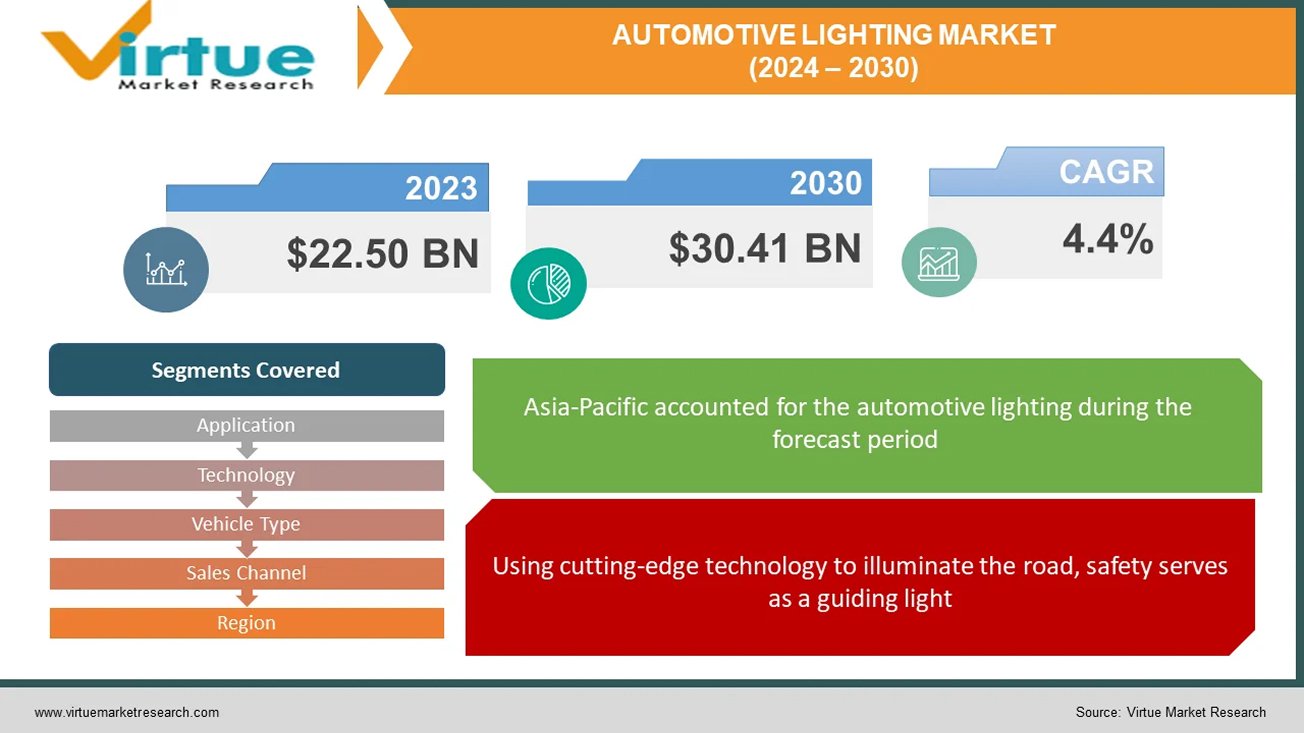
Global automotive lighting refers to all vehicle lighting systems, from headlamps that illuminate the road to taillights that communicate movements. They guarantee motorists and other road users alike safety, visibility, and style. While taillights frequently use LEDs for improved visibility, headlights are available in a variety of technologies, including LED and laser. Interior illumination, DRLs, and signal lights all have a role to play. This market, which was estimated to be worth $33.64 billion in 2022, is anticipated to rise to $67.39 billion by 2030 because of laws, luxury tastes, safety concerns, and technological developments like OLED taillights and adaptive headlights. Anticipate a future dominated by intelligent, connected, personalized, and sustainable lighting systems that enhance the safety, efficiency, and aesthetic appeal of automobiles.
Car lighting works its magic to provide safety, visibility, and style. Headlights cut through the night, taillights express intent, and interiors shine with comfort. The billion-dollar global business is expected to rise due to consumer demand for high-end experiences, safer roads, and cutting-edge technology. Imagine dynamic messages being painted by taillights, headlights that adjust to the road, and interiors that customize their atmosphere. Driven by technological advancements like linked systems and laser beams, this future is calling. Anticipate even more visually attractive, environmentally friendly, and intelligent lighting to illuminate the way ahead, making cars safer, more efficient, and unquestionably cooler.
In the market for automobile lighting, safety is the driving force behind demand from the public and laws. While automated high beams smoothly react to traffic, adaptive headlights modify their beams so as not to blind other people. With visually striking displays, dynamic taillights convey intentions for braking and turning. Beyond these developments, integrated pedestrian identification and lane departure alerts will soon make roads safer and brighter for everyone.
Luxurious automobile lighting creates a distinct visual identity that goes beyond simple illumination. Personalized interior lighting customizes the driving experience by setting the mood with a range of colours and intensities, while intricate designs and distinctive DRLs modify exteriors. As you approach your automobile at night, welcoming lights lead the way, resulting in an interior that is perfectly lit. Not only is this symphony of light aesthetically pleasing, but it also stands as a tribute to luxury. Upcoming developments like gesture-controlled lighting and holographic displays promise to further enhance the experience.
The worldwide automotive lighting market is undergoing a significant transition towards energy-efficient solutions, as environmental concerns gain prominence. LED technology is leading the way, providing a ray of hope for the environment and drivers alike. LED lights beam brighter and use a lot less energy than conventional halogen lamps. There are some tangible advantages to this. For drivers, this translates to increased fuel economy, which lowers petrol prices and lessens reliance on fossil fuels. Greater air quality and a reduction in the transport sector's contribution to climate change are the results of reduced overall emissions.
Although the global automotive lighting business is booming, there are still unknowns. Difficulties impede growth even as innovation propels it with eye catching features like laser beams and adaptable headlights. These technologies are luxury items due to their high cost and difficult integration, which puts producers' abilities to the test. The worldwide patchwork created by unclear legislation limits the potential of innovation. Durability issues persist, particularly when complex systems are subjected to challenging conditions. Ultimately, a lot of drivers still don't fully understand how these improvements can help them. Together, we can overcome these obstacles. The keys to reducing costs are improved production, more seamless integration, and unified regulations. Their full potential can be realized by educating customers about the safety, efficiency, and aesthetic value of these lighting wonders. By working together, we can pave the way for an even brighter and safer future for vehicle lighting.
It is made possible by advanced LED technology, which gives drivers the ability to customize their illumination for the highest level of comfort and flair. Consumers that care about the environment want greener products, and vehicle lighting complies. While solar- and self-powered lighting technologies offer a future powered by clean energy, energy-efficient LEDs lower pollution. The advent of connected lighting systems heralds a new age. Envision automobiles interacting with infrastructure and one another to minimize accidents and enhance traffic efficiency. Integrated headlights with pedestrian recognition provide unmatched safety, while dramatic taillights with eye-catching displays alert onlookers to your intentions. The possibilities are endless in the future. Gesture-controlled interior illumination, holographic displays projected onto the road, and even light fixtures with self-healing capabilities.

Due to laws requiring safety features like headlights, taillights, and brake lights, exterior lighting presently holds the most market share in the vehicle lighting industry. The dominance of this market is partly attributed to advancements in safety-focused technologies such as adaptive headlights and daytime running lights. The market value of external lighting is increased by the quick adoption of technology like LED bulbs and laser lights, which improve performance and aesthetics. Conversely, the interior lighting market is expected to increase at the fastest rate in the upcoming years. Innovations like ambient lighting and technology breakthroughs like LED and OLED displays, driven by consumer demand for comfort and personalisation, open new possibilities. The spread of sophisticated interior lighting systems is further driven by the growing emphasis on safety and the expansion of the luxury car market.
The worldwide vehicle lighting market is currently dominated by halogen because of its more affordable price, advanced technology, and useful illumination. With its dependable supply chain and affordable option for manufacturers and cost-conscious customers, halogen holds the biggest market share. The fastest-growing market right now is LEDs, which are predicted to shortly overtake halogen. The rapid expansion of LEDs is driven by their higher efficiency, longer lifespan, flexibility in design, and technological breakthroughs including enhanced brightness. Because LEDs use less energy and produce fewer emissions and better fuel economy, they are becoming more and more popular in the changing automotive lighting market.
Passenger automobiles rule the worldwide automotive lighting market. The sheer number of passenger cars produced which surpasses that of business vehicles and fuels the need for lighting systems is the primary cause of this popularity. The growing demand for personal automobiles in developing nations is a result of rising disposable income, which in turn drives the rise of the passenger car market. The importance that consumers place on safety and aesthetics elements helps to drive market expansion. But in the upcoming years, the market for electric and hybrid cars is expected to develop at the quickest rate. The exponential rise of the worldwide electric car market, which is still expanding and shows no signs of slowing down, is what is driving this surge. Specialised lighting solutions are required since electric and hybrid vehicles have different lighting requirements because of their specific functionality and design aesthetics.
Most lighting systems sold nowadays are sold by OEMs (Original Equipment Manufacturers), primarily because manufacturers pre-install lighting systems in new cars. But in the next years, the aftermarket is expected to develop at the quickest rate. This spike in demand for replacement parts, especially lighting systems, can be linked to several variables, one of them being the average age of cars. The industry is expanding because of consumers' growing desire to personalise their cars with aftermarket lighting upgrades such LED upgrades and decorative lighting. The availability and affordability of technologies like adaptive headlights and laser lights in the aftermarket, together with other advancements in lighting technology, are driving demand even more. Moreover, the growing market for electric cars (EVs).
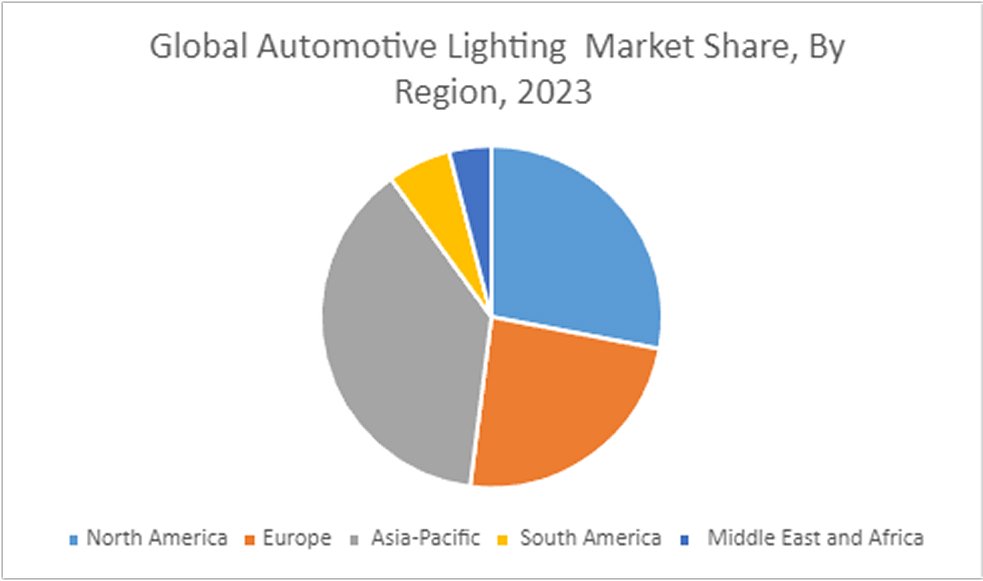
Throughout the forecast period, Asia Pacific is anticipated to be the automotive lighting market with the highest profitability. Over the past few years, Asia Pacific countries like China and India have seen notable increases in automotive manufacturing and sales, primarily in the medium-to premium luxury car segment. Asia Pacific is predicted to see an increase in the manufacturing of passenger cars, with India experiencing the strongest growth rate. Depending on the state of the national economy, the area offers a suitable selection of both high-end and cheap cars. For instance, there is a substantial demand for halogen, Xenon/HID, and LED since China and India produce more economy and mid-range automobiles. On the other hand, luxury car adoption rates are greater in South Korea and Japan, where LED lighting is the norm.
A brief shadow was thrown by COVID-19 over the worldwide automotive lighting market. Production was stopped by lockdowns and supply chain disruptions, while luxury lighting upgrades were shelved by consumers on a tight budget. Resources became scarce, and R&D stagnated. Still, the market is recovering thanks to resurgent demand and rearranged priorities. While energy-efficient LEDs are being pushed towards adoption by sustainability, safety concerns are driving interest in features like pedestrian detection and adaptive headlights. The digital push of the epidemic creates opportunities for intelligent, networked lighting systems that may interact with infrastructure and other cars. Ultimately, the industry is positioned to shine brighter, focused on safety, sustainability, and a connected future, even though the pandemic dimmed its brilliance.
A development collaboration between OSRAM Continental and REHAU aims to incorporate lighting into external components, providing automobile manufacturers with innovative lighting options that improve functionality and design flexibility. For rear combination lamps, Hella unveiled a revolutionary lighting innovation called Hella FlatLight technology. A Memorandum of Understanding (MoU) was signed by Samvardhana Motherson Automotive Systems Group BV (SMRPBV), a division of Motherson Group, and Marelli Automotive Lighting to investigate a technology collaboration focused on intelligently lighted external body components. Valeo debuted their revolutionary 360° lighting system at the Shanghai Auto Show. This technology surrounds the car with a band of light, projecting instantaneous, clear signs that other drivers can see from a distance. Pedestrians, cyclists, and scooter riders are especially susceptible to these signals
Expanding applications within the oil and gas sector are significantly contributing to market growth.
The adverse environmental effects associated with solvent-borne coatings are constraining market growth.
Key players include BASF SE, Axalta Coating Systems and Akzo Nobel N.V.
The Saudi Arabia region has the biggest share in the Middle East and Africa Industrial Coatings Market.
Egypt region is expanding at the highest rate.
Joining thousands of companies around the world committed to making the Excellent Business Solutions.

Specify your preferred Countries, Segments, or timeframes
Unlock Country Level Outlook, Trends, Cross-country Comparability, or supply Chain Variations.



Analyst Support
Every order comes with Analyst Support.

Customization
We offer customization to cater your needs to fullest.

Verified Analysis
We value integrity, quality and authenticity the most.

