Magnesium Fertilization Market Research Report – Segmentation by SOURCES (Soluble Sources, Semi-Soluble sources) ; CROP TYPE (Oilseed & Pulses, Fruits & Vegetables, cereals and grains, others); and Region; - Size, Share, Growth Analysis | Forecast (2024– 2030)
Magnesium Fertilization Market Size (2024 – 2030)
The Global Magnesium Fertilization Market was valued at USD 2.27 billion in 2023 and is projected to reach a market size of USD 2.87 billion by the end of 2030. Over the forecast period of 2024-2030, the market is projected to grow at a CAGR of 3.4%.
INDUSTRY OVERVIEW
The use of fertilizers has increased tremendously over the past few decades. The consumption of fertilizers in the 1950s was around 20 million tons and it has increased by many folds and reached around 190 million tons in 2019 and 2020 and it is estimated to continue growing in the future. Fertilizers are natural and synthetic chemical substances that are used in farming to boost the productivity of crops. The fertilizers include useful nutrients that are required by plants to grow. Fertilizers improve the soil’s natural fertility and aid higher crop production. It also helps water in soil retention and provides tolerance from various pests. Farmers are now able to utilize fertilizers more safely and effectively, reducing their risk of exposure to dangerous fertilizers as a result of the growing availability of organic fertilizers.
Magnesium (Mg) is a mineral that is necessary for all living things, including plants, animals, and people. A lack of magnesium impairs photosynthesis and carbohydrate partitioning in plants, reduces the viability of agricultural development, and has long-term detrimental effects on both human and animal health. Unfortunately, crops produced on acidic soils found all over the world usually show clear signs of magnesium shortage, especially when they are in a vital growth stage and rapidly accumulate carbohydrates. The primary source of magnesium nutrition for both humans and animals is edible agricultural items. Therefore, it is crucial for the health of both humans and animals to keep the Mg content of agricultural products within a range that is generally sufficient. Further, the primary core of the chlorophyll molecule in plant tissue is magnesium. Due to the quest for high yields, crop fertilization procedures are continually getting more sophisticated. A crucial plant component called magnesium is routinely disregarded and may be hindering plant growth. Potential inadequacies should be identified by soil testing, and when necessary, farmers have access to a wide range of top-notch Mg supplies. Moreover, if Mg is inadequate, the lack of chlorophyll causes poor and stunted plant development.
The productivity of agriculture has grown due to the world's unrivalled rate of population expansion. The extensive and continual use of agricultural land has diminished soil nutrient concentration, which has resulted in decreasing crop yields. These factors have caused the demand for magnesium compounds from the agriculture sector to rise. Magnesium is a powerful enzyme activator that promotes the development and development of plants. To make up for the soil's deficiency in magnesium, magnesium salt is added to the soil as a fertilizer in the agricultural industry. To give their crops the best growth circumstances, farmers that grow vegetables and cash crops rely heavily on soils high in magnesium. For the potted plants, they offer, plant nurseries also utilise magnesium salt extensively. The global market is being driven by dietary changes brought on by population growth and increased disposable income in emerging economies.
COVD-19 IMPACT ON THE MAGNESIUM FERTILIZATION MARKET
The COVID-19 pandemic-related worldwide crisis significantly disrupted most businesses, however, the fertilizer sector has shown some resilience. During the epidemic, there were problems with the supply chain. Demand and expansion were slowed by a lack of labour, a scarcity of raw materials, and the localized closure of a few manufacturing facilities. The biggest producer and user of phosphates, Sulphur, and sulphuric acid, China, is at the center of the problem and was severely damaged. The lockdowns, logistical issues, lower outputs, and related economic effects of COVID-19 continue to pose a challenge to the world market for magnesium macronutrients. Since the beginning, the world's greatest producer and user of agricultural micronutrients, China, has been particularly impacted. The transportation of both finished goods and raw materials for micronutrients into and out of China has been impacted by the outbreak of a novel coronavirus, which has so far had the most severe effects on the whole of Chinese agriculture micronutrients industry However, things began to improve, and manufacturing was resumed. Consequently, COVID-19's overall impact on the fertilizer business was limited.
MARKET DRIVERS:
Market expansion will be aided by soaring demand from the agricultural sector
The unparalleled rate of population growth throughout the world has increased agricultural productivity. Crop yields have decreased as a result of the excessive and ongoing usage of agricultural land, which has decreased soil nutrient concentration. These reasons have led to an increase in demand for magnesium compounds from the agricultural sector. Magnesium salt is incorporated into the soil as a fertilizer in the agriculture sector to make up for the soil's lack of magnesium. Farmers that cultivate vegetables and cash crops rely largely on magnesium-rich soil to provide favorable growing conditions for their crops. Additionally, plant nurseries use salt extensively for the potted plants they sell. Dietary changes have been caused by population increase and rising disposable income in emerging nations, driving the worldwide market.
The growing use of magnesium as a micronutrient to promote market growth
Numerous nutrients increase plant output, keep people nourished and healthy across the world, and improve fertilizer effectiveness. Micronutrients make up the third group of crucial crop nutrients. Micronutrients contribute to the general health and growth of plants. Further, magnesium micronutrients encourage vital plant functions and growth, which results in nutrient-dense food for both animals and people. Therefore, the use of magnesium as a micronutrient is likely to propel the market growth.
MARKET RESTRAINTS:
Price volatility and negative effects of magnesium salt affect market development
One of the main things limiting the market's expansion is the price volatility of magnesium salt. The primary causes of the volatility in the total cost of salt over the past several years have been the steep increase in energy prices and raw material costs. The pricing of raw materials is also affected by a decrease in the supply of high-quality minerals. Additionally, the negative health impacts of medications made with magnesium compounds are reducing consumer demand for the goods. Compound-based medications have a significant likelihood of resulting in hives, diarrhea, breathing difficulties, and neck, face, or tongue swelling. Additionally, consuming too much salt might interfere with the body's ability to absorb medications. As a result, these issues will slow the market's expansion over the projected period.
MAGNESIUM FERTILIZATION MARKET REPORT COVERAGE:
REPORT METRIC
DETAILS
Market Size Available
2023 - 2030
Base Year
2023
Forecast Period
2024 - 2030
CAGR
3.4%
Segments Covered
By Sources, By Crop Type and By Region.
Various Analyses Covered
Global, Regional & Country Level Analysis, Segment-Level Analysis, DROC, PESTLE Analysis, Porter’s Five Forces Analysis, Competitive Landscape, Analyst Overview on Investment Opportunities
Regional Scope
North America, Europe, APAC, Latin America, Middle East & Africa
Key Companies Profiled
NUTRIEN LTD. , YARA INTERNATIONAL ASA , THE MOSAIC COMPANY , ISRAEL CHEMICALS LTD. , NUFARM , KOCH AG & ENERGY SOLUTIONS LLC, COROMANDEL INTERNATIONAL LIMITED , DEEPAK FERTILISERS AND PETROCHEMICALS , HAIFA CHEMICALS , SAPEC AGRO S.A. , KUGLER COMPANY, EVERGROW , AGRICULTURE SOLUTIONS INC , IMPACT FERTILIZER, VAN IPEREN INTERNATIONAL B.V, U.S. AG LLC
This research report on the Magnesium Fertilization Market has been segmented and sub-segmented based on Sources, By Crop Type and By Region.
ENHANCED WATER MARKET – BY SOURCES
Soluble Sources
Magnesium Sulfate
Kieserite
Kainite
Langbeinite
Magnesium Chloride
Magnesium Nitrate
Others
Semi-Soluble sources
Dolomite
Magnesium oxide
Hydrated dolomite
Struvite
Others
Based on the source, the magnesium fertilization market is segmented into soluble sources and Semi- Soluble sources. The Soluble source is further categorized into Magnesium Sulfate, Kieserite, Kainite, Langbeinite, Magnesium Chloride, Magnesium Nitrate and Others. The semi soluble Sources are further segmented into Dolomite, Magnesium oxide, Hydrated dolomite, Struvite and Others. Among these, the Magnesium Sulfate category dominated the market in 2021 and is predicted to expand at a CAGR of 5.5% over the forecast period. The rising consumption in the agriculture industry is the driving factor of the market. The salt is primarily used as a fertilizer to fulfil the magnesium deficiency in the soil. The monohydrate of magnesium sulphate known as kieserite is largely produced in German mines. As a carrier of both Mg and S, kieserite has a variety of uses in both industry and agriculture. MgCl2, or magnesium chloride, contains 25% magnesium. Due to its high solubility, this substance is often marketed as a liquid and is widely utilised as a component in fluid fertilizers. Magnesium Nitrate, or Mg (NO3)2. 6H2O contains 9% magnesium. often used in the horticulture sector to give magnesium in a form that also serves as a source of soluble nitrogen.
In semi soluble magnesium fertilizer, the Magnesium oxide category has a significant proportion. Magnesium oxide, or MgO, contains 56% magnesium. It is created by heating magnesium carbonate (MgCO3) to drive out carbon dioxide, leaving just magnesium and oxygen. Although it is very insoluble, it has the greatest Mg content of all conventional fertilizers. Making use of this nutrient source for plant development will depend on timing the application to coincide with plant needs and employing fine particle size.
Based on the crop type, the magnesium fertilization market is segmented into Cereal and Grains, Oilseed and Pulses, Fruits and Vegetables and others. Among these, the Fruits and Vegetable category dominated the market. The vitamins and minerals found in vegetables are abundant and very inexpensive. When consumed in adequate amounts, they offer flavour, palatability, and hunger stimulation as well as a decent quantity of fibre. Therefore, for vegetable crops to be successfully produced, proper plant nutrition is crucial as a result magnesium micronutrients are widely used as a substitute for the deficient mineral in the soil and thus help in better crop growth.
MAGNESIUM FERTILIZATION MARKET - BY REGION
North America
Europe
The Asia Pacific
Latin America
The Middle East
Africa
By region, the Magnesium Fertilization Market is grouped into North America, Europe, Asia Pacific, Latin America, The Middle East and Africa. The market is dominated by the Asia Pacific, which also has the largest market share. The expansion of the particular market is mostly due to the largely agricultural area and knowledge of the utilization of secondary nutrients such as Magnesium, Calcium and Sulphur. China and India are the two biggest market players. High use of secondary nutrients in nations like China, the world's top producer of magnesite, Sulphur, and lime. Asia produces a variety of important products, including rice, sugar beet, fruits, vegetables, cereals, and grains. The area consumes 90% of the world's rice production. In the Asia Pacific, there is a big market for secondary macronutrients such as Magnesium since micronutrients are directly used to alleviate plant deficits and are frequently sprayed in combination or as additives. Micronutrients are necessary substances that plants only require in trace amounts. Crop absorption for the majority of micronutrients is less than one pound per acre. Despite this minimal demand, a lack of micronutrients can impair vital plant processes, leading to irregular plant development and poorer production. North America and Europe are estimated to increase at a strong rate throughout the projection period. Because fertile areas are scattered over sections of Argentina, Chile, Colombia, and Brazil, Central and South America have only had modest expansion throughout this time.
MAGNESIUM FERTILIZATION MARKET - BY COMPANIES
Some of the major players operating in the Magnesium Fertilization Market include:
NOTABLE HAPPENING IN THE MAGNESIUM FERTILIZATION MARKET
PRODUCT LAUNCH- One of the top specialized mineral firms in the world, ICCL Group LTD, purchased Fertliaqua in 2021. Fertliaqua provides comprehensive product solutions for the plant life cycle, including seed treatment and soil rejuvenation products.
PRODUCT LAUNCH- A partnership agreement to increase the range of calcium nitrate (CN) compatible products was signed between FBSciences Inc., a pioneer in naturally derived plant health technologies and products, and Yara North America in 2020. The first item to come out of this partnership is ZiCAN Soil.
PRODUCT LAUNCH- July 2019: K+S enhances MgSO4 anhydrous capacity. To increase the production of magnesium sulphate anhydrous, K+S Group enlarged its facility at the Wintershall location of the Werra plant. The business invested USD 38.4 million in its development. With this breakthrough, K+S will be able to strengthen its position in the European market.
To Learn more about this report,
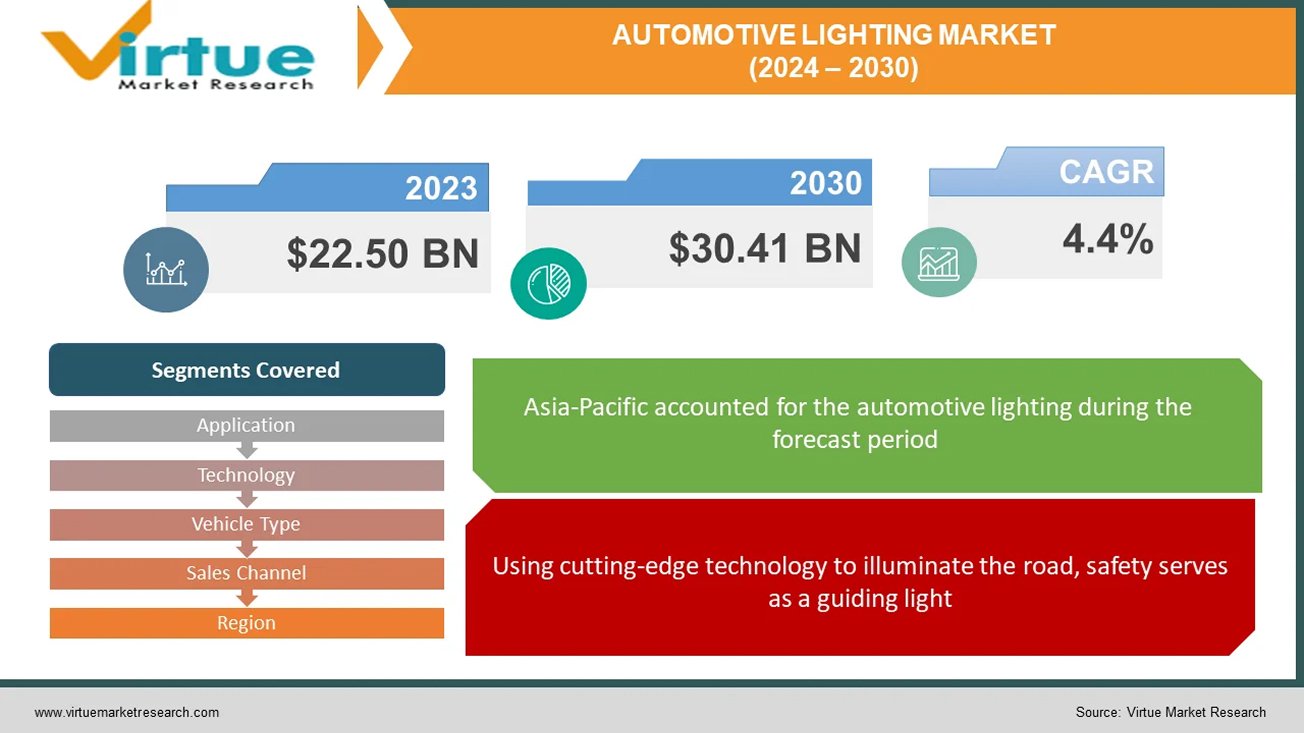
Global automotive lighting refers to all vehicle lighting systems, from headlamps that illuminate the road to taillights that communicate movements. They guarantee motorists and other road users alike safety, visibility, and style. While taillights frequently use LEDs for improved visibility, headlights are available in a variety of technologies, including LED and laser. Interior illumination, DRLs, and signal lights all have a role to play. This market, which was estimated to be worth $33.64 billion in 2022, is anticipated to rise to $67.39 billion by 2030 because of laws, luxury tastes, safety concerns, and technological developments like OLED taillights and adaptive headlights. Anticipate a future dominated by intelligent, connected, personalized, and sustainable lighting systems that enhance the safety, efficiency, and aesthetic appeal of automobiles.
Key Market Insights:
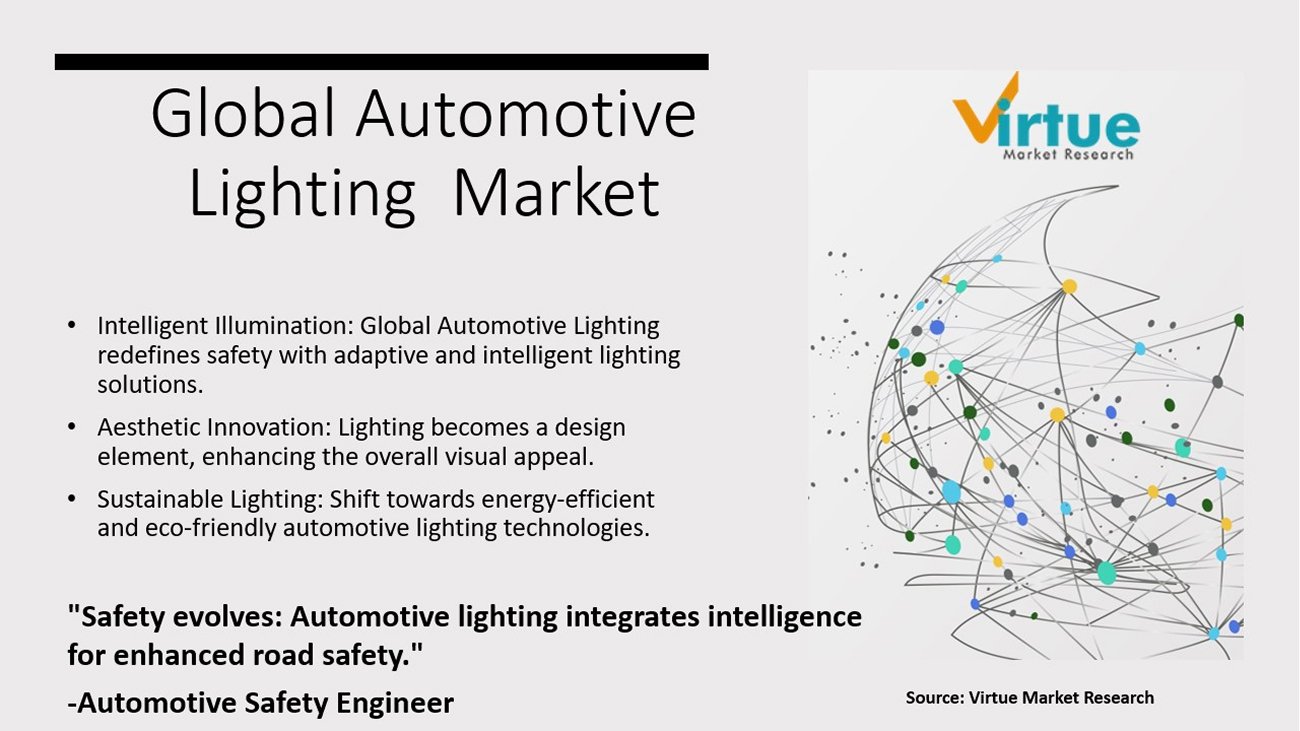
Car lighting works its magic to provide safety, visibility, and style. Headlights cut through the night, taillights express intent, and interiors shine with comfort. The billion-dollar global business is expected to rise due to consumer demand for high-end experiences, safer roads, and cutting-edge technology. Imagine dynamic messages being painted by taillights, headlights that adjust to the road, and interiors that customize their atmosphere. Driven by technological advancements like linked systems and laser beams, this future is calling. Anticipate even more visually attractive, environmentally friendly, and intelligent lighting to illuminate the way ahead, making cars safer, more efficient, and unquestionably cooler.
Global Automotive Lighting Market Drivers:
Using cutting-edge technology to illuminate the road, safety serves as a guiding light.
In the market for automobile lighting, safety is the driving force behind demand from the public and laws. While automated high beams smoothly react to traffic, adaptive headlights modify their beams so as not to blind other people. With visually striking displays, dynamic taillights convey intentions for braking and turning. Beyond these developments, integrated pedestrian identification and lane departure alerts will soon make roads safer and brighter for everyone.
Beyond Performance-Based Luxuries Redefined by Light.
Luxurious automobile lighting creates a distinct visual identity that goes beyond simple illumination. Personalized interior lighting customizes the driving experience by setting the mood with a range of colours and intensities, while intricate designs and distinctive DRLs modify exteriors. As you approach your automobile at night, welcoming lights lead the way, resulting in an interior that is perfectly lit. Not only is this symphony of light aesthetically pleasing, but it also stands as a tribute to luxury. Upcoming developments like gesture-controlled lighting and holographic displays promise to further enhance the experience.
Fuel Efficiency Takes the Lead: Illuminating Sustainability
The worldwide automotive lighting market is undergoing a significant transition towards energy-efficient solutions, as environmental concerns gain prominence. LED technology is leading the way, providing a ray of hope for the environment and drivers alike. LED lights beam brighter and use a lot less energy than conventional halogen lamps. There are some tangible advantages to this. For drivers, this translates to increased fuel economy, which lowers petrol prices and lessens reliance on fossil fuels. Greater air quality and a reduction in the transport sector's contribution to climate change are the results of reduced overall emissions.
To Learn more about this report,
Global Automotive Lighting Market Restraints and Challenges:
Although the global automotive lighting business is booming, there are still unknowns. Difficulties impede growth even as innovation propels it with eye catching features like laser beams and adaptable headlights. These technologies are luxury items due to their high cost and difficult integration, which puts producers' abilities to the test. The worldwide patchwork created by unclear legislation limits the potential of innovation. Durability issues persist, particularly when complex systems are subjected to challenging conditions. Ultimately, a lot of drivers still don't fully understand how these improvements can help them. Together, we can overcome these obstacles. The keys to reducing costs are improved production, more seamless integration, and unified regulations. Their full potential can be realized by educating customers about the safety, efficiency, and aesthetic value of these lighting wonders. By working together, we can pave the way for an even brighter and safer future for vehicle lighting.
Global Automotive Lighting Market Opportunities:
It is made possible by advanced LED technology, which gives drivers the ability to customize their illumination for the highest level of comfort and flair. Consumers that care about the environment want greener products, and vehicle lighting complies. While solar- and self-powered lighting technologies offer a future powered by clean energy, energy-efficient LEDs lower pollution. The advent of connected lighting systems heralds a new age. Envision automobiles interacting with infrastructure and one another to minimize accidents and enhance traffic efficiency. Integrated headlights with pedestrian recognition provide unmatched safety, while dramatic taillights with eye-catching displays alert onlookers to your intentions. The possibilities are endless in the future. Gesture-controlled interior illumination, holographic displays projected onto the road, and even light fixtures with self-healing capabilities.
AUTOMOTIVE LIGHTING MARKET REPORT COVERAGE:
To Learn more about this report,
Global Automotive Lighting Market Segmentation: By Application
Exterior Lighting
Interior Lighting
Due to laws requiring safety features like headlights, taillights, and brake lights, exterior lighting presently holds the most market share in the vehicle lighting industry. The dominance of this market is partly attributed to advancements in safety-focused technologies such as adaptive headlights and daytime running lights. The market value of external lighting is increased by the quick adoption of technology like LED bulbs and laser lights, which improve performance and aesthetics. Conversely, the interior lighting market is expected to increase at the fastest rate in the upcoming years. Innovations like ambient lighting and technology breakthroughs like LED and OLED displays, driven by consumer demand for comfort and personalisation, open new possibilities. The spread of sophisticated interior lighting systems is further driven by the growing emphasis on safety and the expansion of the luxury car market.
Global Automotive Lighting Market Segmentation: By Technology
Halogen
LED (Light-Emitting Diode)
Xenon
Emerging Technologies
The worldwide vehicle lighting market is currently dominated by halogen because of its more affordable price, advanced technology, and useful illumination. With its dependable supply chain and affordable option for manufacturers and cost-conscious customers, halogen holds the biggest market share. The fastest-growing market right now is LEDs, which are predicted to shortly overtake halogen. The rapid expansion of LEDs is driven by their higher efficiency, longer lifespan, flexibility in design, and technological breakthroughs including enhanced brightness. Because LEDs use less energy and produce fewer emissions and better fuel economy, they are becoming more and more popular in the changing automotive lighting market.
Global Automotive Lighting Market Segmentation: By Vehicle Type
Passenger Cars
Commercial Vehicles
Passenger automobiles rule the worldwide automotive lighting market. The sheer number of passenger cars produced which surpasses that of business vehicles and fuels the need for lighting systems is the primary cause of this popularity. The growing demand for personal automobiles in developing nations is a result of rising disposable income, which in turn drives the rise of the passenger car market. The importance that consumers place on safety and aesthetics elements helps to drive market expansion. But in the upcoming years, the market for electric and hybrid cars is expected to develop at the quickest rate. The exponential rise of the worldwide electric car market, which is still expanding and shows no signs of slowing down, is what is driving this surge. Specialised lighting solutions are required since electric and hybrid vehicles have different lighting requirements because of their specific functionality and design aesthetics.
Global Automotive Lighting Market Segmentation: By Sales Channel
OEM (Original Equipment Manufacturers)
Aftermarket
Most lighting systems sold nowadays are sold by OEMs (Original Equipment Manufacturers), primarily because manufacturers pre-install lighting systems in new cars. But in the next years, the aftermarket is expected to develop at the quickest rate. This spike in demand for replacement parts, especially lighting systems, can be linked to several variables, one of them being the average age of cars. The industry is expanding because of consumers' growing desire to personalise their cars with aftermarket lighting upgrades such LED upgrades and decorative lighting. The availability and affordability of technologies like adaptive headlights and laser lights in the aftermarket, together with other advancements in lighting technology, are driving demand even more. Moreover, the growing market for electric cars (EVs).
To Learn more about this report,
Global Automotive Lighting Market Segmentation: By Region
North America
Asia-Pacific
Europe
South America
Middle East and Africa
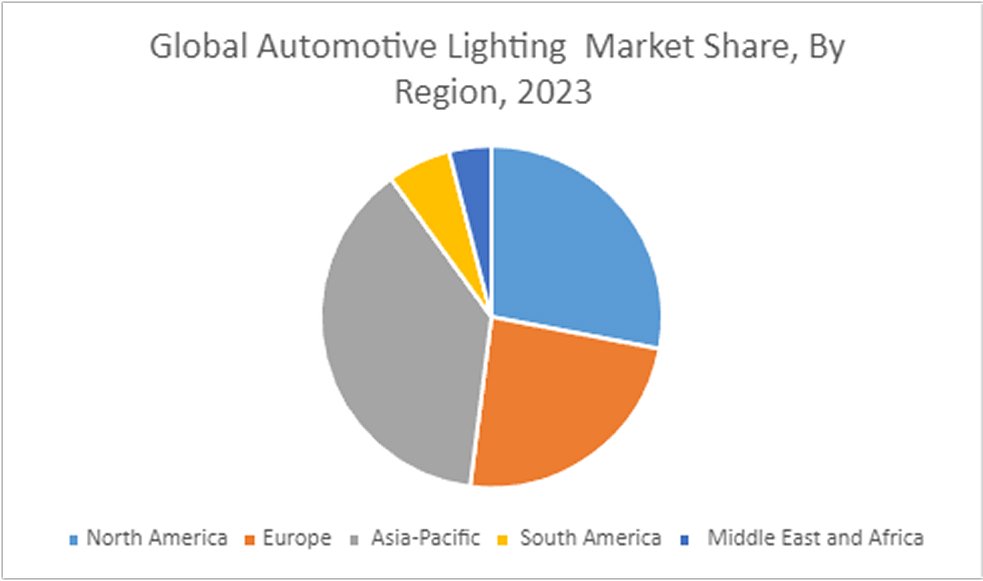
Throughout the forecast period, Asia Pacific is anticipated to be the automotive lighting market with the highest profitability. Over the past few years, Asia Pacific countries like China and India have seen notable increases in automotive manufacturing and sales, primarily in the medium-to premium luxury car segment. Asia Pacific is predicted to see an increase in the manufacturing of passenger cars, with India experiencing the strongest growth rate. Depending on the state of the national economy, the area offers a suitable selection of both high-end and cheap cars. For instance, there is a substantial demand for halogen, Xenon/HID, and LED since China and India produce more economy and mid-range automobiles. On the other hand, luxury car adoption rates are greater in South Korea and Japan, where LED lighting is the norm.
COVID-19 Impact Analysis on the Global Automotive Lighting Market:
A brief shadow was thrown by COVID-19 over the worldwide automotive lighting market. Production was stopped by lockdowns and supply chain disruptions, while luxury lighting upgrades were shelved by consumers on a tight budget. Resources became scarce, and R&D stagnated. Still, the market is recovering thanks to resurgent demand and rearranged priorities. While energy-efficient LEDs are being pushed towards adoption by sustainability, safety concerns are driving interest in features like pedestrian detection and adaptive headlights. The digital push of the epidemic creates opportunities for intelligent, networked lighting systems that may interact with infrastructure and other cars. Ultimately, the industry is positioned to shine brighter, focused on safety, sustainability, and a connected future, even though the pandemic dimmed its brilliance.
Recent Trends and Developments in the Global Automotive Lighting Market:
A development collaboration between OSRAM Continental and REHAU aims to incorporate lighting into external components, providing automobile manufacturers with innovative lighting options that improve functionality and design flexibility. For rear combination lamps, Hella unveiled a revolutionary lighting innovation called Hella FlatLight technology. A Memorandum of Understanding (MoU) was signed by Samvardhana Motherson Automotive Systems Group BV (SMRPBV), a division of Motherson Group, and Marelli Automotive Lighting to investigate a technology collaboration focused on intelligently lighted external body components. Valeo debuted their revolutionary 360° lighting system at the Shanghai Auto Show. This technology surrounds the car with a band of light, projecting instantaneous, clear signs that other drivers can see from a distance. Pedestrians, cyclists, and scooter riders are especially susceptible to these signals
Report Code: VMR-3605 | Published Date: March 2024 | Format: Excel and PDF
The global agricultural harvesting market was valued at USD 23.63 billion and is projected to reach a market size of USD 39.98 billion by the end of 2030. Over the forecast period of 2024–2030, the market is projected to...
Report Code: VMR-453 | Published Date: December 2024 | Format: Excel and PDF
The Commercial Seaweeds Market was valued at USD 11.54 billion in 2024. Over the forecast period of 2025-2030, it is projected to reach USD 18.11 billion by 2030, growing at a CAGR of 7.8%.
Report Code: VMR-18664 | Published Date: October 2024 | Format: Excel and PDF
The Asia Pacific Farm Mechanization Market was valued at USD 75.2 billion in 2024 and is projected to reach a market size of USD 118.6 billion by the end of 2030.
Report Code: VMR-3441 | Published Date: June 2024 | Format: Excel and PDF
The Agricultural Pesticide Market was valued at USD 48.3 billion in 2023 and is projected to reach a market size of USD 80.13 billion by the end of 2030. Over the cast period of 2024 – 2030, the figure for requests is pr...
Report Code: VMR-17018 | Published Date: May 2024 | Format: Excel and PDF
The Global Metaverse in indoor farming Market is valued at USD 536.55 Million and is projected to reach a market size of USD 761.11 Million by the end of 2030. Over the forecast period of 2024-2030, the market is project...
“We received a complex piece of work for our niche market from Virtue Market research in short period of time. I appreciate the quality and content of the final files we received. Thanks for the support”
Medical Devices Company based in Europe
“We received a complex piece of work for our niche market from Virtue Market research in short period of time. I appreciate the quality and content of the final files we received. Thanks for the support”
Medical Devices Company based in Europe
“We received a complex piece of work for our niche market from Virtue Market research in short period of time. I appreciate the quality and content of the final files we received. Thanks for the support”
Medical Devices Company based in Europe
“We received a complex piece of work for our niche market from Virtue Market research in short period of time. I appreciate the quality and content of the final files we received. Thanks for the support”
Medical Devices Company based in Europe
“We received a complex piece of work for our niche market from Virtue Market research in short period of time. I appreciate the quality and content of the final files we received. Thanks for the support”
Medical Devices Company based in Europe
“We received a complex piece of work for our niche market from Virtue Market research in short period of time. I appreciate the quality and content of the final files we received. Thanks for the support”