
Family Entertainment Centers Market
The Family Entertainment Centers Market was valued at USD 34.45 billion in 2023. Over the forecast period of 2024-2030 it is projected to reach USD 73.81 billion by 2030, growing at a CAGR of 11.5%.
Explore reportThe Kojic Acid Skincare Products Market was valued at USD 36.5 Million in 2025 and is projected to reach a market size of USD 55.6 Million by the end of 2030. Over the forecast period of 2026-2030, the market is projected to grow at a CAGR of 8.8 %.
Kojic acid skincare products have shifted from niche brightening solutions to clinically positioned treatments for complex pigmentation issues such as melasma, PIH, and photoaging across diverse skin types, especially in melanin-rich markets. Demand has strengthened due to dermatologists’ preference for kojic acid as a safer long-term alternative to hydroquinone. Brands increasingly use microencapsulation and multi-active formulations to stabilize kojic acid—traditionally prone to oxidation—and deliver deeper epidermal penetration. The market’s evolution is closely tied to rising aesthetic dermatology adoption in Asia-Pacific and the Middle East, where pigmentary disorders drive high willingness to pay for prescription-strength or clinical-grade formulations.
Kojic Acid Skincare Products Market behavior is also influenced by the tightening global regulatory environment surrounding skin-lightening ingredients, forcing brands to shift toward transparent labeling, safer derivatives (kojic dipalmitate), and dermatologist-endorsed positioning. Consumer expectations have moved beyond “lightening” to “tone correction,” pushing brands to combine kojic acid with niacinamide, tranexamic acid, and retinoids to target multi-pathway pigmentation. Social media dermatology communities, along with the rise of precision skincare platforms, have accelerated education on ingredient efficacy and optimal concentrations, driving premium-tier product adoption. Meanwhile, counterfeit and unstable products remain market challenges, prompting clinical brands to invest in authenticity tracing and cold-chain protection.

Key Market Insights:

Market Drivers:
Rising Dermatological Shift Toward Precision Pigmentation Correction and Combination-Actives Formulations is boosting Kojic Acid Skincare Products Market worldwide
The market is increasingly driven by dermatologists’ shift from broad-spectrum brightening solutions to precision pigmentation correction, where kojic acid plays a unique role due to its specific mechanism of action in inhibiting tyrosinase activity. Unlike vitamin C or arbutin, kojic acid demonstrates enhanced efficacy in multi-factor hyperpigmentation cases such as post-inflammatory hyperpigmentation (PIH), melasma, and sun-induced lentigines, particularly in darker Fitzpatrick skin types where treatment outcomes are historically challenging. This has accelerated the adoption of kojic acid in combination actives—often paired with tranexamic acid, niacinamide, and azelaic acid—to create customized regimens addressing layered pigmentation pathways. The shift toward dermatologically validated, mechanism-based products is pulling kojic acid from a niche brightening agent into a core ingredient within physician-dispensed and cosmeceutical-grade formulations, strengthening demand globally.
Expansion of Clean-Label and Minimalist Skincare Architectures Supporting Fermentation-Derived Actives is driving the Kojic Acid Skincare Products Market
Consumer demand for clean-label, fermentation-derived skincare ingredients is propelling kojic acid’s relevance as it originates from natural fermentation by fungi. Unlike synthetic brighteners increasingly scrutinized for endocrine-disrupting or carcinogenic concerns, kojic acid benefits from strong alignment with the “biotech beauty” trend—where ingredients manufactured via controlled microbial processes deliver both purity and sustainability. This alignment is driving significant reformulation activity among premium and mid-tier brands seeking non-synthetic, efficacious alternatives to hydroquinone, synthetic retinoids, or aggressive exfoliants. Furthermore, minimalist skincare users gravitate toward single-ingredient serums and derm-grade boosters, where kojic acid’s clear functional purpose simplifies communication and enhances consumer trust. This convergence of ingredient transparency, ethical sourcing, and microbiome-friendly profiles is deepening kojic acid integration across global markets.
Market Restraints and Challenges:
The chemical instability of pure kojic acid, which oxidizes rapidly when exposed to air, light, or inappropriate pH environments. This degradation not only reduces efficacy but also causes discoloration, complicating its incorporation into consumer-facing skincare products where visual appearance influences purchasing behavior. To counter this, brands must invest in stabilization technologies—encapsulation, chelating agents, pH optimization, or kojic acid derivatives like kojic dipalmitate. These solutions increase formulation complexity and production costs, especially for mass-market players. Additionally, stability issues can lead to reduced shelf life, increasing the risk of product returns or negative consumer experiences. This technical barrier restricts widespread use in high-volume categories such as lotions and cleansers, maintaining kojic acid’s concentration in more premium or controlled formats.
Market Opportunities:
A significant untapped opportunity in melanin-rich consumer segments, where demand for safe and effective pigmentation management solutions is accelerating due to increasing urban pollution, UV exposure, and PIH prevalence. Kojic acid is emerging as a preferred ingredient in ethnic dermatology, where hyperpigmentation disorders are often more persistent and multi-layered. Brands that develop skin-type-specific formulations—focusing on barrier-supportive bases, lower irritation profiles, and complementary anti-inflammatory actives—can differentiate themselves meaningfully. Moreover, there is growing clinical interest in custom dark-spot correction treatments, creating opportunities for premium-grade kojic acid boosters in dermatology clinics, med-spas, and tele-dermatology platforms. Companies investing in culturally nuanced product architectures and education campaigns stand to gain disproportionate market share.
KOJIC ACID SKINCARE PRODUCTS MARKET REPORT COVERAGE:
|
REPORT METRIC |
DETAILS |
|
Market Size Available |
2025 - 2030 |
|
Base Year |
2025 |
|
Forecast Period |
2026 - 2030 |
|
CAGR |
8.8% |
|
Segments Covered |
By Product Type, application, skin type, distribution channel, and Region |
|
Various Analyses Covered |
Global, Regional & Country Level Analysis, Segment-Level Analysis, DROC, PESTLE Analysis, Porter’s Five Forces Analysis, Competitive Landscape, Analyst Overview on Investment Opportunities |
|
Regional Scope |
North America, Europe, APAC, Latin America, Middle East & Africa |
|
Key Companies Profiled |
Honasa Consumer (HCPL), Minimalist, Plum Goodness Private Limited (Plum), Bake Cosmetics Pvt Ltd (Bake Cosmetics), Alkem Laboratories Limited, Sansho Pharmaceutical Co., Ltd., Torrent Pharmaceuticals Ltd, Lotus Herbals Pvt Limited, Areton Ltd., and Kose Corporation. |
Kojic Acid Skincare Products Market Segmentation:

Creams & lotions dominate the kojic acid skincare landscape due to their compatibility with daily-use routines, extended skin contact time, and ability to integrate multi-functional benefits such as moisturization, barrier repair, and anti-inflammatory support. Their versatility allows formulators to address multiple concerns—hydration, pigmentation, and sun protection—within a single SKU. This aligns strongly with consumer preference for simplified regimens, especially in markets like the U.S., Japan, and South Korea where “treatment + hydration” hybrids are replacing multi-step routines. Additionally, creams offer better stability for kojic derivatives such as kojic dipalmitate, enabling consistent efficacy even in warmer climates.
Serums & ampoules are experiencing the fastest growth because they align with the surge in clinical-grade skincare adoption driven by aesthetic dermatology, chem-exfoliation consumers, and evidence-led Asian beauty markets. These formats allow higher kojic acid loading, precision delivery, and combination with modern brightening agents like tranexamic acid or peptides. Moreover, serums fit seamlessly into personalization trends, where consumers tailor corrective steps to specific pigmentation types—melasma, PIH, or spot discoloration. The rapid expansion of K-beauty, dermocosmetics, and med-spa ecosystems further accelerates serum adoption, making them the most innovation-active segment globally.
Hyperpigmentation remains the largest application due to its chronic nature, high recurrence rates, and prevalence across melanin-rich populations in Asia, the Middle East, and Africa. Kojic acid’s molecular mechanism—tyrosinase inhibition—makes it a front-line solution for persistent and deeper-set pigmentation where vitamin C or niacinamide alone fall short. Dermatologists increasingly recommend kojic acid combinations for multi-pathway suppression, making pigmentation correction the backbone of both prescription-linked and OTC product ranges. Brands also prioritize this segment because consumers perceive visible pigmentation improvement as a core outcome, increasing repeat-purchase loyalty.
Post-Inflammatory Hyperpigmentation (PIH) is growing fastest due to surging acne incidence among both adults and teens, aggressive exfoliation habits, and rising cosmetic procedure–induced pigmentation (lasers, peels, microneedling). PIH is especially prominent in darker skin tones where inflammation triggers long-lasting pigmentation, creating persistent demand for safe but potent actives like kojic acid. Unlike melasma, PIH has shorter treatment cycles, pushing demand for spot correctors and high-concentration serums. Social-media-driven awareness around “acne marks vs. acne scars” further accelerates the category, encouraging clinical brands to develop PIH-specific formulations with kojic acid.
Combination skin dominates because it represents the most common global skin profile, particularly in Asian and Latin American populations. People with combination skin often experience both oiliness and dryness, making them susceptible to uneven tone and localized pigmentation—conditions where kojic acid is frequently used. Brands design balanced formulations with lightweight emulsions or gel-cream hybrids to address these mixed needs, boosting uptake. Cross-category formats such as daily brightening gels, hybrid moisturizers, and layered serums perform particularly well in this segment, sustaining its leadership position.
Sensitive skin is expanding fastest as skin barrier disorders rise due to pollution, retinol misuse, over-exfoliation, and prolonged screen-related blue-light exposure. This accelerates demand for low-irritation kojic derivatives, encapsulated kojic acid, and barrier-supportive pairing with ceramides and panthenol. Consumers increasingly seek pigmentation correction without aggressive actives like hydroquinone or high-strength acids, making gentle kojic acid systems highly attractive. Manufacturers are responding with microbiome-safe formulations and dermatologically tested “sensitive brightening” lines, driving rapid growth in this category.
E-commerce leads due to its dominance in skincare discovery, especially for ingredient-specific categories like kojic acid where consumers rely heavily on reviews, before–after visuals, and influencer content. Platforms such as Amazon, Shopee, Flipkart, and Tmall facilitate rapid comparison across brands and concentrations, which is critical for a treatment-driven ingredient. Cross-border e-commerce further boosts access to Japanese, Korean, and U.S. formulations that command strong trust. Subscription models for brightening serums and PIH treatments also favor e-commerce, as consumers require continuous usage to maintain results.
DTC is expanding fastest as premium, science-backed brands shift toward direct control over customer experience, diagnostics, and personalization. Kojic acid’s role in multi-step pigmentation correction makes DTC ideal for brands offering custom regimens, virtual derm consults, and algorithm-driven product pairing. DTC also enables precise education on correct kojic usage—addressing irritation myths and guiding layering with actives like niacinamide. This channel also benefits from higher margins and first-party data, pushing clinical aesthetic brands and indie skincare labels to prioritize direct online storefronts.

The mid-market tier dominates because it balances perceived efficacy with affordability, attracting consumers upgrading from mass-market products but not yet willing to invest in premium clinic-grade formulations. This tier is heavily populated by K-beauty, J-beauty, Indian derma brands, and U.S. clean-beauty labels known for well-formulated kojic acid blends. Mid-market brands typically offer higher concentrations and better stability technologies than economy brands, increasing trust among pigmentation-focused consumers. Their accessibility via pharmacies and online platforms solidifies their large market share.
Luxury and physician-dispensed segments are growing rapidly owing to clinical validation, dermatologist endorsement, and the rise of medical aesthetic procedures requiring post-treatment pigmentation maintenance. These products often include advanced encapsulation, patented delivery systems, or synergistic pairing with tranexamic acid, peptides, and retinoids—targeted at resistant melasma and chronic PIH cases. As affluent consumers and procedure patients seek more exacting solutions, premium ranges with clinic integration become preferred. High engagement in the Middle East, South Korea, and the U.S. accelerates this tier’s exceptional growth.

Asia-Pacific leads the global market due to its high melanin-rich population, strong beauty culture centered on tone-evening, and deep-rooted trust in fermentation-derived ingredients like kojic acid. Japan and South Korea have long used kojic acid in pharmaceutical-grade brightening treatments, shaping consumer behavior across Indonesia, China, India, and the Philippines. The region also sees high incidence of melasma, PIH, and sun-related pigmentation, driving continuous demand. Strong domestic manufacturing, K-beauty innovation, and J-beauty regulatory safety frameworks further reinforce APAC’s dominant position.
The Middle East & Africa is the fastest growing market due to extreme UV exposure, higher melanin-rich demographics, and increasing adoption of medical aesthetic procedures such as lasers and chemical peels that often trigger PIH—creating sustained need for kojic acid post-care. Gulf consumers show strong preference for rapid-result, high-potency pigmentation correctors, especially those combining kojic acid with arbutin, retinoids, and tranexamic acid. Meanwhile, Africa’s rising derma-clinic penetration and demand for safe alternatives to illicit bleaching products accelerates regulated kojic acid uptake. The region’s appetite for performance-driven brightening solutions positions it for continued high-growth momentum.
COVID-19 catalyzed a permanent shift from clinic-centric treatments to at-home, evidence-led regimens—boosting demand for stable, physician-endorsed actives like kojic acid. Tele-dermatology growth meant clinicians increasingly recommended lab-grade, low-irritant kojic derivatives (e.g., kojic dipalmitate) for remote care and post-procedure maintenance. Simultaneously, supply-chain pressures on fermentation capacity in Asia forced formulators to invest in stabilized derivatives and microencapsulation to guarantee shelf life and efficacy. The pandemic also raised consumer risk-aversion: buyers prefer dermatologist-backed, traceable ingredients, pushing premiumization and DTC clinical brands that combine kojic acid with barrier-support actives for safer, long-term pigmentation management.
Latest Trends and Developments:
Key Players in the Market:
Market News:
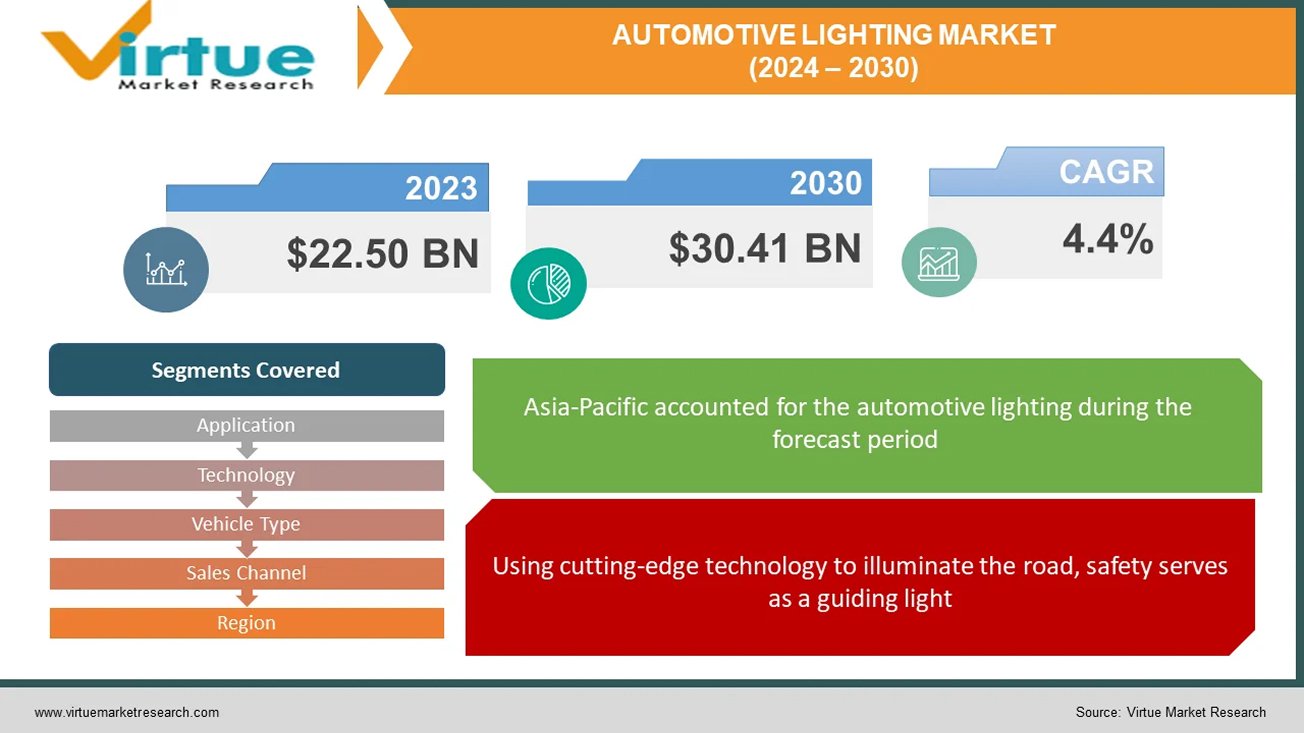
Global automotive lighting refers to all vehicle lighting systems, from headlamps that illuminate the road to taillights that communicate movements. They guarantee motorists and other road users alike safety, visibility, and style. While taillights frequently use LEDs for improved visibility, headlights are available in a variety of technologies, including LED and laser. Interior illumination, DRLs, and signal lights all have a role to play. This market, which was estimated to be worth $33.64 billion in 2022, is anticipated to rise to $67.39 billion by 2030 because of laws, luxury tastes, safety concerns, and technological developments like OLED taillights and adaptive headlights. Anticipate a future dominated by intelligent, connected, personalized, and sustainable lighting systems that enhance the safety, efficiency, and aesthetic appeal of automobiles.
Car lighting works its magic to provide safety, visibility, and style. Headlights cut through the night, taillights express intent, and interiors shine with comfort. The billion-dollar global business is expected to rise due to consumer demand for high-end experiences, safer roads, and cutting-edge technology. Imagine dynamic messages being painted by taillights, headlights that adjust to the road, and interiors that customize their atmosphere. Driven by technological advancements like linked systems and laser beams, this future is calling. Anticipate even more visually attractive, environmentally friendly, and intelligent lighting to illuminate the way ahead, making cars safer, more efficient, and unquestionably cooler.
In the market for automobile lighting, safety is the driving force behind demand from the public and laws. While automated high beams smoothly react to traffic, adaptive headlights modify their beams so as not to blind other people. With visually striking displays, dynamic taillights convey intentions for braking and turning. Beyond these developments, integrated pedestrian identification and lane departure alerts will soon make roads safer and brighter for everyone.
Luxurious automobile lighting creates a distinct visual identity that goes beyond simple illumination. Personalized interior lighting customizes the driving experience by setting the mood with a range of colours and intensities, while intricate designs and distinctive DRLs modify exteriors. As you approach your automobile at night, welcoming lights lead the way, resulting in an interior that is perfectly lit. Not only is this symphony of light aesthetically pleasing, but it also stands as a tribute to luxury. Upcoming developments like gesture-controlled lighting and holographic displays promise to further enhance the experience.
The worldwide automotive lighting market is undergoing a significant transition towards energy-efficient solutions, as environmental concerns gain prominence. LED technology is leading the way, providing a ray of hope for the environment and drivers alike. LED lights beam brighter and use a lot less energy than conventional halogen lamps. There are some tangible advantages to this. For drivers, this translates to increased fuel economy, which lowers petrol prices and lessens reliance on fossil fuels. Greater air quality and a reduction in the transport sector's contribution to climate change are the results of reduced overall emissions.
Although the global automotive lighting business is booming, there are still unknowns. Difficulties impede growth even as innovation propels it with eye catching features like laser beams and adaptable headlights. These technologies are luxury items due to their high cost and difficult integration, which puts producers' abilities to the test. The worldwide patchwork created by unclear legislation limits the potential of innovation. Durability issues persist, particularly when complex systems are subjected to challenging conditions. Ultimately, a lot of drivers still don't fully understand how these improvements can help them. Together, we can overcome these obstacles. The keys to reducing costs are improved production, more seamless integration, and unified regulations. Their full potential can be realized by educating customers about the safety, efficiency, and aesthetic value of these lighting wonders. By working together, we can pave the way for an even brighter and safer future for vehicle lighting.
It is made possible by advanced LED technology, which gives drivers the ability to customize their illumination for the highest level of comfort and flair. Consumers that care about the environment want greener products, and vehicle lighting complies. While solar- and self-powered lighting technologies offer a future powered by clean energy, energy-efficient LEDs lower pollution. The advent of connected lighting systems heralds a new age. Envision automobiles interacting with infrastructure and one another to minimize accidents and enhance traffic efficiency. Integrated headlights with pedestrian recognition provide unmatched safety, while dramatic taillights with eye-catching displays alert onlookers to your intentions. The possibilities are endless in the future. Gesture-controlled interior illumination, holographic displays projected onto the road, and even light fixtures with self-healing capabilities.

Due to laws requiring safety features like headlights, taillights, and brake lights, exterior lighting presently holds the most market share in the vehicle lighting industry. The dominance of this market is partly attributed to advancements in safety-focused technologies such as adaptive headlights and daytime running lights. The market value of external lighting is increased by the quick adoption of technology like LED bulbs and laser lights, which improve performance and aesthetics. Conversely, the interior lighting market is expected to increase at the fastest rate in the upcoming years. Innovations like ambient lighting and technology breakthroughs like LED and OLED displays, driven by consumer demand for comfort and personalisation, open new possibilities. The spread of sophisticated interior lighting systems is further driven by the growing emphasis on safety and the expansion of the luxury car market.
The worldwide vehicle lighting market is currently dominated by halogen because of its more affordable price, advanced technology, and useful illumination. With its dependable supply chain and affordable option for manufacturers and cost-conscious customers, halogen holds the biggest market share. The fastest-growing market right now is LEDs, which are predicted to shortly overtake halogen. The rapid expansion of LEDs is driven by their higher efficiency, longer lifespan, flexibility in design, and technological breakthroughs including enhanced brightness. Because LEDs use less energy and produce fewer emissions and better fuel economy, they are becoming more and more popular in the changing automotive lighting market.
Passenger automobiles rule the worldwide automotive lighting market. The sheer number of passenger cars produced which surpasses that of business vehicles and fuels the need for lighting systems is the primary cause of this popularity. The growing demand for personal automobiles in developing nations is a result of rising disposable income, which in turn drives the rise of the passenger car market. The importance that consumers place on safety and aesthetics elements helps to drive market expansion. But in the upcoming years, the market for electric and hybrid cars is expected to develop at the quickest rate. The exponential rise of the worldwide electric car market, which is still expanding and shows no signs of slowing down, is what is driving this surge. Specialised lighting solutions are required since electric and hybrid vehicles have different lighting requirements because of their specific functionality and design aesthetics.
Most lighting systems sold nowadays are sold by OEMs (Original Equipment Manufacturers), primarily because manufacturers pre-install lighting systems in new cars. But in the next years, the aftermarket is expected to develop at the quickest rate. This spike in demand for replacement parts, especially lighting systems, can be linked to several variables, one of them being the average age of cars. The industry is expanding because of consumers' growing desire to personalise their cars with aftermarket lighting upgrades such LED upgrades and decorative lighting. The availability and affordability of technologies like adaptive headlights and laser lights in the aftermarket, together with other advancements in lighting technology, are driving demand even more. Moreover, the growing market for electric cars (EVs).
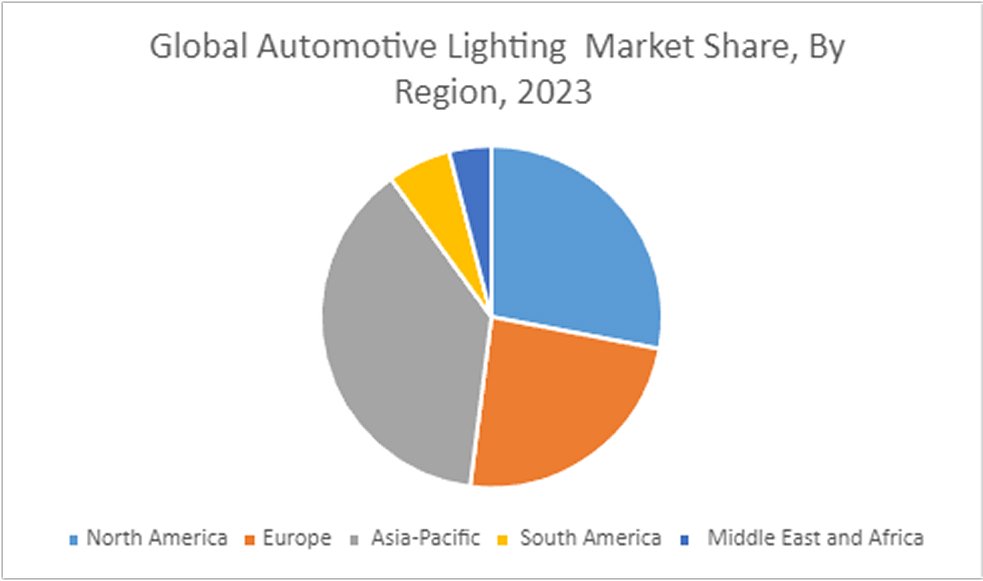
Throughout the forecast period, Asia Pacific is anticipated to be the automotive lighting market with the highest profitability. Over the past few years, Asia Pacific countries like China and India have seen notable increases in automotive manufacturing and sales, primarily in the medium-to premium luxury car segment. Asia Pacific is predicted to see an increase in the manufacturing of passenger cars, with India experiencing the strongest growth rate. Depending on the state of the national economy, the area offers a suitable selection of both high-end and cheap cars. For instance, there is a substantial demand for halogen, Xenon/HID, and LED since China and India produce more economy and mid-range automobiles. On the other hand, luxury car adoption rates are greater in South Korea and Japan, where LED lighting is the norm.
A brief shadow was thrown by COVID-19 over the worldwide automotive lighting market. Production was stopped by lockdowns and supply chain disruptions, while luxury lighting upgrades were shelved by consumers on a tight budget. Resources became scarce, and R&D stagnated. Still, the market is recovering thanks to resurgent demand and rearranged priorities. While energy-efficient LEDs are being pushed towards adoption by sustainability, safety concerns are driving interest in features like pedestrian detection and adaptive headlights. The digital push of the epidemic creates opportunities for intelligent, networked lighting systems that may interact with infrastructure and other cars. Ultimately, the industry is positioned to shine brighter, focused on safety, sustainability, and a connected future, even though the pandemic dimmed its brilliance.
A development collaboration between OSRAM Continental and REHAU aims to incorporate lighting into external components, providing automobile manufacturers with innovative lighting options that improve functionality and design flexibility. For rear combination lamps, Hella unveiled a revolutionary lighting innovation called Hella FlatLight technology. A Memorandum of Understanding (MoU) was signed by Samvardhana Motherson Automotive Systems Group BV (SMRPBV), a division of Motherson Group, and Marelli Automotive Lighting to investigate a technology collaboration focused on intelligently lighted external body components. Valeo debuted their revolutionary 360° lighting system at the Shanghai Auto Show. This technology surrounds the car with a band of light, projecting instantaneous, clear signs that other drivers can see from a distance. Pedestrians, cyclists, and scooter riders are especially susceptible to these signals
Rising dermatological shift toward precision pigmentation correction and combination-actives formulations and expansion of clean-label and minimalist skincare architectures supporting fermentation-derived actives are key drivers of the Kojic Acid Skincare Products Market.
The Global Kojic Acid Skincare Products Market faces significant barrier that is the instability of kojic acid leading to formulation complexity and cost escalation and rising regulatory scrutiny and dermatological sensitivity concerns affecting adoption.
Key players include Honasa Consumer (HCPL), Minimalist, Plum Goodness Private Limited (Plum), Bake Cosmetics Pvt Ltd (Bake Cosmetics), Alkem Laboratories Limited, Sansho Pharmaceutical Co., Ltd., Torrent Pharmaceuticals Ltd, Lotus Herbals Pvt Limited, Areton Ltd., and Kose Corporation.
Asia-Pacific leads the global market due to its high melanin-rich population, strong beauty culture centered on tone-evening, and deep-rooted trust in fermentation-derived ingredients like kojic acid.
The Middle East & Africa is the fastest growing market due to extreme UV exposure, higher melanin-rich demographics, and increasing adoption of medical aesthetic procedures such as lasers and chemical peels that often trigger PIH—creating sustained need for kojic acid post-care.
Joining thousands of companies around the world committed to making the Excellent Business Solutions.

Specify your preferred Countries, Segments, or timeframes
Unlock Country Level Outlook, Trends, Cross-country Comparability, or supply Chain Variations.



Analyst Support
Every order comes with Analyst Support.

Customization
We offer customization to cater your needs to fullest.

Verified Analysis
We value integrity, quality and authenticity the most.

