The GLP-1 Supply Chain & Fill-Finish Capacity Market was valued at USD 8.42 billion in 2025 and is projected to reach a market size of USD 21.89 billion by the end of 2030. Over the forecast period of 2026-2030, the market is projected to grow at a CAGR of 21.1%.
The GLP-1 Supply Chain & Fill-Finish Capacity Market represents the critical industrial backbone supporting the most significant pharmaceutical phenomenon of the decade: the widespread adoption of Glucagon-like peptide-1 (GLP-1) agonists for obesity and type 2 diabetes. This market encompasses the complex network of specialized manufacturing processes required to take these biologic drugs from raw peptide synthesis to the patient-ready injectable device. Unlike traditional small-molecule supply chains, the GLP-1 ecosystem is defined by extreme sterility requirements and sophisticated device integration. It involves three distinct high-value stages: the synthesis of the peptide API (Active Pharmaceutical Ingredient) via recombinant DNA or synthetic chemistry; the aseptic "fill-finish" process where the sterile liquid is filled into glass cartridges or syringes inside isolators; and the final assembly of these containers into complex autoinjector pens. The current market scenario in 2025 is defined by a frantic "capacity arms race." With demand for drugs like Wegovy, Ozempic, Mounjaro, and Zepbound consistently outstripping global supply, the market has shifted from a demand-constrained model to a supply-constrained one. This shift has created a massive bottleneck in "fill-finish" capacity the specific ability to fill sterile drugs into syringes, which has become the most valuable commodity in the pharma services sector.
Key Market Insights:
The global demand for GLP-1 therapies, used for diabetes and obesity, is growing at a remarkable rate, with prescriptions increasing around 38 % annually between 2022 and 2024, and sales expected to reach approximately $100 billion by 2030. This rapid uptake is creating intense pressure on pharmaceutical supply chains, particularly in fill-finish capacity, cold chain logistics, and autoinjector/device manufacturing capacity. McKinsey & Company+1
In 2025, the global capacity utilization rate for high-speed sterile syringe filling lines suitable for GLP-1s is running at 94%, effectively leaving no room for error or unplanned downtime.
The demand for autoinjector components (springs, plastic housing, needle shields) for GLP-1s specifically reached 1.2 billion units in 2025, driving a massive sub-market for medical plastic molding.
Despite massive internal investments, approximately 45% of all GLP-1 commercial fill-finish volume in 2025 is still handled by Contract Development and Manufacturing Organizations (CDMOs), highlighting the industry's dependence on outsourcing.
A staggering 60% of the global sterile fill-finish capacity dedicated to GLP-1s is concentrated in just three locations: North Carolina (USA), Indiana (USA), and Kalundborg (Denmark).
While oral formulations are in development, 88% of the 2025 supply chain market value is still derived from injectable formats due to the higher complexity and cost of sterile manufacturing compared to tablet pressing.
The industry is grappling with high rejection rates; in 2025, approximately 3-5% of filled GLP-1 pens are rejected during visual inspection and quality control, representing hundreds of millions of dollars in lost API.
The supply chain relies heavily on 2-8°C logistics; the market for GLP-1 specific cold-chain packaging and logistics services is valued at USD 650 million in 2025 alone.
Market Drivers:
The primary driver for the supply chain market is the fundamental shift of GLP-1s from a niche diabetes treatment to a mass-market lifestyle and obesity management tool.
By 2025, the addressable patient population will have exploded not just because of clinical need, but because major insurance payers and government bodies have begun to recognize obesity as a chronic disease warranting coverage. This reimbursement tipping point has unlocked millions of new prescriptions that were previously stalled by out-of-pocket costs. For the supply chain, this means that "peak demand" targets are constantly moving upward. Manufacturers are no longer planning for millions of doses, but for billions. This sheer volume requirement is forcing a complete modernization of fill-finish lines, driving the adoption of high-speed, robotic isolator lines that can process 600 units per minute to keep pace with the prescription rate.
A critical technical driver is the consumer preference (and US market dominance) for single-dose autoinjectors over multi-dose dial-a-dose pens.
In a multi-dose pen, one glass cartridge serves a patient for a month. In a single-dose autoinjector (like the standard Wegovy or Zepbound device), the patient uses a new device every week. This quadruples the manufacturing burden: four times the glass, four times the stoppers, four times the sterilization cycles, and four times the assembly steps for the same duration of therapy. This "multiplying effect" is the single biggest factor driving the explosion in fill-finish market value. It creates an insatiable demand for component manufacturing (glass vials, rubber plungers) and forces CDMOs to build vast assembly halls dedicated solely to snapping these pens together.
Market Restraints and Challenges:
The most formidable restraint is the Lead Time for Sterile Capacity. Building a new sterile fill-finish facility is not a quick fix; it takes 3-5 years from groundbreaking to regulatory validation. Even ordering a new high-speed filling line has a lead time of 18-24 months in 2025 due to backlogs at equipment manufacturers. This physical lag time means supply cannot instantly react to demand surges. Additionally, the Complexity of Peptide Synthesis poses a raw material challenge. Scaling up the chemical synthesis or recombinant production of peptides is resource-intensive, consuming vast amounts of solvents and water, and facing strict environmental regulations that limit how fast API production sites can expand.
Market Opportunities:
A massive opportunity lies in the Oral GLP-1 Supply Chain. As companies like Eli Lilly and Novo Nordisk advance oral versions (e.g., Orforglipron), there is a distinct opportunity for manufacturers specializing in spray drying, solid dispersion, and high-volume tableting. These oral drugs require significantly more API per dose than injectables, creating a boom for chemical synthesis API manufacturers. Another key opportunity is Next-Generation Device Innovation. There is a growing market for eco-friendly, reusable autoinjectors or biodegradable pen components to mitigate the environmental backlash of throwing away billions of plastic pens annually. CDMOs that can offer "sustainable assembly" solutions will capture a premium share of the market.
GLP-1 SUPPLY CHAIN & FILL-FINISH CAPACITY MARKET
REPORT METRIC
DETAILS
Market Size Available
2024 - 2030
Base Year
2024
Forecast Period
2025 - 2030
CAGR
21.1%
Segments Covered
By Product, Type, Consumption, Distribution Channel and Region
Various Analyses Covered
Global, Regional & Country Level Analysis, Segment-Level Analysis, DROC, PESTLE Analysis, Porter’s Five Forces Analysis, Competitive Landscape, Analyst Overview on Investment Opportunities
Regional Scope
North America, Europe, APAC, Latin America, Middle East & Africa
Becton, Dickinson and Company (BD), Gerresheimer AG, West Pharmaceutical Services, Inc.
Market Segmentation:
Segmentation by Type:
API Synthesis
Sterile Fill-Finish
Device Assembly
Packaging & Labelling
Sterile Fill-Finish is the fastest-growing type. This step is the current bottleneck of the entire industry. The urgent need to convert bulk API into sterile, patient-ready syringes has driven prices for these services up and spurred massive investment. The high barrier to entry (requiring Class A cleanrooms) ensures this segment captures the highest value growth.
Device Assembly is the most dominant type by volume of activity. While fill-finish is the most critical/expensive step per unit of time, the physical footprint and logistics required to assemble billions of mechanical pens, combining the drug cartridge with springs, needles, and housing, constitutes the largest operational segment of the supply chain.
Segmentation by Product Format:
Single-dose Autoinjectors
Multi-dose Pens
Vials
Oral Tablets
Oral Tablets are the fastest-growing product format (from a low base). With clinical successes in 2024 and 2025, the industry is aggressively building capacity for oral GLP-1s to bypass the injectable bottleneck. This format is expected to see exponential growth in the latter half of the forecast period.
Single-dose Autoinjectors are the most dominant product format. Driven by the US market preference for convenience and ease of use, this format commands the vast majority of current manufacturing lines. It is the standard-bearer for the obesity indication (Wegovy, Zepbound) and dictates the current supply chain configuration.
Segmentation by End-User:
Pharmaceutical Companies (Captive)
Contract Development & Manufacturing Organizations (CDMOs)
Pharmaceutical Companies (Captive) are the most dominant end-user. Giants like Novo Nordisk and Eli Lilly are investing tens of billions to own their manufacturing destiny. The acquisition of Catalent sites by Novo is a prime example of "re-capturing" capacity to ensure control and lower long-term costs.
CDMOs are the fastest-growing end-user in terms of new project requests. Mid-size pharma companies and biotech firms with next-gen GLP-1 assets (like retatrutide or amycretin competitors) cannot afford to build billion-dollar factories. They are flooding the CDMO market, booking slots years in advance and driving rapid expansion in the outsourced sector.
Market Segmentation: Regional Analysis:
North America
Europe
Asia-Pacific
Rest of World
North America dominates the market with a 45% share ($3.78 billion). This is driven by the massive concentration of demand in the US, the location of major manufacturing hubs in Indiana and North Carolina, and the recent massive capital injections by Eli Lilly into domestic manufacturing resilience.
Europe is the fastest-growing region. This is heavily influenced by the expansion of the "Kalundborg Symbiosis" in Denmark (Novo Nordisk's home) and significant new investments in Ireland and Germany. Europe is becoming the high-tech export hub for the global supply of these complex biologics, leveraging its deep talent pool in sterile manufacturing.
COVID-19 Impact Analysis:
The COVID-19 pandemic acted as a double-edged sword that ultimately forged the resilience of the GLP-1 supply chain. Initially, it diverted critical fill-finish capacity toward vaccines, exacerbating early shortages of diabetes medications. However, the lasting impact was the creation of massive sterile capacity that is now being repurposed. The pandemic forced the industry to build unprecedented speed and scale in sterile injectables. As vaccine demand waned in 2023-2024, the "warm" manufacturing lines and the trained workforce were rapidly pivoted to meet the surging demand for GLP-1s. It taught the industry valuable lessons in rapid scaling and supply chain diversification that are now the playbook for the obesity drug rollout.
Latest Market News:
February 21, 2025: The US FDA officially removed Semaglutide (injection) from the FDA Drug Shortages List, marking a major milestone in supply chain recovery, though noting that localized disruptions may persist.
December 2024:Eli Lilly announced a new $3 billion investment to expand its manufacturing site in Pleasant Prairie, Wisconsin, specifically to increase production of GLP-1 injectable products.
November 2025:Eli Lilly revealed plans to construct a $3 billion facility in the Netherlands (Leiden Bio Science Park) dedicated to the manufacturing of oral GLP-1 medicines (Orforglipron), signaling a strategic pivot to solid dose.
February 5, 2024:Novo Holdings announced the acquisition of Catalent for $16.5 billion, a deal that allows Novo Nordisk to acquire three key fill-finish sites (Indiana, Italy, Belgium) for $11 billion to secure Wegovy supply.
October 2025:Eli Lilly reported Q3 2025 financial results showing Zepbound revenue increased 185% year-over-year, confirming the massive ramp-up in supply chain throughput.
May 2025: FDA 503B compounding facilities were legally required to cease compounding semaglutide copies following the resolution of the official shortage, returning volume to the official supply chain.
Latest Trends and Developments:
A major trend is "De-risking" via Multi-Sourcing. Manufacturers are moving away from single-source dependencies for critical components like glass vials and rubber stoppers, qualifying secondary suppliers to prevent line stoppages. Another development is the rise of High-Concentration Formulations. To reduce the volume of liquid that needs to be injected (and thus filling time), companies are developing more potent versions of the drug. This allows for smaller injection volumes, which can be filled faster and potentially allow for smaller, less plastic-intensive devices. Finally, Digital Twins in Manufacturing are being used to simulate fill-finish lines, optimizing robot movements to squeeze every possible unit of output from existing machinery.
Key Players in the Market:
Novo Nordisk A/S
Eli Lilly and Company
Catalent, Inc. (Acquired/Restructured)
Thermo Fisher Scientific Inc.
Vetter Pharma-Fertigung GmbH & Co. KG
PCI Pharma Services
Simtra BioPharma Solutions (formerly Baxter)
Becton, Dickinson and Company (BD)
Gerresheimer AG
West Pharmaceutical Services, Inc.
To Learn more about this report,
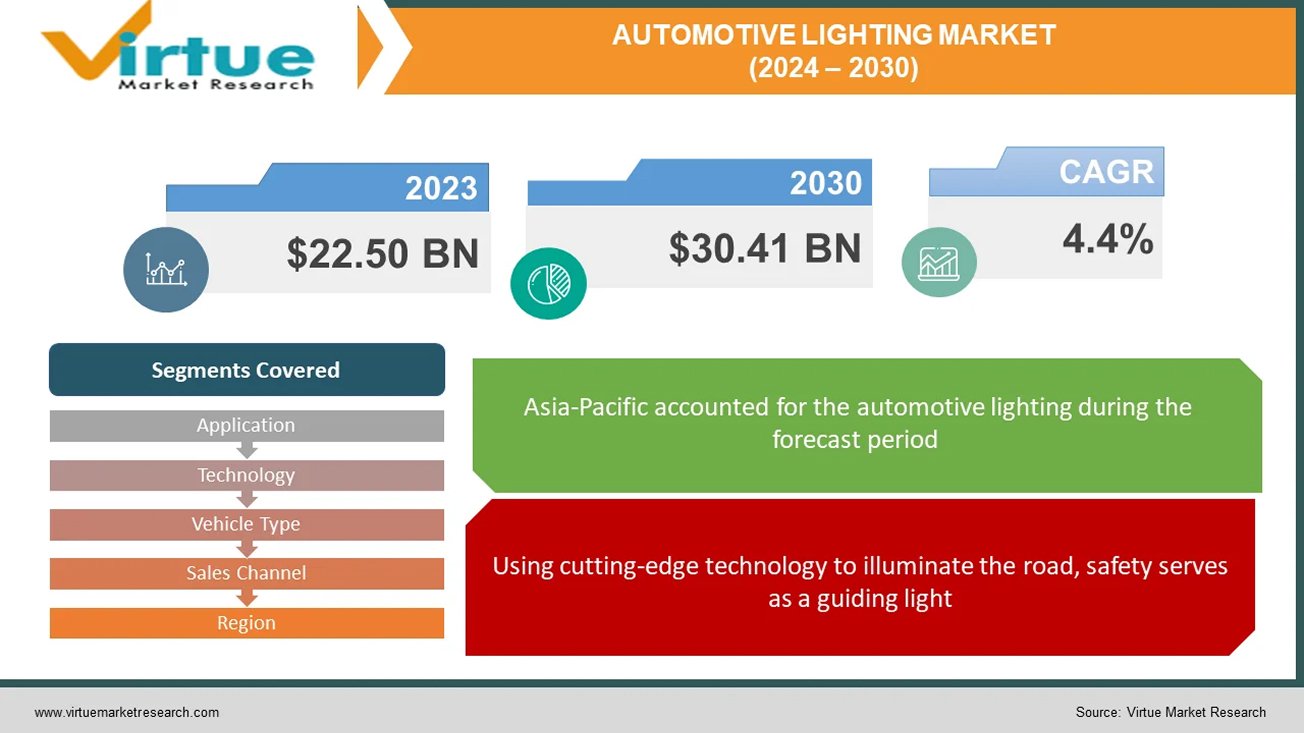
Global automotive lighting refers to all vehicle lighting systems, from headlamps that illuminate the road to taillights that communicate movements. They guarantee motorists and other road users alike safety, visibility, and style. While taillights frequently use LEDs for improved visibility, headlights are available in a variety of technologies, including LED and laser. Interior illumination, DRLs, and signal lights all have a role to play. This market, which was estimated to be worth $33.64 billion in 2022, is anticipated to rise to $67.39 billion by 2030 because of laws, luxury tastes, safety concerns, and technological developments like OLED taillights and adaptive headlights. Anticipate a future dominated by intelligent, connected, personalized, and sustainable lighting systems that enhance the safety, efficiency, and aesthetic appeal of automobiles.
Key Market Insights:
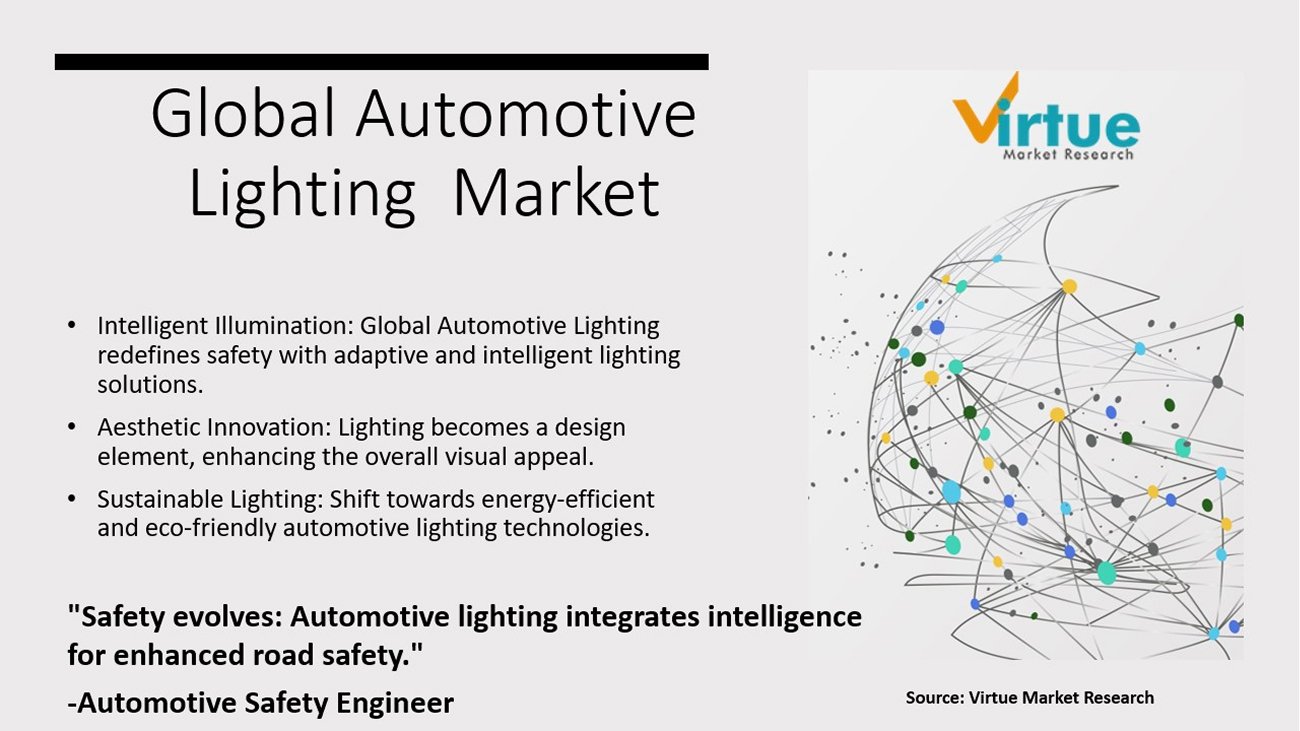
Car lighting works its magic to provide safety, visibility, and style. Headlights cut through the night, taillights express intent, and interiors shine with comfort. The billion-dollar global business is expected to rise due to consumer demand for high-end experiences, safer roads, and cutting-edge technology. Imagine dynamic messages being painted by taillights, headlights that adjust to the road, and interiors that customize their atmosphere. Driven by technological advancements like linked systems and laser beams, this future is calling. Anticipate even more visually attractive, environmentally friendly, and intelligent lighting to illuminate the way ahead, making cars safer, more efficient, and unquestionably cooler.
Global Automotive Lighting Market Drivers:
Using cutting-edge technology to illuminate the road, safety serves as a guiding light.
In the market for automobile lighting, safety is the driving force behind demand from the public and laws. While automated high beams smoothly react to traffic, adaptive headlights modify their beams so as not to blind other people. With visually striking displays, dynamic taillights convey intentions for braking and turning. Beyond these developments, integrated pedestrian identification and lane departure alerts will soon make roads safer and brighter for everyone.
Beyond Performance-Based Luxuries Redefined by Light.
Luxurious automobile lighting creates a distinct visual identity that goes beyond simple illumination. Personalized interior lighting customizes the driving experience by setting the mood with a range of colours and intensities, while intricate designs and distinctive DRLs modify exteriors. As you approach your automobile at night, welcoming lights lead the way, resulting in an interior that is perfectly lit. Not only is this symphony of light aesthetically pleasing, but it also stands as a tribute to luxury. Upcoming developments like gesture-controlled lighting and holographic displays promise to further enhance the experience.
Fuel Efficiency Takes the Lead: Illuminating Sustainability
The worldwide automotive lighting market is undergoing a significant transition towards energy-efficient solutions, as environmental concerns gain prominence. LED technology is leading the way, providing a ray of hope for the environment and drivers alike. LED lights beam brighter and use a lot less energy than conventional halogen lamps. There are some tangible advantages to this. For drivers, this translates to increased fuel economy, which lowers petrol prices and lessens reliance on fossil fuels. Greater air quality and a reduction in the transport sector's contribution to climate change are the results of reduced overall emissions.
To Learn more about this report,
Global Automotive Lighting Market Restraints and Challenges:
Although the global automotive lighting business is booming, there are still unknowns. Difficulties impede growth even as innovation propels it with eye catching features like laser beams and adaptable headlights. These technologies are luxury items due to their high cost and difficult integration, which puts producers' abilities to the test. The worldwide patchwork created by unclear legislation limits the potential of innovation. Durability issues persist, particularly when complex systems are subjected to challenging conditions. Ultimately, a lot of drivers still don't fully understand how these improvements can help them. Together, we can overcome these obstacles. The keys to reducing costs are improved production, more seamless integration, and unified regulations. Their full potential can be realized by educating customers about the safety, efficiency, and aesthetic value of these lighting wonders. By working together, we can pave the way for an even brighter and safer future for vehicle lighting.
Global Automotive Lighting Market Opportunities:
It is made possible by advanced LED technology, which gives drivers the ability to customize their illumination for the highest level of comfort and flair. Consumers that care about the environment want greener products, and vehicle lighting complies. While solar- and self-powered lighting technologies offer a future powered by clean energy, energy-efficient LEDs lower pollution. The advent of connected lighting systems heralds a new age. Envision automobiles interacting with infrastructure and one another to minimize accidents and enhance traffic efficiency. Integrated headlights with pedestrian recognition provide unmatched safety, while dramatic taillights with eye-catching displays alert onlookers to your intentions. The possibilities are endless in the future. Gesture-controlled interior illumination, holographic displays projected onto the road, and even light fixtures with self-healing capabilities.
AUTOMOTIVE LIGHTING MARKET REPORT COVERAGE:
To Learn more about this report,
Global Automotive Lighting Market Segmentation: By Application
Exterior Lighting
Interior Lighting
Due to laws requiring safety features like headlights, taillights, and brake lights, exterior lighting presently holds the most market share in the vehicle lighting industry. The dominance of this market is partly attributed to advancements in safety-focused technologies such as adaptive headlights and daytime running lights. The market value of external lighting is increased by the quick adoption of technology like LED bulbs and laser lights, which improve performance and aesthetics. Conversely, the interior lighting market is expected to increase at the fastest rate in the upcoming years. Innovations like ambient lighting and technology breakthroughs like LED and OLED displays, driven by consumer demand for comfort and personalisation, open new possibilities. The spread of sophisticated interior lighting systems is further driven by the growing emphasis on safety and the expansion of the luxury car market.
Global Automotive Lighting Market Segmentation: By Technology
Halogen
LED (Light-Emitting Diode)
Xenon
Emerging Technologies
The worldwide vehicle lighting market is currently dominated by halogen because of its more affordable price, advanced technology, and useful illumination. With its dependable supply chain and affordable option for manufacturers and cost-conscious customers, halogen holds the biggest market share. The fastest-growing market right now is LEDs, which are predicted to shortly overtake halogen. The rapid expansion of LEDs is driven by their higher efficiency, longer lifespan, flexibility in design, and technological breakthroughs including enhanced brightness. Because LEDs use less energy and produce fewer emissions and better fuel economy, they are becoming more and more popular in the changing automotive lighting market.
Global Automotive Lighting Market Segmentation: By Vehicle Type
Passenger Cars
Commercial Vehicles
Passenger automobiles rule the worldwide automotive lighting market. The sheer number of passenger cars produced which surpasses that of business vehicles and fuels the need for lighting systems is the primary cause of this popularity. The growing demand for personal automobiles in developing nations is a result of rising disposable income, which in turn drives the rise of the passenger car market. The importance that consumers place on safety and aesthetics elements helps to drive market expansion. But in the upcoming years, the market for electric and hybrid cars is expected to develop at the quickest rate. The exponential rise of the worldwide electric car market, which is still expanding and shows no signs of slowing down, is what is driving this surge. Specialised lighting solutions are required since electric and hybrid vehicles have different lighting requirements because of their specific functionality and design aesthetics.
Global Automotive Lighting Market Segmentation: By Sales Channel
OEM (Original Equipment Manufacturers)
Aftermarket
Most lighting systems sold nowadays are sold by OEMs (Original Equipment Manufacturers), primarily because manufacturers pre-install lighting systems in new cars. But in the next years, the aftermarket is expected to develop at the quickest rate. This spike in demand for replacement parts, especially lighting systems, can be linked to several variables, one of them being the average age of cars. The industry is expanding because of consumers' growing desire to personalise their cars with aftermarket lighting upgrades such LED upgrades and decorative lighting. The availability and affordability of technologies like adaptive headlights and laser lights in the aftermarket, together with other advancements in lighting technology, are driving demand even more. Moreover, the growing market for electric cars (EVs).
To Learn more about this report,
Global Automotive Lighting Market Segmentation: By Region
North America
Asia-Pacific
Europe
South America
Middle East and Africa
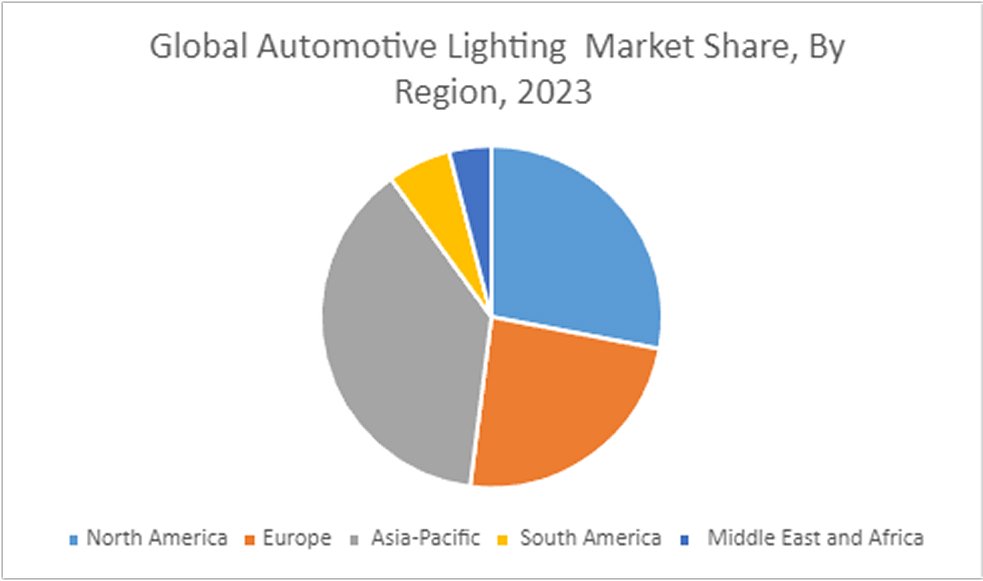
Throughout the forecast period, Asia Pacific is anticipated to be the automotive lighting market with the highest profitability. Over the past few years, Asia Pacific countries like China and India have seen notable increases in automotive manufacturing and sales, primarily in the medium-to premium luxury car segment. Asia Pacific is predicted to see an increase in the manufacturing of passenger cars, with India experiencing the strongest growth rate. Depending on the state of the national economy, the area offers a suitable selection of both high-end and cheap cars. For instance, there is a substantial demand for halogen, Xenon/HID, and LED since China and India produce more economy and mid-range automobiles. On the other hand, luxury car adoption rates are greater in South Korea and Japan, where LED lighting is the norm.
COVID-19 Impact Analysis on the Global Automotive Lighting Market:
A brief shadow was thrown by COVID-19 over the worldwide automotive lighting market. Production was stopped by lockdowns and supply chain disruptions, while luxury lighting upgrades were shelved by consumers on a tight budget. Resources became scarce, and R&D stagnated. Still, the market is recovering thanks to resurgent demand and rearranged priorities. While energy-efficient LEDs are being pushed towards adoption by sustainability, safety concerns are driving interest in features like pedestrian detection and adaptive headlights. The digital push of the epidemic creates opportunities for intelligent, networked lighting systems that may interact with infrastructure and other cars. Ultimately, the industry is positioned to shine brighter, focused on safety, sustainability, and a connected future, even though the pandemic dimmed its brilliance.
Recent Trends and Developments in the Global Automotive Lighting Market:
A development collaboration between OSRAM Continental and REHAU aims to incorporate lighting into external components, providing automobile manufacturers with innovative lighting options that improve functionality and design flexibility. For rear combination lamps, Hella unveiled a revolutionary lighting innovation called Hella FlatLight technology. A Memorandum of Understanding (MoU) was signed by Samvardhana Motherson Automotive Systems Group BV (SMRPBV), a division of Motherson Group, and Marelli Automotive Lighting to investigate a technology collaboration focused on intelligently lighted external body components. Valeo debuted their revolutionary 360° lighting system at the Shanghai Auto Show. This technology surrounds the car with a band of light, projecting instantaneous, clear signs that other drivers can see from a distance. Pedestrians, cyclists, and scooter riders are especially susceptible to these signals
Fill out the form below and our team will get back to you shortly
FAQ's
The primary drivers are the unprecedented consumer demand for weight-loss drugs (Wegovy, Zepbound) driven by the "obesity as a disease" medical paradigm, and the technical shift toward single-dose autoinjectors, which require significantly more manufacturing capacity per patient than older multi-dose pens.
The primary drivers are the unprecedented consumer demand for weight-loss drugs (Wegovy, Zepbound) driven by the "obesity as a disease" medical paradigm, and the technical shift toward single-dose autoinjectors, which require significantly more manufacturing capacity per patient than older multi-dose pens.
The main concerns are the "Fill-Finish Bottleneck"—the lack of sufficient sterile injectable manufacturing lines to meet current demand—and the high capital cost and long lead times (3-5 years) required to build new facilities, creating a persistent lag between demand and supply.
The main concerns are the "Fill-Finish Bottleneck"—the lack of sufficient sterile injectable manufacturing lines to meet current demand—and the high capital cost and long lead times (3-5 years) required to build new facilities, creating a persistent lag between demand and supply.
The market is led by the drug owners, Novo Nordisk and Eli Lilly, who are investing billions. They are supported by major Contract Development and Manufacturing Organizations (CDMOs) like Catalent, Thermo Fisher Scientific, and Vetter Pharma, as well as device specialists like SHL Medical and Ypsomed.
The market is led by the drug owners, Novo Nordisk and Eli Lilly, who are investing billions. They are supported by major Contract Development and Manufacturing Organizations (CDMOs) like Catalent, Thermo Fisher Scientific, and Vetter Pharma, as well as device specialists like SHL Medical and Ypsomed.
North America holds the largest market share, estimated at 45% in 2025. This is due to the United States being the primary consumer market for these drugs and the location of massive new manufacturing campuses in Indiana and North Carolina.
North America holds the largest market share, estimated at 45% in 2025. This is due to the United States being the primary consumer market for these drugs and the location of massive new manufacturing campuses in Indiana and North Carolina.
Europe is expanding at the highest rate, largely driven by the expansion of Novo Nordisk's massive production hub in Denmark and significant new investments in sterile manufacturing capacity in Ireland and Germany to serve the global market.
Europe is expanding at the highest rate, largely driven by the expansion of Novo Nordisk's massive production hub in Denmark and significant new investments in sterile manufacturing capacity in Ireland and Germany to serve the global market.
More related reports
Get expert-driven market research reports from a leading research partner to help you navigate the future of the global industry.
Report Code: VMR-18737 | Published Date: October 2025 | Format: Excel and PDF
The Radiation Therapy-based Glioblastoma Multiforme Treatment Market was valued at USD 3.72 billion in 2024 and is projected to reach a market size of USD 6.13 billion by the end of 2030. Over the forecast period of 2025...
Report Code: VMR-15695 | Published Date: August 2022 | Format: Excel and PDF
The Placental Stem Cell Therapy for Neurological Disorders Market was valued at USD 464.96 Million and is projected to reach a market size of USD 1,806.95 Million by the end of 2030. Over the forecast period of 2024-2030...
Report Code: VMR-18524 | Published Date: July 2025 | Format: Excel and PDF
The Insurance Market was valued at USD 10.11 trillion in 2024 and is projected to reach a market size of USD 14.65 trillion by the end of 2030. Over the forecast period of 2025-2030, the market is projected to grow at a...
Report Code: VMR-7325 | Published Date: July 2025 | Format: Excel and PDF
The Insomnia Market was valued at USD 3.76 billion in 2024 and is projected to reach a market size of USD 4.84 billion by the end of 2030. Over the forecast period of 2025-2030, the market is projected to grow at a CAGR...
Report Code: VMR-19021 | Published Date: January 2026 | Format: Excel and PDF
The Oncology Biologics Competitive Benchmarking Market was valued at USD 1.57 billion in 2025 and is projected to reach a market size of USD 2.42 billion by the end of 2030. Over the forecast period of 2026-2030, the mar...
“We received a complex piece of work for our niche market from Virtue Market research in short period of time. I appreciate the quality and content of the final files we received. Thanks for the support”
Medical Devices Company based in Europe
“We received a complex piece of work for our niche market from Virtue Market research in short period of time. I appreciate the quality and content of the final files we received. Thanks for the support”
Medical Devices Company based in Europe
“We received a complex piece of work for our niche market from Virtue Market research in short period of time. I appreciate the quality and content of the final files we received. Thanks for the support”
Medical Devices Company based in Europe
“We received a complex piece of work for our niche market from Virtue Market research in short period of time. I appreciate the quality and content of the final files we received. Thanks for the support”
Medical Devices Company based in Europe
“We received a complex piece of work for our niche market from Virtue Market research in short period of time. I appreciate the quality and content of the final files we received. Thanks for the support”
Medical Devices Company based in Europe
“We received a complex piece of work for our niche market from Virtue Market research in short period of time. I appreciate the quality and content of the final files we received. Thanks for the support”