The Decentralized Clinical Trials (DCT) Services Market was valued at USD 9.39 billion in 2025 and is projected to reach a market size of USD 18.62 billion by the end of 2030. Over the forecast period of 2026-2030, the market is projected to grow at a CAGR of 14.7%.
The Decentralized Clinical Trials (DCT) Services Market represents the most significant structural evolution in pharmaceutical research of the 21st century. It marks a definitive pivot from the site-centric dogma—where patients were tethered to physical academic medical centers to a patient-centric ecosystem where the trial revolves around the participant's daily life. In 2025, DCTs are no longer an experimental "Plan B" necessitated by pandemics but a strategic "Plan A" for global drug development. This market encompasses a sophisticated matrix of logistics, digital platforms, and healthcare services that enable trial activities such as consent, dosing, and data collection to occur remotely via telemedicine, home health nursing, and sensor-based monitoring
Key Market Insights:
The Oncology segment commands a massive 46.3% of the total DCT market revenue in 2025. This is driven by the urgent need to reduce the burden on cancer patients, for whom frequent travel to trial sites is physically exhausting and immune-compromising.
Data from 2025 indicates that 88% of all new Component III clinical trials now incorporate at least one decentralized element (e.g., eConsent or tele-visits), up from just 40% in 2019.
Trials utilizing decentralized recruitment platforms in 2025 reported a 3x faster enrollment rate compared to traditional site-based methods, a critical metric given that every day of delay costs sponsors up to $8 million in lost opportunity revenue.
Cloud-based DCT platforms hold a dominant 58.2% market share in 2025, proving that the software infrastructure is the central nervous system of modern trials.
DCTs have successfully improved cohort diversity; 2025 stats show a 22% increase in participation from underrepresented minority populations in US-based trials compared to the 2020 baseline, largely attributed to the removal of geographic barriers.
The volume of data points collected via connected wearables in trials exceeded 15 petabytes globally in 2025, necessitating advanced AI analytics to process real-time biometric streams.
DCT models have reduced patient dropout rates to below 15% in 2025, a significant improvement over the historical industry average of 30%, directly saving millions in replacement recruitment costs.
McKinsey analysis emphasizes the transformative potential of decentralizing trial operations, with strategic application of remote monitoring, telemedicine, and digital tools to increase overall trial productivity and broaden participant access.
Market Drivers:
The single most powerful driver is the industry-wide mandate to democratize access to clinical research.
For decades, trials were biased toward patients who lived near major urban academic centers and had the time and resources to travel. In 2025, sponsors are under immense pressure from regulators (like the FDA's diversity action plans) to ensure trial populations mirror the real-world demographics of the disease. DCT services remove the "zip code lottery" by bringing the trial to the patient. By enabling participation through local pharmacies, mobile clinics, and home visits, DCTs unlock a vast, previously inaccessible pool of participants from rural and underserved communities. This not only fulfills ethical and regulatory requirements but also drastically accelerates recruitment timelines, which is the primary bottleneck in drug development.
The technological maturation of medical-grade sensors and AI analytics is the "engine room" driving this market.
In the past, remote data was viewed with skepticism; in 2025, it is often viewed as superior. Continuous monitoring via wearable biosensors provides a high-fidelity "movie" of a patient's health (heart rate variability, sleep quality, gait speed) rather than the low-resolution "snapshot" obtained during a monthly clinic visit. This continuous stream of "Real-World Data" (RWD) allows sponsors to detect safety signals earlier and demonstrate drug efficacy with greater nuance. Furthermore, AI algorithms are now capable of validating this data in real-time, flagging anomalies to investigators instantly, which builds the trust required to rely on remote endpoints for pivotal regulatory decisions.
Market Restraints and Challenges:
The primary restraint in 2025 remains Regulatory Fragmentation and Data Sovereignty. While the FDA and EMA have issued supportive guidance, the global landscape is a patchwork of conflicting laws. Operating a single global DCT requires navigating dozens of different telemedicine licensure laws, data privacy regulations (GDPR, CCPA, PIPL in China), and direct-to-patient drug shipping rules. This compliance complexity often forces sponsors to run "hybrid" protocols that revert to traditional methods in certain countries, diluting the efficiency of the decentralized model. Additionally, Cybersecurity Risks are acute; expanding the trial ecosystem to patients' homes and personal devices exponentially increases the surface area for cyberattacks and data breaches.
Market Opportunities:
A massive opportunity lies in the "Retail-ization" of Clinical Research. Partnerships between pharma sponsors and retail pharmacy giants (like Walgreens, CVS, and Boots) are transforming neighborhood drugstores into satellite clinical trial sites. This leverages the high trust patients have in their local pharmacists and the vast footprint of these locations. Another significant opportunity is in AI-Driven Synthetic Control Arms. By using the rich historical data accumulated from DCTs and Real-World Evidence (RWE), companies can simulate control arms for trials, potentially reducing the number of patients required for a study by half and accelerating the path to approval for rare disease therapies.
Decentralized Clinical Trials (DCT) Services Market Segmentation by Study Design:
Interventional Trials
Observational Trials
Expanded Access Trials
Interventional Trials are the most dominant type, accounting for approximately 63% of the market share. This dominance is due to the sheer volume of Component II and III drug development activity where safety and efficacy data must be rigorously generated to support marketing authorization. Observational Trials are the fastest-growing type. As payers and regulators demand more "Real-World Evidence" post-approval to justify pricing and reimbursement, sponsors are launching massive, low-burden remote observational studies to track long-term drug performance in large populations.
Decentralized Clinical Trials (DCT) Services Market Segmentation by Therapeutic Area:
Oncology
Cardiovascular
Neurology
Immunology
Rare Diseases
Respiratory
Oncology is the most dominant therapeutic area. The complexity of cancer treatments and the fragility of the patient population make the "concierge" service model of DCTs (e.g., home infusions, remote vitals monitoring) highly valuable and well-funded. Neurology is the fastest-growing segment. Conditions like Alzheimer's, Parkinson's, and Multiple Sclerosis often limit patient mobility, making them perfect candidates for decentralized methods. Digital biomarkers (like measuring tremor via smartphone accelerometer) are revolutionizing endpoints in this field.
Decentralized Clinical Trials (DCT) Services Market Segmentation by Component:
Software & Platforms
Clinical Services (Home Nursing, Logistics)
Wearable Technologies
Software & Platforms is the most dominant segment. The central platform (eCOA, eConsent, EDC) is the non-negotiable infrastructure for any DCT. It creates the "sticky" ecosystem that binds the patient, investigator, and sponsor together. Clinical Services is the fastest-growing segment. As trials move from "fully virtual" to "hybrid," the physical delivery of care (phlebotomy at home, mobile imaging units) is seeing explosive demand to support complex biological sample collection that apps cannot handle.
Decentralized Clinical Trials (DCT) Services Market Segmentation by End-User:
Biopharmaceutical Companies
Medical Device Manufacturers
Contract Research Organizations (CROs)
Academic & Research Institutes
Biopharmaceutical Companies are the most dominant end-users, controlling the vast majority of R&D budgets. They are the primary purchasers of DCT licenses and service contracts to execute their pipelines. Medical Device Manufacturers are the fastest-growing end-users. The rise of "Software as a Medical Device" (SaMD) and connected therapeutics naturally aligns with decentralized validation studies, where the device data is collected remotely by design.
North America dominates the market with an estimated 48.6% share in 2025. This is driven by the presence of the world's largest pharma sponsors, a highly digitized healthcare system, and a forward-thinking regulator (FDA) that has championed remote trial guidance.
Asia-Pacific is the fastest-growing region. Rapid digitization in China, South Korea, and Japan, combined with vast, untapped patient populations and government initiatives to modernize clinical research infrastructure, is driving double-digit growth.
COVID-19 Impact Analysis:
The COVID-19 pandemic was the catalyst event that transformed DCTs from a theoretical concept into an operational necessity. In the short term, it forced a "sink or swim" adoption as physical sites closed. The long-term impact, visible clearly in 2025, is the permanent alteration of risk tolerance. Pre-COVID, sponsors feared that remote data would be rejected by regulators. The pandemic proved that decentralized data is not only acceptable but often more robust. It successfully broke the industry's inertia, establishing remote monitoring and eConsent as the new "standard of care" for clinical operations.
Latest Market News:
March 2025:ICON plc announced a strategic collaboration with Mural Health Technologies to integrate the "Mural Link" platform, aiming to streamline participant payments and logistics, directly addressing the financial friction of trial participation.
April 2025:Axtria Inc. launched "LUCCID," a GenAI-powered solution designed to extract and process unstructured clinical data from electronic health records (EHRs), significantly speeding up patient identification for decentralized trials.
August 2024:Walgreens launched the D-COHRe initiative with a valuation potential of $100 million, a partnership with the US government to conduct large-scale decentralized studies utilizing their vast retail pharmacy network to reach underserved communities.
July 2024:Walgreens secured $25 million in funding from BARDA (Biomedical Advanced Research and Development Authority) to execute a decentralized clinical trial aimed at expanding access to respiratory vaccines, validating the retail-based DCT model.
February 2024:Castor and Microsoft entered a major partnership to leverage Azure’s cloud capabilities, integrating advanced AI into Castor’s DCT platform to automate data management and improve patient retention predictions.
Latest Trends and Developments:
The defining trend of 2025 is "Bring Your Own Device" (BYOD) 2.0. While early DCTs provided provisioned devices (sending an iPad to every patient), the market is shifting toward secure, validated apps that run on patients' own smartphones, reducing hardware costs and logistical waste. Another major development is the "Green Trial" movement. DCTs are increasingly being audited for their carbon footprint; by eliminating millions of miles of patient travel and site monitor commutes, DCTs are becoming a key pillar of Pharma's Net-Zero sustainability strategies.
Key Players in the Market:
IQVIA Inc.
ICON plc
LabCorp (Laboratory Corporation of America Holdings)
Syneos Health
Thermo Fisher Scientific (PPD)
Medable, Inc.
Science 37
Parexel International Corporation
ObvioHealth
Advarra
To Learn more about this report,
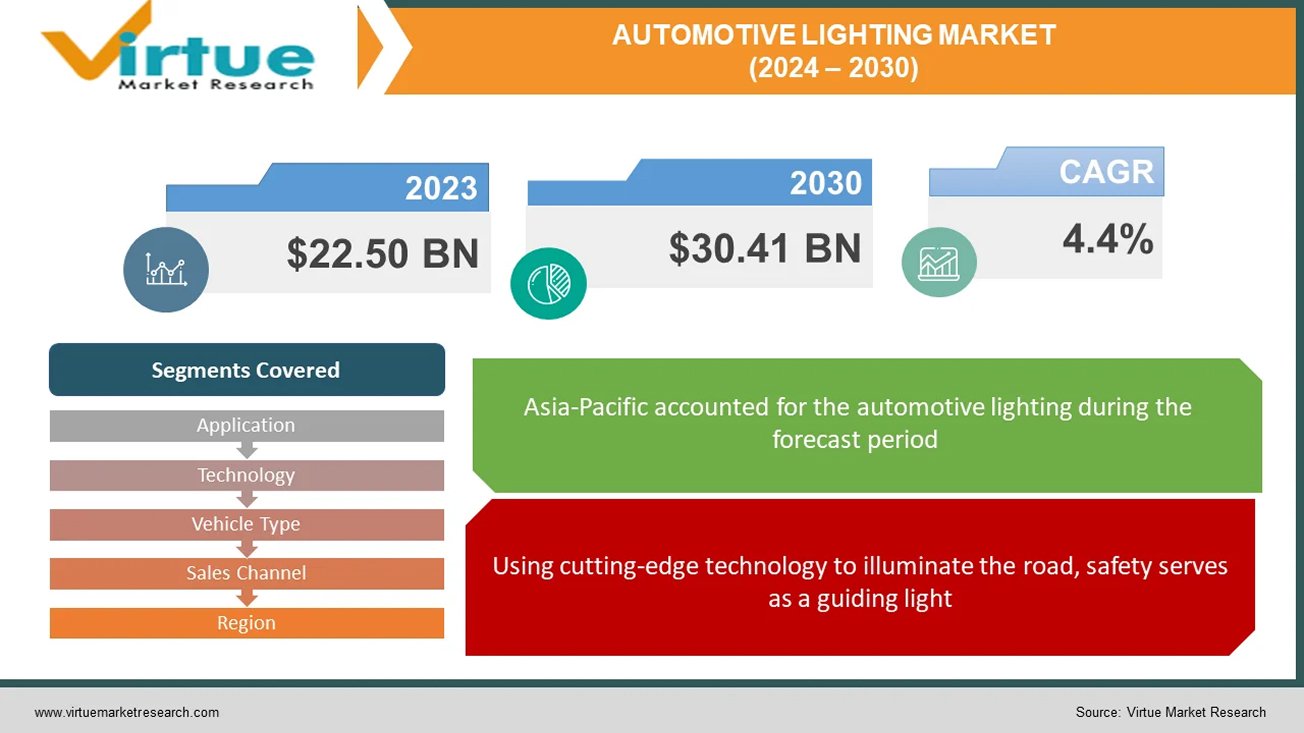
Global automotive lighting refers to all vehicle lighting systems, from headlamps that illuminate the road to taillights that communicate movements. They guarantee motorists and other road users alike safety, visibility, and style. While taillights frequently use LEDs for improved visibility, headlights are available in a variety of technologies, including LED and laser. Interior illumination, DRLs, and signal lights all have a role to play. This market, which was estimated to be worth $33.64 billion in 2022, is anticipated to rise to $67.39 billion by 2030 because of laws, luxury tastes, safety concerns, and technological developments like OLED taillights and adaptive headlights. Anticipate a future dominated by intelligent, connected, personalized, and sustainable lighting systems that enhance the safety, efficiency, and aesthetic appeal of automobiles.
Key Market Insights:
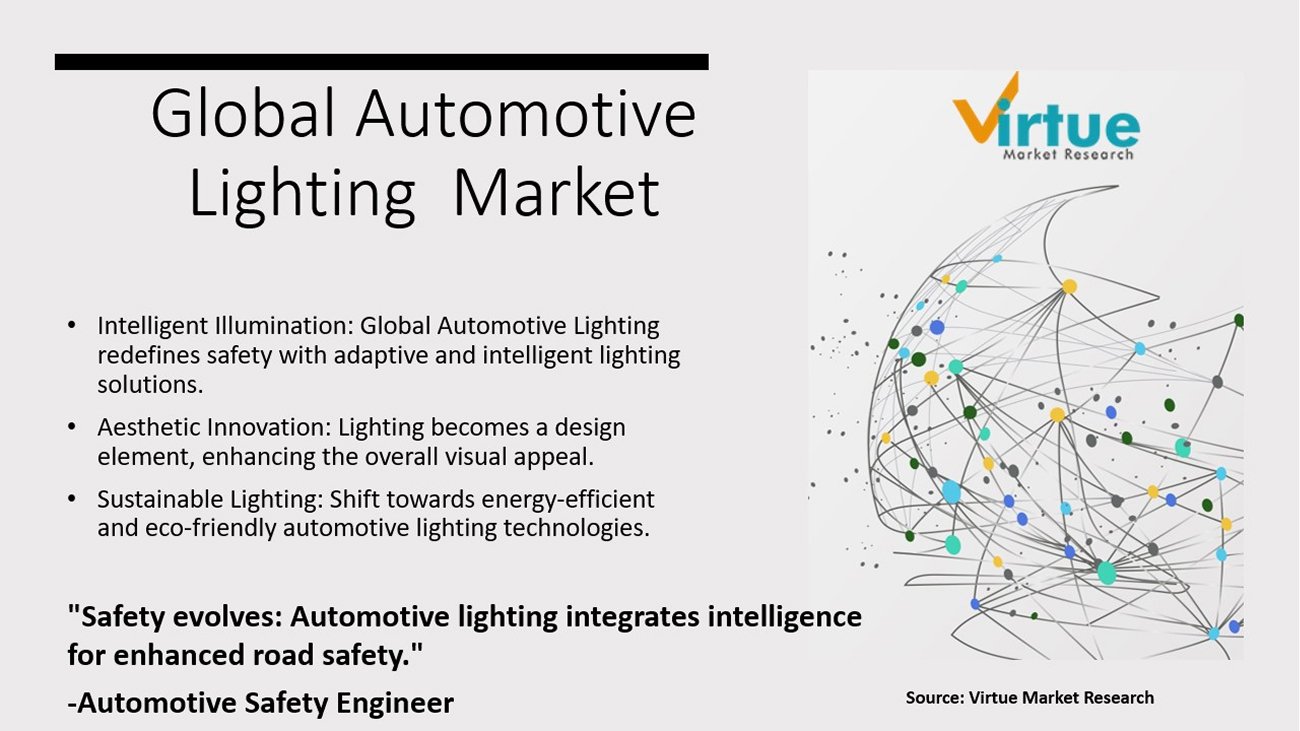
Car lighting works its magic to provide safety, visibility, and style. Headlights cut through the night, taillights express intent, and interiors shine with comfort. The billion-dollar global business is expected to rise due to consumer demand for high-end experiences, safer roads, and cutting-edge technology. Imagine dynamic messages being painted by taillights, headlights that adjust to the road, and interiors that customize their atmosphere. Driven by technological advancements like linked systems and laser beams, this future is calling. Anticipate even more visually attractive, environmentally friendly, and intelligent lighting to illuminate the way ahead, making cars safer, more efficient, and unquestionably cooler.
Global Automotive Lighting Market Drivers:
Using cutting-edge technology to illuminate the road, safety serves as a guiding light.
In the market for automobile lighting, safety is the driving force behind demand from the public and laws. While automated high beams smoothly react to traffic, adaptive headlights modify their beams so as not to blind other people. With visually striking displays, dynamic taillights convey intentions for braking and turning. Beyond these developments, integrated pedestrian identification and lane departure alerts will soon make roads safer and brighter for everyone.
Beyond Performance-Based Luxuries Redefined by Light.
Luxurious automobile lighting creates a distinct visual identity that goes beyond simple illumination. Personalized interior lighting customizes the driving experience by setting the mood with a range of colours and intensities, while intricate designs and distinctive DRLs modify exteriors. As you approach your automobile at night, welcoming lights lead the way, resulting in an interior that is perfectly lit. Not only is this symphony of light aesthetically pleasing, but it also stands as a tribute to luxury. Upcoming developments like gesture-controlled lighting and holographic displays promise to further enhance the experience.
Fuel Efficiency Takes the Lead: Illuminating Sustainability
The worldwide automotive lighting market is undergoing a significant transition towards energy-efficient solutions, as environmental concerns gain prominence. LED technology is leading the way, providing a ray of hope for the environment and drivers alike. LED lights beam brighter and use a lot less energy than conventional halogen lamps. There are some tangible advantages to this. For drivers, this translates to increased fuel economy, which lowers petrol prices and lessens reliance on fossil fuels. Greater air quality and a reduction in the transport sector's contribution to climate change are the results of reduced overall emissions.
To Learn more about this report,
Global Automotive Lighting Market Restraints and Challenges:
Although the global automotive lighting business is booming, there are still unknowns. Difficulties impede growth even as innovation propels it with eye catching features like laser beams and adaptable headlights. These technologies are luxury items due to their high cost and difficult integration, which puts producers' abilities to the test. The worldwide patchwork created by unclear legislation limits the potential of innovation. Durability issues persist, particularly when complex systems are subjected to challenging conditions. Ultimately, a lot of drivers still don't fully understand how these improvements can help them. Together, we can overcome these obstacles. The keys to reducing costs are improved production, more seamless integration, and unified regulations. Their full potential can be realized by educating customers about the safety, efficiency, and aesthetic value of these lighting wonders. By working together, we can pave the way for an even brighter and safer future for vehicle lighting.
Global Automotive Lighting Market Opportunities:
It is made possible by advanced LED technology, which gives drivers the ability to customize their illumination for the highest level of comfort and flair. Consumers that care about the environment want greener products, and vehicle lighting complies. While solar- and self-powered lighting technologies offer a future powered by clean energy, energy-efficient LEDs lower pollution. The advent of connected lighting systems heralds a new age. Envision automobiles interacting with infrastructure and one another to minimize accidents and enhance traffic efficiency. Integrated headlights with pedestrian recognition provide unmatched safety, while dramatic taillights with eye-catching displays alert onlookers to your intentions. The possibilities are endless in the future. Gesture-controlled interior illumination, holographic displays projected onto the road, and even light fixtures with self-healing capabilities.
AUTOMOTIVE LIGHTING MARKET REPORT COVERAGE:
To Learn more about this report,
Global Automotive Lighting Market Segmentation: By Application
Exterior Lighting
Interior Lighting
Due to laws requiring safety features like headlights, taillights, and brake lights, exterior lighting presently holds the most market share in the vehicle lighting industry. The dominance of this market is partly attributed to advancements in safety-focused technologies such as adaptive headlights and daytime running lights. The market value of external lighting is increased by the quick adoption of technology like LED bulbs and laser lights, which improve performance and aesthetics. Conversely, the interior lighting market is expected to increase at the fastest rate in the upcoming years. Innovations like ambient lighting and technology breakthroughs like LED and OLED displays, driven by consumer demand for comfort and personalisation, open new possibilities. The spread of sophisticated interior lighting systems is further driven by the growing emphasis on safety and the expansion of the luxury car market.
Global Automotive Lighting Market Segmentation: By Technology
Halogen
LED (Light-Emitting Diode)
Xenon
Emerging Technologies
The worldwide vehicle lighting market is currently dominated by halogen because of its more affordable price, advanced technology, and useful illumination. With its dependable supply chain and affordable option for manufacturers and cost-conscious customers, halogen holds the biggest market share. The fastest-growing market right now is LEDs, which are predicted to shortly overtake halogen. The rapid expansion of LEDs is driven by their higher efficiency, longer lifespan, flexibility in design, and technological breakthroughs including enhanced brightness. Because LEDs use less energy and produce fewer emissions and better fuel economy, they are becoming more and more popular in the changing automotive lighting market.
Global Automotive Lighting Market Segmentation: By Vehicle Type
Passenger Cars
Commercial Vehicles
Passenger automobiles rule the worldwide automotive lighting market. The sheer number of passenger cars produced which surpasses that of business vehicles and fuels the need for lighting systems is the primary cause of this popularity. The growing demand for personal automobiles in developing nations is a result of rising disposable income, which in turn drives the rise of the passenger car market. The importance that consumers place on safety and aesthetics elements helps to drive market expansion. But in the upcoming years, the market for electric and hybrid cars is expected to develop at the quickest rate. The exponential rise of the worldwide electric car market, which is still expanding and shows no signs of slowing down, is what is driving this surge. Specialised lighting solutions are required since electric and hybrid vehicles have different lighting requirements because of their specific functionality and design aesthetics.
Global Automotive Lighting Market Segmentation: By Sales Channel
OEM (Original Equipment Manufacturers)
Aftermarket
Most lighting systems sold nowadays are sold by OEMs (Original Equipment Manufacturers), primarily because manufacturers pre-install lighting systems in new cars. But in the next years, the aftermarket is expected to develop at the quickest rate. This spike in demand for replacement parts, especially lighting systems, can be linked to several variables, one of them being the average age of cars. The industry is expanding because of consumers' growing desire to personalise their cars with aftermarket lighting upgrades such LED upgrades and decorative lighting. The availability and affordability of technologies like adaptive headlights and laser lights in the aftermarket, together with other advancements in lighting technology, are driving demand even more. Moreover, the growing market for electric cars (EVs).
To Learn more about this report,
Global Automotive Lighting Market Segmentation: By Region
North America
Asia-Pacific
Europe
South America
Middle East and Africa
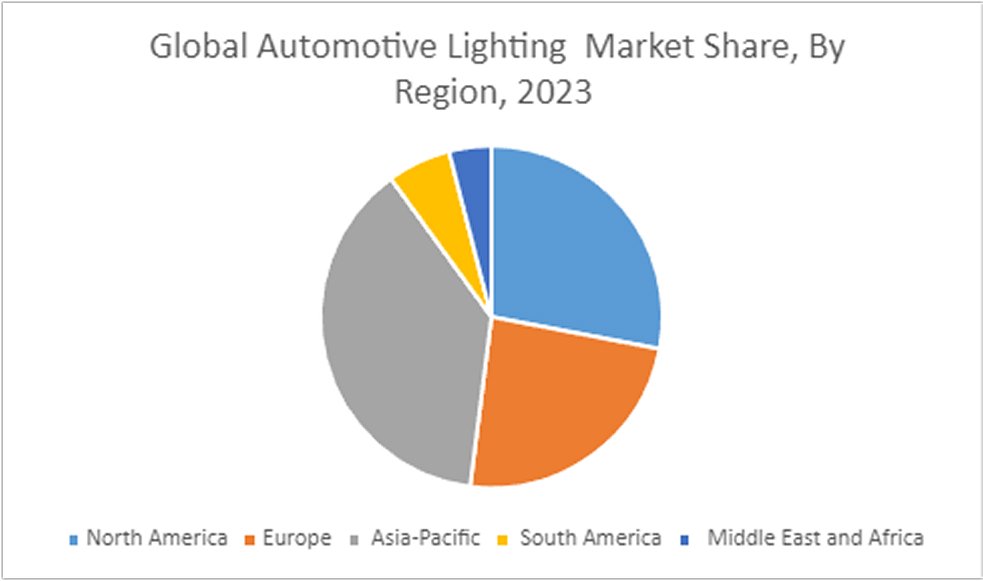
Throughout the forecast period, Asia Pacific is anticipated to be the automotive lighting market with the highest profitability. Over the past few years, Asia Pacific countries like China and India have seen notable increases in automotive manufacturing and sales, primarily in the medium-to premium luxury car segment. Asia Pacific is predicted to see an increase in the manufacturing of passenger cars, with India experiencing the strongest growth rate. Depending on the state of the national economy, the area offers a suitable selection of both high-end and cheap cars. For instance, there is a substantial demand for halogen, Xenon/HID, and LED since China and India produce more economy and mid-range automobiles. On the other hand, luxury car adoption rates are greater in South Korea and Japan, where LED lighting is the norm.
COVID-19 Impact Analysis on the Global Automotive Lighting Market:
A brief shadow was thrown by COVID-19 over the worldwide automotive lighting market. Production was stopped by lockdowns and supply chain disruptions, while luxury lighting upgrades were shelved by consumers on a tight budget. Resources became scarce, and R&D stagnated. Still, the market is recovering thanks to resurgent demand and rearranged priorities. While energy-efficient LEDs are being pushed towards adoption by sustainability, safety concerns are driving interest in features like pedestrian detection and adaptive headlights. The digital push of the epidemic creates opportunities for intelligent, networked lighting systems that may interact with infrastructure and other cars. Ultimately, the industry is positioned to shine brighter, focused on safety, sustainability, and a connected future, even though the pandemic dimmed its brilliance.
Recent Trends and Developments in the Global Automotive Lighting Market:
A development collaboration between OSRAM Continental and REHAU aims to incorporate lighting into external components, providing automobile manufacturers with innovative lighting options that improve functionality and design flexibility. For rear combination lamps, Hella unveiled a revolutionary lighting innovation called Hella FlatLight technology. A Memorandum of Understanding (MoU) was signed by Samvardhana Motherson Automotive Systems Group BV (SMRPBV), a division of Motherson Group, and Marelli Automotive Lighting to investigate a technology collaboration focused on intelligently lighted external body components. Valeo debuted their revolutionary 360° lighting system at the Shanghai Auto Show. This technology surrounds the car with a band of light, projecting instantaneous, clear signs that other drivers can see from a distance. Pedestrians, cyclists, and scooter riders are especially susceptible to these signals
Chapter 6. Decentralized Clinical Trials (DCT) Services Market– By Study Design
6.1 Introduction/Key Findings
6.2 Interventional Trials
6.3 Observational Trials
6.4 Expanded Access Trials
6.5 Y-O-Y Growth trend Analysis By Study Design
6.6 Absolute $ Opportunity Analysis By Study Design , 2026-2030
Chapter 7. Decentralized Clinical Trials (DCT) Services Market– By Therapeutic Area
7.1 Introduction/Key Findings
7.2 Oncology
7.3 Cardiovascular
7.4 Neurology
7.5 Immunology
7.6 Rare Diseases
7.7 Respiratory
7.8 Y-O-Y Growth trend Analysis By Therapeutic Area
7.9 Absolute $ Opportunity Analysis By Therapeutic Area 2026-2030
Chapter 8. Decentralized Clinical Trials (DCT) Services Market– By Component
8.1 Introduction/Key Findings
8.2 Software & Platforms
8.3 Clinical Services (Home Nursing, Logistics)
8.4 Wearable Technologies
8.5 Y-O-Y Growth trend Analysis Component
8.6 Absolute $ Opportunity Analysis Component , 2026-2030 Chapter 9. Decentralized Clinical Trials (DCT) Services Market– By End user
9.1 Introduction/Key Findings
9.2 Biopharmaceutical Companies
9.3 Medical Device Manufacturers
9.4 Contract Research Organizations (CROs)
9.5 Academic & Research Institutes Y-O-Y Growth trend Analysis End user
9.6 Absolute $ Opportunity Analysis, End user 2026-2030
Chapter 10. Decentralized Clinical Trials (DCT) Services Market, By Geography – Market Size, Forecast, Trends & Insights
10.1. North America
10.1.1. By Country
10.1.1.1. U.S.A.
10.1.1.2. Canada
10.1.1.3. Mexico
10.1.2. By Study Design
10.1.3. By End user
10.1.4. By Component
10.1.5. Therapeutic Area
10.1.6. Countries & Segments - Market Attractiveness Analysis
10.2. Europe
10.2.1. By Country
10.2.1.1. U.K.
10.2.1.2. Germany
10.2.1.3. France
10.2.1.4. Italy
10.2.1.5. Spain
10.2.1.6. Rest of Europe
10.2.2. By Study Design
10.2.3. By End user
10.2.4. By Component
10.2.5. Therapeutic Area
10.2.6. Countries & Segments - Market Attractiveness Analysis
10.3. Asia Pacific
10.3.1. By Country
10.3.1.2. China
10.3.1.2. Japan
10.3.1.3. South Korea
10.3.1.4. India
10.3.1.5. Australia & New Zealand
10.3.1.6. Rest of Asia-Pacific
10.3.2. By Study Design
10.3.3. By Therapeutic Area
10.3.4. By Component
10.3.5. End user
10.3.6. Countries & Segments - Market Attractiveness Analysis
10.4. South America
10.4.1. By Country
10.4.1.1. Brazil
10.4.1.2. Argentina
10.4.1.3. Colombia
10.4.1.4. Chile
10.4.1.5. Rest of South America
10.4.2. By Therapeutic Area
10.4.3. By Study Design
10.4.4. By End user
10.4.5. Component
10.4.6. Countries & Segments - Market Attractiveness Analysis
10.5. Middle East & Africa
10.5.1. By Country
10.5.1.4. United Arab Emirates (UAE)
10.5.1.2. Saudi Arabia
10.5.1.3. Qatar
10.5.1.4. Israel
10.5.1.5. South Africa
10.5.1.6. Nigeria
10.5.1.7. Kenya
10.5.1.10. Egypt
10.5.1.10. Rest of MEA
10.5.2. By Study Design
10.5.3. By Therapeutic Area
10.5.4. By Component
10.5.5. End user
10.5.6. Countries & Segments - Market Attractiveness Analysis Chapter 11. Decentralized Clinical Trials (DCT) Services Market – Company Profiles – (Overview, Portfolio, Financials, Strategies & Developments)
11.1 IQVIA Inc.
11.2 ICON plc
11.3 LabCorp (Laboratory Corporation of America Holdings)
11.4 Syneos Health
11.5 Thermo Fisher Scientific (PPD)
11.6 Medable, Inc.
11.7 Science 37
11.8 Parexel International Corporation
11.9 ObvioHealth
11.10 Advarra
Fill out the form below and our team will get back to you shortly
FAQ's
The primary drivers are the industry-wide necessity to improve patient recruitment and retention by reducing the burden of travel, and the rapid advancement of digital health technologies (wearables, AI, telemedicine) that make remote data collection scientifically reliable.
The most significant concerns revolve around data privacy and cybersecurity, as trials move out of secure hospital firewalls into patients' homes. Additionally, the regulatory fragmentation across different countries makes running a unified global decentralized trial operationally complex and legally risky
The market is led by a mix of giant Contract Research Organizations (CROs) like IQVIA and ICON, and specialized technology platform providers such as Medable, Science 37, and Medidata, who provide the digital infrastructure.
North America currently holds the largest market share, estimated at nearly 48.6% in 2025. This is due to the high concentration of biopharma headquarters, advanced digital infrastructure, and a supportive regulatory environment established by the FDA
The Asia-Pacific region is expanding at the highest rate. This growth is powered by large, untapped patient populations, increasing government support for clinical research modernization in countries like China and Japan, and high mobile technology penetration.
More related reports
Get expert-driven market research reports from a leading research partner to help you navigate the future of the global industry.
Report Code: VMR-18737 | Published Date: October 2025 | Format: Excel and PDF
The Radiation Therapy-based Glioblastoma Multiforme Treatment Market was valued at USD 3.72 billion in 2024 and is projected to reach a market size of USD 6.13 billion by the end of 2030. Over the forecast period of 2025...
Report Code: VMR-15695 | Published Date: August 2022 | Format: Excel and PDF
The Placental Stem Cell Therapy for Neurological Disorders Market was valued at USD 464.96 Million and is projected to reach a market size of USD 1,806.95 Million by the end of 2030. Over the forecast period of 2024-2030...
Report Code: VMR-18524 | Published Date: July 2025 | Format: Excel and PDF
The Insurance Market was valued at USD 10.11 trillion in 2024 and is projected to reach a market size of USD 14.65 trillion by the end of 2030. Over the forecast period of 2025-2030, the market is projected to grow at a...
Report Code: VMR-7325 | Published Date: July 2025 | Format: Excel and PDF
The Insomnia Market was valued at USD 3.76 billion in 2024 and is projected to reach a market size of USD 4.84 billion by the end of 2030. Over the forecast period of 2025-2030, the market is projected to grow at a CAGR...
Report Code: VMR-19021 | Published Date: January 2026 | Format: Excel and PDF
The Oncology Biologics Competitive Benchmarking Market was valued at USD 1.57 billion in 2025 and is projected to reach a market size of USD 2.42 billion by the end of 2030. Over the forecast period of 2026-2030, the mar...
“We received a complex piece of work for our niche market from Virtue Market research in short period of time. I appreciate the quality and content of the final files we received. Thanks for the support”
Medical Devices Company based in Europe
“We received a complex piece of work for our niche market from Virtue Market research in short period of time. I appreciate the quality and content of the final files we received. Thanks for the support”
Medical Devices Company based in Europe
“We received a complex piece of work for our niche market from Virtue Market research in short period of time. I appreciate the quality and content of the final files we received. Thanks for the support”
Medical Devices Company based in Europe
“We received a complex piece of work for our niche market from Virtue Market research in short period of time. I appreciate the quality and content of the final files we received. Thanks for the support”
Medical Devices Company based in Europe
“We received a complex piece of work for our niche market from Virtue Market research in short period of time. I appreciate the quality and content of the final files we received. Thanks for the support”
Medical Devices Company based in Europe
“We received a complex piece of work for our niche market from Virtue Market research in short period of time. I appreciate the quality and content of the final files we received. Thanks for the support”