Cancer Predictive Genetic Testing Market Research Report – Segmentation by Test Type (Germline Testing, Somatic Testing); Cancer Type (Breast Cancer, Colorectal Cancer, Ovarian Cancer, Other Cancer Types); End-User (Hospitals and Clinics, Diagnostic Laboratories, Research Institutes); and Region - Size, Share, Growth Analysis | Forecast (2023 – 2030)
Cancer Predictive Genetic Testing Market Size (2023 – 2030)
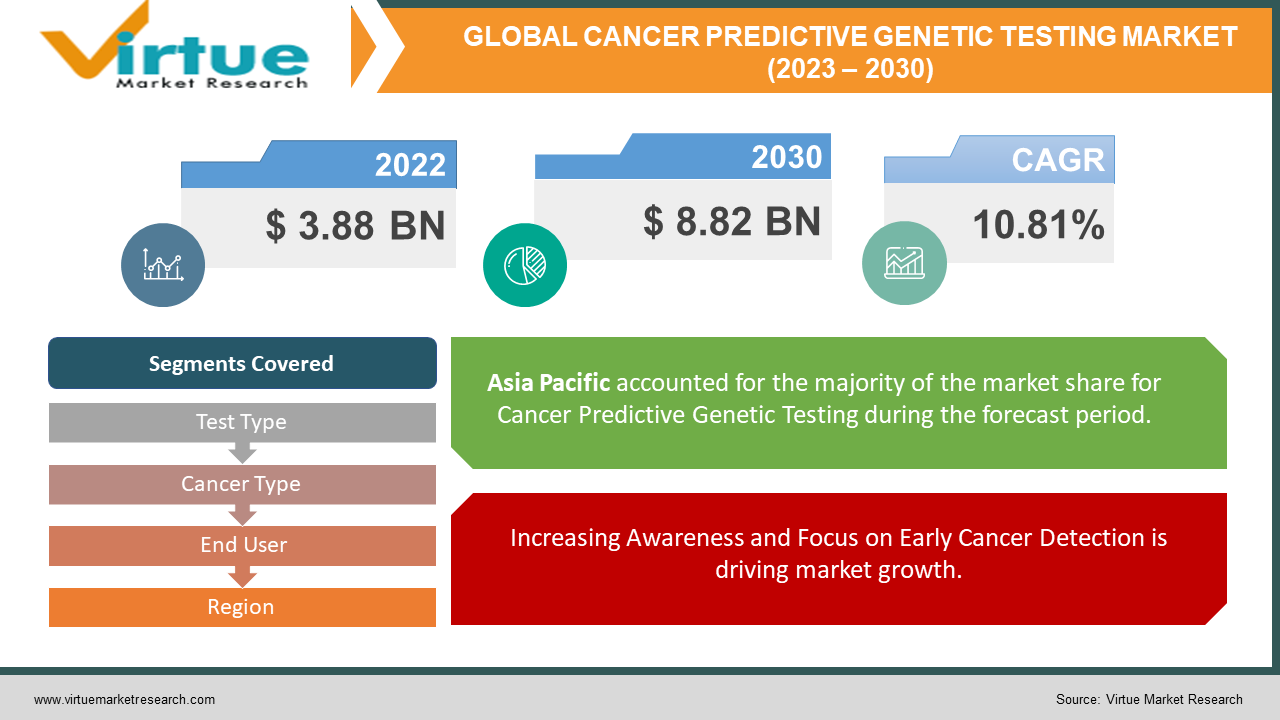
Global Cancer Predictive Genetic Testing Market is estimated to be worth USD 3.88 Billion in 2022 and is projected to reach a value of USD 8.82 Billion by 2030, growing at a CAGR of 10.81% during the outlook period 2023-2030.
The rising incidence of cancer and a better understanding of how genetics plays a role in its development has led to considerable growth and developments in the market for cancer-predictive genetic testing in recent years. Complex genetic and environmental factors have a role in the development of cancer. Genetic testing is essential for identifying those who are more likely to get a certain type of cancer, allowing for early detection, prevention, and individualized treatment plans. An individual's DNA is examined for particular gene mutations or variants linked to an increased risk of developing cancer as part of cancer-predictive genetic testing. Somatic testing and germline testing are the two main types of genetic testing techniques employed. Somatic testing explores genetic changes within tumor cells to inform targeted therapy, whereas germline testing looks at inherited gene mutations that potentially raise the risk of cancer.
Due to the rising incidence of the disease, technical breakthroughs, and a greater awareness of the genetic underpinnings of the condition, the market for cancer-predictive genetic testing has seen impressive growth. Genetic testing provides useful information about a person's propensity for developing cancer, enabling early detection, prevention, and individualized treatment plans. To fully utilize genetic testing in the battle against cancer, however, issues with data interpretation, genetic counselling, and ethical issues must be resolved.
Global Cancer Predictive Genetic Testing Market Drivers:
Increasing Awareness and Focus on Early Cancer Detection is driving market growth.
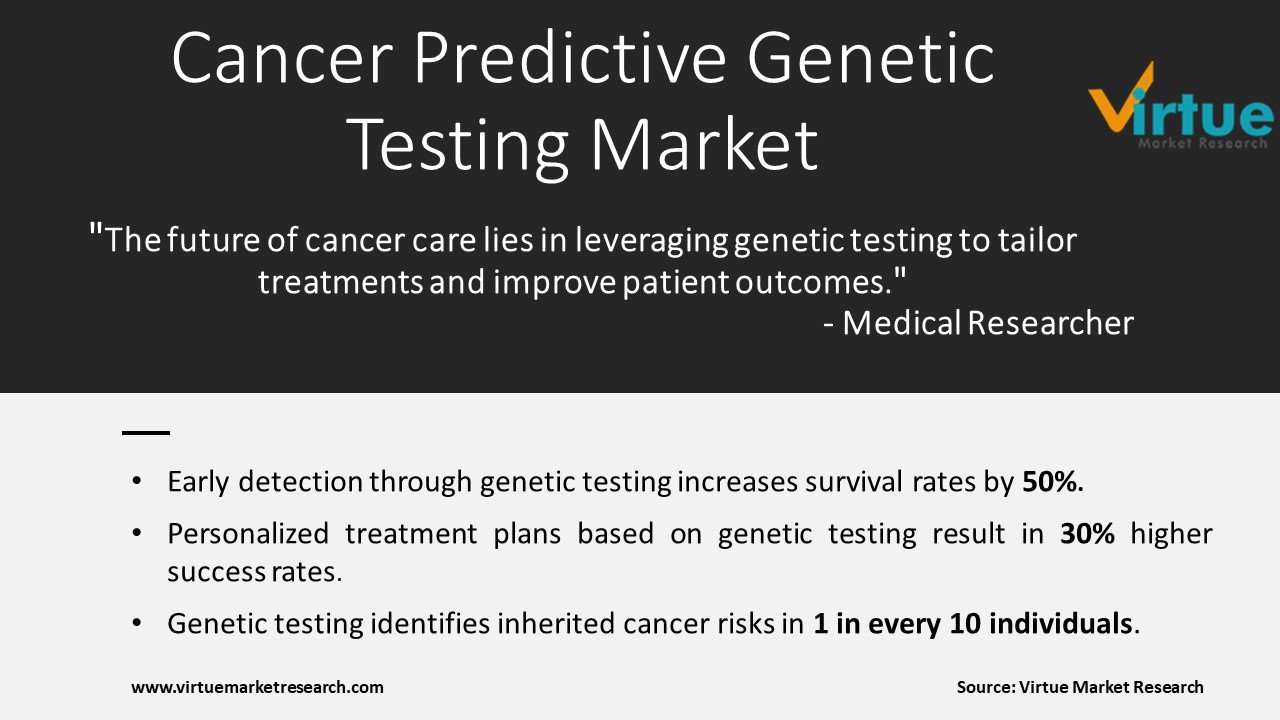
The growing awareness of and emphasis on early cancer detection is one of the key factors behind the growth of the global market for cancer-predictive genetic testing. Cancer incidence is rising globally, and early detection is becoming more important because treatment outcomes are often better when the disease is caught early. Genetic testing is essential for identifying people who are more likely to get particular cancers, allowing for pre-emptive treatments like increased surveillance, preventive procedures, or lifestyle changes. People are actively looking for genetic testing services to determine their risk of cancer as knowledge of the value of early detection continues to rise. The advantages of genetic testing are also being promoted by healthcare organizations and providers, which is increasing usage. The market is expanding further as governments and healthcare organizations establish cancer screening programs that involve genetic testing as a crucial component.
Technological Advancements in Genetic Sequencing Technologies are supporting and driving market expansion.
Another significant factor driving the growth of the global market for cancer-predictive genetic testing is technological advancements in genetic sequencing technology. DNA sequencing methods have significantly improved over time, particularly with the emergence of next-generation sequencing (NGS) technologies. Large volumes of genomic data may be quickly and affordably analyzed with NGS, enabling thorough genetic testing and analysis. Genetic testing has undergone a revolution because of NGS, which offers improved accuracy, sensitivity, and scalability. The variety of genetic testing available has increased as a result of the easier discovery of new cancer-related genes and genetic variants linked to cancer risk. Additionally, NGS has increased the population's access to genetic testing, enabling healthcare professionals to deliver testing services that are both affordable and effective.
Global Cancer Predictive Genetic Testing Market Challenges:
The interpretation and management of the enormous amount of genetic data produced by genetic testing is a significant difficulty in the global industry for cancer-predictive genetic testing. Complex data generated by genetic testing necessitates knowledge of genetics and bioinformatics to be correctly interpreted and to yield useful conclusions. In the process of analyzing genetic data, pertinent gene mutations or variations are found, their effects on cancer risk are evaluated, and based on the findings, the right counseling and advice are given. The difficulty lies in accurately and quickly processing and interpreting this data so that medical practitioners can make wise judgments and give individuals undergoing genetic testing individualized care.
COVID-19 Impact on Global Cancer Predictive Genetic Testing Market:
The global market for cancer predictive genetic testing has benefited from the COVID-19 pandemic's faster adoption of telemedicine and remote healthcare services. Healthcare practitioners are increasingly using telehealth platforms to provide genetic counseling and testing services due to limitations on in-person visits and the requirement to preserve social distance. This change has made genetic testing more convenient and accessible by enabling people to get tested in the privacy and comfort of their own homes. The demand for cancer prediction genetic testing has increased as a result of the pandemic's emphasis on the need for early identification and prevention. The global market for cancer prediction genetic testing has faced various obstacles as a result of the COVID-19 epidemic. Genetic testing has temporarily been interrupted as a result of the pandemic's management taking up more healthcare resources and priorities. The availability and provision of genetic testing services have been hampered by the closure of genetic testing laboratories, disruptions in the supply chain, and restricted access to healthcare facilities. Additionally, the affordability and uptake of genetic testing have been impacted by economic uncertainty and budgetary restraints encountered by individuals and healthcare systems, potentially slowing market growth during the pandemic.
Global Cancer Predictive Genetic Testing Market Recent Developments:
In June 2022, ColoClear, a non-invasive stool DNA test created by Prenetics Group Limited, can identify colorectal cancer's early warning symptoms. Based on clinical research, this at-home screening technology provides a simple substitute for colonoscopy, with a sensitivity of 96% in detecting colorectal cancer and 64% in detecting advanced adenoma. The National Medical Products Administration (NMPA) has only authorized ColoClear, a cancer screening test that combines stool DNA technology with a fecal immunochemical test (FIT). With 15.8% of all new cancer cases in Hong Kong in 2019, colorectal cancer is the second most prevalent malignancy. ColoClear has been introduced thanks to a partnership between Prenetics and New Horizon Health.
In March 2022, a comprehensive cancer test that uses a single tissue sample to evaluate a wide range of tumor genes has been made available in Europe by leading genome sequencing company Illumina. This test has the potential to assist people with rare illnesses by identifying relevant treatment options depending on each patient's genetic profile. Illumina claims that this test scans for more mutations than current kits, satisfying the growing demand for better diagnostic tools in the pharmaceutical industry's precision oncology projects. This test's debut is in keeping with the industry's focus on developing specialized medicines for particular patient populations.
CANCER PREDICTIVE TESTING MARKET REPORT COVERAGE:
REPORT METRIC
DETAILS
Market Size Available
2022 - 2030
Base Year
2022
Forecast Period
2023 - 2030
CAGR
10.81%
Segments Covered
By Test Type, Cancer Type, End User, and Region
Various Analyses Covered
Global, Regional & Country Level Analysis, Segment-Level Analysis, DROC, PESTLE Analysis, Porter’s Five Forces Analysis, Competitive Landscape, Analyst Overview on Investment Opportunities
Regional Scope
North America, Europe, APAC, Latin America, Middle East & Africa
Global Cancer Predictive Genetic Testing Market Segmentation:
Global Cancer Predictive Genetic Testing Market Segmentation: By Test Type
Germline Testing
Somatic Testing
Germline testing and somatic testing are the two test types that can be used to segment the global market for cancer-predictive genetic testing. Somatic testing focuses on genetic changes within tumor cells to inform targeted therapy, whereas germline testing examines inherited gene mutations that potentially raise the chance of getting cancer. Because it can identify people who are more likely to have cancer, enabling preventive measures and individualized treatment options, chromosomal testing has a substantial market share. The identification of specific gene variants linked to increased cancer risk, such as the BRCA1 and BRCA2 mutations for breast and ovarian cancer, is one of the main findings from germline testing. By detecting genetic changes in tumor cells, somatic testing, on the other hand, is essential in guiding targeted therapy. It aids in determining the best course of treatment and keeping track of its effectiveness. Somatic testing is gaining ground while germline testing continues to rule the industry thanks to developments in precision medicine and targeted cancer medicines.
Global Cancer Predictive Genetic Testing Market Segmentation: By Cancer Type
Breast Cancer
Colorectal Cancer
Ovarian Cancer
Other Cancer Types
Based on the kind of cancer, the global market for cancer-predictive genetic testing may be divided into segments for breast cancer, colorectal cancer, ovarian cancer, and other cancer types. Due to the high frequency and knowledge of hereditary abnormalities like BRCA1 and BRCA2, which raise the risk of breast cancer, breast cancer accounts for a sizable portion of the market. Early detection, individualized treatment strategies, and preventive treatments including prophylactic surgeries are all made possible by genetic testing for breast cancer. Market share for colorectal cancer is also affected, and genetic testing helps to identify those who have inherited mutations like Lynch syndrome. The goal of ovarian cancer genetic testing is to find mutations like BRCA1 and BRCA2, which enables people to make educated decisions regarding preventive measures. To understand risk factors, direct treatment choices, and discover potential hereditary components, genetic testing is becoming increasingly important for other cancer forms, which include a variety of malignancies. Based on the prevalence, awareness, and developments in genetic research for each distinct cancer type, the market share differs among cancer kinds.
Global Cancer Predictive Genetic Testing Market Segmentation: By End-User
Hospitals and Clinics
Diagnostic Laboratories
Research Institutes
Hospitals and clinics, diagnostic laboratories, and research institutions make up the three end-user categories that make up the global market for cancer-predictive genetic testing. As the main suppliers of healthcare and providers of a variety of genetic testing services, including cancer-predictive genetic testing, hospitals, and clinics hold a substantial market share. These facilities have the setup, know-how, and tools required to carry out genetic testing and give patients all-encompassing care. Due to their expertise in genetic testing services and availability of precise and dependable testing solutions, diagnostic laboratories also enjoy a sizable market share. They are essential in the processing of genetic material, data analysis, and delivery of test findings to patients and healthcare professionals. To understand risk factors, direct treatment choices, and discover potential hereditary components, genetic testing is becoming increasingly important for other cancer forms, which include a variety of malignancies. Based on the prevalence, awareness, and developments in genetic research for each distinct cancer type, the market share differs among cancer kinds.
Global Cancer Predictive Genetic Testing Market Segmentation: By Region
North America
Europe
Asia Pacific
South America
Middle East & Africa
North America, Europe, Asia Pacific, South America, and the Middle East & Africa are the regions into which the global market for cancer predictive genetic testing can be divided. Due to its established healthcare infrastructure, high adoption of cutting-edge genetic testing technologies, and rising awareness of cancer risk assessment, North America maintains a sizable market share. With an emphasis on projects in genetic research and personalized treatment, Europe also provides a sizeable portion of the market. The increased incidence of cancer, better healthcare infrastructure, and greater public knowledge of the advantages of genetic testing are all contributing factors to the Asia Pacific region's market's rapid expansion. Despite having lesser market shares, South America and the Middle East & Africa are expanding due to rising cancer occurrences, increased healthcare infrastructure investment, and government programs to increase access to genetic testing services. The market is now dominated by North America and Europe, but in the years to come, the Asia-Pacific region is anticipated to present considerable potential opportunities.
Global Cancer Predictive Genetic Testing Market Key Players:
23&Me Inc.
Abbott Laboratories
Myriad Genetics Inc.
Danaher Corporation
Illumina Inc.
DiaSorin Spa (Luminex Corporation)
BioRad Laboratories Inc.
PerkinElmer Inc.
Quest Diagnostics Incorporated
F. Hoffmann-La Roche Ltd
To Learn more about this report,
Global automotive lighting refers to all vehicle lighting systems, from headlamps that illuminate the road to taillights that communicate movements. They guarantee motorists and other road users alike safety, visibility, and style. While taillights frequently use LEDs for improved visibility, headlights are available in a variety of technologies, including LED and laser. Interior illumination, DRLs, and signal lights all have a role to play. This market, which was estimated to be worth $33.64 billion in 2022, is anticipated to rise to $67.39 billion by 2030 because of laws, luxury tastes, safety concerns, and technological developments like OLED taillights and adaptive headlights. Anticipate a future dominated by intelligent, connected, personalized, and sustainable lighting systems that enhance the safety, efficiency, and aesthetic appeal of automobiles.
Key Market Insights:
Car lighting works its magic to provide safety, visibility, and style. Headlights cut through the night, taillights express intent, and interiors shine with comfort. The billion-dollar global business is expected to rise due to consumer demand for high-end experiences, safer roads, and cutting-edge technology. Imagine dynamic messages being painted by taillights, headlights that adjust to the road, and interiors that customize their atmosphere. Driven by technological advancements like linked systems and laser beams, this future is calling. Anticipate even more visually attractive, environmentally friendly, and intelligent lighting to illuminate the way ahead, making cars safer, more efficient, and unquestionably cooler.
Global Automotive Lighting Market Drivers:
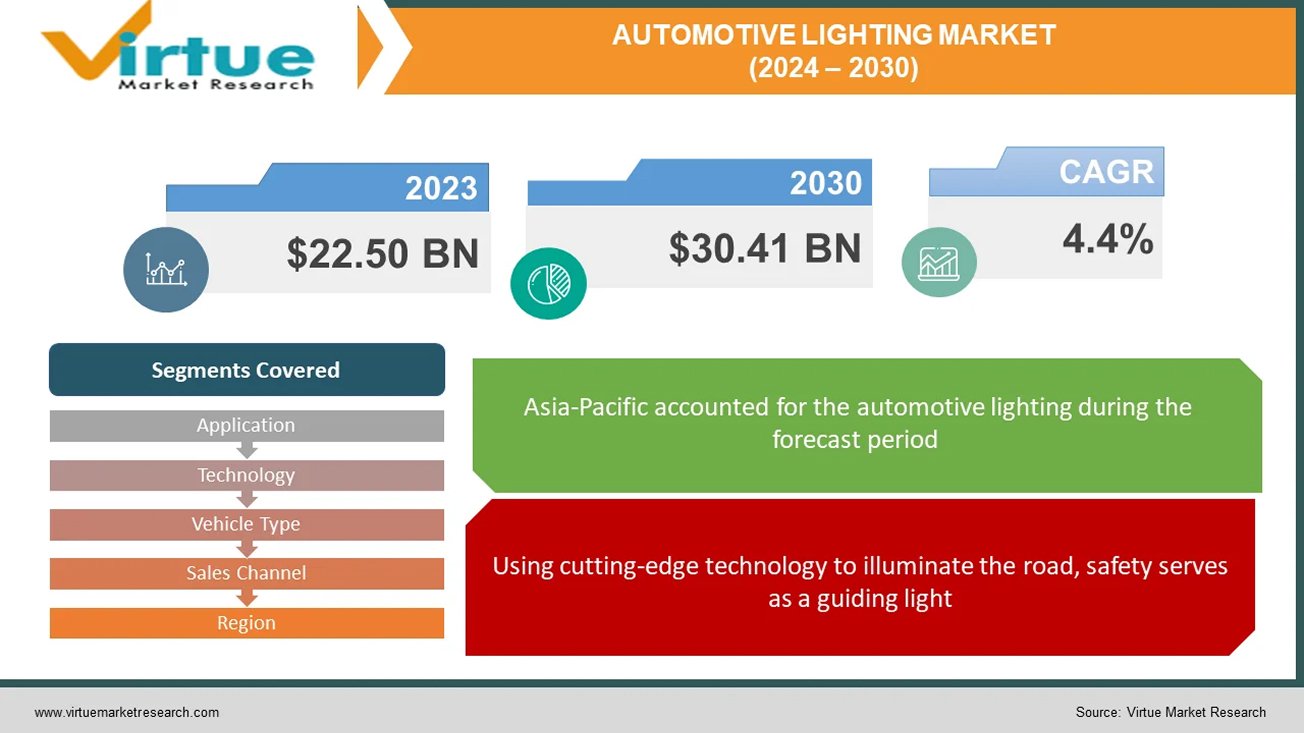
Using cutting-edge technology to illuminate the road, safety serves as a guiding light.
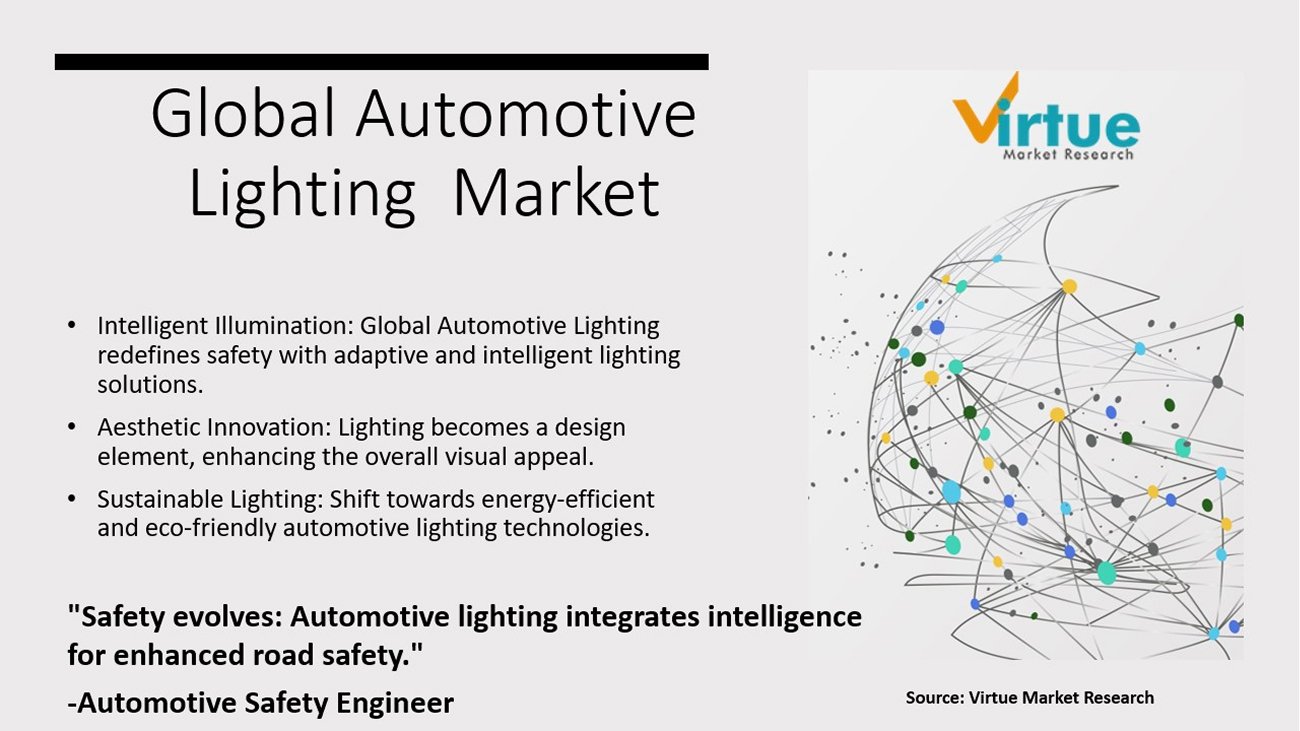
In the market for automobile lighting, safety is the driving force behind demand from the public and laws. While automated high beams smoothly react to traffic, adaptive headlights modify their beams so as not to blind other people. With visually striking displays, dynamic taillights convey intentions for braking and turning. Beyond these developments, integrated pedestrian identification and lane departure alerts will soon make roads safer and brighter for everyone.
Beyond Performance-Based Luxuries Redefined by Light.
Luxurious automobile lighting creates a distinct visual identity that goes beyond simple illumination. Personalized interior lighting customizes the driving experience by setting the mood with a range of colours and intensities, while intricate designs and distinctive DRLs modify exteriors. As you approach your automobile at night, welcoming lights lead the way, resulting in an interior that is perfectly lit. Not only is this symphony of light aesthetically pleasing, but it also stands as a tribute to luxury. Upcoming developments like gesture-controlled lighting and holographic displays promise to further enhance the experience.
Fuel Efficiency Takes the Lead: Illuminating Sustainability
The worldwide automotive lighting market is undergoing a significant transition towards energy-efficient solutions, as environmental concerns gain prominence. LED technology is leading the way, providing a ray of hope for the environment and drivers alike. LED lights beam brighter and use a lot less energy than conventional halogen lamps. There are some tangible advantages to this. For drivers, this translates to increased fuel economy, which lowers petrol prices and lessens reliance on fossil fuels. Greater air quality and a reduction in the transport sector's contribution to climate change are the results of reduced overall emissions.
To Learn more about this report,
Global Automotive Lighting Market Restraints and Challenges:
Although the global automotive lighting business is booming, there are still unknowns. Difficulties impede growth even as innovation propels it with eye catching features like laser beams and adaptable headlights. These technologies are luxury items due to their high cost and difficult integration, which puts producers' abilities to the test. The worldwide patchwork created by unclear legislation limits the potential of innovation. Durability issues persist, particularly when complex systems are subjected to challenging conditions. Ultimately, a lot of drivers still don't fully understand how these improvements can help them. Together, we can overcome these obstacles. The keys to reducing costs are improved production, more seamless integration, and unified regulations. Their full potential can be realized by educating customers about the safety, efficiency, and aesthetic value of these lighting wonders. By working together, we can pave the way for an even brighter and safer future for vehicle lighting.
Global Automotive Lighting Market Opportunities:
It is made possible by advanced LED technology, which gives drivers the ability to customize their illumination for the highest level of comfort and flair. Consumers that care about the environment want greener products, and vehicle lighting complies. While solar- and self-powered lighting technologies offer a future powered by clean energy, energy-efficient LEDs lower pollution. The advent of connected lighting systems heralds a new age. Envision automobiles interacting with infrastructure and one another to minimize accidents and enhance traffic efficiency. Integrated headlights with pedestrian recognition provide unmatched safety, while dramatic taillights with eye-catching displays alert onlookers to your intentions. The possibilities are endless in the future. Gesture-controlled interior illumination, holographic displays projected onto the road, and even light fixtures with self-healing capabilities.
AUTOMOTIVE LIGHTING MARKET REPORT COVERAGE:
To Learn more about this report,
Global Automotive Lighting Market Segmentation: By Application
Exterior Lighting
Interior Lighting
Due to laws requiring safety features like headlights, taillights, and brake lights, exterior lighting presently holds the most market share in the vehicle lighting industry. The dominance of this market is partly attributed to advancements in safety-focused technologies such as adaptive headlights and daytime running lights. The market value of external lighting is increased by the quick adoption of technology like LED bulbs and laser lights, which improve performance and aesthetics. Conversely, the interior lighting market is expected to increase at the fastest rate in the upcoming years. Innovations like ambient lighting and technology breakthroughs like LED and OLED displays, driven by consumer demand for comfort and personalisation, open new possibilities. The spread of sophisticated interior lighting systems is further driven by the growing emphasis on safety and the expansion of the luxury car market.
Global Automotive Lighting Market Segmentation: By Technology
Halogen
LED (Light-Emitting Diode)
Xenon
Emerging Technologies
The worldwide vehicle lighting market is currently dominated by halogen because of its more affordable price, advanced technology, and useful illumination. With its dependable supply chain and affordable option for manufacturers and cost-conscious customers, halogen holds the biggest market share. The fastest-growing market right now is LEDs, which are predicted to shortly overtake halogen. The rapid expansion of LEDs is driven by their higher efficiency, longer lifespan, flexibility in design, and technological breakthroughs including enhanced brightness. Because LEDs use less energy and produce fewer emissions and better fuel economy, they are becoming more and more popular in the changing automotive lighting market.
Global Automotive Lighting Market Segmentation: By Vehicle Type
Passenger Cars
Commercial Vehicles
Passenger automobiles rule the worldwide automotive lighting market. The sheer number of passenger cars produced which surpasses that of business vehicles and fuels the need for lighting systems is the primary cause of this popularity. The growing demand for personal automobiles in developing nations is a result of rising disposable income, which in turn drives the rise of the passenger car market. The importance that consumers place on safety and aesthetics elements helps to drive market expansion. But in the upcoming years, the market for electric and hybrid cars is expected to develop at the quickest rate. The exponential rise of the worldwide electric car market, which is still expanding and shows no signs of slowing down, is what is driving this surge. Specialised lighting solutions are required since electric and hybrid vehicles have different lighting requirements because of their specific functionality and design aesthetics.
Global Automotive Lighting Market Segmentation: By Sales Channel
OEM (Original Equipment Manufacturers)
Aftermarket
Most lighting systems sold nowadays are sold by OEMs (Original Equipment Manufacturers), primarily because manufacturers pre-install lighting systems in new cars. But in the next years, the aftermarket is expected to develop at the quickest rate. This spike in demand for replacement parts, especially lighting systems, can be linked to several variables, one of them being the average age of cars. The industry is expanding because of consumers' growing desire to personalise their cars with aftermarket lighting upgrades such LED upgrades and decorative lighting. The availability and affordability of technologies like adaptive headlights and laser lights in the aftermarket, together with other advancements in lighting technology, are driving demand even more. Moreover, the growing market for electric cars (EVs).
To Learn more about this report,
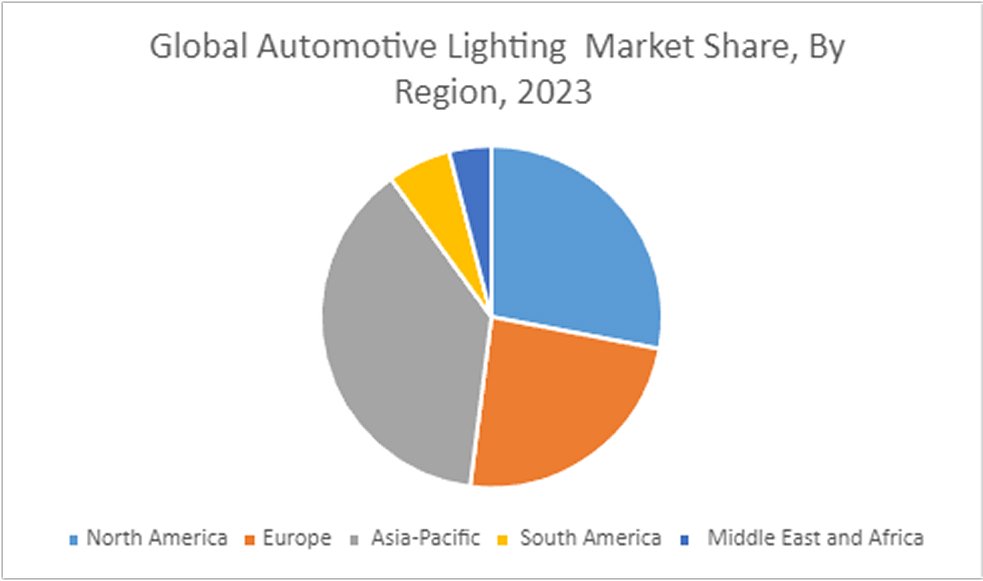
Global Automotive Lighting Market Segmentation: By Region
North America
Asia-Pacific
Europe
South America
Middle East and Africa
Throughout the forecast period, Asia Pacific is anticipated to be the automotive lighting market with the highest profitability. Over the past few years, Asia Pacific countries like China and India have seen notable increases in automotive manufacturing and sales, primarily in the medium-to premium luxury car segment. Asia Pacific is predicted to see an increase in the manufacturing of passenger cars, with India experiencing the strongest growth rate. Depending on the state of the national economy, the area offers a suitable selection of both high-end and cheap cars. For instance, there is a substantial demand for halogen, Xenon/HID, and LED since China and India produce more economy and mid-range automobiles. On the other hand, luxury car adoption rates are greater in South Korea and Japan, where LED lighting is the norm.
COVID-19 Impact Analysis on the Global Automotive Lighting Market:
A brief shadow was thrown by COVID-19 over the worldwide automotive lighting market. Production was stopped by lockdowns and supply chain disruptions, while luxury lighting upgrades were shelved by consumers on a tight budget. Resources became scarce, and R&D stagnated. Still, the market is recovering thanks to resurgent demand and rearranged priorities. While energy-efficient LEDs are being pushed towards adoption by sustainability, safety concerns are driving interest in features like pedestrian detection and adaptive headlights. The digital push of the epidemic creates opportunities for intelligent, networked lighting systems that may interact with infrastructure and other cars. Ultimately, the industry is positioned to shine brighter, focused on safety, sustainability, and a connected future, even though the pandemic dimmed its brilliance.
Recent Trends and Developments in the Global Automotive Lighting Market:
A development collaboration between OSRAM Continental and REHAU aims to incorporate lighting into external components, providing automobile manufacturers with innovative lighting options that improve functionality and design flexibility. For rear combination lamps, Hella unveiled a revolutionary lighting innovation called Hella FlatLight technology. A Memorandum of Understanding (MoU) was signed by Samvardhana Motherson Automotive Systems Group BV (SMRPBV), a division of Motherson Group, and Marelli Automotive Lighting to investigate a technology collaboration focused on intelligently lighted external body components. Valeo debuted their revolutionary 360° lighting system at the Shanghai Auto Show. This technology surrounds the car with a band of light, projecting instantaneous, clear signs that other drivers can see from a distance. Pedestrians, cyclists, and scooter riders are especially susceptible to these signals
Fill out the form below and our team will get back to you shortly
FAQ's
The Global Cancer Predictive Genetic Testing Market was esteemed at USD 3.88 Billion in 2022 and is projected to a value of USD 8.82 Billion by 2030, growing at a fast CAGR of 10.81% during the forecast period 2023-2030
The Global Cancer Predictive Genetic Testing Market drives Increasing Awareness and Focus on Early Cancer Detection
The Segments under the Global Cancer Predictive Genetic Testing Market by Cancer Type are Breast Cancer, Colorectal Cancer, and Ovarian Cancer
China, Japan, South Korea, Singapore, and India are the most dominating countries in the Asia Pacific region for the Global Cancer Predictive Genetic Testing Market
23&Me Inc., Abbott Laboratories, and Myriad Genetics Inc. are the three major leading players in the Global Cancer Predictive Genetic Testing Market.
More related reports
Get expert-driven market research reports from a leading research partner to help you navigate the future of the global industry.
Report Code: VMR-18737 | Published Date: October 2025 | Format: Excel and PDF
The Radiation Therapy-based Glioblastoma Multiforme Treatment Market was valued at USD 3.72 billion in 2024 and is projected to reach a market size of USD 6.13 billion by the end of 2030. Over the forecast period of 2025...
Report Code: VMR-15695 | Published Date: August 2022 | Format: Excel and PDF
The Placental Stem Cell Therapy for Neurological Disorders Market was valued at USD 464.96 Million and is projected to reach a market size of USD 1,806.95 Million by the end of 2030. Over the forecast period of 2024-2030...
Report Code: VMR-18524 | Published Date: July 2025 | Format: Excel and PDF
The Insurance Market was valued at USD 10.11 trillion in 2024 and is projected to reach a market size of USD 14.65 trillion by the end of 2030. Over the forecast period of 2025-2030, the market is projected to grow at a...
Report Code: VMR-7325 | Published Date: July 2025 | Format: Excel and PDF
The Insomnia Market was valued at USD 3.76 billion in 2024 and is projected to reach a market size of USD 4.84 billion by the end of 2030. Over the forecast period of 2025-2030, the market is projected to grow at a CAGR...
Report Code: VMR-19021 | Published Date: January 2026 | Format: Excel and PDF
The Oncology Biologics Competitive Benchmarking Market was valued at USD 1.57 billion in 2025 and is projected to reach a market size of USD 2.42 billion by the end of 2030. Over the forecast period of 2026-2030, the mar...
“We received a complex piece of work for our niche market from Virtue Market research in short period of time. I appreciate the quality and content of the final files we received. Thanks for the support”
Medical Devices Company based in Europe
“We received a complex piece of work for our niche market from Virtue Market research in short period of time. I appreciate the quality and content of the final files we received. Thanks for the support”
Medical Devices Company based in Europe
“We received a complex piece of work for our niche market from Virtue Market research in short period of time. I appreciate the quality and content of the final files we received. Thanks for the support”
Medical Devices Company based in Europe
“We received a complex piece of work for our niche market from Virtue Market research in short period of time. I appreciate the quality and content of the final files we received. Thanks for the support”
Medical Devices Company based in Europe
“We received a complex piece of work for our niche market from Virtue Market research in short period of time. I appreciate the quality and content of the final files we received. Thanks for the support”
Medical Devices Company based in Europe
“We received a complex piece of work for our niche market from Virtue Market research in short period of time. I appreciate the quality and content of the final files we received. Thanks for the support”