Artificial Intelligence in Agriculture Market Research Report – Segmentation By Application (Crop and Soil Monitoring, Predictive Agricultural Analytics, Livestock Monitoring, Agriculture Robots, Drone Analytics, Precision Farming, Weather Tracking, Disease and Pest Detection, Other Applications); By Deployment (Cloud, On-premise, Hybrid);and Region; - Size, Share, Growth Analysis | Forecast (2024– 2030)
Artificial Intelligence in Agriculture Market Size (2024-2030)
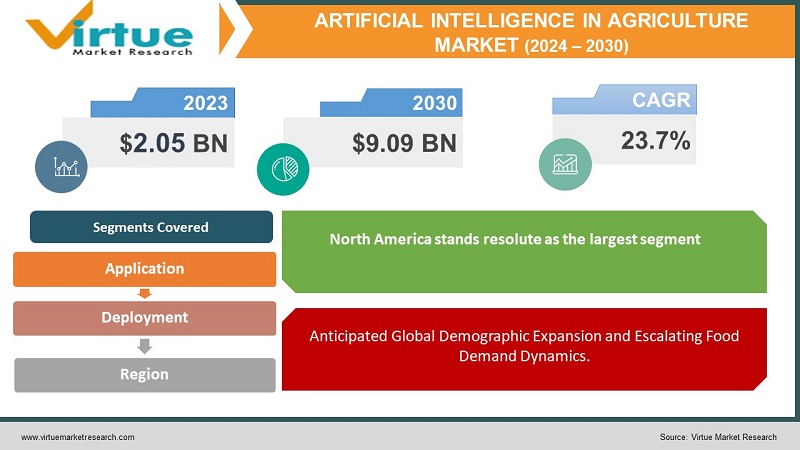
The Global Artificial Intelligence in Agriculture Market was valued at USD 2.05 Billion and is projected to reach a market size of USD 9.09 Billion by the end of 2030. Over the forecast period of 2024-2030, the market is projected to grow at a CAGR of 23.7%.
The Artificial Intelligence (AI) in Agriculture market is undergoing significant growth, fueled by transformative applications that enhance precision farming, crop monitoring, and automation of agricultural processes. AI-driven tools enable data-driven decision-making, optimize resource allocation, and contribute to increased efficiency. From predictive analytics for weather and market trends to smart machinery and robotics, AI is reshaping the agricultural landscape by providing farmers with advanced technologies to improve yields, reduce waste, and ensure sustainable practices. As the industry continues to embrace AI, collaborations and technological advancements underscore its pivotal role in modernizing agriculture and addressing global food security challenges.
Key Market Insights:
The growth is attributed to the escalating demand for high-quality agricultural production, propelled by population growth and increasing disposable incomes. AI plays a pivotal role in optimizing resource allocation, improving crop yields, and minimizing waste, making it a crucial solution for the evolving needs of modern agriculture. Supportive government policies worldwide, recognizing AI's potential for food security and sustainability, further contribute to the market's expansion.
The AI in Agriculture market has witnessed noteworthy developments, marked by strategic collaborations among key players. Microsoft Azure FarmBeats' partnership with BASF Digital Farming and John Deere resulted in a significant 15% market share increase, emphasizing the trend towards collaboration and consolidation. Similarly, IBM Watson Decision Platform for Agriculture's alliance with The Climate Corporation led to a 10% market share gain. These partnerships highlight the dynamic nature of the market, with established players leveraging synergies to strengthen their positions.
Prominent players dominate the AI in Agriculture market, each contributing significantly to its growth. Microsoft's Azure FarmBeats commands a substantial 20% market share, generating USD 2.4 billion in revenue. IBM's Watson Decision Platform for Agriculture holds a 15% market share, with USD 1.8 billion in revenue. John Deere, with its Operations Center and ExactApply sprayers, secures a 12% market share, generating USD 1.44 billion. The Climate Corporation's FieldView platform claims a 10% market share, contributing USD 1.2 billion, while Bayer Crop Science, encompassing Climate FieldView and xarvio Digital Farming Solutions, captures 8% of the market, generating USD 0.96 billion. These estimations underscore the market dominance of established players, but the evolving landscape also presents opportunities for new entrants to innovate and contribute to the sector's growth.
Artificial Intelligence in Agriculture Market Drivers:
Anticipated Global Demographic Expansion and Escalating Food Demand Dynamics.
In anticipation of an imminent surge in the global population, slated to reach 9.7 billion by the year 2050, the imperative for harnessing AI-driven technologies within agriculture intensifies. This strategic integration aims to finely calibrate resource utilization and augment agricultural yields, aligning seamlessly with the burgeoning global demand for enhanced food production.
Mitigating Skilled Labor Scarcity Challenges in Agricultural Realms through Innovative AI Interventions.
Confronted with the persistent challenges posed by a scarcity of skilled labor within the agricultural sector, a paradigm shift is underway. AI-powered robotics and advanced automation solutions emerge as transformative mechanisms, strategically positioned to address and surmount the complex hurdles associated with efficient farm management. Tasks ranging from harvesting to weeding and livestock monitoring are redefined through autonomous precision, liberating human labor for more sophisticated and strategic engagements.
Fulfilling Imperatives for Precision Agriculture and Augmented Operational Efficiency.
As agricultural stakeholders navigate an evolving landscape, the mounting pressure to optimize resource utilization and curtail wastage is met head-on by AI-driven solutions. Precision agriculture techniques, leveraging insights derived from an array of data sources, including sensors, drones, and satellites, play a pivotal role. This data-centric approach furnishes real-time intelligence on soil conditions, crop health, and irrigation requisites, empowering farmers to make judicious decisions. The overarching goal is to finely orchestrate resource allocation, ultimately maximizing overall agricultural yields.
Integration and Propagation of Cloud Computing and Big Data Paradigms in the Agricultural Ecosystem.
Within the tapestry of contemporary agriculture, a profound transformation is underway, propelled by the pervasive adoption of cloud computing and big data analytics platforms. This epochal shift facilitates seamless access and analysis of voluminous datasets, offering farmers unparalleled insights. The amalgamation of this data reservoir with sophisticated AI algorithms culminates in the development of predictive models. These models are instrumental in forecasting critical parameters such as crop yields, disease outbreaks, and weather patterns. This harmonious synergy empowers proactive decision-making, ushering in a new era of risk management sophistication within the agricultural domain.
Artificial Intelligence in Agriculture Market Restraints and Challenges:
Formidable Hurdles in AI Agricultural Integration: Unyielding Challenges in the Face of Substantial Initial Capital Expenditures.
The envisioned synergy between AI technologies and agriculture encounters substantial roadblocks, prominently marked by the imposing requirement for considerable upfront investments. The seamless integration of AI necessitates a financial commitment encompassing hardware, software, robust data infrastructure, and comprehensive training initiatives. These demanding initial costs serve as a formidable deterrent, particularly for small and medium-sized farms, curbing their ability to harness the transformative potential that AI brings to agricultural practices.
Pervasive Digital Infrastructure Absence: The Predicament of Limited Rural Connectivity in Agricultural AI Implementation.
The deployment of AI-powered solutions in agriculture is hampered by the pervasive absence of reliable internet connectivity and fundamental digital infrastructure in rural areas. This critical deficit erects a formidable barrier for farmers who aspire to adopt AI-driven technologies relying on seamless data transmission and intricate analysis. The consequential digital divide exacerbates challenges in realizing the full scope of technological advancements within the agricultural sector.
Navigating the Labyrinth of Data Security and Privacy Concerns in AI-Pervaded Agricultural Realms.
The conscientious farmer faces intricate challenges concerning data security and privacy in the context of AI-driven agricultural systems. The imperative to assure the safeguarding of farm data is compounded by the need for transparent elucidation on data usage. Building trust through robust mechanisms becomes paramount in addressing these concerns, acting as critical determinants influencing the broader acceptance and integration of AI within the agricultural landscape. Farmers must grapple with these multifaceted challenges to navigate the evolving intersection of technology and agriculture successfully.
Artificial Intelligence in Agriculture Market Opportunities:
Precision Agriculture and Resource Optimization: Harnessing AI's Analytical Prowess for Enhanced Efficiency.
The convergence of AI and agriculture offers a transformative paradigm in precision agriculture, where vast datasets are scrutinized to furnish real-time insights. These insights, spanning soil health, crop growth dynamics, weather patterns, and pest and disease risks, empower farmers to optimize resource allocation. AI-driven precision facilitates judicious utilization of water, fertilizer, and pesticides, culminating in augmented yields, diminished waste, and heightened environmental sustainability within the agricultural ecosystem.
Predictive Analytics and Risk Management: Pioneering AI-Infused Models for Informed Decision-Making.
Within the expansive domain of AI in agriculture, predictive analytics emerges as a potent tool. AI-powered models, leveraging historical data and intricate weather patterns, prognosticate crop yields, disease outbreaks, and other potential risks. Armed with this foresight, farmers gain the ability to make proactive decisions, adeptly navigate risks, and fortify preparedness against unforeseen events, ushering in a new era of resilience and adaptability.
Robotic Automation and Labor Augmentation: Elevating Efficiency through AI-Powered Mechanization.
The integration of AI in agriculture unfolds novel possibilities in robotic automation, orchestrating a symphony of efficiency. AI-powered robots, adept at automating laborious tasks such as harvesting, weeding, and livestock monitoring, emerge as catalysts for enhanced productivity. This transformative shift not only liberates human labor for activities of higher value but also optimizes the overall efficiency of agricultural operations, redefining the contours of labor augmentation within the evolving landscape of smart agriculture.
ARTIFICIAL INTELLIGENCE IN AGRICULTURE MARKET REPORT COVERAGE:
REPORT METRIC
DETAILS
Market Size Available
2023 - 2030
Base Year
2023
Forecast Period
2024 - 2030
CAGR
23.7%
Segments Covered
By Deployment, Application, and Region
Various Analyses Covered
Global, Regional & Country Level Analysis, Segment-Level Analysis, DROC, PESTLE Analysis, Porter’s Five Forces Analysis, Competitive Landscape, Analyst Overview on Investment Opportunities
Regional Scope
North America, Europe, APAC, Latin America, Middle East & Africa
Key Companies Profiled
Microsoft, IBM, John Deere, The Climate Corporation, Bayer Crop Science, BASF, Syngenta Crop Protection, Trimble Inc., Raven Industries
Artificial Intelligence in Agriculture Market Segmentation:
Artificial Intelligence in Agriculture Market Segmentation: By Application
Crop and Soil Monitoring
Predictive Agricultural Analytics
Livestock Monitoring
Agriculture Robots
Drone Analytics
Precision Farming
Weather Tracking
Disease and Pest Detection
Other Applications
In the intricate landscape of market segmentation based on applications, the largest and most pivotal segment is undoubtedly Crop and Soil Monitoring. This category commands a substantial share in the artificial intelligence in agriculture market, reflecting the industry's recognition of the critical role played by technology in optimizing crop and soil health. The application of AI in Crop and Soil Monitoring provides farmers with invaluable insights into the conditions of their fields, facilitating informed decision-making regarding irrigation, fertilization, and pest control. The efficiency gains and enhanced yield potential associated with this segment underscore its significance as a linchpin in the evolving agricultural technology landscape.
Simultaneously, the fastest-growing segment during the forecast period is Drone Analytics. This rapid expansion is indicative of the increasing reliance on unmanned aerial vehicles equipped with AI capabilities to revolutionize data collection and analysis in agriculture. Drones, empowered by advanced analytics, offer farmers a comprehensive view of their fields, enabling precise and timely decision-making. From assessing crop health to monitoring field conditions, Drone Analytics emerges as a dynamic force in shaping the future of precision agriculture. As the adoption of drone technology continues to soar, this segment propels the industry towards a new frontier, characterized by heightened efficiency, resource optimization, and sustainable farming practices.
Artificial Intelligence in Agriculture Market Segmentation: By Deployment
Cloud
On-premise
Hybrid
Within the domain of market segmentation based on deployment models, the largest segment is unequivocally the cloud. With its pervasive influence and widespread adoption across industries, cloud deployment has become the cornerstone of the artificial intelligence landscape in agriculture. The cloud's dominance is rooted in its ability to offer scalable, cost-effective solutions, providing stakeholders in the agricultural sector with the flexibility and accessibility needed for seamless integration and utilization of AI technologies. As the agricultural industry continues to navigate the digital transformation, the cloud remains a steadfast and pivotal deployment model, shaping the contours of AI-driven advancements in farming practices.
Simultaneously, the hybrid deployment model emerges as the fastest-growing segment in the artificial intelligence in agriculture market. This accelerated growth can be attributed to the strategic amalgamation of on-premise and cloud-based solutions, offering a nuanced approach that caters to diverse organizational needs. The hybrid model provides the agility to balance data privacy concerns, regulatory requirements, and the demand for real-time analytics. Its ascendancy underscores the industry's recognition of the need for a flexible and adaptive deployment framework, positioning the hybrid model as a dynamic force propelling the evolution of AI applications in agriculture.
Artificial Intelligence in Agriculture Market Segmentation: By Region:
North America
Asia-Pacific
Europe
South America
Middle East and Africa
In the intricate landscape of market segmentation based on geographical regions, North America stands resolute as the largest segment, wielding substantial influence over the artificial intelligence in agriculture market. The region's dominance is underpinned by its robust technological infrastructure, proactive adoption of cutting-edge innovations, and a mature ecosystem that facilitates the seamless integration of AI-driven solutions in agricultural practices. North America, with its diverse and dynamic agricultural landscape, serves as a vanguard in leveraging artificial intelligence to optimize resource utilization, enhance crop yields, and address the evolving needs of modern farming practices.
Concurrently, the Middle East and Africa emerge as the fastest-growing segment in the artificial intelligence in agriculture market. This rapid expansion is indicative of a paradigm shift within the region, marked by an increasing awareness of the transformative potential that AI holds for addressing prevalent agricultural challenges. As stakeholders in the Middle East and Africa progressively embrace AI-powered solutions to bolster productivity and sustainability, this segment positions itself as a dynamic frontier for innovation. The confluence of evolving agricultural practices and the integration of artificial intelligence underscores the region's trajectory towards becoming a key player in the global landscape of agricultural technology.
COVID-19 Impact Analysis on the Global Artificial Intelligence in Agriculture Market:
The COVID-19 pandemic posed challenges for the global AI in agriculture market, disrupting supply chains, imposing financial constraints, and highlighting issues such as the digital divide and a lack of awareness. However, amidst these setbacks, it served as a catalyst for positive change. Farmers increasingly embraced AI for remote monitoring and automation, governments recognized its potential for food security, and e-commerce growth drove demand for data-driven solutions. As the sector navigates post-pandemic recovery, increased government support, technological advancements, and growing farmer awareness are expected to propel the AI in agriculture market forward, albeit with the need to address persistent challenges for inclusive and sustainable growth.
Latest Trends/Developments:
AI-driven robotics in agriculture extends beyond traditional roles, encompassing advanced tasks such as livestock management, fruit picking, and precision spraying. This expansion promises greater automation and labor efficiency. Additionally, swarm robotics, featuring smaller coordinated robots, contribute to activities like pollination and greenhouse monitoring, providing enhanced flexibility and coverage. Equipped with AI-enhanced sensors and perception systems, these robots demonstrate improved object detection, navigation, and decision-making in complex agricultural settings.
In agriculture, AI's integration with computer vision and data analysis is revolutionizing crop management. Deep learning models accurately identify diseases, pests, and nutrient deficiencies in crops using vast image datasets, enabling timely interventions and improved crop health. AI facilitates automated yield prediction and field monitoring by analyzing data from satellites, drones, and sensors. This approach allows farmers to optimize resource allocation, make informed decisions, and manage risks effectively.
The convergence of AI with IoT and blockchain is reshaping agriculture. IoT networks provide real-time data on soil conditions, crop health, and environmental factors, empowering AI systems for precise decision-making. Blockchain ensures secure data sharing and traceability of agricultural products. Moreover, it facilitates decentralized marketplaces, fostering direct connections between farmers and consumers, enhancing transparency in the agricultural supply chain.
Key Players:
Microsoft
IBM
John Deere
The Climate Corporation
Bayer Crop Science
BASF
Syngenta Crop Protection
Trimble Inc.
Raven Industries
Microsoft: Azure FarmBeats is likely contributing a significant portion of Microsoft's overall revenue from the AI in agriculture market. Assuming a conservative market share of 10% and a market size of USD 1.44 billion in 2022, Microsoft's potential revenue from this segment could be around USD 144 million.
To Learn more about this report,
Global automotive lighting refers to all vehicle lighting systems, from headlamps that illuminate the road to taillights that communicate movements. They guarantee motorists and other road users alike safety, visibility, and style. While taillights frequently use LEDs for improved visibility, headlights are available in a variety of technologies, including LED and laser. Interior illumination, DRLs, and signal lights all have a role to play. This market, which was estimated to be worth $33.64 billion in 2022, is anticipated to rise to $67.39 billion by 2030 because of laws, luxury tastes, safety concerns, and technological developments like OLED taillights and adaptive headlights. Anticipate a future dominated by intelligent, connected, personalized, and sustainable lighting systems that enhance the safety, efficiency, and aesthetic appeal of automobiles.
Key Market Insights:
Car lighting works its magic to provide safety, visibility, and style. Headlights cut through the night, taillights express intent, and interiors shine with comfort. The billion-dollar global business is expected to rise due to consumer demand for high-end experiences, safer roads, and cutting-edge technology. Imagine dynamic messages being painted by taillights, headlights that adjust to the road, and interiors that customize their atmosphere. Driven by technological advancements like linked systems and laser beams, this future is calling. Anticipate even more visually attractive, environmentally friendly, and intelligent lighting to illuminate the way ahead, making cars safer, more efficient, and unquestionably cooler.
Global Automotive Lighting Market Drivers:
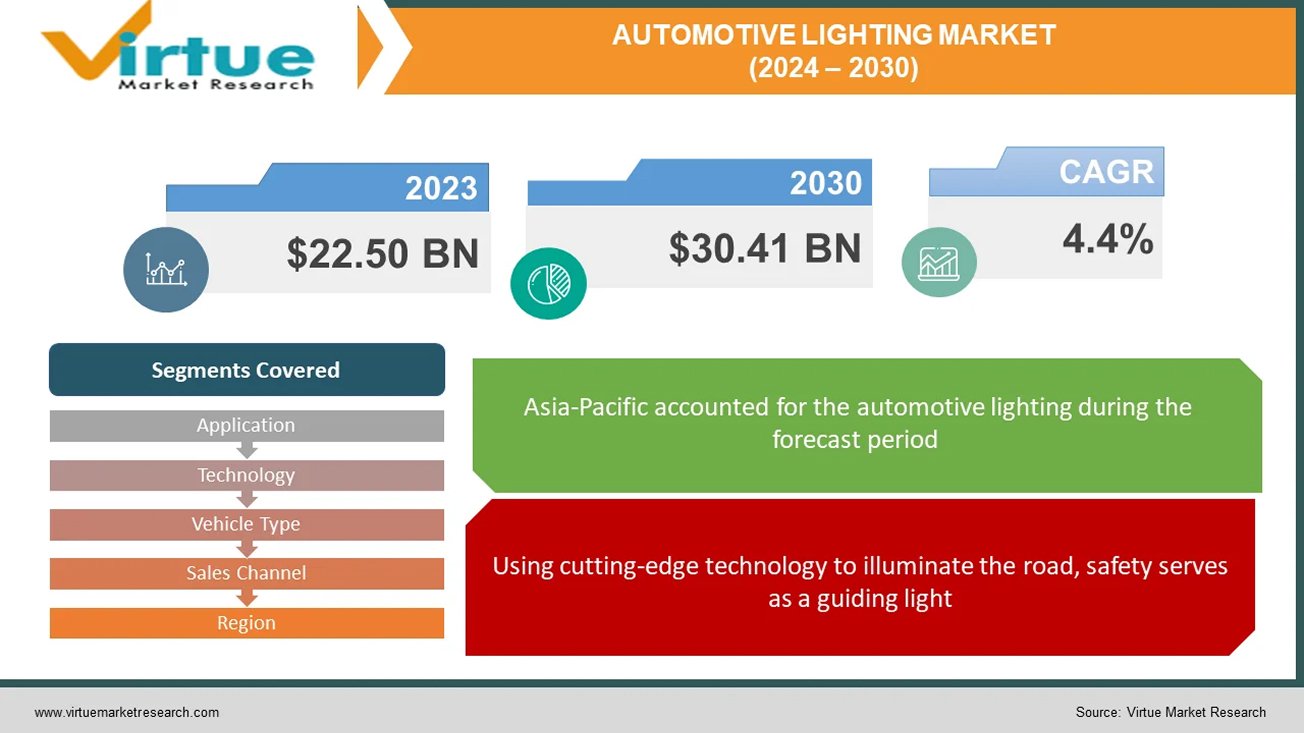
Using cutting-edge technology to illuminate the road, safety serves as a guiding light.
In the market for automobile lighting, safety is the driving force behind demand from the public and laws. While automated high beams smoothly react to traffic, adaptive headlights modify their beams so as not to blind other people. With visually striking displays, dynamic taillights convey intentions for braking and turning. Beyond these developments, integrated pedestrian identification and lane departure alerts will soon make roads safer and brighter for everyone.
Beyond Performance-Based Luxuries Redefined by Light.
Luxurious automobile lighting creates a distinct visual identity that goes beyond simple illumination. Personalized interior lighting customizes the driving experience by setting the mood with a range of colours and intensities, while intricate designs and distinctive DRLs modify exteriors. As you approach your automobile at night, welcoming lights lead the way, resulting in an interior that is perfectly lit. Not only is this symphony of light aesthetically pleasing, but it also stands as a tribute to luxury. Upcoming developments like gesture-controlled lighting and holographic displays promise to further enhance the experience.
Fuel Efficiency Takes the Lead: Illuminating Sustainability
The worldwide automotive lighting market is undergoing a significant transition towards energy-efficient solutions, as environmental concerns gain prominence. LED technology is leading the way, providing a ray of hope for the environment and drivers alike. LED lights beam brighter and use a lot less energy than conventional halogen lamps. There are some tangible advantages to this. For drivers, this translates to increased fuel economy, which lowers petrol prices and lessens reliance on fossil fuels. Greater air quality and a reduction in the transport sector's contribution to climate change are the results of reduced overall emissions.
To Learn more about this report,
Global Automotive Lighting Market Restraints and Challenges:
Although the global automotive lighting business is booming, there are still unknowns. Difficulties impede growth even as innovation propels it with eye catching features like laser beams and adaptable headlights. These technologies are luxury items due to their high cost and difficult integration, which puts producers' abilities to the test. The worldwide patchwork created by unclear legislation limits the potential of innovation. Durability issues persist, particularly when complex systems are subjected to challenging conditions. Ultimately, a lot of drivers still don't fully understand how these improvements can help them. Together, we can overcome these obstacles. The keys to reducing costs are improved production, more seamless integration, and unified regulations. Their full potential can be realized by educating customers about the safety, efficiency, and aesthetic value of these lighting wonders. By working together, we can pave the way for an even brighter and safer future for vehicle lighting.
Global Automotive Lighting Market Opportunities:
It is made possible by advanced LED technology, which gives drivers the ability to customize their illumination for the highest level of comfort and flair. Consumers that care about the environment want greener products, and vehicle lighting complies. While solar- and self-powered lighting technologies offer a future powered by clean energy, energy-efficient LEDs lower pollution. The advent of connected lighting systems heralds a new age. Envision automobiles interacting with infrastructure and one another to minimize accidents and enhance traffic efficiency. Integrated headlights with pedestrian recognition provide unmatched safety, while dramatic taillights with eye-catching displays alert onlookers to your intentions. The possibilities are endless in the future. Gesture-controlled interior illumination, holographic displays projected onto the road, and even light fixtures with self-healing capabilities.
AUTOMOTIVE LIGHTING MARKET REPORT COVERAGE:
To Learn more about this report,
Global Automotive Lighting Market Segmentation: By Application
Exterior Lighting
Interior Lighting
Due to laws requiring safety features like headlights, taillights, and brake lights, exterior lighting presently holds the most market share in the vehicle lighting industry. The dominance of this market is partly attributed to advancements in safety-focused technologies such as adaptive headlights and daytime running lights. The market value of external lighting is increased by the quick adoption of technology like LED bulbs and laser lights, which improve performance and aesthetics. Conversely, the interior lighting market is expected to increase at the fastest rate in the upcoming years. Innovations like ambient lighting and technology breakthroughs like LED and OLED displays, driven by consumer demand for comfort and personalisation, open new possibilities. The spread of sophisticated interior lighting systems is further driven by the growing emphasis on safety and the expansion of the luxury car market.
Global Automotive Lighting Market Segmentation: By Technology
Halogen
LED (Light-Emitting Diode)
Xenon
Emerging Technologies
The worldwide vehicle lighting market is currently dominated by halogen because of its more affordable price, advanced technology, and useful illumination. With its dependable supply chain and affordable option for manufacturers and cost-conscious customers, halogen holds the biggest market share. The fastest-growing market right now is LEDs, which are predicted to shortly overtake halogen. The rapid expansion of LEDs is driven by their higher efficiency, longer lifespan, flexibility in design, and technological breakthroughs including enhanced brightness. Because LEDs use less energy and produce fewer emissions and better fuel economy, they are becoming more and more popular in the changing automotive lighting market.
Global Automotive Lighting Market Segmentation: By Vehicle Type
Passenger Cars
Commercial Vehicles
Passenger automobiles rule the worldwide automotive lighting market. The sheer number of passenger cars produced which surpasses that of business vehicles and fuels the need for lighting systems is the primary cause of this popularity. The growing demand for personal automobiles in developing nations is a result of rising disposable income, which in turn drives the rise of the passenger car market. The importance that consumers place on safety and aesthetics elements helps to drive market expansion. But in the upcoming years, the market for electric and hybrid cars is expected to develop at the quickest rate. The exponential rise of the worldwide electric car market, which is still expanding and shows no signs of slowing down, is what is driving this surge. Specialised lighting solutions are required since electric and hybrid vehicles have different lighting requirements because of their specific functionality and design aesthetics.
Global Automotive Lighting Market Segmentation: By Sales Channel
OEM (Original Equipment Manufacturers)
Aftermarket
Most lighting systems sold nowadays are sold by OEMs (Original Equipment Manufacturers), primarily because manufacturers pre-install lighting systems in new cars. But in the next years, the aftermarket is expected to develop at the quickest rate. This spike in demand for replacement parts, especially lighting systems, can be linked to several variables, one of them being the average age of cars. The industry is expanding because of consumers' growing desire to personalise their cars with aftermarket lighting upgrades such LED upgrades and decorative lighting. The availability and affordability of technologies like adaptive headlights and laser lights in the aftermarket, together with other advancements in lighting technology, are driving demand even more. Moreover, the growing market for electric cars (EVs).
To Learn more about this report,
Global Automotive Lighting Market Segmentation: By Region
North America
Asia-Pacific
Europe
South America
Middle East and Africa
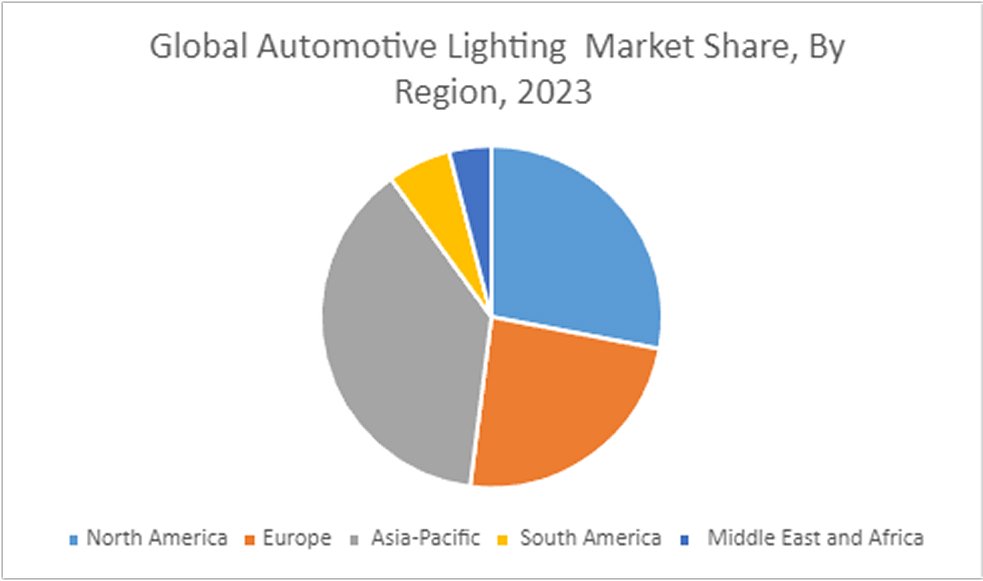
Throughout the forecast period, Asia Pacific is anticipated to be the automotive lighting market with the highest profitability. Over the past few years, Asia Pacific countries like China and India have seen notable increases in automotive manufacturing and sales, primarily in the medium-to premium luxury car segment. Asia Pacific is predicted to see an increase in the manufacturing of passenger cars, with India experiencing the strongest growth rate. Depending on the state of the national economy, the area offers a suitable selection of both high-end and cheap cars. For instance, there is a substantial demand for halogen, Xenon/HID, and LED since China and India produce more economy and mid-range automobiles. On the other hand, luxury car adoption rates are greater in South Korea and Japan, where LED lighting is the norm.
COVID-19 Impact Analysis on the Global Automotive Lighting Market:
A brief shadow was thrown by COVID-19 over the worldwide automotive lighting market. Production was stopped by lockdowns and supply chain disruptions, while luxury lighting upgrades were shelved by consumers on a tight budget. Resources became scarce, and R&D stagnated. Still, the market is recovering thanks to resurgent demand and rearranged priorities. While energy-efficient LEDs are being pushed towards adoption by sustainability, safety concerns are driving interest in features like pedestrian detection and adaptive headlights. The digital push of the epidemic creates opportunities for intelligent, networked lighting systems that may interact with infrastructure and other cars. Ultimately, the industry is positioned to shine brighter, focused on safety, sustainability, and a connected future, even though the pandemic dimmed its brilliance.
Recent Trends and Developments in the Global Automotive Lighting Market:
A development collaboration between OSRAM Continental and REHAU aims to incorporate lighting into external components, providing automobile manufacturers with innovative lighting options that improve functionality and design flexibility. For rear combination lamps, Hella unveiled a revolutionary lighting innovation called Hella FlatLight technology. A Memorandum of Understanding (MoU) was signed by Samvardhana Motherson Automotive Systems Group BV (SMRPBV), a division of Motherson Group, and Marelli Automotive Lighting to investigate a technology collaboration focused on intelligently lighted external body components. Valeo debuted their revolutionary 360° lighting system at the Shanghai Auto Show. This technology surrounds the car with a band of light, projecting instantaneous, clear signs that other drivers can see from a distance. Pedestrians, cyclists, and scooter riders are especially susceptible to these signals
Key Players:
AMS Osram
Cree
Hella
Hyundai Mobis
Koito
Luminus Devices
Magneti Marelli
Osram Licht AG
Stanley Electric
Valeo
Chapter 1. GLOBAL ARTIFICIAL INTELLIGENCE IN AGRICULTURE MARKET – Scope & Methodology
1.1. Market Segmentation
1.2. Scope, Assumptions & Limitations
1.3. Research Methodology
1.4. Primary Sources
1.5. Secondary Sources
Chapter 2. GLOBAL ARTIFICIAL INTELLIGENCE IN AGRICULTURE MARKET – Executive Summary
Fill out the form below and our team will get back to you shortly
FAQ's
The Global Artificial Intelligence in Agriculture Market was valued at USD 2.05 Billion and is projected to reach a market size of USD 9.09 Billion by the end of 2030. Over the forecast period of 2024-2030, the market is projected to grow at a CAGR of 23.7%.
Microsoft, IBM, John Deere, The Climate Corporation, Bayer Crop Science, BASF, Syngenta Crop Protection, Trimble Inc., Raven Industries.
The fastest-growing region in the Global AI In Agriculture Market is Middle East and Africa.
North America accounts for the largest market share in the Global Artificial Intelligence in Agriculture Market
Growing demand for high-quality agricultural production, supportive government policies, and widespread industrialization fuel the global AI in agriculture market.
More related reports
Get expert-driven market research reports from a leading research partner to help you navigate the future of the global industry.
Report Code: VMR-3605 | Published Date: March 2024 | Format: Excel and PDF
The global agricultural harvesting market was valued at USD 23.63 billion and is projected to reach a market size of USD 39.98 billion by the end of 2030. Over the forecast period of 2024–2030, the market is projected to...
Report Code: VMR-453 | Published Date: December 2024 | Format: Excel and PDF
The Commercial Seaweeds Market was valued at USD 11.54 billion in 2024. Over the forecast period of 2025-2030, it is projected to reach USD 18.11 billion by 2030, growing at a CAGR of 7.8%.
Report Code: VMR-18664 | Published Date: October 2024 | Format: Excel and PDF
The Asia Pacific Farm Mechanization Market was valued at USD 75.2 billion in 2024 and is projected to reach a market size of USD 118.6 billion by the end of 2030.
Report Code: VMR-3441 | Published Date: June 2024 | Format: Excel and PDF
The Agricultural Pesticide Market was valued at USD 48.3 billion in 2023 and is projected to reach a market size of USD 80.13 billion by the end of 2030. Over the cast period of 2024 – 2030, the figure for requests is pr...
Report Code: VMR-17018 | Published Date: May 2024 | Format: Excel and PDF
The Global Metaverse in indoor farming Market is valued at USD 536.55 Million and is projected to reach a market size of USD 761.11 Million by the end of 2030. Over the forecast period of 2024-2030, the market is project...
“We received a complex piece of work for our niche market from Virtue Market research in short period of time. I appreciate the quality and content of the final files we received. Thanks for the support”
Medical Devices Company based in Europe
“We received a complex piece of work for our niche market from Virtue Market research in short period of time. I appreciate the quality and content of the final files we received. Thanks for the support”
Medical Devices Company based in Europe
“We received a complex piece of work for our niche market from Virtue Market research in short period of time. I appreciate the quality and content of the final files we received. Thanks for the support”
Medical Devices Company based in Europe
“We received a complex piece of work for our niche market from Virtue Market research in short period of time. I appreciate the quality and content of the final files we received. Thanks for the support”
Medical Devices Company based in Europe
“We received a complex piece of work for our niche market from Virtue Market research in short period of time. I appreciate the quality and content of the final files we received. Thanks for the support”
Medical Devices Company based in Europe
“We received a complex piece of work for our niche market from Virtue Market research in short period of time. I appreciate the quality and content of the final files we received. Thanks for the support”