

Family Entertainment Centers Market
The Family Entertainment Centers Market was valued at USD 34.45 billion in 2023. Over the forecast period of 2024-2030 it is projected to reach USD 73.81 billion by 2030, growing at a CAGR of 11.5%.
Explore reportThe Global Aloe Vera Whole Leaf Extract Market was valued at USD 506 million in 2023 and is projected to reach a market size of USD 880.78 million by the end of 2030. Over the forecast period of 2024-2030, the market is projected to grow at a CAGR of 8.24%.
Aloe whole leaf extract, derived from the succulent plant Aloe Barbadensis, has many health benefits and has been valued by many cultures for centuries. This powerful extract is rich in vitamins, minerals, enzymes, and antioxidants, making it a versatile natural remedy. Known for its benefits, this herb is widely used to reduce skin irritation, burns, and wounds, and promote rapid healing and tissue regeneration. Its anti-inflammatory properties make it an important ingredient in skin care products. It prevents acne and eczema while moisturizing and nourishing the skin. Additionally, aloe vera extract supports digestion by aiding digestion, reducing bowel movements, and encouraging regular activity. Its benefits are further enhanced by its anti-inflammatory properties, which increase the body's resistance to diseases and illnesses. Whether applied topically or ingested, Aloe Vera Whole Leaf Extract offers a wide range of health benefits, combining benefits in a single, effective way.
Key Market Insights:
Asia-Pacific region has the largest and had almost USD 183 million of total market share in 2023 and is expected to show a CAGR of 9.58%.Companies are investing in research and development to innovate new formulations and product formats that meet consumer preferences and market trends. Additionally, there's a growing emphasis on sustainable packaging solutions to minimize environmental impact and appeal to eco-conscious consumers. Meeting regulatory requirements and ensuring product quality and safety remain significant challenges for manufacturers in the Aloe Vera extract market. Strict regulations govern the production, labeling, and marketing of skincare and dietary supplement products, requiring compliance to maintain consumer trust and regulatory approval.
Aloe Vera Whole Leaf Extract Market Drivers:
Increasing Demand for Natural and Organic Products fuels market growth.
As people become more health-conscious and environmentally aware, they are starting to choose natural and organic ingredients in skincare and medical products. Aloe vera whole leaf extract fits perfectly into this formula and is a natural product with many benefits. Its organic structure appeals to consumers looking for a safe and environmentally friendly alternative to synthetic chemicals.
Expansion of the Skincare and Cosmetics Industry accelerates the market growth.
The global skin and cosmetics industry is growing steadily, driven by factors such as urbanization, increasing disposable incomes, and changing lifestyles. Aloe vera whole leaf extract has moisturizing, anti-inflammatory, and rejuvenating properties, making it a versatile ingredient that can be used in many skincare and beauty products. The expansion of the industry means that demand for aloe vera whole leaf extract is increasing.
Rising Awareness of Health and Wellness Benefits will drive the Aloe Vera Whole Leaf Extract market forward.
With the proliferation of information through digital platforms and social media, awareness of the health benefits of aloe vera has increased significantly. Consumers are now more aware of aloe vera's healing benefits, including its ability to relieve skin conditions such as sunburn, eczema, and acne. This increased awareness has increased the demand for commercial aloe vera products, including whole-leaf extract.

Aloe Vera Whole Leaf Extract Market Restraints and Challenges:
Supply Chain Vulnerability and Seasonal Variability restrains the market growth.
Aloe vera cultivation is susceptible to environmental factors such as climate changes, pests, and diseases. Since aloe vera grows only in regions with specific climates, any disturbance in these regions may cause fluctuations in material and price. Additionally, since the growth cycle of aloe vera plants is slow, it is difficult to meet demand quickly. These supply chains are fragile and seasonal changes create major problems for companies and can lead to product shortages and high production costs.
Quality Control and Product Standardization hinder market growth...
Consistency and standardization of aloe vera whole leaf extract is one of the biggest challenges faced by manufacturers. Differences in growing, harvesting, and processing techniques can affect the chemical composition and effectiveness of the extract. Quality control is critical to meeting regulatory and customer requirements. However, achieving consistent product quality from batch to batch can be challenging, raising concerns about product reliability and performance.
Competition from Synthetic Alternatives proves to be a challenge in the Aloe Vera Whole Leaf Extract Market
The aloe vera whole leaf extract market faces competition from synthetic and other natural ingredients used in skincare and health products. Synthetic chemicals may provide similar benefits at a lower cost and pose a threat to aloe vera extract's market share. Additionally, some consumers may not believe in the effectiveness of natural remedies compared to synthetic models, making it even more difficult for the business to grow. To overcome this challenge, marketers need to differentiate their products and educate consumers about the unique benefits of aloe vera extract.
Aloe Vera Whole Leaf Extract Market Opportunities:
The global aloe vera whole leaf extract market has many growth and expansion opportunities arising from various factors. First of all, the increasing interest of consumers in skin care, and organic and healthy products has created a fertile ground for aloe vera extract. As awareness of the health benefits of aloe vera continues to grow, consumers are increasingly seeking products containing this versatile ingredient, driving market demand.
Additionally, the growth of aloe vera products in emerging markets offers great opportunities for entrepreneurs to attract new customers and expand their territories. Additionally, advances in technology and production methods strengthen business development by allowing the development of new aloe vera products according to customer needs.
Moreover, the integration of aloe vera extract into various industries beyond skin care, such as pharmaceuticals, food and beverages, and nutraceuticals, has opened many opportunities for market expansion and diversification. By taking advantage of these business opportunities and leveraging the many benefits of aloe vera extract, industry participants can unlock the full potential of the aloe vera whole leaf extract industry in the world and thrive in a competitive environment.
ALOE VERA WHOLE LEAF EXTRACT MARKET REPORT COVERAGE:
|
REPORT METRIC |
DETAILS |
|
Market Size Available |
2023 - 2030 |
|
Base Year |
2023 |
|
Forecast Period |
2024 - 2030 |
|
CAGR |
8.24% |
|
Segments Covered |
By Application, Distribution Channel, and Region |
|
Various Analyses Covered |
Global, Regional & Country Level Analysis, Segment-Level Analysis, DROC, PESTLE Analysis, Porter’s Five Forces Analysis, Competitive Landscape, Analyst Overview on Investment Opportunities |
|
Regional Scope |
North America, Europe, APAC, Latin America, Middle East & Africa |
|
Key Companies Profiled |
Terry Laboratories LLC, Aloe Laboratories Inc. (Harmony Green Corporation Japan), Lily of the Desert, Whole Leaf Aloe, Herbalife, Aloe Farms Inc., Aloecorp Inc. , AMB Wellness, Forever Living Products International Inc., Natural Aloe Costa Rica |
Skincare Products
Pharmaceuticals
Dietary Supplements
Functional Foods and Beverages
Herbal Remedies and Traditional Medicine
In 2023, based on the Application, Skincare Products holds the largest market share with over 65% of the market. This section contains Aloe Vera whole leaf extract used in various skin care formulations such as lotions, creams, serums, masks, and gels. Aloe vera extract is prized for its moisturizing, soothing, and healing properties. This makes it a popular ingredient in products that treat skin conditions such as sunburn, acne, eczema, and dryness. Skin care products containing aloe vera appeal to consumers looking for natural and gentle solutions to their skin needs. Overall, the dominance of Aloe Vera Whole Leaf Extract in skincare products reflects its widespread recognition and acceptance as a potent natural ingredient with proven benefits for skin health and beauty.
Retail Stores
E-commerce Platforms
Specialty Stores
Direct Sales Channels
Institutional Sales
In 2023, based on the Distribution Channel, E-Commerce holds the largest market share with over 40% of the market. The E-commerce platform has a global reach, delivering aloe vera extract products to consumers worldwide wherever they are. This expansion allows companies and brands to target a broader audience and reach more markets without being limited to physical stores. The e-commerce platform offers convenience to its customers with 24/7 access, a user-friendly interface, and secure payment options. Consumers can browse, compare, and purchase aloe vera products from the comfort of their homes or on the go using their computer, smartphone, or tablet. E-commerce platforms facilitate direct-to-consumer models, allowing companies and businesses to bypass middlemen and sell products directly to end consumers. This direct relationship fosters brand loyalty, strengthens customer relationships, and allows for greater cost control, branding, and sales.
Overall, the dominance of e-commerce platforms in the distribution of aloe vera whole leaf extract products demonstrates the shift towards digitalization, ease, and access to the global market. As online shopping continues to grow in popularity, e-commerce platforms offer companies and brands unique opportunities to reach and engage with consumers, leading to sales growth and business expansion.

North America
Asia-Pacific
Europe
South America
Middle East and Africa
In 2023 based on Region, Asia-Pacific has the largest market share, with over 35% market share. The Asia-Pacific region is experiencing rapid economic growth, urbanization, and rising disposable incomes, driving increased consumer spending on health and wellness products, including Aloe Vera extract. The Asia-Pacific region has a population of more than 4.6 billion people and its consumer market is large and diverse. Countries like China and India alone account for a large portion of the world's population and provide a huge market for aloe vera extract products. The proliferation of e-commerce platforms and digital technologies in countries like China, India, and Southeast Asia has democratized access to Aloe Vera extract products, enabling producers to reach a large audience and drive sales growth online.
In North America, including the United States, Canada, and Mexico, the market is driven by growing demand for skincare and wellness products, as well as established brands supporting customers and a growing e-commerce market. In Europe, countries like the UK, Germany, and France lead the market, with stringent regulations emphasizing quality and certification. South America includes countries such as Brazil, Argentina, and Chile where growth is driven by a rich botanical heritage and consumer interest in natural treatments. The Middle East and Africa region, which includes the UAE, Saudi Arabia, and South Africa, is an emerging market with increasing consumer awareness and growth for premium skincare and wellness products. Overall, these regions contribute to the global aloe vera whole leaf extract market, with each region offering unique growth trends and consumer preferences.
While Asia-Pacific leads the Global Aloe Vera Whole Leaf Extract market, other regions such as North America and Europe are experiencing rapid growth and present huge opportunities for Aloe Vera Whole Leaf Extract market vendors.
COVID-19 Impact Analysis on the Global Aloe Vera Whole Leaf Extract Market:
The COVID-19 pandemic has greatly impacted the Global Aloe Vera Whole Leaf Extract Market, affecting demand and supply. As a result, consumers' interest in herbal and anti-inflammatory products, including aloe vera extract, has increased, resulting in increased demand. Consumers are increasingly looking for products with health benefits, such as aloe vera, to boost their immune system and overall health. However, supply chain disruptions, including shipping restrictions, labor shortages, and logistical challenges, have created serious problems for aloe vera extract manufacturers and suppliers. Additionally, market uncertainty and changes in consumer spending patterns affected purchasing behavior, causing demand and sales fluctuations. Despite these challenges, the aloe vera whole leaf extract market has demonstrated resilience as new strategies and online platforms help reduce the impact and sustain business growth during the pandemic's uncertainties.
Latest Trends/ Developments:
In the global Aloe Vera Whole Leaf Extract industry, several trends and developments are shaping the industry landscape. Increasing demand for organic and natural health products is leading to the adoption of aloe vera extract in cosmetics and personal care. To meet customers' needs for choice of beauty solutions, manufacturers are focusing on finding the best properties of aloe vera extract and incorporating it into new skin care products such as lotions, masks, and moisturizers. Additionally, the aloe vera extract industry has shown interest in sustainable and environmentally friendly packaging, aligning with the broader sustainability movement in the beauty and wellness industries. Additionally, advances in extraction and production technology have made it possible to develop a high-quality and stable aloe vera extract with better performance and shelf life, enhancing economic growth and innovation.
Key Players:
Terry Laboratories LLC
Aloe Laboratories Inc. (Harmony Green Corporation Japan)
Lily of the Desert
Whole Leaf Aloe
Herbalife
Aloe Farms Inc.
Aloecorp Inc.
AMB Wellness
Forever Living Products International Inc.
Natural Aloe Costa Rica
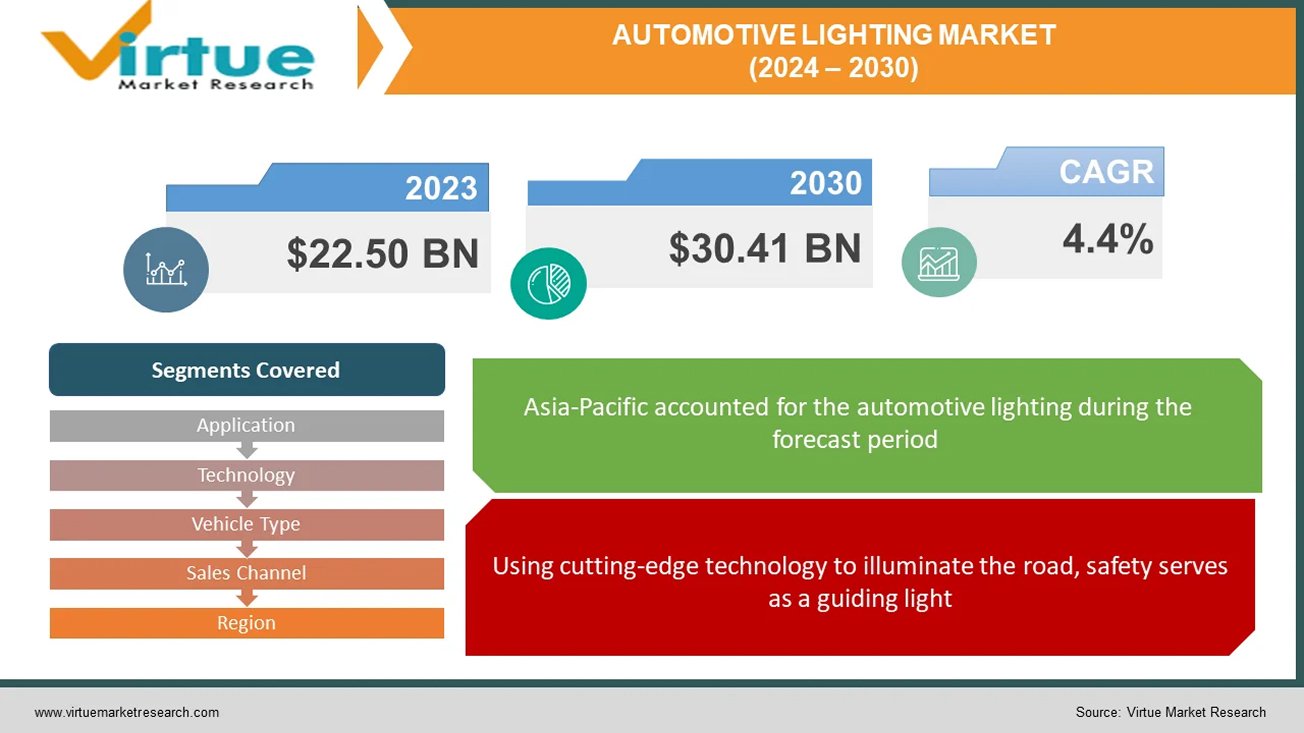
Global automotive lighting refers to all vehicle lighting systems, from headlamps that illuminate the road to taillights that communicate movements. They guarantee motorists and other road users alike safety, visibility, and style. While taillights frequently use LEDs for improved visibility, headlights are available in a variety of technologies, including LED and laser. Interior illumination, DRLs, and signal lights all have a role to play. This market, which was estimated to be worth $33.64 billion in 2022, is anticipated to rise to $67.39 billion by 2030 because of laws, luxury tastes, safety concerns, and technological developments like OLED taillights and adaptive headlights. Anticipate a future dominated by intelligent, connected, personalized, and sustainable lighting systems that enhance the safety, efficiency, and aesthetic appeal of automobiles.
Car lighting works its magic to provide safety, visibility, and style. Headlights cut through the night, taillights express intent, and interiors shine with comfort. The billion-dollar global business is expected to rise due to consumer demand for high-end experiences, safer roads, and cutting-edge technology. Imagine dynamic messages being painted by taillights, headlights that adjust to the road, and interiors that customize their atmosphere. Driven by technological advancements like linked systems and laser beams, this future is calling. Anticipate even more visually attractive, environmentally friendly, and intelligent lighting to illuminate the way ahead, making cars safer, more efficient, and unquestionably cooler.
In the market for automobile lighting, safety is the driving force behind demand from the public and laws. While automated high beams smoothly react to traffic, adaptive headlights modify their beams so as not to blind other people. With visually striking displays, dynamic taillights convey intentions for braking and turning. Beyond these developments, integrated pedestrian identification and lane departure alerts will soon make roads safer and brighter for everyone.
Luxurious automobile lighting creates a distinct visual identity that goes beyond simple illumination. Personalized interior lighting customizes the driving experience by setting the mood with a range of colours and intensities, while intricate designs and distinctive DRLs modify exteriors. As you approach your automobile at night, welcoming lights lead the way, resulting in an interior that is perfectly lit. Not only is this symphony of light aesthetically pleasing, but it also stands as a tribute to luxury. Upcoming developments like gesture-controlled lighting and holographic displays promise to further enhance the experience.
The worldwide automotive lighting market is undergoing a significant transition towards energy-efficient solutions, as environmental concerns gain prominence. LED technology is leading the way, providing a ray of hope for the environment and drivers alike. LED lights beam brighter and use a lot less energy than conventional halogen lamps. There are some tangible advantages to this. For drivers, this translates to increased fuel economy, which lowers petrol prices and lessens reliance on fossil fuels. Greater air quality and a reduction in the transport sector's contribution to climate change are the results of reduced overall emissions.
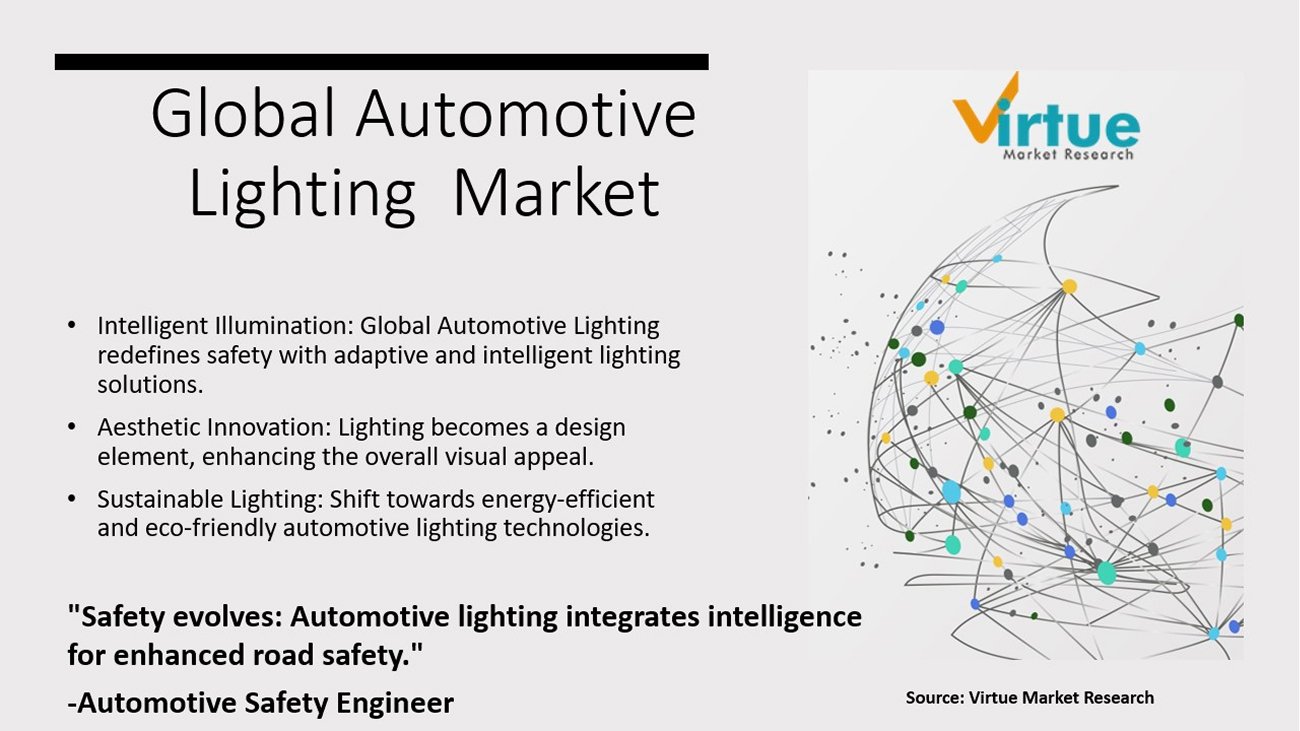
Although the global automotive lighting business is booming, there are still unknowns. Difficulties impede growth even as innovation propels it with eye catching features like laser beams and adaptable headlights. These technologies are luxury items due to their high cost and difficult integration, which puts producers' abilities to the test. The worldwide patchwork created by unclear legislation limits the potential of innovation. Durability issues persist, particularly when complex systems are subjected to challenging conditions. Ultimately, a lot of drivers still don't fully understand how these improvements can help them. Together, we can overcome these obstacles. The keys to reducing costs are improved production, more seamless integration, and unified regulations. Their full potential can be realized by educating customers about the safety, efficiency, and aesthetic value of these lighting wonders. By working together, we can pave the way for an even brighter and safer future for vehicle lighting.
It is made possible by advanced LED technology, which gives drivers the ability to customize their illumination for the highest level of comfort and flair. Consumers that care about the environment want greener products, and vehicle lighting complies. While solar- and self-powered lighting technologies offer a future powered by clean energy, energy-efficient LEDs lower pollution. The advent of connected lighting systems heralds a new age. Envision automobiles interacting with infrastructure and one another to minimize accidents and enhance traffic efficiency. Integrated headlights with pedestrian recognition provide unmatched safety, while dramatic taillights with eye-catching displays alert onlookers to your intentions. The possibilities are endless in the future. Gesture-controlled interior illumination, holographic displays projected onto the road, and even light fixtures with self-healing capabilities.

Due to laws requiring safety features like headlights, taillights, and brake lights, exterior lighting presently holds the most market share in the vehicle lighting industry. The dominance of this market is partly attributed to advancements in safety-focused technologies such as adaptive headlights and daytime running lights. The market value of external lighting is increased by the quick adoption of technology like LED bulbs and laser lights, which improve performance and aesthetics. Conversely, the interior lighting market is expected to increase at the fastest rate in the upcoming years. Innovations like ambient lighting and technology breakthroughs like LED and OLED displays, driven by consumer demand for comfort and personalisation, open new possibilities. The spread of sophisticated interior lighting systems is further driven by the growing emphasis on safety and the expansion of the luxury car market.
The worldwide vehicle lighting market is currently dominated by halogen because of its more affordable price, advanced technology, and useful illumination. With its dependable supply chain and affordable option for manufacturers and cost-conscious customers, halogen holds the biggest market share. The fastest-growing market right now is LEDs, which are predicted to shortly overtake halogen. The rapid expansion of LEDs is driven by their higher efficiency, longer lifespan, flexibility in design, and technological breakthroughs including enhanced brightness. Because LEDs use less energy and produce fewer emissions and better fuel economy, they are becoming more and more popular in the changing automotive lighting market.
Passenger automobiles rule the worldwide automotive lighting market. The sheer number of passenger cars produced which surpasses that of business vehicles and fuels the need for lighting systems is the primary cause of this popularity. The growing demand for personal automobiles in developing nations is a result of rising disposable income, which in turn drives the rise of the passenger car market. The importance that consumers place on safety and aesthetics elements helps to drive market expansion. But in the upcoming years, the market for electric and hybrid cars is expected to develop at the quickest rate. The exponential rise of the worldwide electric car market, which is still expanding and shows no signs of slowing down, is what is driving this surge. Specialised lighting solutions are required since electric and hybrid vehicles have different lighting requirements because of their specific functionality and design aesthetics.
Most lighting systems sold nowadays are sold by OEMs (Original Equipment Manufacturers), primarily because manufacturers pre-install lighting systems in new cars. But in the next years, the aftermarket is expected to develop at the quickest rate. This spike in demand for replacement parts, especially lighting systems, can be linked to several variables, one of them being the average age of cars. The industry is expanding because of consumers' growing desire to personalise their cars with aftermarket lighting upgrades such LED upgrades and decorative lighting. The availability and affordability of technologies like adaptive headlights and laser lights in the aftermarket, together with other advancements in lighting technology, are driving demand even more. Moreover, the growing market for electric cars (EVs).
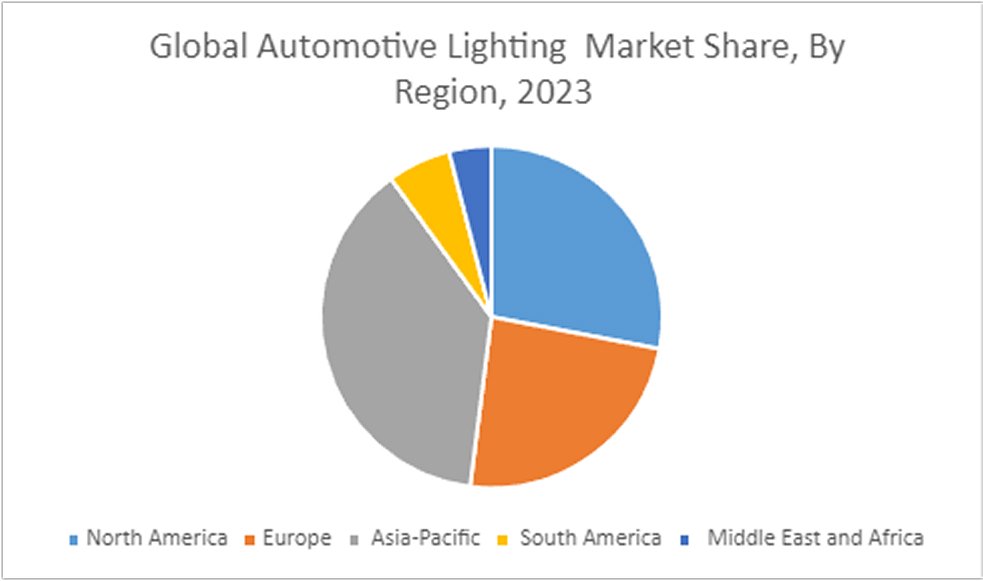
Throughout the forecast period, Asia Pacific is anticipated to be the automotive lighting market with the highest profitability. Over the past few years, Asia Pacific countries like China and India have seen notable increases in automotive manufacturing and sales, primarily in the medium-to premium luxury car segment. Asia Pacific is predicted to see an increase in the manufacturing of passenger cars, with India experiencing the strongest growth rate. Depending on the state of the national economy, the area offers a suitable selection of both high-end and cheap cars. For instance, there is a substantial demand for halogen, Xenon/HID, and LED since China and India produce more economy and mid-range automobiles. On the other hand, luxury car adoption rates are greater in South Korea and Japan, where LED lighting is the norm.
A brief shadow was thrown by COVID-19 over the worldwide automotive lighting market. Production was stopped by lockdowns and supply chain disruptions, while luxury lighting upgrades were shelved by consumers on a tight budget. Resources became scarce, and R&D stagnated. Still, the market is recovering thanks to resurgent demand and rearranged priorities. While energy-efficient LEDs are being pushed towards adoption by sustainability, safety concerns are driving interest in features like pedestrian detection and adaptive headlights. The digital push of the epidemic creates opportunities for intelligent, networked lighting systems that may interact with infrastructure and other cars. Ultimately, the industry is positioned to shine brighter, focused on safety, sustainability, and a connected future, even though the pandemic dimmed its brilliance.
A development collaboration between OSRAM Continental and REHAU aims to incorporate lighting into external components, providing automobile manufacturers with innovative lighting options that improve functionality and design flexibility. For rear combination lamps, Hella unveiled a revolutionary lighting innovation called Hella FlatLight technology. A Memorandum of Understanding (MoU) was signed by Samvardhana Motherson Automotive Systems Group BV (SMRPBV), a division of Motherson Group, and Marelli Automotive Lighting to investigate a technology collaboration focused on intelligently lighted external body components. Valeo debuted their revolutionary 360° lighting system at the Shanghai Auto Show. This technology surrounds the car with a band of light, projecting instantaneous, clear signs that other drivers can see from a distance. Pedestrians, cyclists, and scooter riders are especially susceptible to these signals
The Global Aloe Vera Whole Leaf Extract Market was valued at USD 506 million in 2023 and is projected to reach a market size of USD 880.78 million by the end of 2030. Over the forecast period of 2024-2030, the market is projected to grow at a CAGR of 8.24%.
The segments under the Global Aloe Vera Whole Leaf Extract Market by Application are Skincare Products, Pharmaceuticals, Dietary Supplements, Functional Foods and Beverages, Herbal Remedies, and Traditional Medicine.
Asia-Pacific is the dominant region in the Global Aloe Vera Whole Leaf Extract Market.
Terry Laboratories LLC, Aloe Laboratories Inc. (Harmony Green Corporation Japan), Lily of the Desert, Whole Leaf Aloe, Herbalife, etc.
The COVID-19 pandemic has greatly impacted the Global Aloe Vera Whole Leaf Extract Market, affecting demand and supply. As a result, consumers' interest in herbal and anti-inflammatory products, including aloe vera extract, has increased, resulting in increased demand. Consumers are increasingly looking for products with health benefits, such as aloe vera, to boost their immune system and overall health. However, supply chain disruptions, including shipping restrictions, labor shortages, and logistical challenges, have created serious problems for aloe vera extract manufacturers and suppliers.
Joining thousands of companies around the world committed to making the Excellent Business Solutions.

Specify your preferred Countries, Segments, or timeframes
Unlock Country Level Outlook, Trends, Cross-country Comparability, or supply Chain Variations.



Analyst Support
Every order comes with Analyst Support.

Customization
We offer customization to cater your needs to fullest.

Verified Analysis
We value integrity, quality and authenticity the most.

